


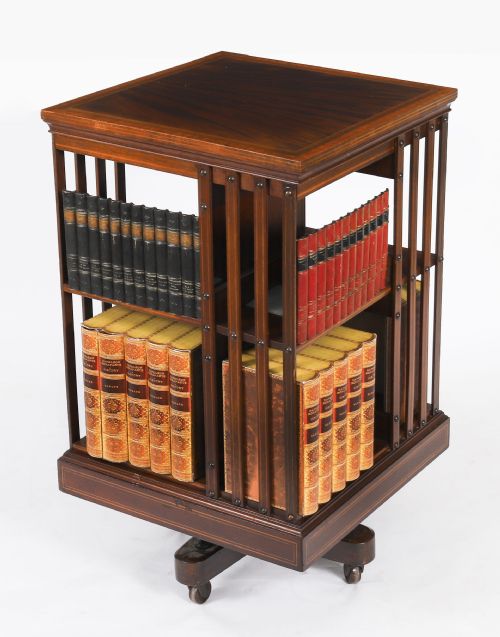
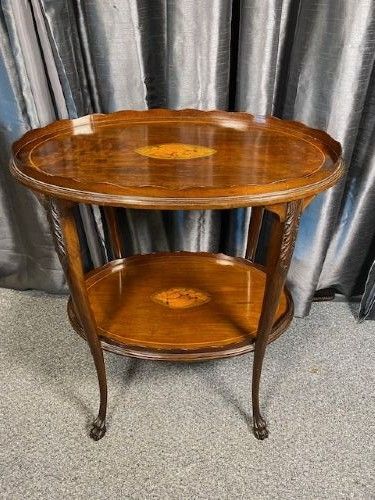
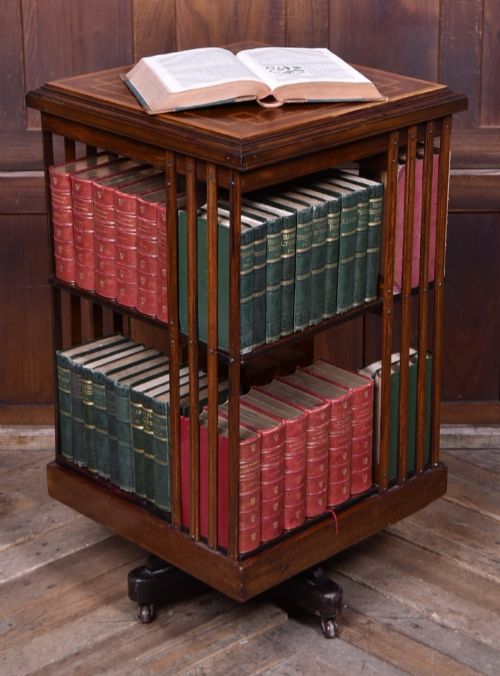
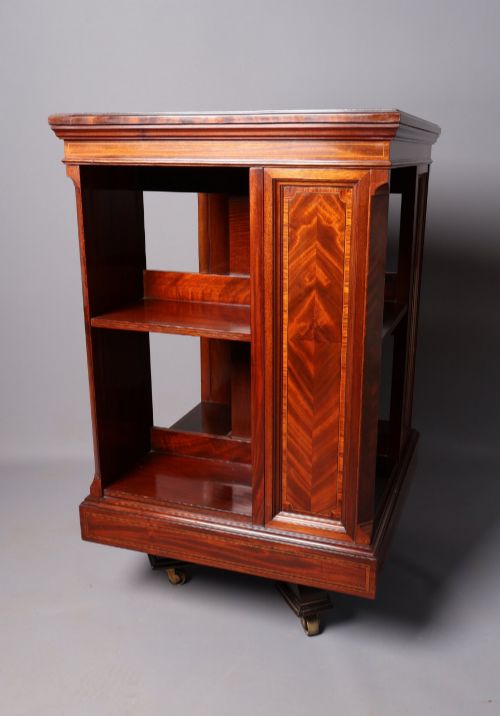
Edwardian Inlaid Tier Table
When you search for an edwardian inlaid tier table, you uncover versatile multi-level occasional pieces designed to display ornaments or hold lamps.
Edwardian Inlaid Tier Table
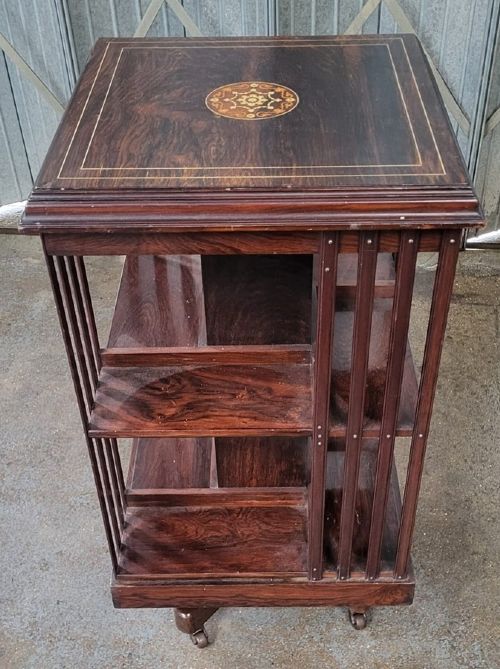
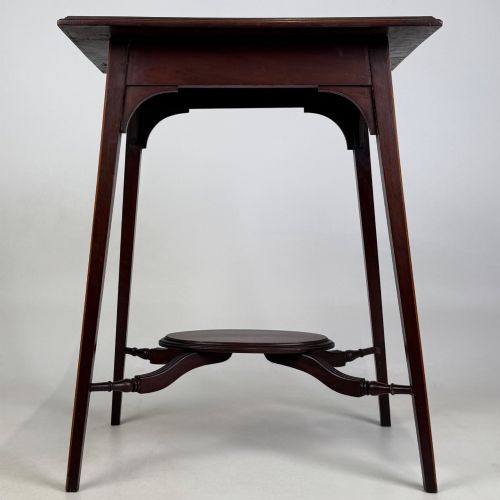
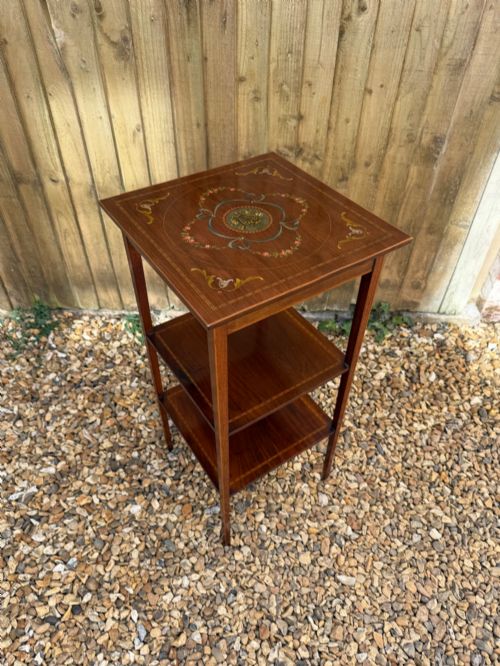
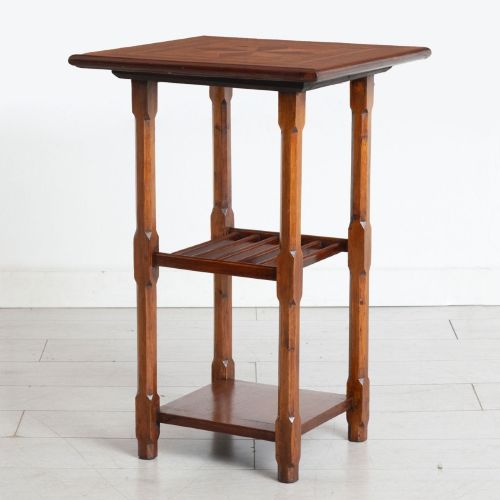
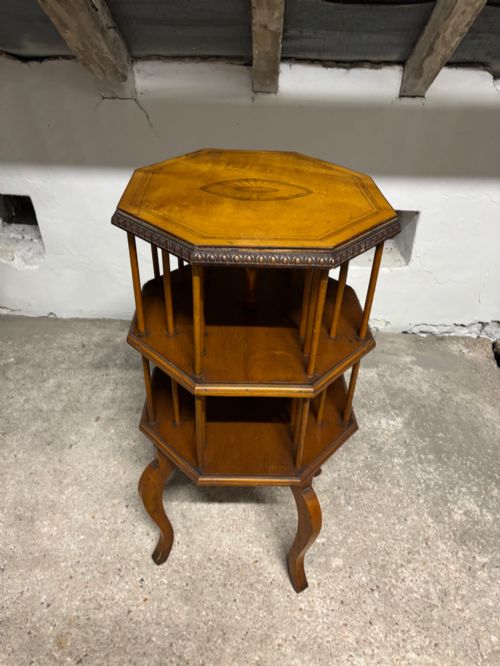
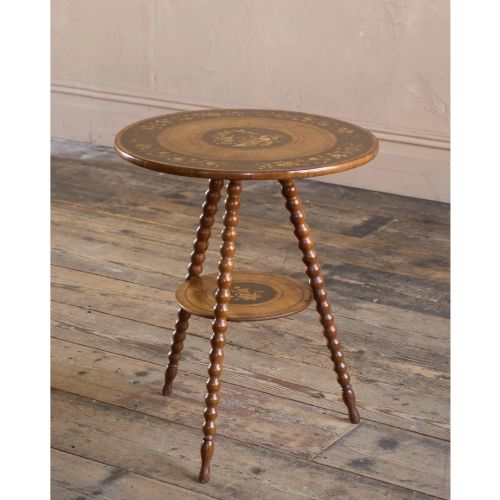
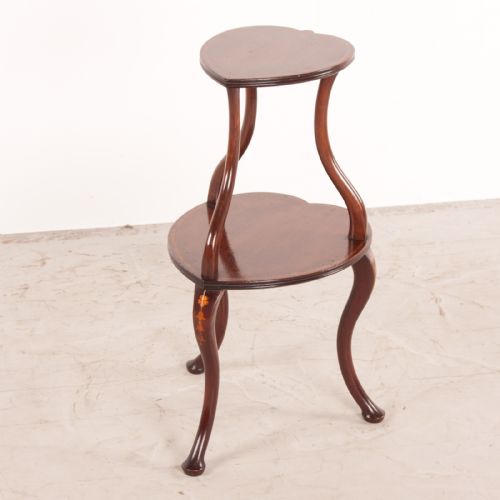
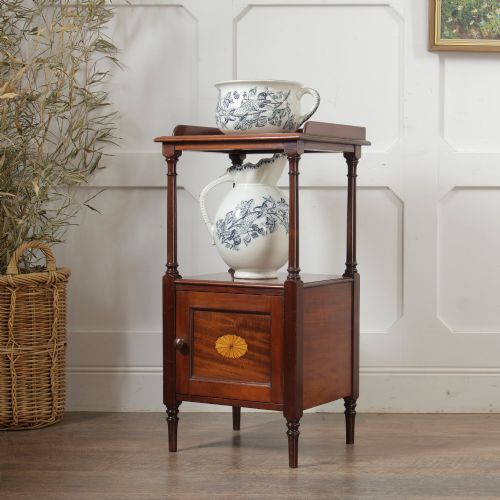
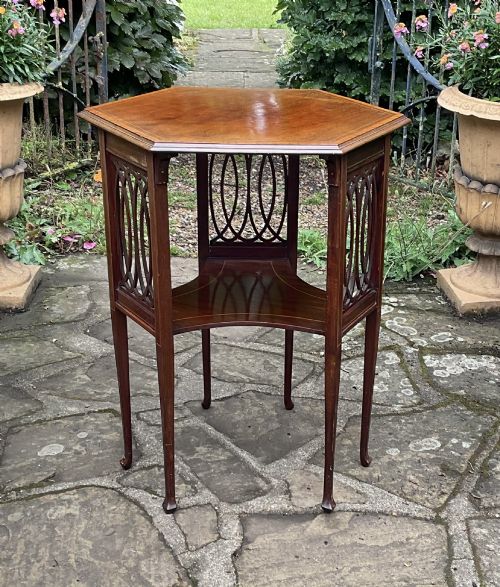
An edwardian inlaid tier table combines multiple stacked surfaces supported by slender uprights, designed for domestic display and utility. These multi-level pieces serve as lamp tables, plant stands, or display surfaces within the Edwardian home.
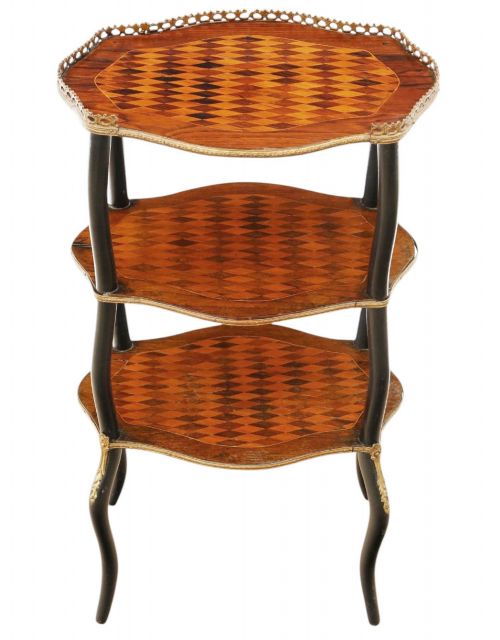
The evidence shows forms ranging from two-tier occasional tables and tray tables to three-tier etageres and serpentine display pieces. Mahogany and satinwood provide the primary timber foundations for these tiered structures.
Makers drew heavily on Sheraton Revival aesthetics, incorporating delicate proportions alongside functional multi-level surfaces. Alongside Edwardian examples, the records show Victorian and late nineteenth-century iterations sharing similar tiered formats.
Materials and construction methods
Cabinet makers utilised mahogany, satinwood, and rosewood as the primary structural timbers for these tiered tables. Veneers frequently covered secondary woods, providing smooth surfaces ready for decorative treatment.
Boxwood inlay and delicate stringing created contrasting geometric borders and floral motifs across tabletops and shelves. Brass mounts, ormolu details, and marquetry panels occasionally supplemented the inlaid woodwork.
Listings feature woods including mahogany, satinwood, rosewood, walnut, and boxwood, alongside brass and ormolu mounts.
Judging the quality of these tables
Quality rests upon the precision of the boxwood inlay and the selection of timber veneers such as flame mahogany or figured satinwood. Crisp, tight joints between the tiers and upright supports separate standard utility items from finer exhibition pieces.
The complexity of the form dictates distinction, with serpentine edges, multiple tiers, and balanced proportions elevating the piece. Subtle details like shaped tray tops or fine marquetry panels demonstrate superior cabinet-making skill.
Collingson and Lock
The Edwardian Inlaid Tier Table Glossary
- Tier table
- A piece of furniture featuring two or more stacked horizontal surfaces held by vertical supports. These tables maximise display space within a compact footprint.
- Inlay
- A decorative technique where contrasting woods or materials are set into recesses flush with the surface. Boxwood and satinwood commonly create lines and patterns on the timber.
- Etagere
- A set of open shelves or tiers used for displaying small objects and ornaments. The records show these combined with occasional table formats.
- Sheraton Revival
- A late nineteenth and early twentieth-century design movement copying the neoclassical styles of Thomas Sheraton. Pieces display classic geometric inlay, slender legs, and refined proportions.
- Marquetry
- The art of applying pieces of veneer to a structure to form decorative patterns and pictures. Craftsmen used various coloured woods to achieve floral or geometric scenes.
Edwardian Inlaid Tier Table: Frequently Asked Questions
What is a tier table used for?
Tiered tables provide additional surface area across multiple levels without occupying extra floor space in a room. Owners traditionally placed lamps, books, or decorative plants on the various shelves.
Today, they function well beside seating or in corners to hold small decorative objects. Their multi-level structure makes them practical display units.
How do I spot Sheraton Revival style?
Sheraton Revival furniture draws inspiration from eighteenth-century neoclassical designs championed by Thomas Sheraton. You will notice straight tapered legs, delicate proportions, and symmetrical geometric inlay.
Mahogany and satinwood serve as favoured timbers for this aesthetic. The overall impression is lighter and more refined than heavier Victorian styles.
What is satinwood?
Satinwood is a dense, durable timber known for its natural golden sheen and smooth texture. Cabinet makers prized it for contrasting stringing and decorative veneering.
Tables featuring satinwood often present a luminous, pale yellow finish. It appears frequently in Edwardian and Sheraton Revival pieces.
How do I care for inlaid wood?
Inlaid wooden tables require protection from direct sunlight and excessive moisture to prevent veneer warping or fading. Regular dusting with a soft, dry cloth preserves the polished surface.
Avoid placing damp items directly onto the timber or inlay. Occasional application of appropriate wax maintains the condition of the wood.