


Edwardian Inlaid Rosewood Cupboard
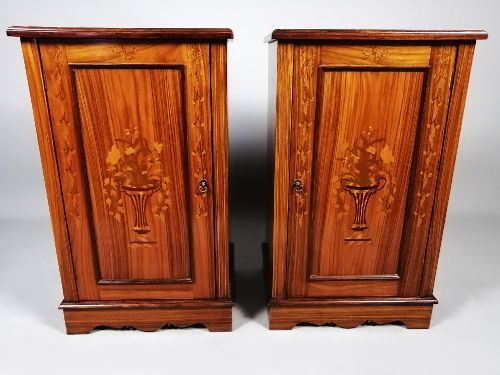
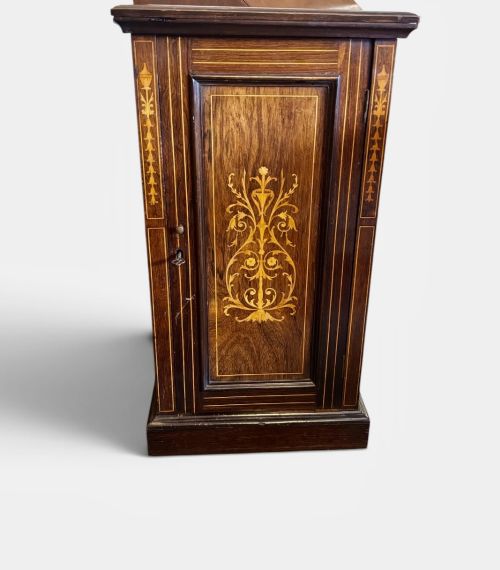
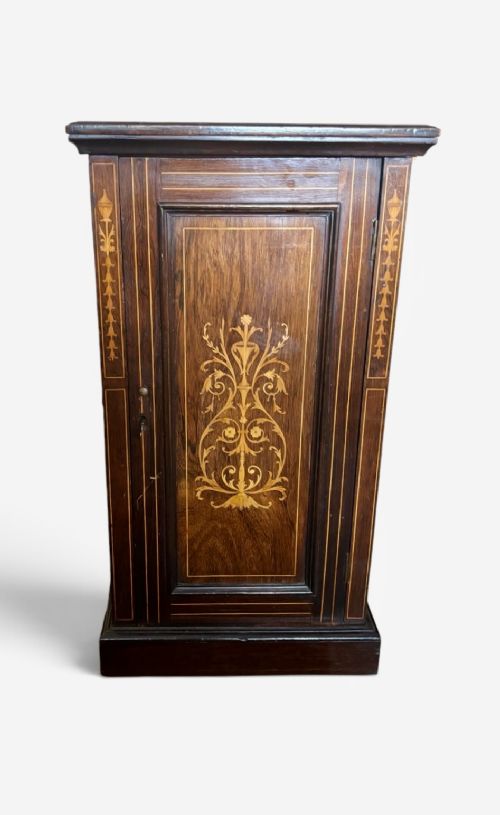
An edwardian inlaid rosewood cupboard brings rich dark grain and delicate contrasting woodwork into a room.
Edwardian Inlaid Rosewood Cupboard
When you search for an edwardian inlaid rosewood cupboard, you encounter a focused selection of compact storage pieces originating primarily from the late Victorian and Edwardian eras. The selection spans corner cabinets, display cabinets, music cabinets, and bedside pieces, reflecting the diverse domestic needs of the period.
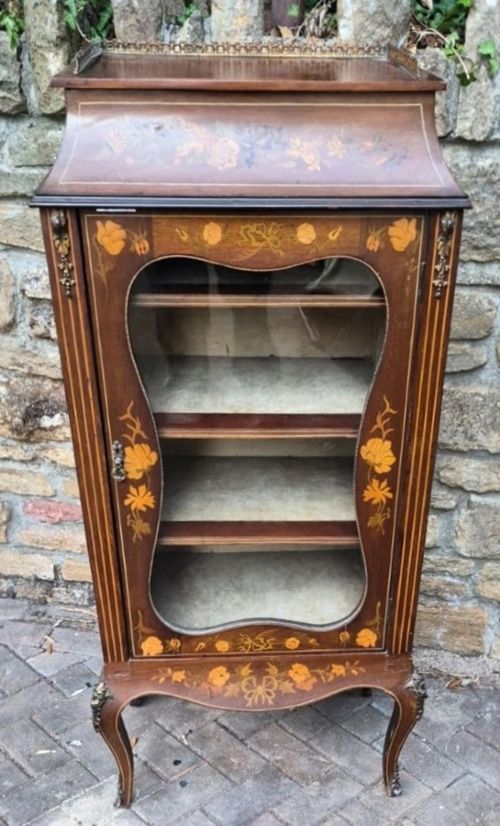
The Edwardian examples dominate the range, frequently displaying crisp geometric or floral marquetry. Victorian predecessors appear alongside these, often showing slightly heavier proportions and deeper colour tones in the timber.
Revival styles such as Georgian Revival and Victorian Sheraton Revival shape several pieces on the page. These designs borrow classical proportions while utilising the rich figured rosewood characteristic of the late nineteenth century.
Materials and Construction
Hardware details typically include cast brass fixtures, mirrored glass panels for display doors, and internal shelving arranged for specialised storage such as sheet music or books.
Music cabinets preserve an era when households gathered around the piano for evening entertainment.
Evaluating Quality
The distinction between standard and exceptional pieces rests in the precision of the contrasting inlay and the grain figure of the rosewood. Top-tier examples display crisp, tightly fitted marquetry with minimal shrinkage in the timber grounds.
Structural refinement also separates the ranges, seen in the clean joinery of small drawers, the stability of corner joints, and the retention of original brass hardware rather than later replacements.
Edwards & Roberts
The Edwardian Inlaid Rosewood Cupboard Glossary
- Marquetry
- A decorative technique where small pieces of contrasting veneer are assembled to form pictorial or geometric patterns on a wooden surface. This method defines the primary visual appeal of many Edwardian storage pieces.
- Satinwood
- A pale, lustrous timber native to India and Sri Lanka, utilised extensively for stringing and inlay work to create contrast against dark rosewood. Its golden sheen catches the light effectively.
- Breakfront
- A furniture form featuring a central section that projects forward from the flanking sections. This architectural arrangement adds depth and visual rhythm to larger wardrobes and cabinets.
- Stringing
- Thin lines of contrasting wood inlaid into channels cut into the primary surface to form geometric borders. This subtle detail frames panels and drawer fronts.
- Hanging Corner Cabinet
- A wall-mounted storage unit designed to fit into a room angle, saving floor space while displaying items behind glass or wooden doors.
Edwardian Inlaid Rosewood Cupboard: Frequently Asked Questions
Where should I place a corner cabinet?
These wall-mounted or floor-standing units suit unused room angles, utilising dead space effectively while introducing rich timber tones.
They work well in dining rooms or hallways where floor space is limited.
How do I clean rosewood furniture?
Dust regularly with a soft, dry cloth to prevent particulate buildup on the polished surface.
Avoid commercial silicone polishes, opting instead for traditional beeswax applied sparingly.
What is a music cabinet used for?
Original interiors featured shallow internal shelves designed to hold sheet music flat before the rise of recorded sound.
Today, these compact compartments suit documents, stationery, or media storage.
How do I distinguish Victorian from Edwardian pieces?
Victorian cabinets often exhibit heavier proportions, darker finishes, and denser carving.
Edwardian examples tend to feel lighter and brighter, featuring delicate satinwood stringing and refined marquetry.