


Edwardian Inlaid Quartetto Set
An edwardian inlaid quartetto set gives you a nest of four graduated tables designed to slide neatly together when floor space matters.
Edwardian Inlaid Quartetto Set
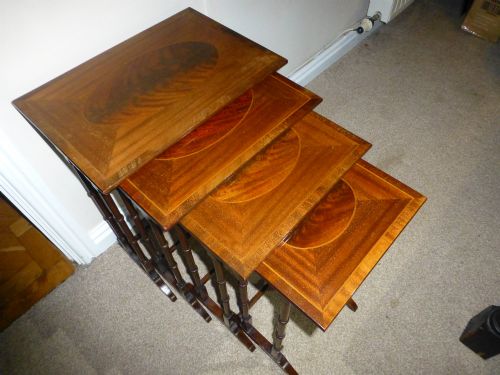
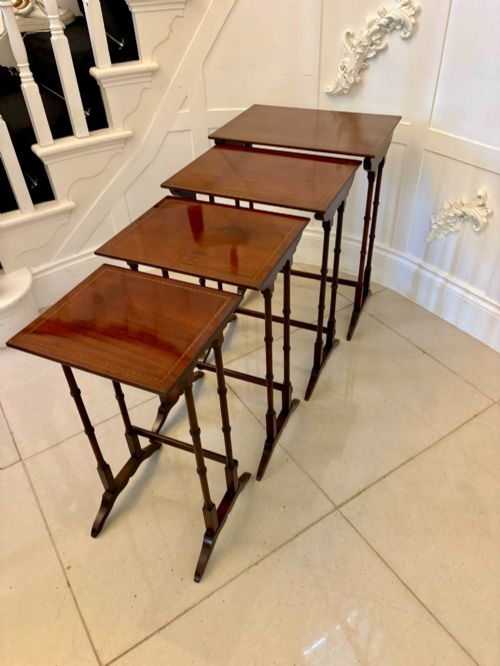
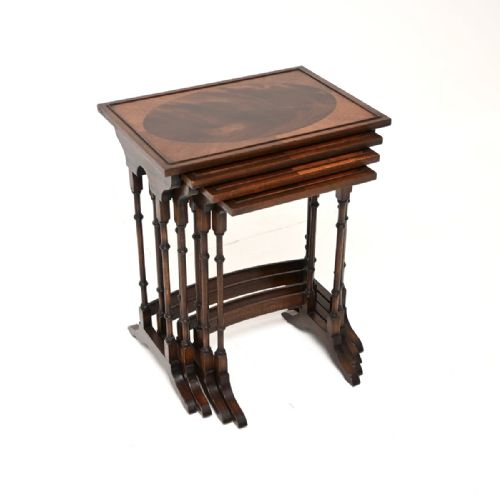
An edwardian inlaid quartetto set comprises a graduating nest of four tables designed to stack inside one another. These pieces serve as versatile occasional furniture for drinks, lamps, or books in a drawing room.
The versions you meet most frequently on this page date from the Edwardian period or adopt the Sheraton Revival style. Mahogany forms the primary structure, accented with contrasting satinwood or boxwood inlay.
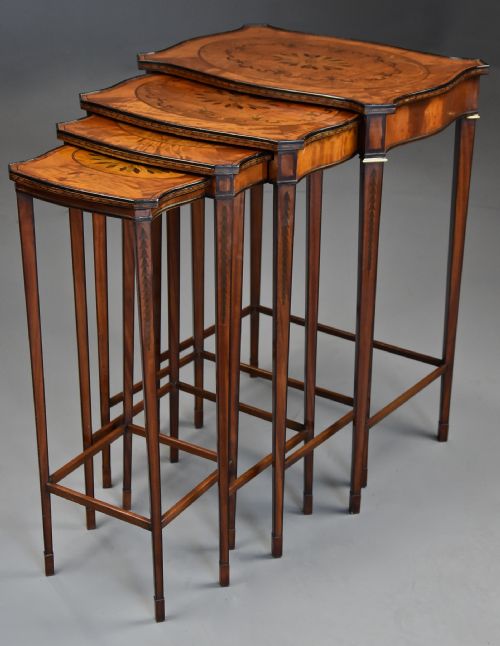
Makers shaped these sets in rectangular, square, or serpentine forms with square tapered legs. While Edwardian examples predominate, you also encounter pieces spanning from the late Victorian era through the 1930s.
Materials and construction methods
Joiners built the primary frames from solid mahogany and applied fine veneer to the table tops. Satinwood and boxwood inlay create delicate stringing and cross banding across the surfaces.
Some variations incorporate French brass inlay or glass elements within the wooden framework. Craftsmen shaped the legs into slender square tapered profiles to ensure the tables graduate smoothly into the nesting frame.
Listings on this site feature mahogany and satinwood construction spanning the Edwardian era, the Victorian period, and the 1930s.
Factors that separate the range
The refinement of the cabinetwork and the precision of the inlay determine the standing of each set. Sharp execution in the satinwood cross banding and crisp angles on the tapered legs elevate the piece.
The consistency of the timber selection across all four graduated tiers indicates greater workshop care. Sets that retain their structural integrity through smooth sliding action without timber warping represent higher craftsmanship.
Gillows
The Edwardian Inlaid Quartetto Set Glossary
- Quartetto
- A set of four nesting tables designed to stack together. This term appears frequently in Edwardian and nineteenth-century furniture descriptions.
- Satinwood
- A lustrous yellow-gold timber used for contrasting inlay and cross banding. Cabinetmakers prized it for decorative stringing on mahogany furniture.
- Cross banding
- A border band of veneer laid so that the grain runs at right angles to the main surface. It frames the perimeter of table tops on finer pieces.
- Stringing
- Thin inlaid lines of contrasting wood used to outline geometric panels. This delicate technique defines Sheraton Revival and Edwardian stylistic details.
- Serpentine
- A gently undulating curved line forming the edge of a table top. This contour requires skilled carpentry to shape accurately.
Edwardian Inlaid Quartetto Set: Frequently Asked Questions
What is a quartetto set?
A quartetto set is a nested group of four tables that stack neatly beneath the largest top. They were designed to save space in period sitting rooms.
You pull them out individually when serving tea or holding lamps, then return them to a single footprint when finished.
How do I date an Edwardian set?
You look at the combination of mahogany timbers, satinwood stringing, and tapered leg profiles typical of the early twentieth century. Many carry stylistic traits from Sheraton Revival revivals.
Construction methods and timber oxidation help distinguish genuine Edwardian work from later twentieth-century interpretations.
Will these tables slide easily?
Each table in the nest is proportioned to clear the frame of the one below it. They should glide smoothly into position without binding against the side supports.
Minor timber movement over decades can alter the fit, so smooth graduation remains a sign of careful initial making.
Where should I place them?
These nests suit reception rooms and studies where surface space is needed intermittently. They sit well beside armchairs or sofas as occasional lamp tables.
You can separate the four tiers around a room during gatherings and stack them together against a wall afterward.