




Edwardian Inlaid Pot Cupboard
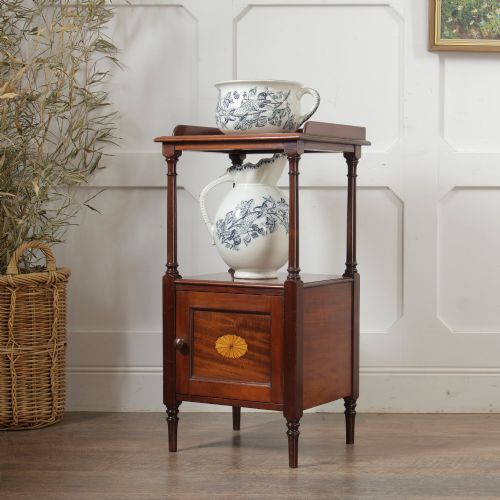
An edwardian inlaid pot cupboard delivers compact bedside storage with crisp classical stringing, satinwood contrast and neat proportions.

Edwardian Inlaid Pot Cupboard
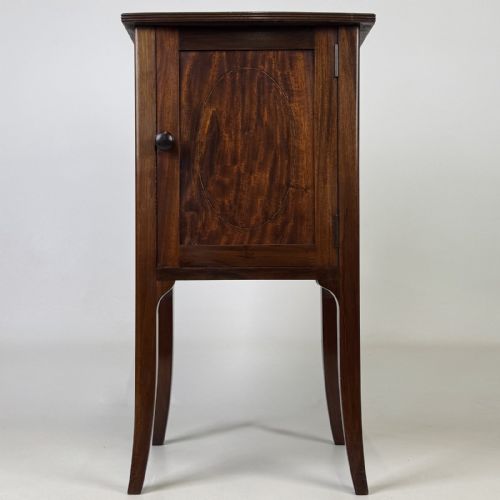
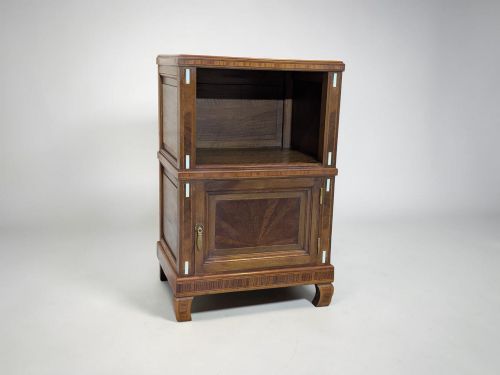
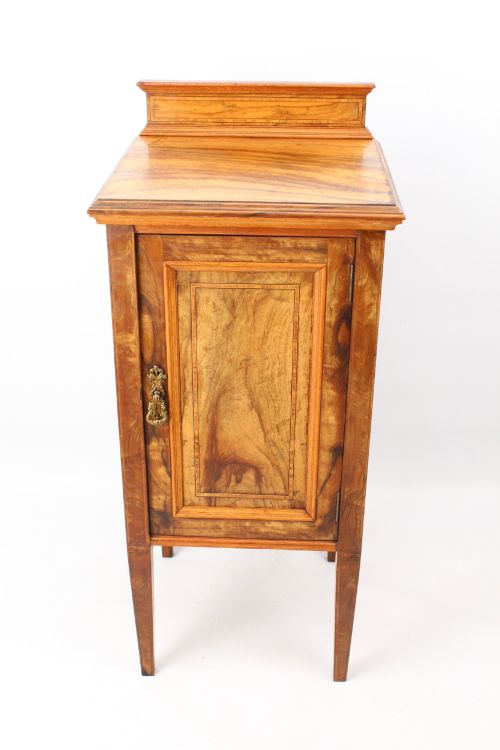
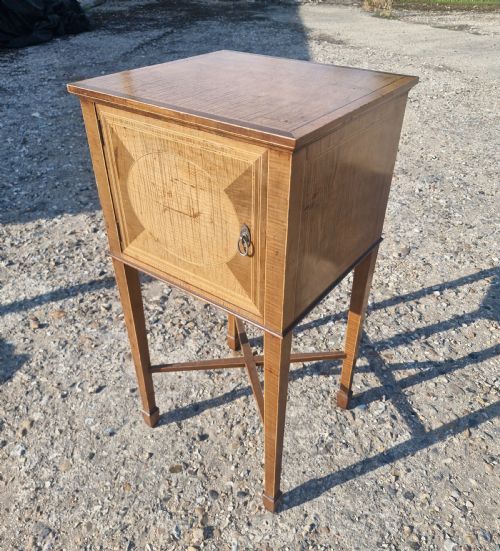
An edwardian inlaid pot cupboard is a small bedside cabinet designed to conceal a chamber pot behind a single door while presenting a decorative top surface.
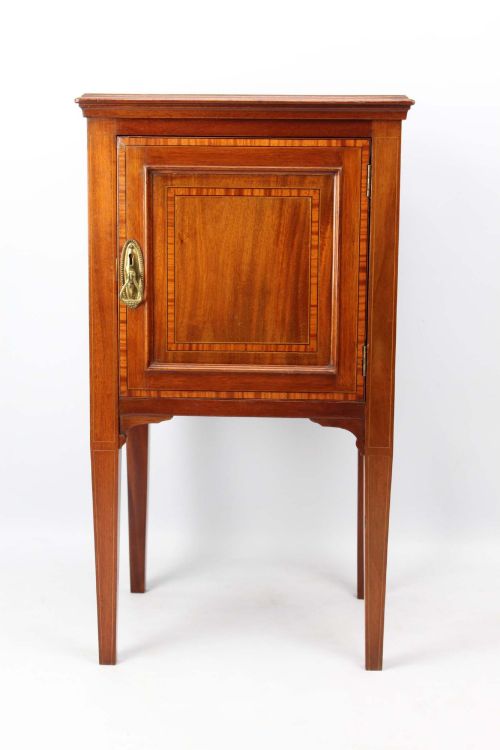
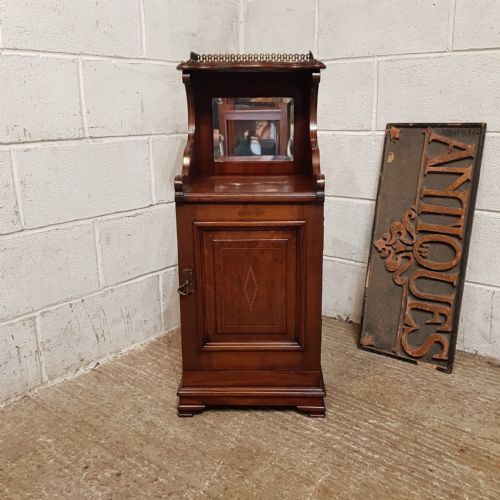
The selections here span standard Edwardian iterations alongside late Victorian and Sheraton Revival forms, mostly executed in mahogany with contrasting boxwood and satinwood stringing.
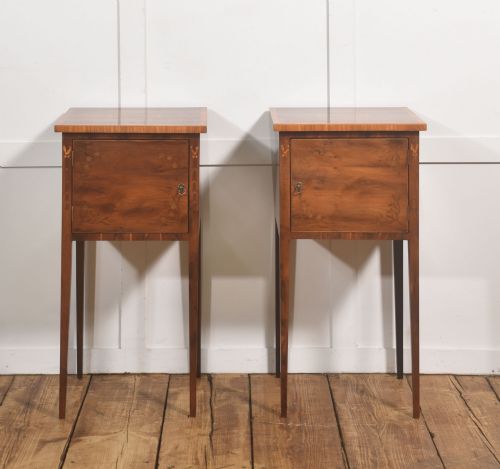
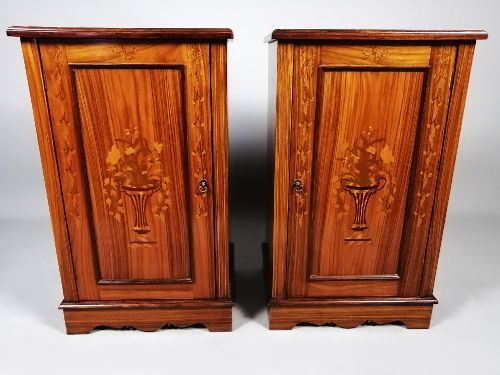
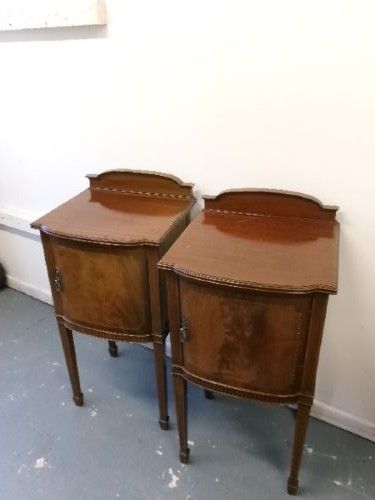
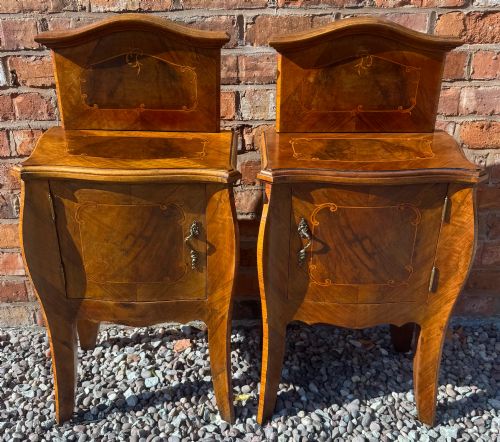
Single cupboards appear alongside matched pairs, taking the form of upright bedside chests, narrow side cabinets and shaped nightstands.
How they were made
Cabinet makers built these small pieces using solid timbers and fine veneers of mahogany, satinwood, walnut and rosewood, often accented with burr walnut or coromandel.
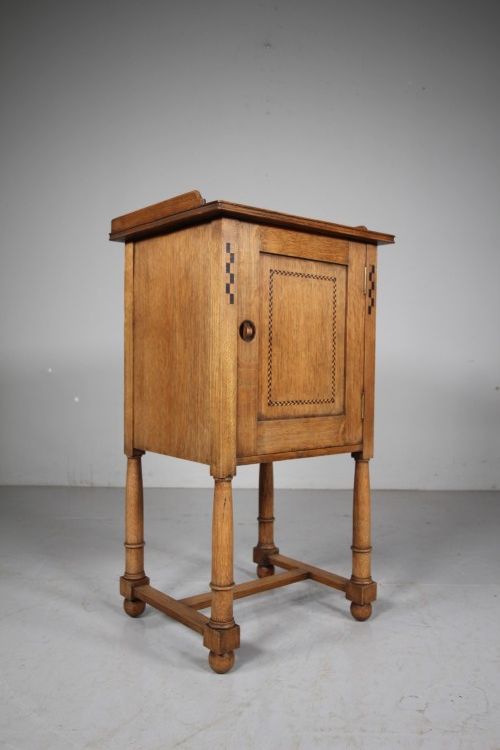
Decoration relied on precise boxwood inlay, marquetry motifs and brass handles, alongside exposed structural joinery on Arts and Crafts examples.
Edwardian Inlaid Pot Cupboard Retail Price Guide 2026
Typical asking prices for edwardian inlaid pot cupboard among the pieces listed under this phrase on Sellingantiques today, from the lower quarter to the upper quarter. They describe what is for sale here now, not the wider market.
Listings feature bedside cabinets spanning the late nineteenth century through to the nineteen-twenties, incorporating both Edwardian and Victorian aesthetic revivals.
What varies in quality
Differentiation lies in the crispness of the boxwood inlay and the selection of figured veneers, where balanced grain patterns elevate standard utility pieces into refined decorative furnishings.
Construction methods also distinguish output, ranging from commercial factory production by prominent firms to sturdier workshop builds in oak.
Maple & Co·Morant & Co·Gillows
The Edwardian Inlaid Pot Cupboard Glossary
- Pot cupboard
- A small bedside cabinet originally built to house a chamber pot behind a closed door. These practical items now function as compact lamp tables.
- Stringing
- Thin lines of contrasting timber inlaid into the surface of a cabinet to form geometric borders. Boxwood is frequently used against a dark mahogany background.
- Marquetry
- Elaborate decorative patterns formed by fitting together different coloured wood veneers onto a structural panel. Floral motifs appear often on these bedside pieces.
- Sheraton Revival
- A late nineteenth and early twentieth century style drawing inspiration from the neoclassical designs of Thomas Sheraton. These pieces utilise satinwood and delicate inlay.
- Bow front
- A convex curved cabinet front that projects outward from the room. This shape softens the profile of a small bedside table.
Edwardian Inlaid Pot Cupboard: Frequently Asked Questions
What is an edwardian inlaid pot cupboard used for today?
These compact cabinets serve primarily as bedside tables, offering a small surface for a reading lamp alongside enclosed storage space below.
Their narrow dimensions also suit tight hallways or small corners where standard tables will not fit.
How do I tell an Edwardian piece from a Victorian one?
Edwardian examples tend to display lighter satinwood elements, airier proportions, and delicate classical stringing inspired by the Sheraton Revival.
Victorian predecessors generally rely on heavier dark mahogany constructions with simpler panel details and robust proportions.
Are these cabinets usually found in pairs?
Both single cabinets and matched pairs appear across the selection, reflecting original bedroom furnishing practices.
Pairs are particularly sought after for balancing twin beds or larger master bedroom layouts.
What woods were used to make these cupboards?
Mahogany forms the primary body for the majority of pieces, frequently paired with lighter satinwood and boxwood inlay.
Alternative materials include walnut, burr walnut, rosewood, oak, and occasional coromandel on Arts and Crafts or Art Nouveau variants.