
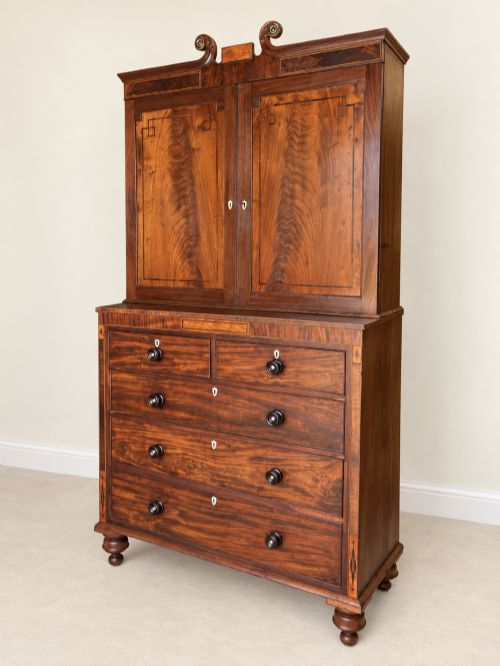
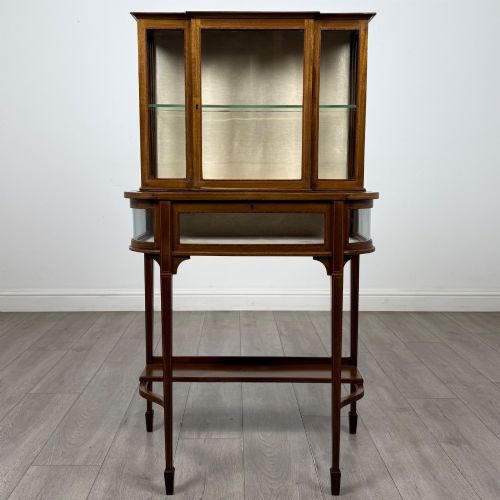
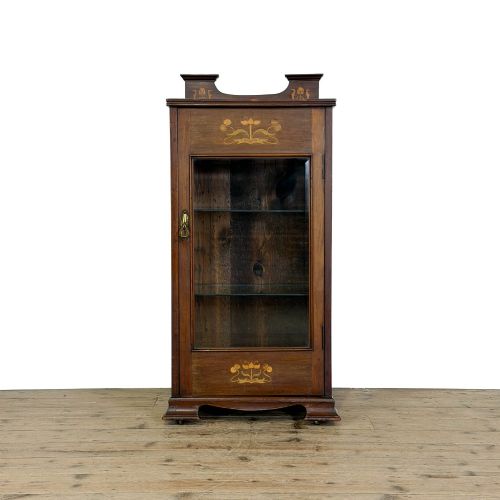
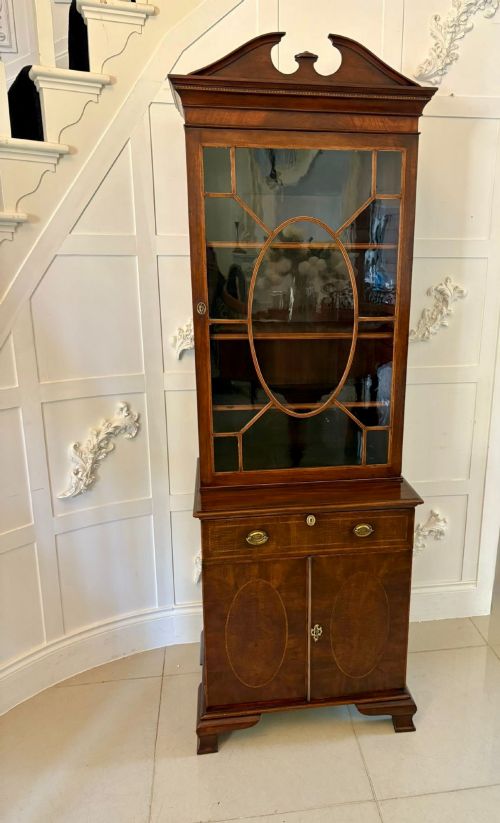


Edwardian Inlaid Mahogany Cupboard
When you search for an edwardian inlaid mahogany cupboard, you meet refined upright timber furniture combining classic Georgian inspiration with delicate decorative detail.
Edwardian Inlaid Mahogany Cupboard
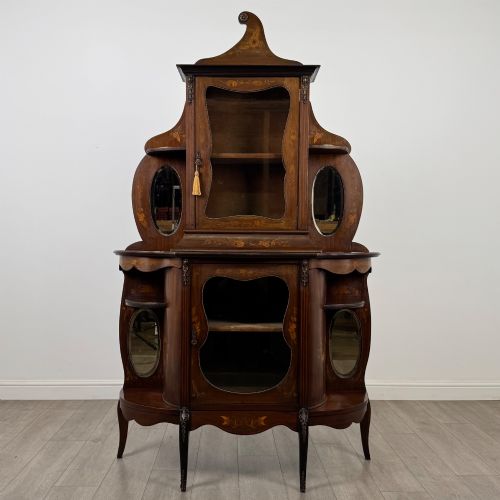
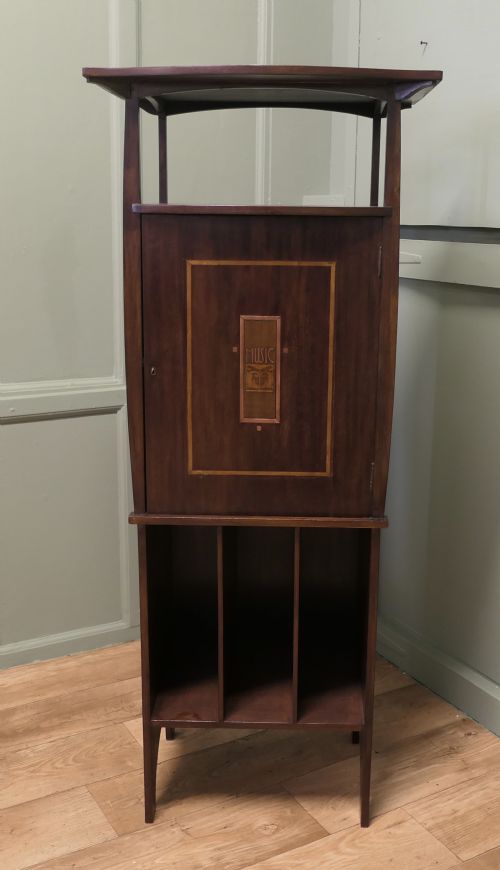
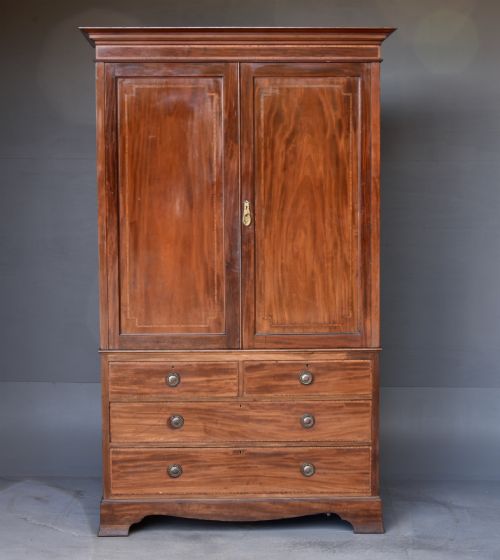
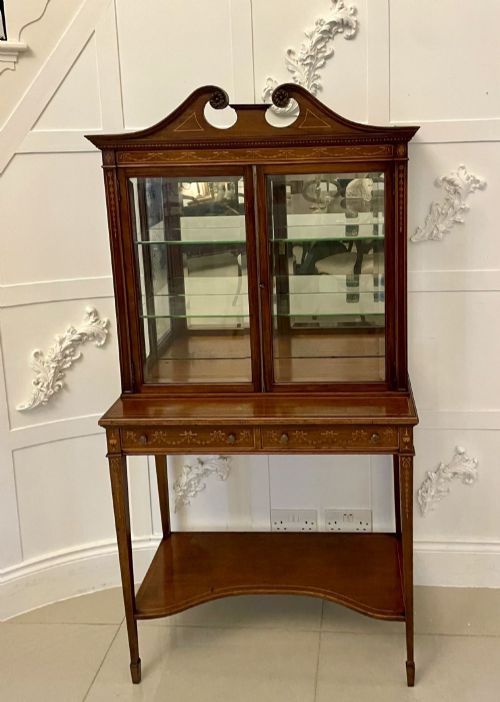
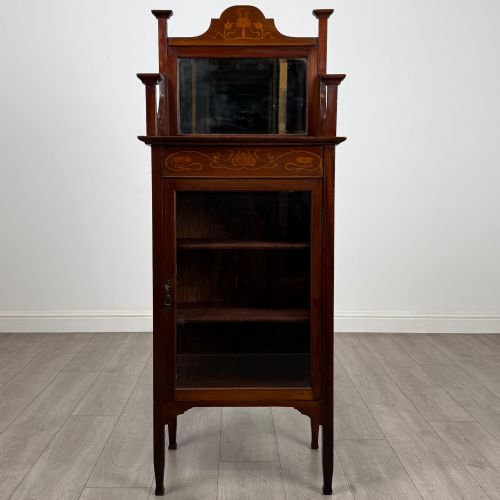
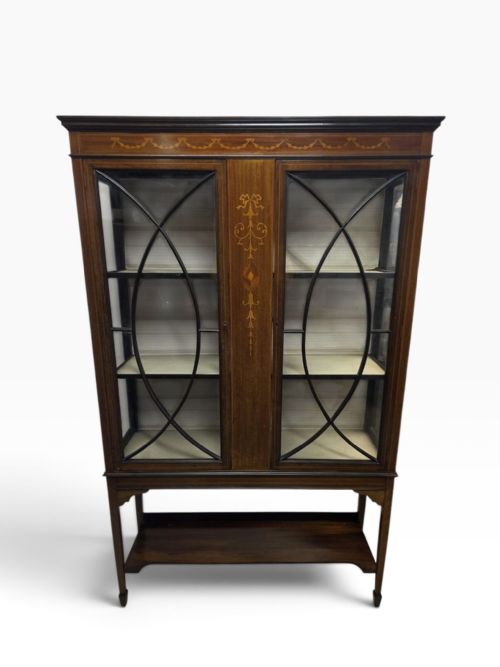
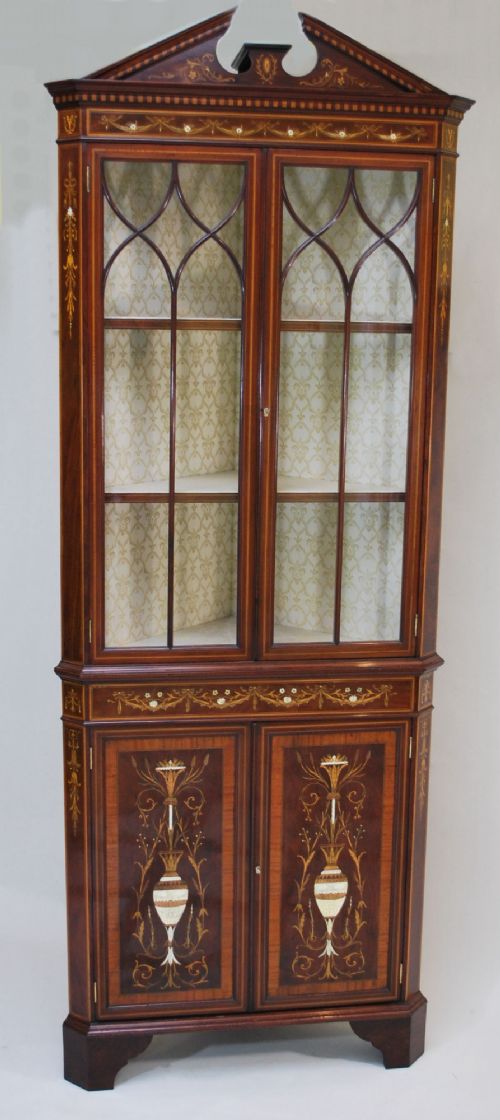
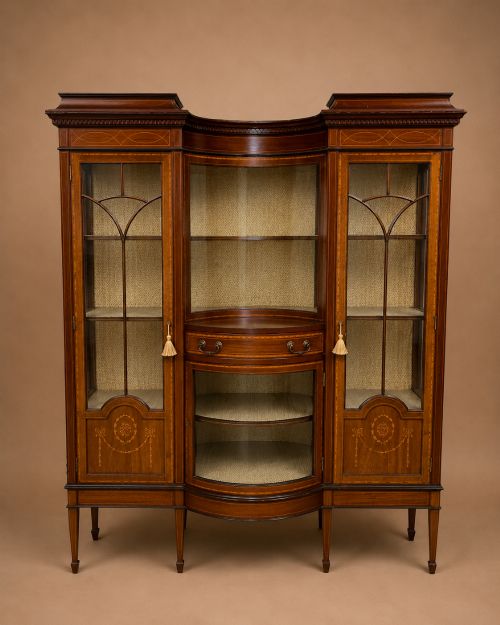
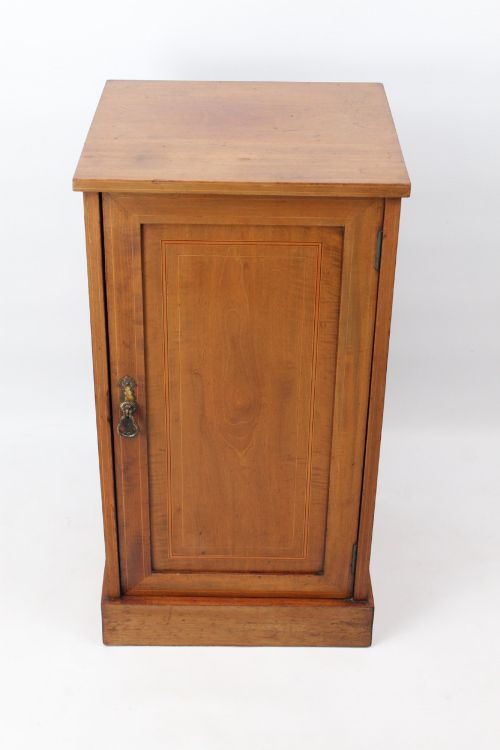
The edwardian inlaid mahogany cupboard bridges late nineteenth-century Victorian solidity and lighter twentieth-century aesthetics, appearing frequently as bedside pot cupboards, corner units, and tall display furniture.
Makers of the period produced versatile forms including washstands, writing desks, and double-height bookcases, reflecting domestic requirements for specialised storage in bedrooms and reception rooms.
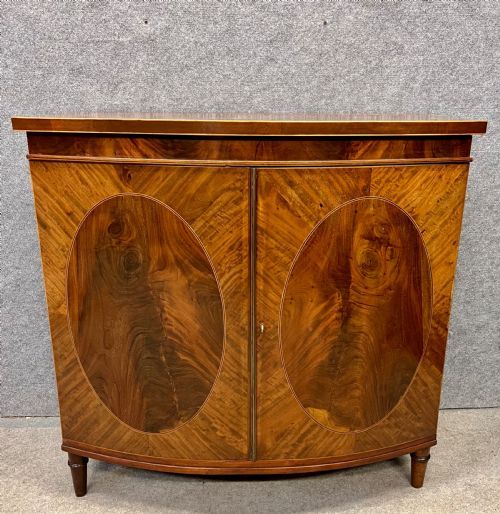
Design vocabulary draws heavily on Sheraton revival idioms, showcasing symmetrical profiles, bow fronts, and tapered legs that elevate functional storage into decorative household items.
How they were made
Construction relies on solid mahogany frames combined with figured mahogany veneers, frequently accented by contrasting satinwood inlay and fine marquetry detailing.
Glazed doors, brass hardware, and mirror backs appear across display cabinets and sideboards, integrating reflective surfaces with rich timber grains.
Listings include satinwood inlay, brass hardware, glass panels, and mirror backs alongside solid mahogany and veneered surfaces.
What varies in quality
Precision of the timber inlay and the subtlety of contrasting wood selections distinguish standard utility pieces from exceptional cabinet work.
Structural integrity reveals itself in the alignment of doors, the tightness of mitred joints, and the retention of original brass fittings.
GM Elwood for JS Henry·maples & co·Edwards & Roberts·Druce & Co.·Jewell of London
The Edwardian Inlaid Mahogany Cupboard Glossary
- Marquetry
- Elaborate decorative patterns created by fitting together small pieces of various coloured woods and veneers. This technique provides the floral and ribbon motifs seen across many cabinet doors.
- Sheraton Revival
- A late nineteenth and early twentieth-century design movement inspired by eighteenth-century neoclassical furniture forms. Pieces typically display slender proportions, straight tapering legs, and balanced symmetry.
- Pot Cupboard
- A compact bedside cabinet designed originally to house a chamber pot behind a single door. These items frequently feature marble tops or simple timber surfaces.
- Satinwood
- A durable, yellowish tropical timber utilised extensively for contrasting stringing and banding details. It offers a bright visual counterpoint to darker mahogany.
Edwardian Inlaid Mahogany Cupboard: Frequently Asked Questions
How do I use a bedside cupboard today?
These compact cabinets serve effectively as modern bedside tables, offering enclosed storage for books and personal items while maintaining a small floor footprint.
Their decorative timber surfaces provide adequate space for a reading lamp and a glass of water, blending historical character into contemporary bedrooms.
Where should I place a corner cupboard?
Standing or hanging corner units fit efficiently into unused room angles, transforming dead space into practical display or storage areas.
Glazed versions work well in dining spaces for tableware, whilst solid timber variants suit hallways and drawing rooms.
How do I care for polished mahogany?
Maintain the timber surface by dusting regularly with a soft, dry cloth and avoiding placement near direct heat sources or strong sunlight.
Applying traditional beeswax occasionally helps nourish the grain and preserves the subtle sheen of the antique finish.
Are these cabinets difficult to date?
Stylistic markers such as tapered legs, satinwood banding, and marquetry motifs help distinguish Edwardian revival production from authentic eighteenth-century originals.
Construction details, including drawer linings and backboards, provide further evidence for placing manufacture around the nineteen-hundreds.