


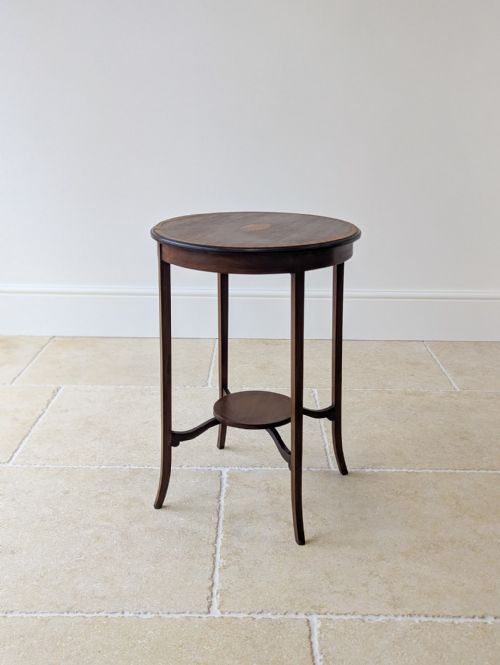

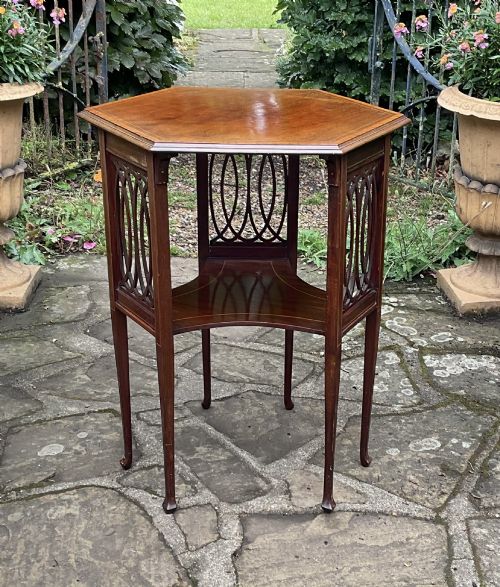
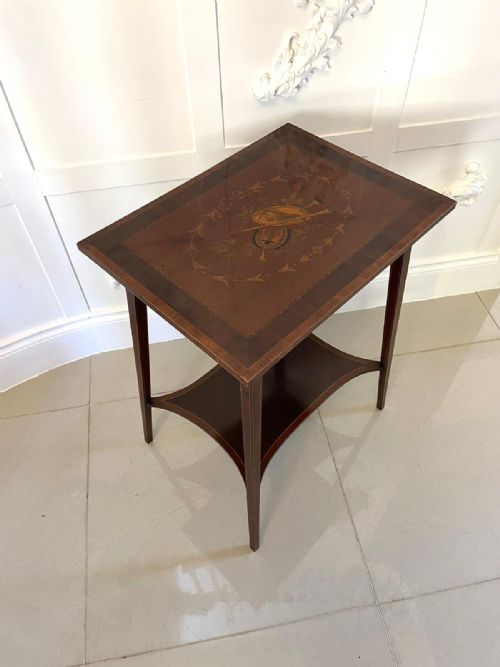
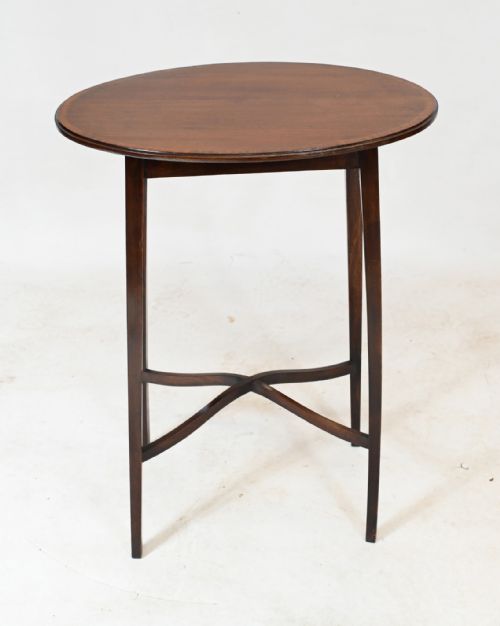

Edwardian Inlaid Lamp Stand
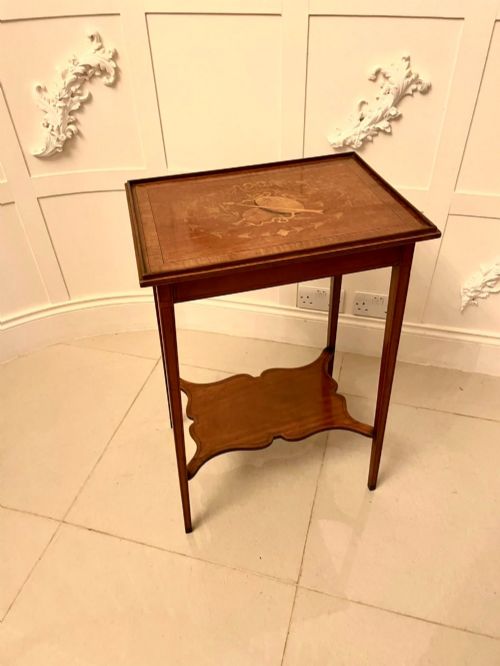
An edwardian inlaid lamp stand brings refined timber and delicate marquetry to a corner, serving tea or holding illumination with quiet elegance.
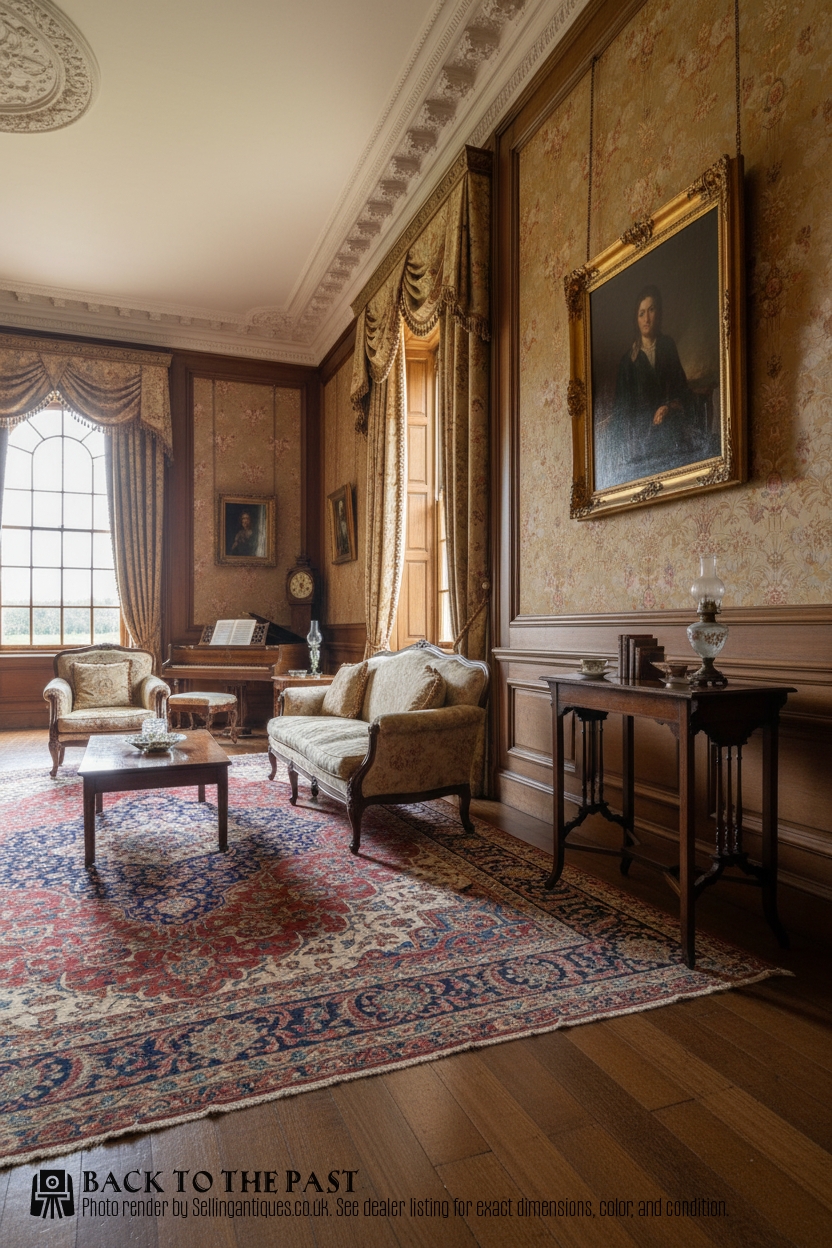
Edwardian Inlaid Lamp Stand
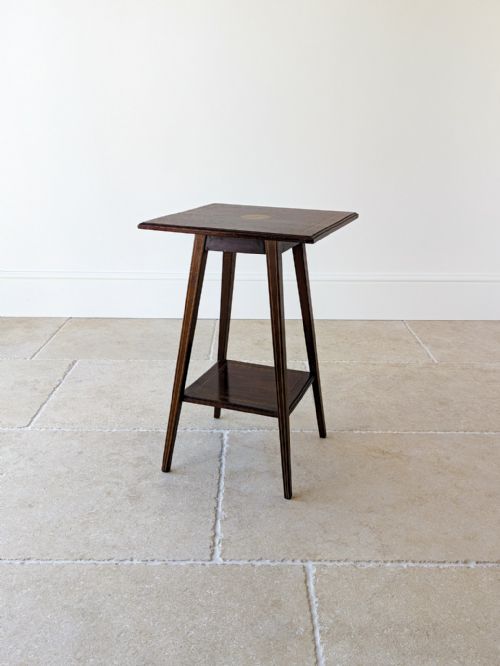
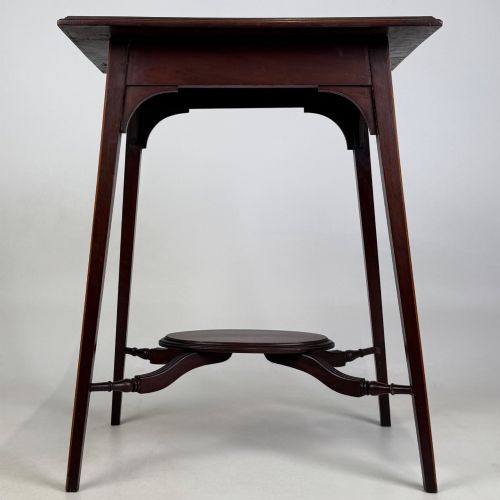
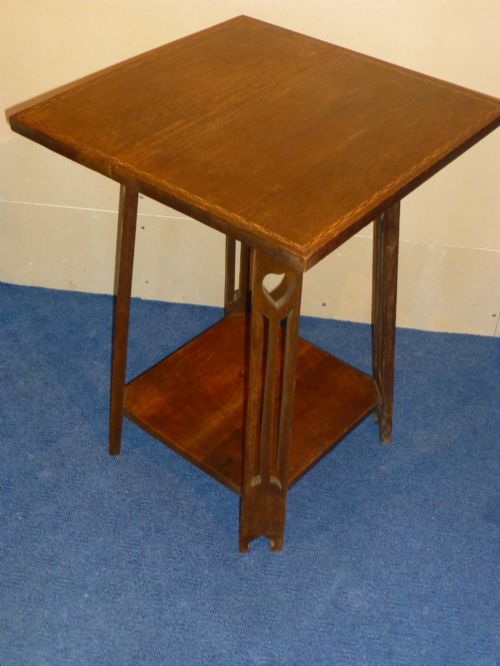
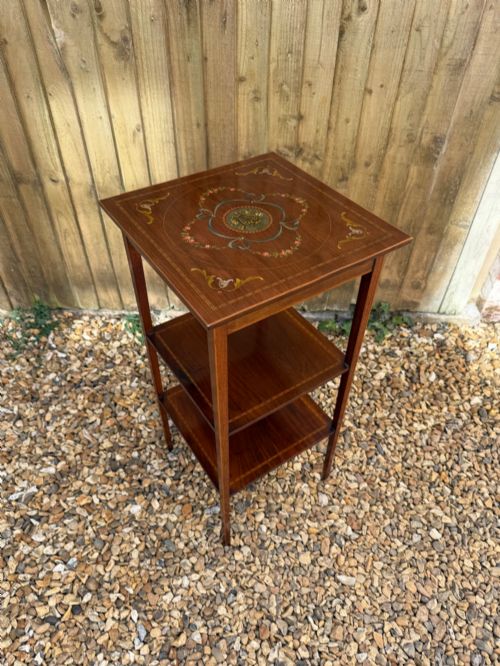
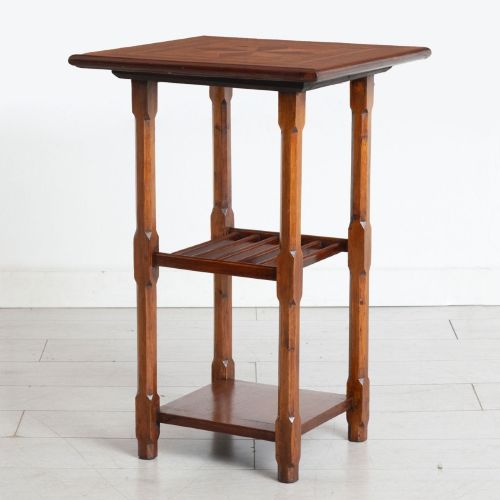
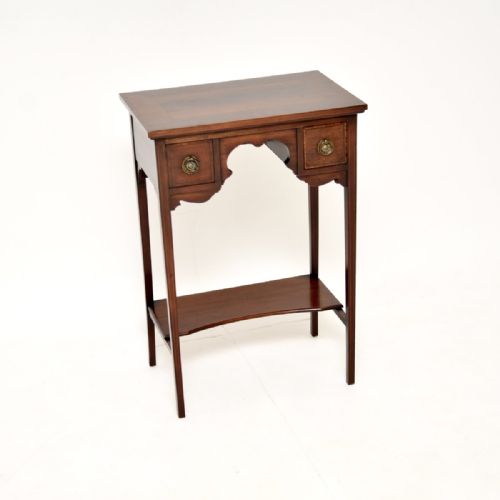
An edwardian inlaid lamp stand is typically a compact occasional table designed to support a light source or display decorative objects within a room. The examples found here span the Edwardian period and Victorian eras, taking forms such as circular, oval, and two-tier occasional tables.
Makers utilised rich timbers, most commonly mahogany, along with satinwood and walnut, to construct these functional pieces. Stylistic influences draw heavily on Sheraton Revival motifs and Arts and Crafts principles, integrating geometric or floral decoration into the top surface.
Materials and construction
Craftsmen built these tables using solid mahogany, burr walnut, and oak, often applying fine veneers to create smooth table tops. Structural integrity relied on traditional joinery techniques suitable for slender occasional and side tables.
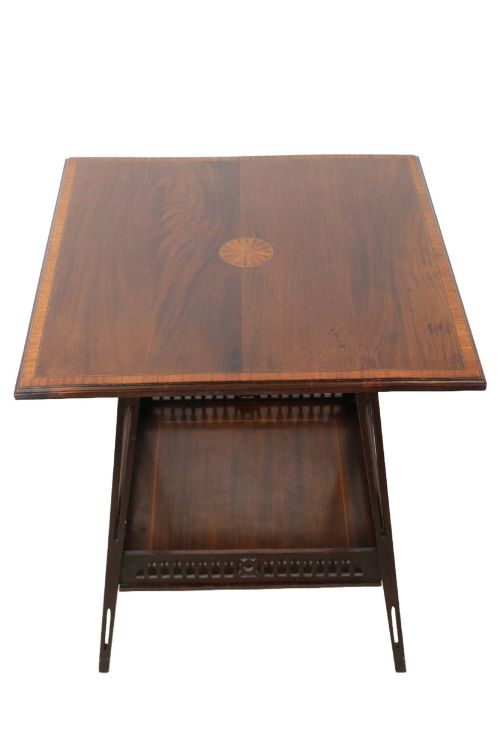
Decoration involved intricate boxwood and satinwood inlay, alongside marquetry work that added contrasting tones to the timber surfaces. Brass elements sometimes appeared in structural fittings or mounts, complementing the warm colour of the wood.
Occasional tables and lamp stands dominate the forms, frequently enhanced with Sheraton Revival or Arts and Crafts styling.
Assessing craftsmanship and finish
The precision of the boxwood and satinwood inlay distinguishes superior pieces from standard production, as clean, tight joints in the marquetry demand high skill. Finer examples display carefully selected timber grains, such as flamed mahogany or burr walnut, which provide natural depth.
Structural refinement also marks the difference, seen in the balance of the legs and the crispness of fretwork or turning. Tables possessing well-defined Sheraton Revival proportions or attributed to known workshops demonstrate greater refinement in their execution.
Trevor Page And Co·Liberty And Co·William Birch
The Edwardian Inlaid Lamp Stand Glossary
- Inlay
- A technique where contrasting materials are inserted into depressions in a wood base to form a decorative pattern. This method creates flat surface ornamentation using woods like boxwood and satinwood.
- Marquetry
- Elaborate veneer patterns applied to the entire surface of a piece to form pictorial or geometric designs. It differs from inlay by covering the structural core rather than resting inside carved recesses.
- Sheraton Revival
- A late nineteenth and early twentieth century style inspired by the neoclassical furniture designs of Thomas Sheraton. These pieces typically feature delicate proportions, tapered legs, and refined classical motifs.
- Occasional Table
- A small, versatile table intended for secondary use in a room, such as holding a lamp or books. They appear in circular, oval, and multi-tiered configurations across these listings.
- Etagere
- A small set of open shelves or a multi-tiered stand used for displaying small objects or ornaments. Examples often incorporate turned supports and inlaid surfaces.
Edwardian Inlaid Lamp Stand: Frequently Asked Questions
What distinguishes an edwardian lamp stand from a side table?
An edwardian lamp stand is typically smaller and more compact in its footprint, specifically dimensioned to hold a table lamp or decorative object in a corner or beside seating.
Side tables generally offer a broader surface area intended for general utility rather than illumination.
How do I identify Sheraton Revival inlay?
Sheraton Revival inlay often incorporates symmetrical classical motifs, satinwood banding, and delicate boxwood lines framing the mahogany top.
These patterns reflect the lighter, more graceful aesthetic popular towards the end of the nineteenth century.
Where should I place a two-tier occasional table?
A two-tier occasional table works effectively beside an armchair or sofa where the lower shelf provides convenient storage for books or small items.
Its compact proportions also allow it to function as a lamp stand in hallway corners or empty niches.
What timber was most commonly used?
Mahogany serves as the predominant timber across these pieces, frequently paired with contrasting satinwood or boxwood for the decorative inlay work.
Walnut and oak also appear, particularly within pieces influenced by the Arts and Crafts movement.