

Edwardian Inlaid Console
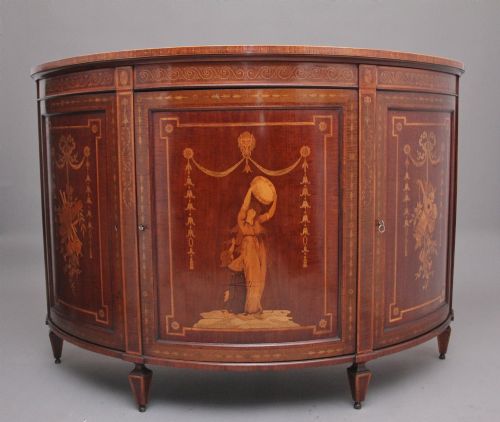
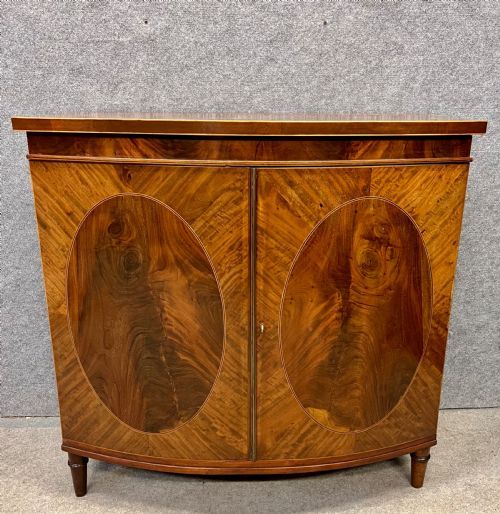
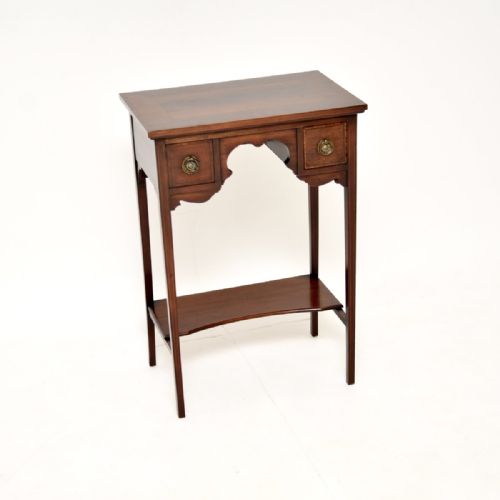
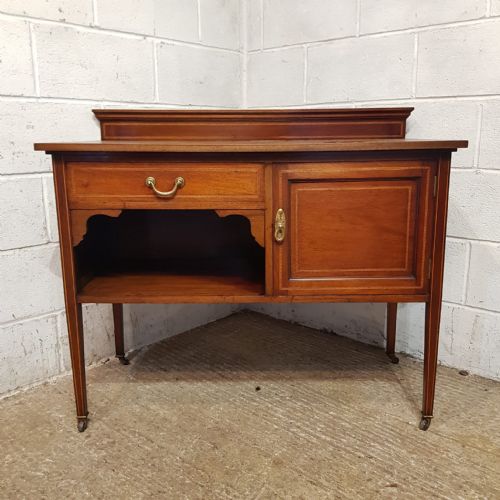
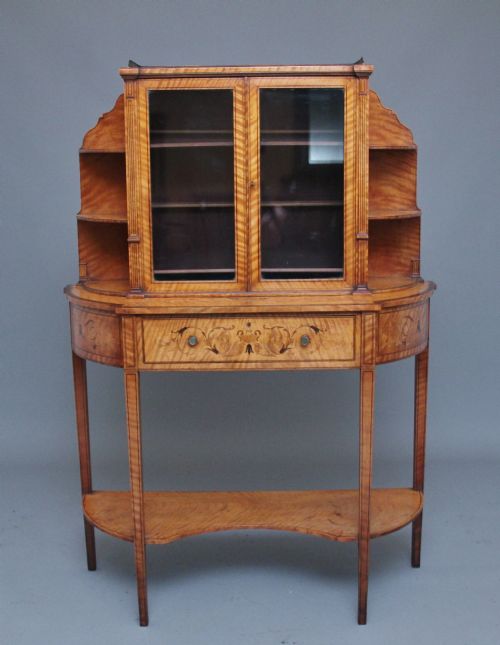
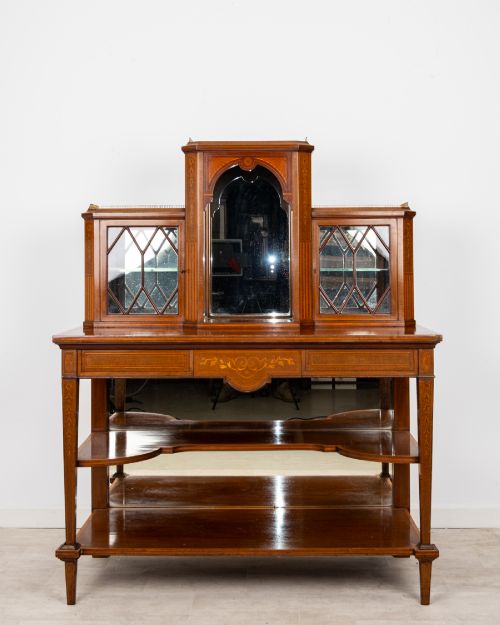
These edwardian inlaid console pieces combine mahogany and satinwood with precise woodworking to offer both surface space and decorative presence.
Edwardian Inlaid Console
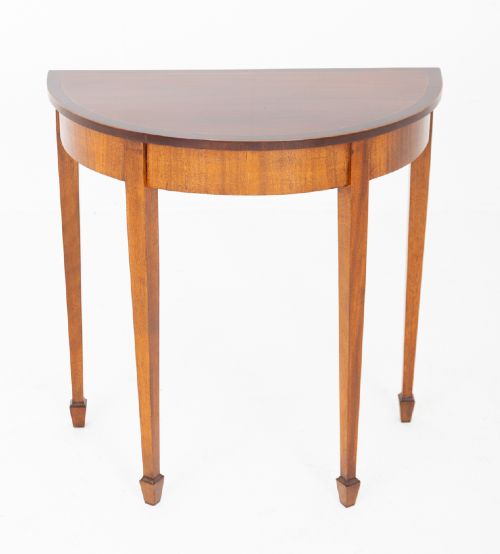
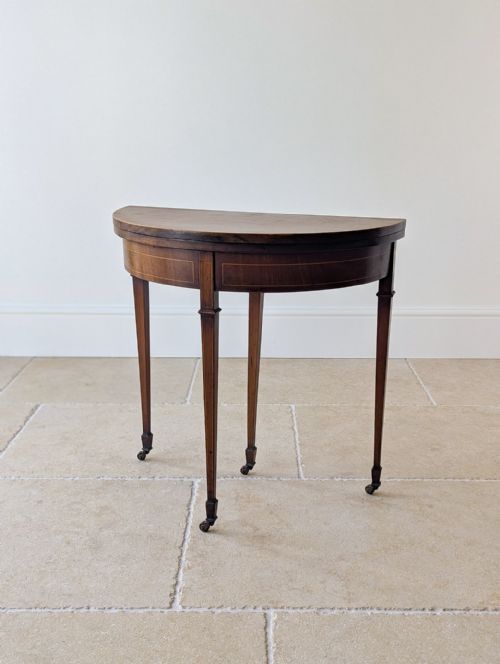
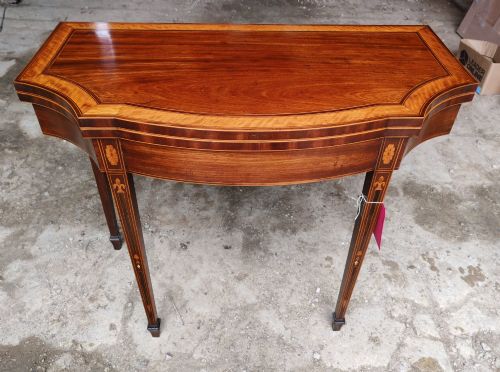
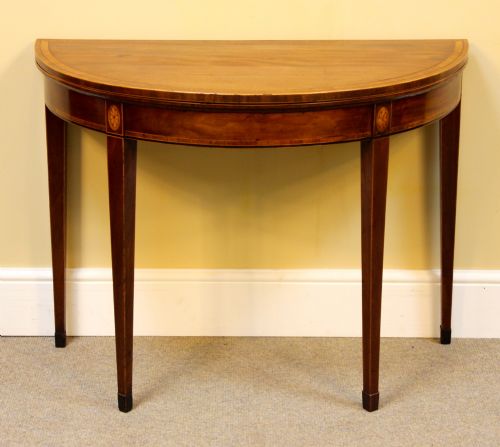
When searching for an edwardian inlaid console, a buyer finds a range of decorative tables and side pieces designed for formal reception rooms. The most common form on this page is the demi-lune console, shaped with a semicircular front that sits flush against a wall.
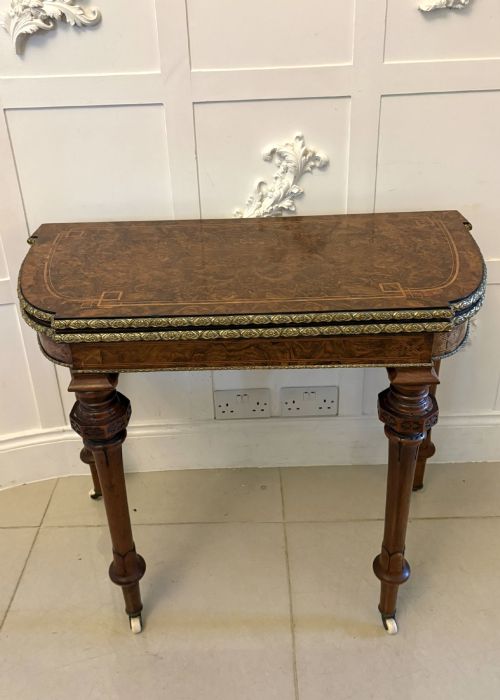
The material record shows a strong reliance on mahogany carcasses enriched with lighter contrasting timbers. Makers also utilised satinwood, rosewood, and burr yew wood to create shaped tops and fitted friezes.
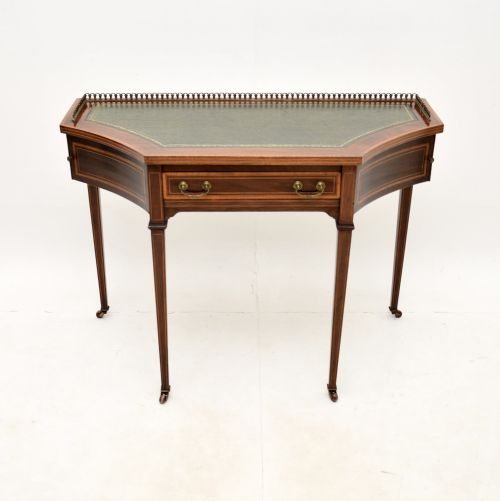
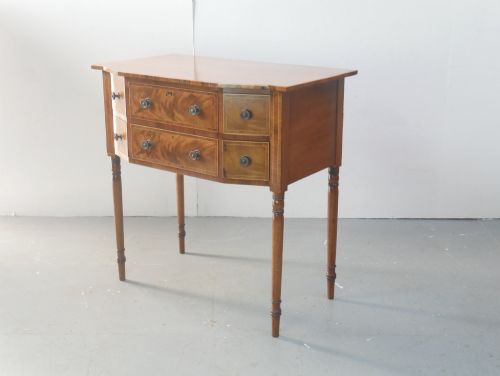
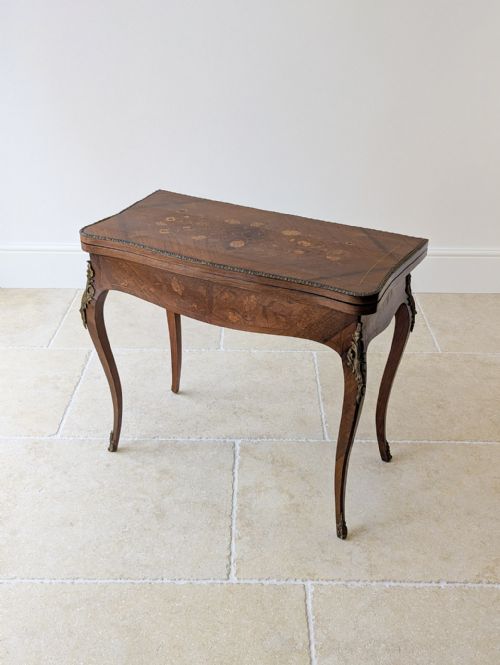
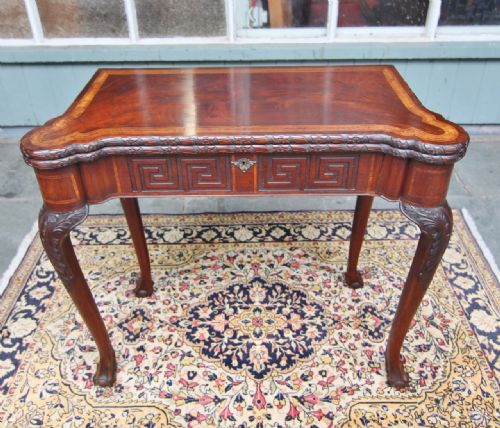
Beyond the standard half-moon console tables, the selection includes card tables, writing desks, and small servers from the same era. These items share the characteristic light timber stringing and floral patera motifs typical of the period aesthetic.
How they were made
Cabinet makers built the structural frames using solid mahogany, applying finely sliced veneers of satinwood and rosewood to the prominent surfaces. The decorative patterns rely on contrasting wood inlay and stringing embedded directly into the primary timber.
Detailing often incorporates boxwood lines and marquetry scrolls to define the edge of the demi-lune tops. Joinery methods of the time prioritized stability, using mortise and tenon joints concealed beneath polished exterior surfaces.
The listings show edwardian inlaid console forms primarily in mahogany, paired with satinwood, rosewood, and burr yew wood inlay.
What varies in quality
The distinction between standard and superior pieces rests on the crispness of the wood inlay and the selection of figured timbers. Higher grade examples feature dense mahogany with rich grain patterns and meticulously cut satinwood banding.
Construction details such as drawer linings in secondary timbers and the precision of the mitred joints indicate the skill of the original workshop. Finer consoles display balanced proportions and sharply executed marquetry rather than stamped or stencilled decoration.
Lamb of Manchester
The Edwardian Inlaid Console Glossary
- Demi-lune
- A half-moon shape used for console tables and cabinets designed to stand flat against a wall. This profile saves floor space while providing a decorative surface.
- Stringing
- Thin lines of contrasting wood inlaid into channels on table tops and drawer fronts. It creates a neat border that frames the primary timber.
- Marquetry
- Decorative patterns formed by fitting together pieces of various coloured veneers onto a structural ground. It differs from inlay by covering the entire surface in a mosaic design.
- Frieze
- The horizontal band beneath the top of a table or cabinet. This section often contains small drawers or decorative inlay panels.
- Satinwood
- A yellow-brown tropical timber prized for its lustrous grain and reflective surface. It serves as a bright contrast against darker woods like mahogany.
Edwardian Inlaid Console: Frequently Asked Questions
Where do you put an edwardian inlaid console?
These tables fit well in hallways, living rooms, or dining spaces where floor space is limited. Their shallow semicircular profile allows them to rest against a wall without obstructing foot traffic.
They also provide a convenient surface for lamps, mirrors, or decorative objects while adding warmth through their polished wood surfaces.
How do you clean the inlaid surfaces?
Dust the wood regularly with a dry, soft cloth to prevent particle buildup in the fine channels of the inlay. Avoid using modern aerosol polishes that leave a silicone film over the finish.
Apply a traditional beeswax sparingly to nourish the timber and maintain the natural lustre of the mahogany and satinwood.
Were these consoles used for dining?
The demi-lune console typically served as a decorative side table or serving surface rather than a primary dining piece. Many examples feature fixed tops, though some fold out or sit in pairs to form larger tables.
In period homes, they stood against drawing room walls to display silver, ceramics, or flower arrangements.