


Edwardian Inlaid Bench
An edwardian inlaid bench brings refined satinwood detailing and sturdy mahogany framing to a hallway, bedroom, or parlour.
Edwardian Inlaid Bench
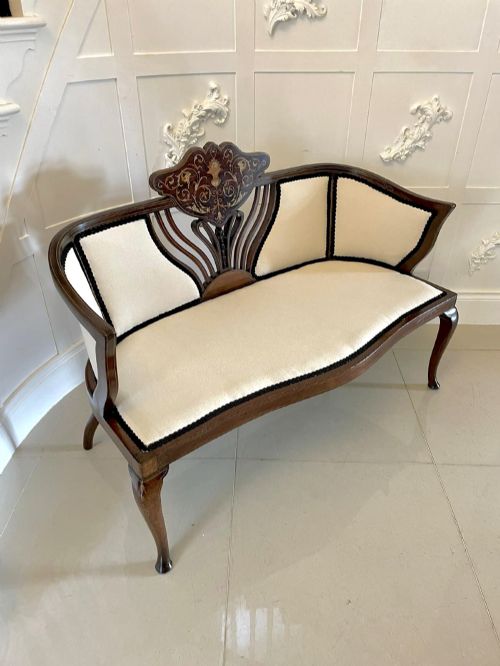
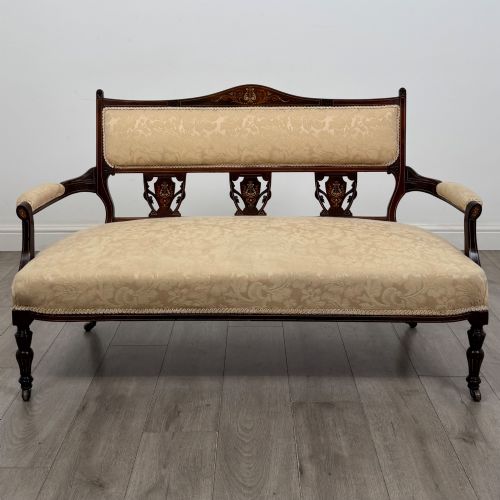
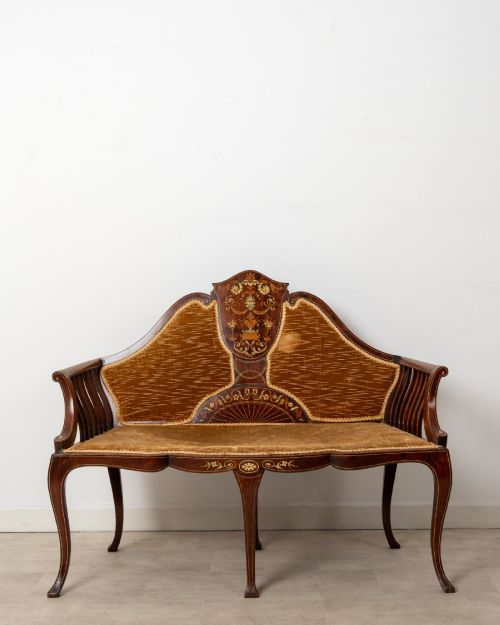
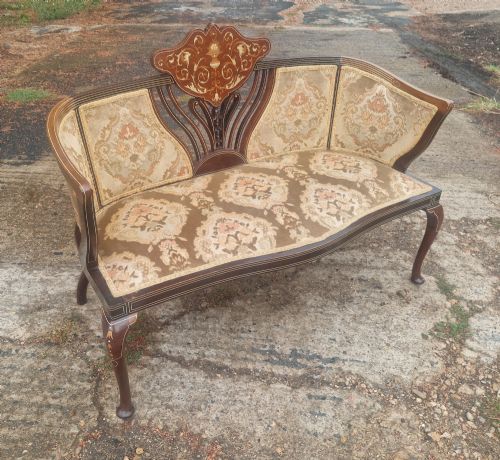
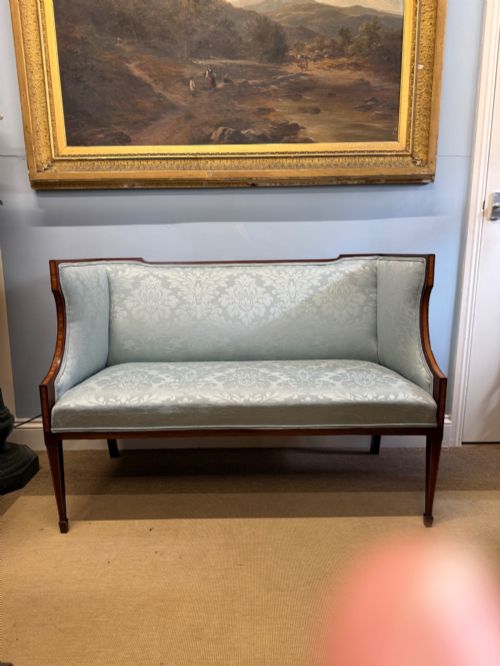
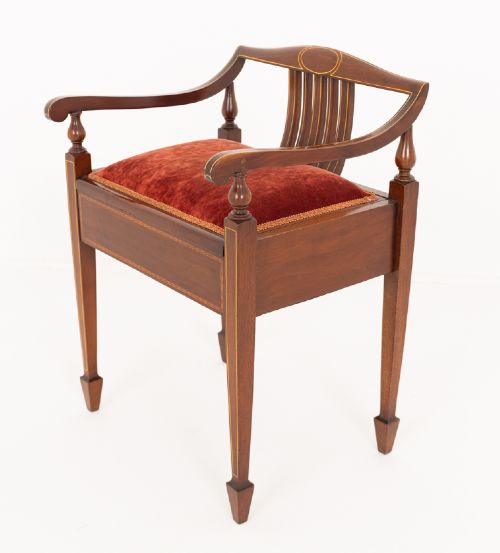
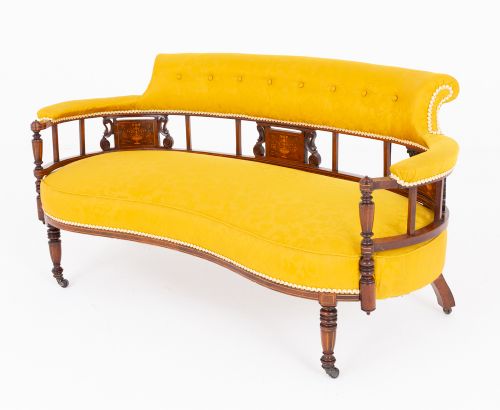
An edwardian inlaid bench spans several related seating forms, appearing most frequently as two-seater settees, parlour sofas, and piano stools. These pieces draw heavily on Sheraton Revival aesthetics alongside Edwardian and late Victorian periods.
Makers shaped these forms from solid timbers, applying contrasting wooden stringing and botanical motifs. Buyers frequently encounter compact two-seater sofas and window seats designed for specific domestic placements.
How they were made
Craftsmen built the structural frames using mahogany, rosewood, and oak, often shaping the timber into supportive backrests and open arms. Satinwood and boxwood veneers were then inlaid into the wood surfaces to create delicate geometric or floral patterns.
Upholstered variants incorporated traditional padding finished with fabric, velvet, or damask covers. Individual workshops also integrated brass fittings and bone details to accent the inlaid woodwork.
Several piano seats include hidden compartments once reserved for stashing rolled-up musical scores out of sight.
What varies in quality
The precision of the woodwork defines the tier of a piece, particularly the tightness of the joinery and the fineness of the satinwood or boxwood inlay. Crisp botanical motifs demonstrate superior cabinet work compared to simpler, uniform stamping.
Subtlety in the frame design and the choice of dense mahogany or rosewood rather than lighter secondary woods elevate the standard of the seating. Original upholstery elements and preserved framing integrity further separate standard examples from finer commissions.
James Shoolbred & Co.
The Edwardian Inlaid Bench Glossary
- Satinwood inlay
- A decorative technique using a yellowish tropical hardwood cut into contrasting shapes and set flush into a darker primary timber. This detail provides bright visual accents on chair rails and backsplashes.
- Sheraton Revival
- A design movement drawing inspiration from eighteenth-century neoclassical furniture forms. It relies on slender proportions, straight tapered legs, and delicate marquetry.
- Piano stool
- A seat built specifically for keyboard players, often featuring an adjustable height mechanism or a box compartment beneath the lid for storing sheet music. These items appear frequently in mahogany with inlaid details.
- Settee
- A small upholstered sofa designed to seat two or more people comfortably. These pieces often feature decorative wooden frames with inlaid crest rails.
- Box settle
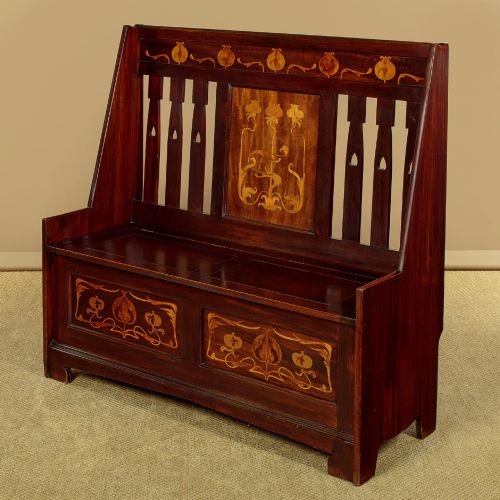
- A high-backed wooden seat incorporating a concealed storage compartment beneath the hinged lid. Examples from this group reflect Arts and Crafts influences.
Edwardian Inlaid Bench: Frequently Asked Questions
Where should I place an edwardian inlaid bench?
These pieces suit entrance halls, foot-of-the-bed positions in bedrooms, or traditional parlour settings where their decorative woodwork remains visible. Their compact proportions allow them to fit well against narrow walls or beneath windows.
Avoid placing them in areas subject to direct sunlight or damp conditions, as temperature fluctuations can damage the delicate satinwood and boxwood inlays over time.
How do I care for the inlaid woodwork?
Dust the timber regularly with a soft, dry cloth to prevent dirt accumulation in the recessed channels of the inlay. Keep the wood nourished with appropriate natural wax rather than modern silicone polishes.
Ensure the room maintains a stable humidity level to prevent the mahogany or rosewood from drying out and causing the veneer to lift.
Are these benches comfortable for daily use?
Many examples are designed with padded seats covered in fabric, velvet, or damask, offering moderate comfort for short periods. Parlour settees and window seats were originally built for formal sitting rather than heavy lounging.
Some pieces require re-upholstery to restore the internal padding and ensure supportive seating for regular use.
How do I distinguish Edwardian from Victorian pieces?
Edwardian items tend to feature lighter mahogany frames, delicate satinwood inlay, and brighter Sheraton Revival motifs. Victorian pieces generally present heavier proportions, darker rosewood or mahogany timbers, and more robust ornamentation.
Stylistic overlaps occur frequently in transitional pieces produced near the turn of the twentieth century.