


Edwardian Howard Style Chair
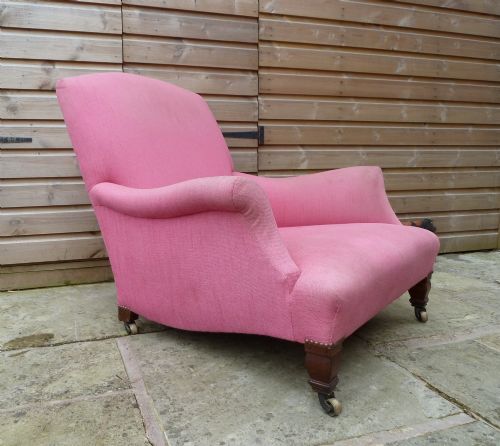
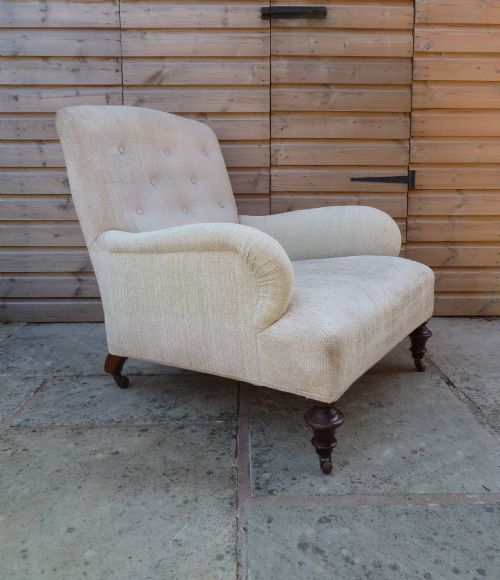
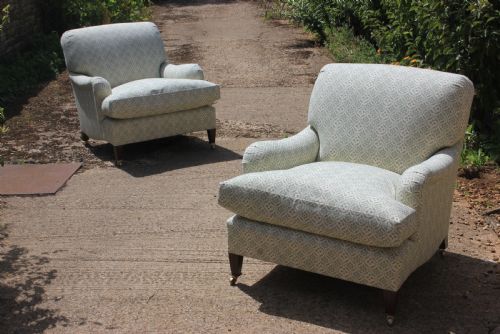
An edwardian howard style chair delivers deep-seated comfort through generous proportions and traditional upholstery.
Edwardian Howard Style Chair
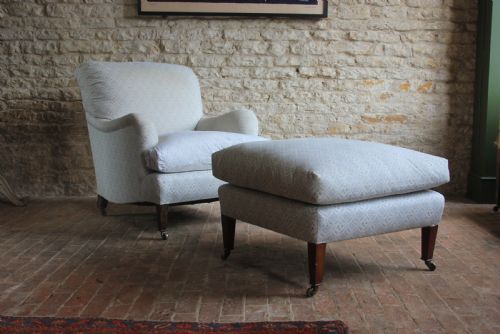
The form prioritises sink-in depth and supportive sprung seats, often accompanied by low wooden legs. Pieces range from open armchair designs to large club chairs and matching footstools. These chairs established a benchmark for domestic seating comfort that endures across different decades.
How they were made
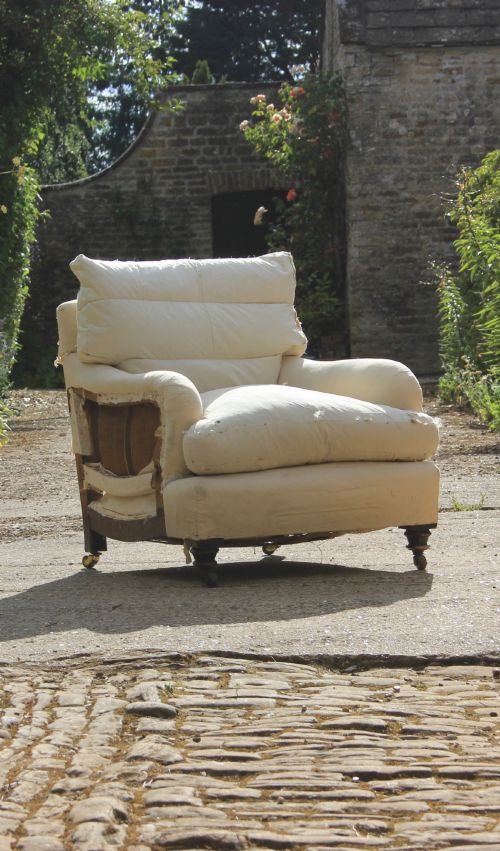
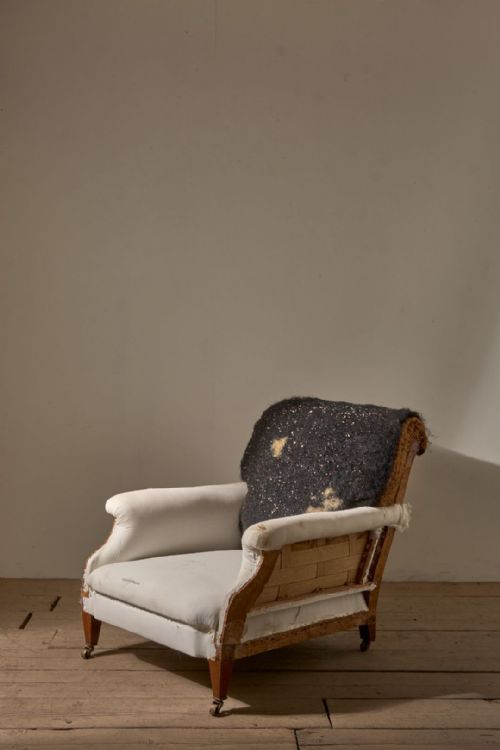
Makers built these frames using hardwoods such as mahogany and walnut, ensuring structural integrity beneath the padding. Traditional upholstery methods relied on internal springs, calico, and hessian to create resilient support before applying the outer covering.
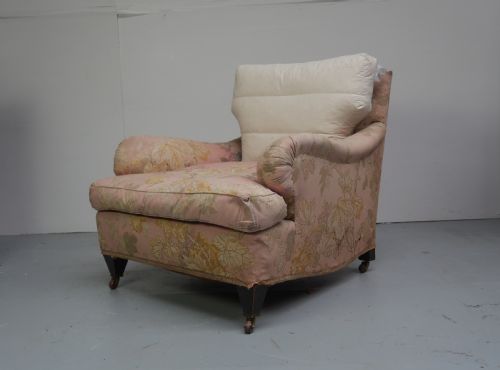
Outer coverings span various materials including patterned fabric, ticking, velvet, and specialised carpets such as Ushak Turkey carpet. Exposed timber elements appear on legs, frequently finished with brass castors.
Some armchairs arrived upholstered in repurposed Ushak Turkey carpets, proving that nineteenth-century lounging could double as exotic floor art.
What varies in quality
The distinction in these chairs lies in the integrity of the internal stuffing and the responsiveness of the sprung foundation. Substantial frames paired with resilient traditional stuffing retain their shape and comfort far better over decades of use.
Finishing details also separate examples, from the weight and weave of the chosen fabric to the turning of the wooden legs and the quality of the brass hardware. Authenticity of period materials contributes significantly to the character of each piece.
Howard and Sons·SF Cullen·Robert Strahan·Trollope and Sons
The Edwardian Howard Style Chair Glossary
- Calico
- A plain-woven cotton fabric used historically as the inner lining or foundation layer beneath outer upholstery. It provides a tight base to hold traditional stuffing materials securely in place.
- Hessian
- A coarse woven fabric, often made from jute fibres, utilised in traditional upholstery for webbing and spring containment. It offers the structural strength required beneath deep seat cushions.
- Bridgewater
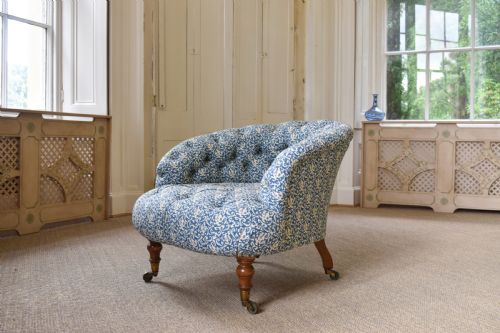
- A classic armchair design characterised by low rolled arms and deep seating proportions. This form forms a cornerstone of English country house seating styles.
- Ticking
- A tightly woven, durable cotton fabric traditionally striped in blue and white or neutral tones. Makers utilised it as a robust outer or inner cover for utilitarian comfort.
- Tub Chair
- An upholstered seating form featuring a rounded back that curves continuously into low arms. This compact shape offers enclosed support while maintaining a modest footprint.
Edwardian Howard Style Chair: Frequently Asked Questions
What defines an edwardian howard style chair?
These pieces are defined by low profiles, deep seats, and rolled arms designed specifically for lounging. They combine robust internal framing with traditional sprung upholstery.
Makers upholstered them in durable fabrics like ticking, velvet, or patterned textiles, often mounted on low wooden legs with brass castors.
How do I identify a period piece?
Period identification relies on examining the framing timbers, construction methods, and internal upholstery materials. Edwardian examples often feature specific proportions and fabric choices characteristic of the early twentieth century.
Signatures or stamps on the wooden frame or castors can also help confirm the maker and approximate age of the armchair.
Were these chairs used in country houses?
They were staple furnishings in British country houses, selected for their emphasis on relaxation and unpretentious comfort. Drawing rooms and libraries frequently featured multiple chairs arranged around fireplaces.
Their generous dimensions made them ideal for prolonged reading or resting during country house weekends.
What fabrics were used originally?
Original upholstery varied from utilitarian striped ticking and plain calico to luxurious gold or pink velvet. Some bespoke pieces incorporated decorative carpets or heavy patterned fabrics.
Many surviving examples retain or have been restored using traditional textiles that reflect their original aesthetic.