
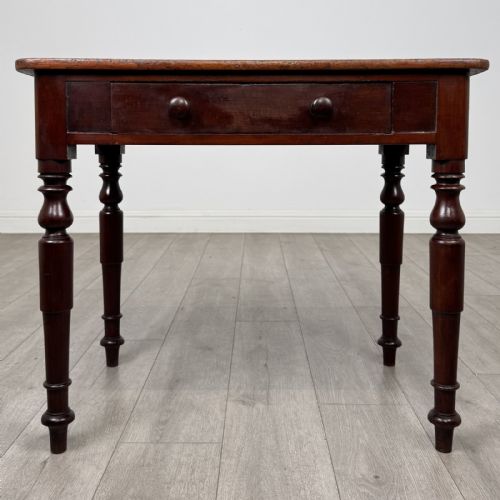
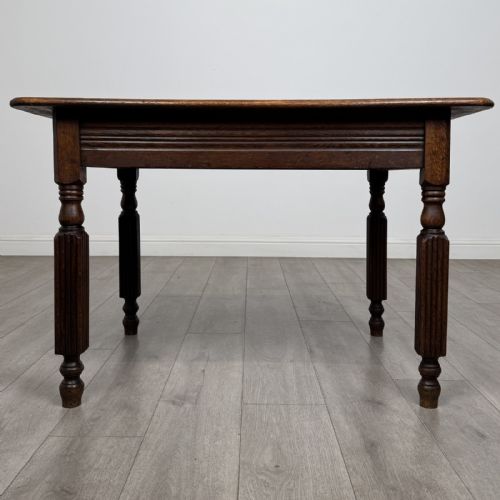
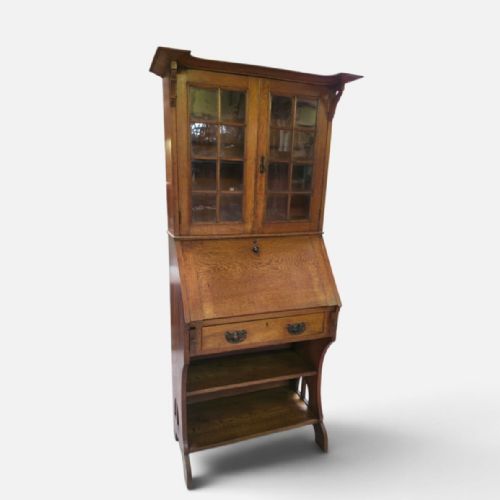
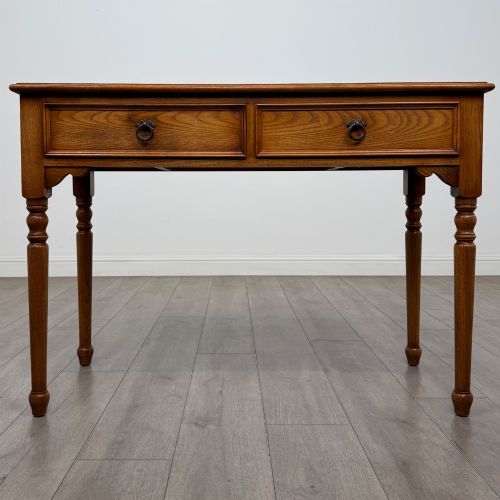
Edwardian Home Office Desk
An edwardian home office desk brings working practicality and refined period timber into daily use.
Edwardian Home Office Desk
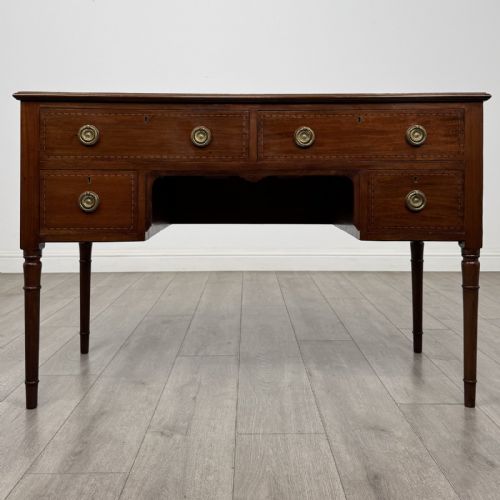
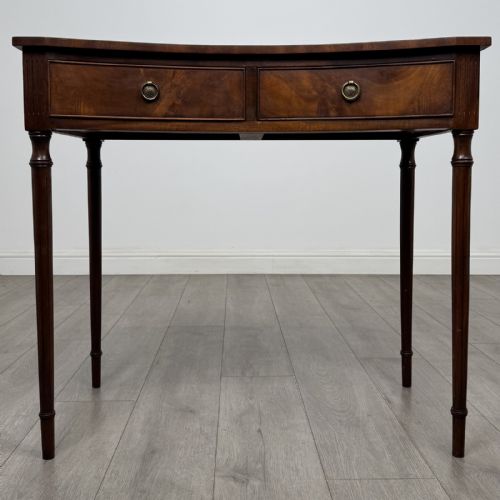
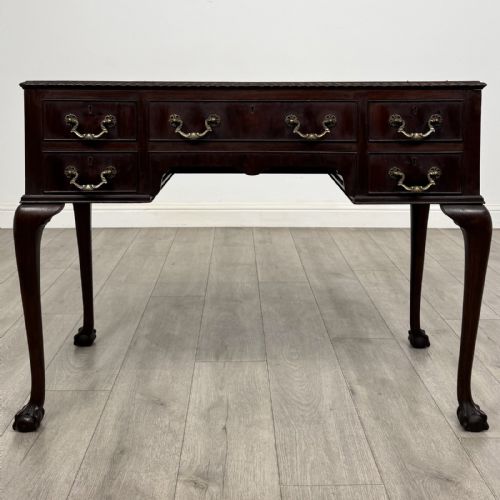
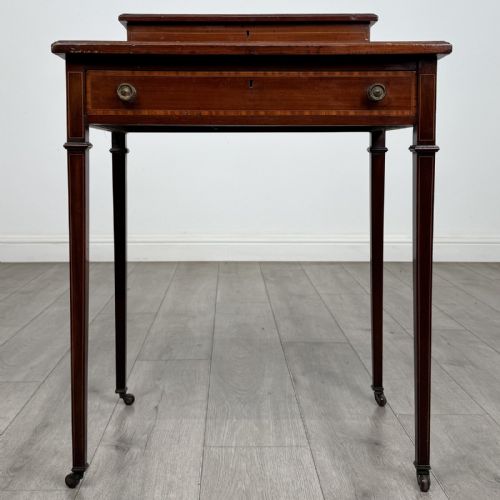
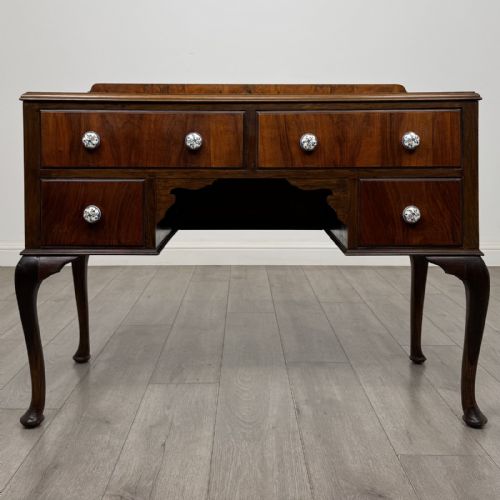
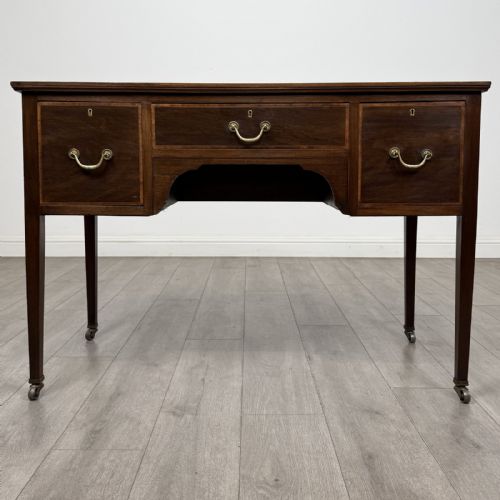
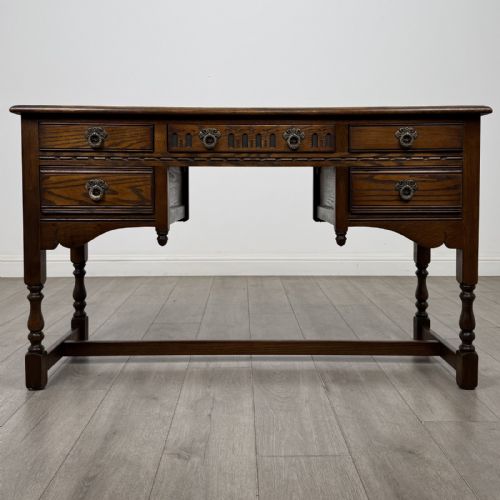
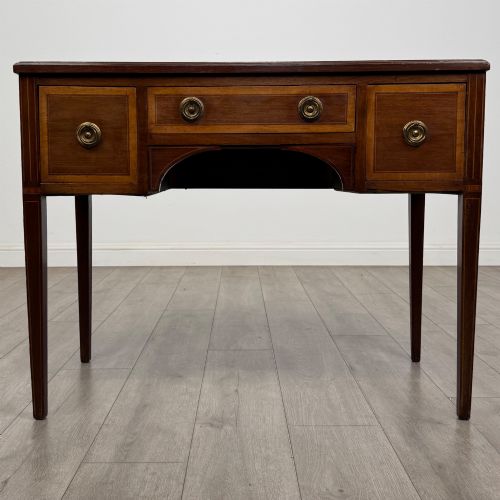
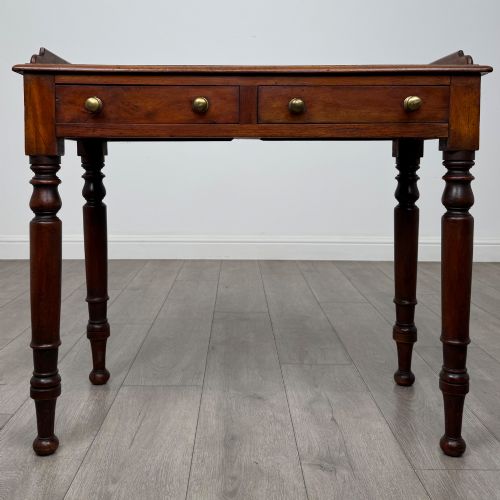
The edwardian home office desk encompasses writing tables, pedestal desks, bureaux, and roll top formats originating primarily around the turn of the twentieth century. These pieces reflect the domestic study furniture of the period, ranging from compact kneehole variants to large double-pedestal timber workstations.
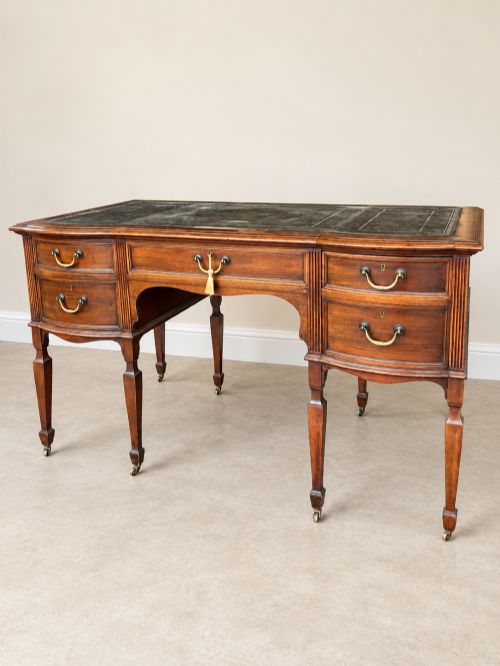
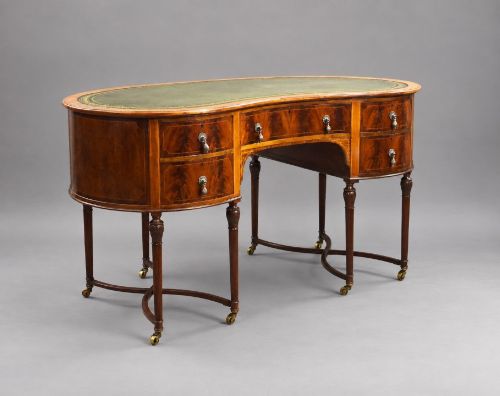
Most examples encountered carry Edwardian or early twentieth-century dates, though Victorian and revival styles such as Sheraton, Georgian, and Arts & Crafts frequently appear. Makers construct these workspaces in diverse shapes including kidney forms, cylinder tops, and traditional rectangular writing surfaces.
Materials and Construction
Cabinet makers utilised dense hardwoods such as mahogany, oak, and walnut, frequently enhancing surfaces with burr walnut or satinwood inlay and brass hardware. Leather inserts often line the writing surfaces, providing a durable and traditional texture for daily correspondence.
Joinery techniques span solid timber construction and detailed marquetry, with specific pieces incorporating tambour shutters, galleries, and structured drawer pedestals. Workshops paired sturdy internal oak or mahogany framing with figured outer veneers to balance structural integrity with decorative presentation.
The furniture spans multiple revival movements, including Sheraton, Georgian, Queen Anne, and Jacobean styles.
Quality and Distinction
Distinction rests in the selection of timbers, such as figured mahogany or burr walnut, and the precision of inlaid satinwood details and marquetry. Superior examples retain original brass handles and fitted leather writing surfaces rather than modern replacements.
Structural complexity also defines the grade of a piece, separating simpler oak writing tables from elaborately carved bureau cabinets, roll top desks, and kidney-shaped forms produced by notable cabinet makers.
Edwards & Roberts·Wylie & Lochhead Glasgow·Maple & Co·Wolfe & Hollander·Jenners
The Edwardian Home Office Desk Glossary
- Pedestal desk
- A heavy freestanding desk comprising two supporting banks of drawers beneath a central writing surface. These heavy pieces provide substantial storage capacity.
- Carlton house desk
- A fitted writing desk with a curved superstructure of small drawers and compartments enclosing the writing surface. This refined form appeared frequently during revival periods.
- Kidney desk
- A writing table shaped with a curved, crescent-like front resembling a kidney bean. This graceful design allows the user to sit closer to the central drawers.
- Bureau
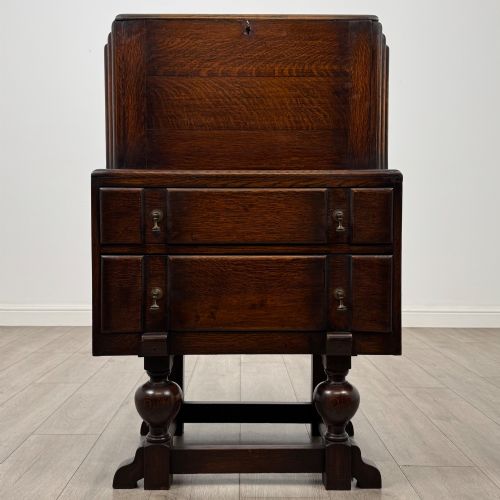
- A desk featuring a sloping hinged lid that drops down to reveal a fitted interior of pigeonholes and small drawers. They offer a compact workspace that conceals correspondence when closed.
- Tambour
- A flexible sliding shutter formed of narrow vertical strips of wood glued to canvas, used to enclose the upper section of cylinder desks. It glides smoothly along a track to secure the workspace.
Edwardian Home Office Desk: Frequently Asked Questions
What is an edwardian home office desk?
An edwardian home office desk is a traditional timber writing table or pedestal unit produced around the early twentieth century. These pieces served domestic correspondence and study needs before modern office furniture standardisation.
They combine period craftsmanship with practical drawer storage and writing surfaces, utilising woods like mahogany, oak, and walnut.
How do I identify an Edwardian desk?
Edwardian desks typically date between eighteen-ninety and nineteen-ten, often displaying lighter timber tones, satinwood inlay, or revival influences such as Sheraton and Arts & Crafts. Construction details include dovetailed drawer joints and period brass hardware.
Many examples bear maker stamps or labels inside the drawers from prominent London and Scottish cabinet houses of the era.
Are roll top desks practical for daily use?
Roll top desks offer exceptional storage and organisation through multiple internal pigeonholes, small drawers, and a lockable tambour shutter. The sliding shutter lets you conceal paperwork instantly.
They provide a generous writing surface while keeping stationery and reference materials contained within the upper cabinet structure.
How do I care for a leather desk top?
Leather desk inserts require gentle cleaning with a slightly damp cloth and occasional treatment with specialist leather balms to prevent drying. Avoid harsh chemical cleaners and excessive moisture.
Using blotters or pads when writing helps protect the historic leather surface from ink stains and deep impressions.