




Edwardian Hollowware
Edwardian hollowware encompasses domestic vessels and tableware in sterling silver and silver plate, prized for elevating formal dining and tea service.
Edwardian Hollowware
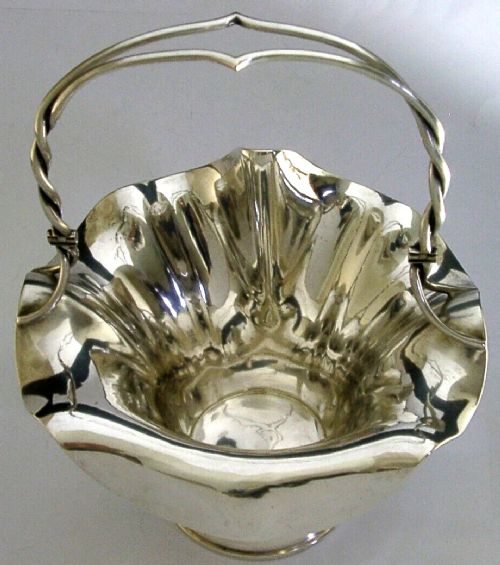
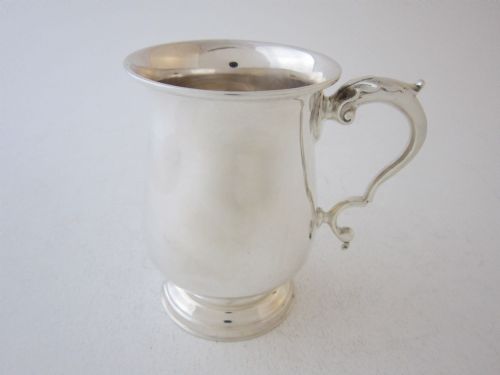
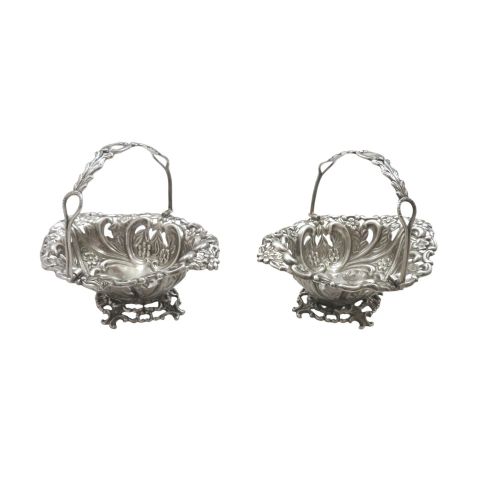
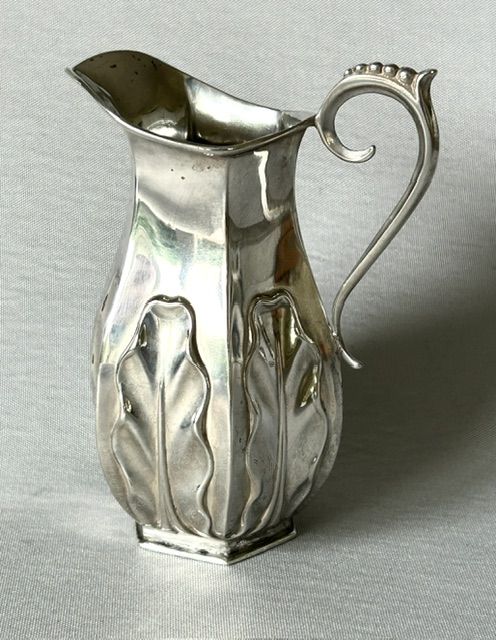
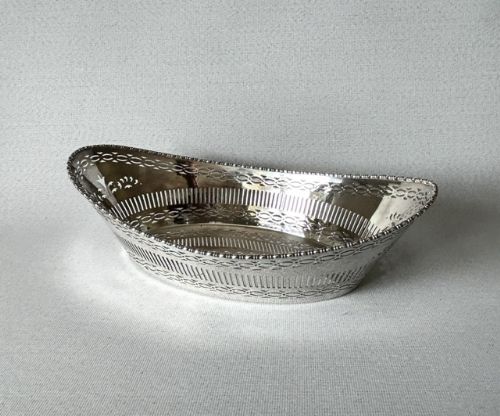
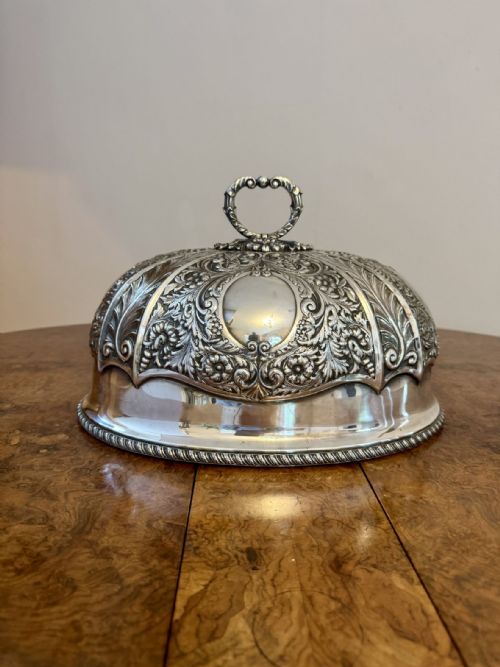
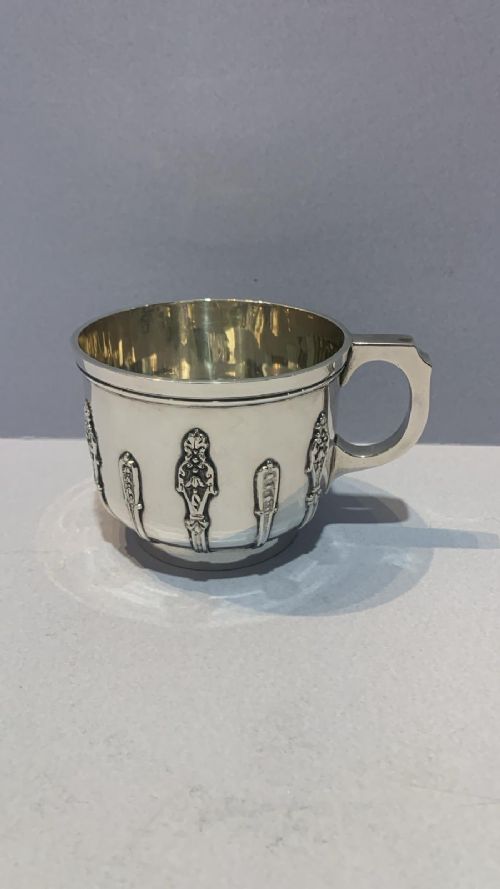
Edwardian hollowware covers a diverse domestic array ranging from tea caddies and cream jugs to biscuit barrels, christening mugs, and baskets and bowls. When browsing edwardian hollowware, a buyer encounters pieces intended for the dining table, sideboard, or nursery, largely spanning the Edwardian period alongside late Victorian and George V examples.
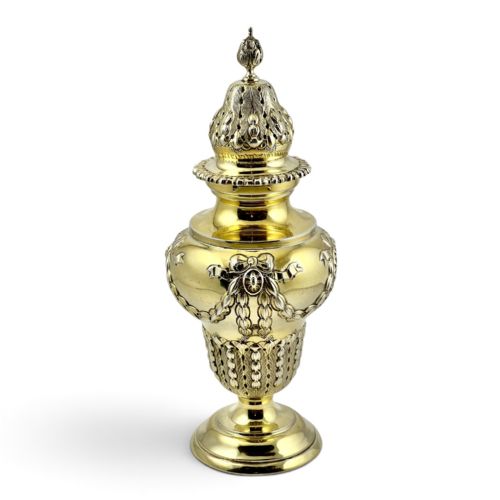
The assortment includes utilitarian serveware alongside decorative pieces like sugar casters, asparagus serving dishes, and entree dishes. Silver-plated items appear frequently alongside solid sterling silver counterparts, sometimes enhanced with cut glass or ebony details.
Forms often reflect contemporary design movements such as Art Nouveau and Arts and Crafts, bringing flowing organic lines or hand-hammered surfaces to everyday vessels like chocolate pots and porringers.
Materials and construction
Makers utilised sterling silver and electroplated nickel silver (EPNS) to form the durable bodies of these vessels. Hammering techniques created textured surfaces on Arts and Crafts pieces, while others relied on smooth rolled plate or cast components.
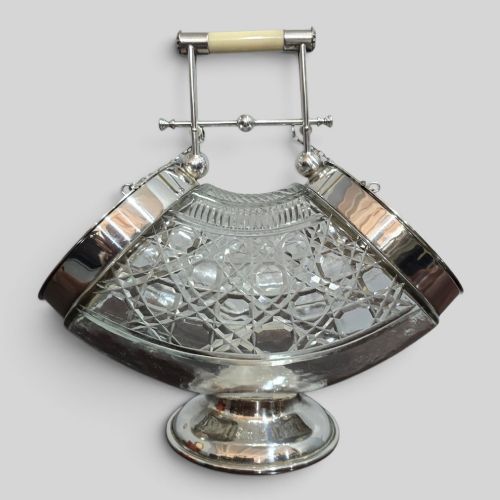
Cut glass formed the body of items like biscuit barrels, mounted with silver collars and lids. Handles occasionally incorporated organic materials like ebony, and decorative finishes involved hand-engraving, applied floral motifs, or silver-gilt interiors.
Listings for edwardian hollowware incorporate pieces spanning the late Victorian era through to the George V period.
Assessing quality
The calibre of edwardian hollowware rests on the weight of the metal and the crispness of any chased or hand-engraved details. Heavier gauge silver and substantial silver plate withstand daily use better and retain sharper decorative lines.
Design ambition distinguishes standard production from exceptional work, seen in the fluency of Art Nouveau botanical motifs or the balanced proportions of chocolate pots and tea sets. Maker attribution also plays a role, with established firms achieving more refined finishes.
Charles Edwards·Mappin and Webb·Thomas Bradbury
The Edwardian Hollowware Glossary
- Hollowware
- Tableware and vessels such as pots, jugs, baskets, and bowls that possess volume, as distinguished from flatware.
- EPNS
- Electroplated nickel silver, a common base metal method utilised for durable silver-plated vessels.
- Porringer
- A small bowl with one or two horizontal handles, frequently utilised as a christening gift.
- Caster
- A small vessel with a perforated lid designed for sprinkling sugar or spices.
- Silver-gilt
- Sterling silver that has been coated with a thin layer of gold on the interior or exterior surface.
Edwardian Hollowware: Frequently Asked Questions
What is edwardian hollowware?
Edwardian hollowware refers to hollow vessels and tableware produced during the early twentieth century, encompassing items for dining, tea service, and decorative display.
These pieces range from silver-plated tea sets and entree dishes to solid sterling silver baskets, cream jugs, and christening mugs.
How do I clean silver plate?
Silver plate requires gentle cleaning with a specialised non-abrasive silver polish to maintain the protective plating over the base metal.
Avoid harsh scrubbing or soaking, which can wear away thin plating and damage organic handles made of materials like ebony.
How do I date these items?
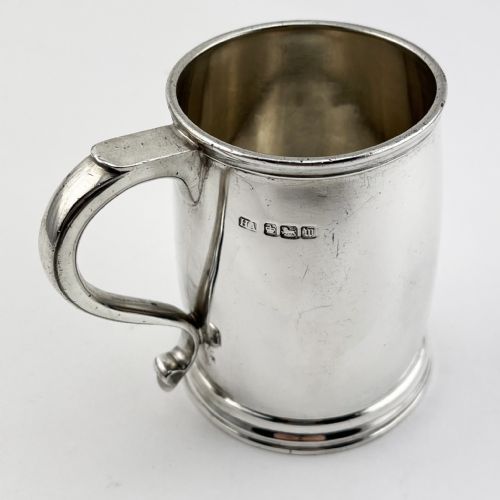
Dating relies heavily on hallmarks stamped into the metal on sterling silver pieces, which indicate the assay office and year of manufacture.
Stylistic cues such as Art Nouveau sweeping curves or Arts and Crafts hammering also help narrow down the period when hallmarks are absent or faint.
How were tea sets used?
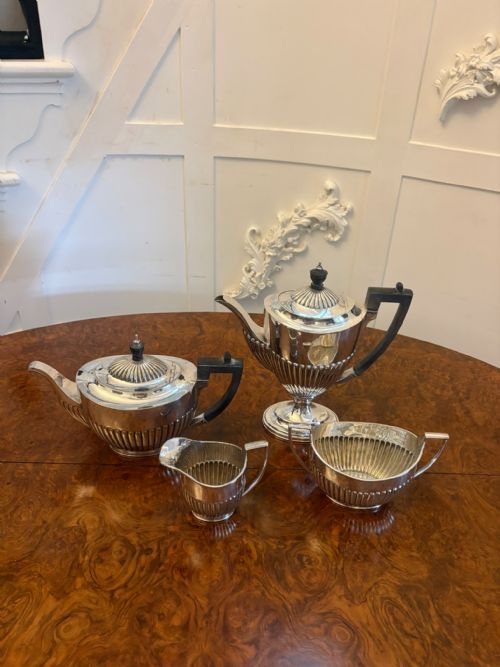
Edwardian tea sets were utilised for formal afternoon tea service in domestic households, centred around a teapot accompanied by matching cream jugs and sugar bowls.
They served both a practical function for hosting guests and a decorative purpose on sideboards and tea tables.