
Edwardian Heart Padlock
An edwardian heart padlock is a sentimental fastening found on period bracelets and pendants, prized for its romantic symbolism and secure clasp mechanism.
Edwardian Heart Padlock
When you search for an edwardian heart padlock, you encounter small mechanical clasps designed to secure charm bracelets or function as pendants. These pieces originate primarily from the early twentieth century, spanning the Victorian and Edwardian eras up to the nineteen twenties.
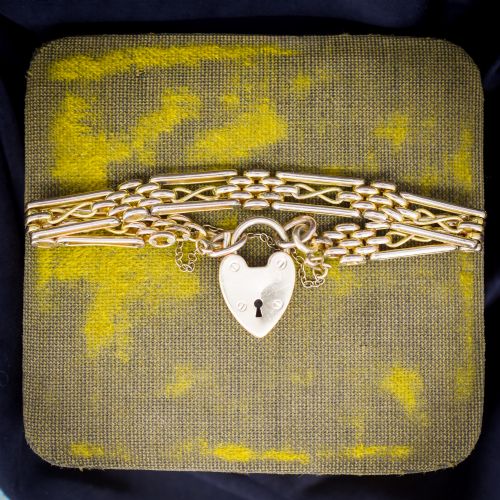
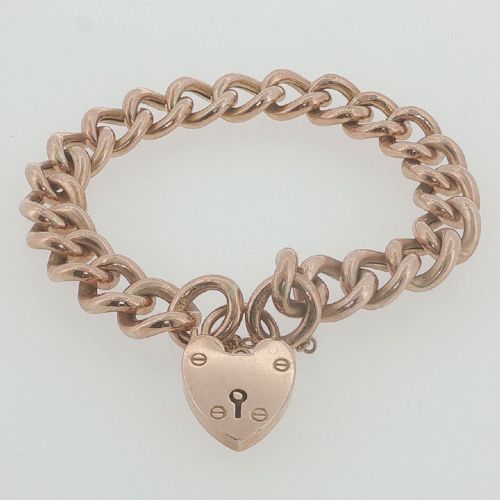
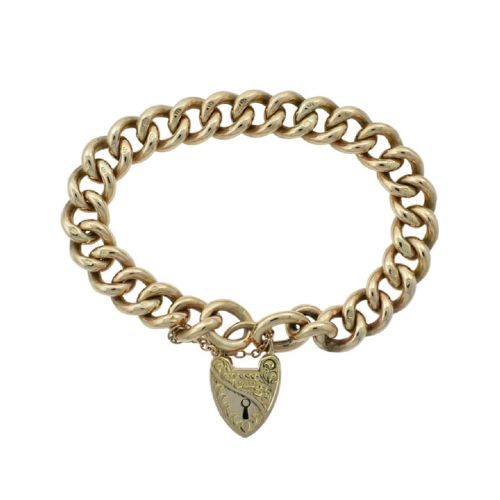
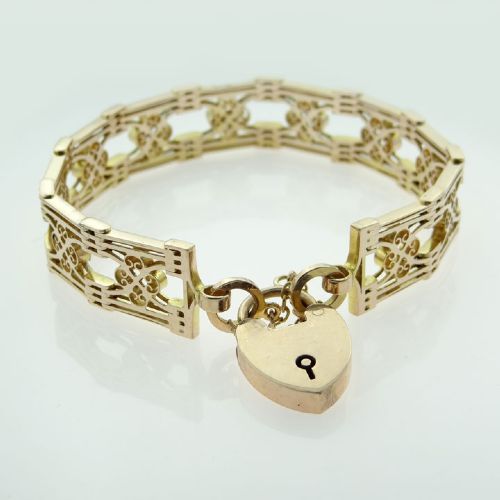
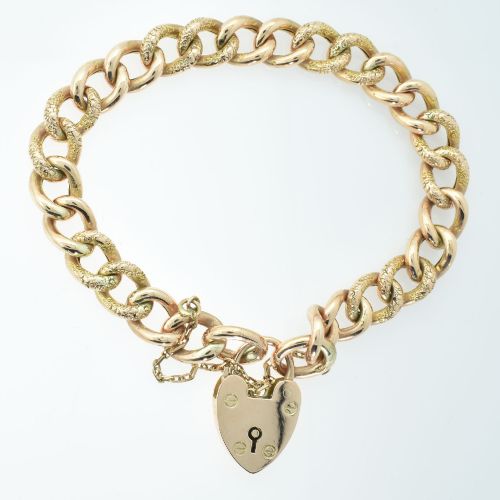
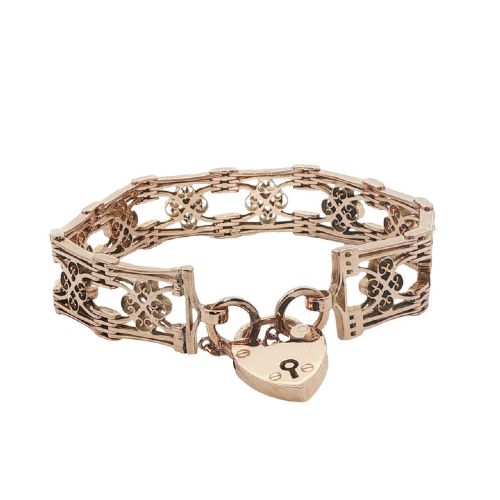
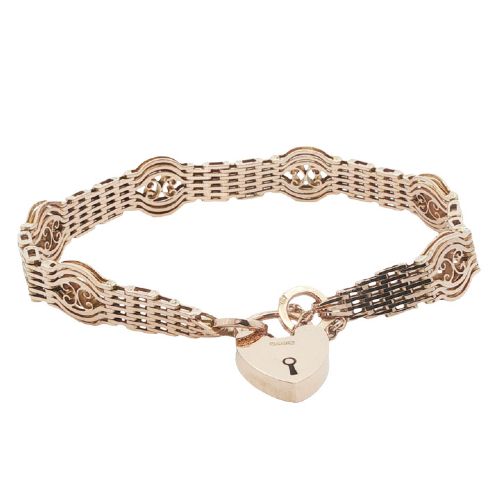
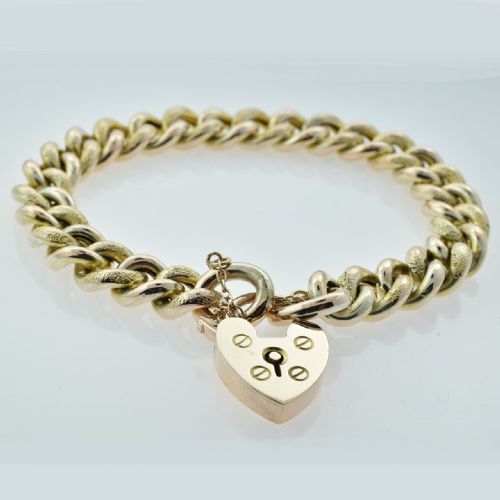
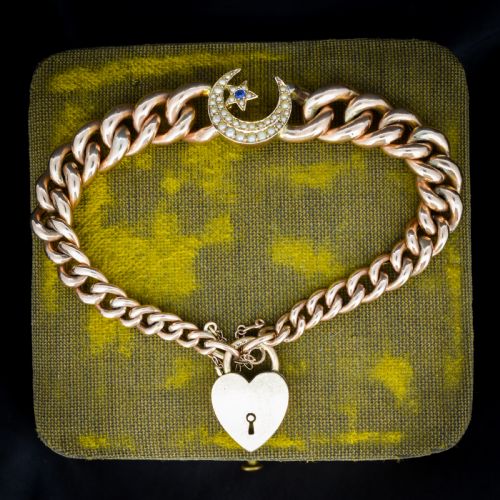
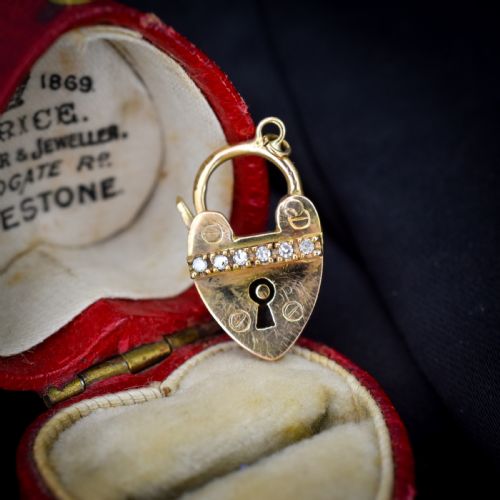
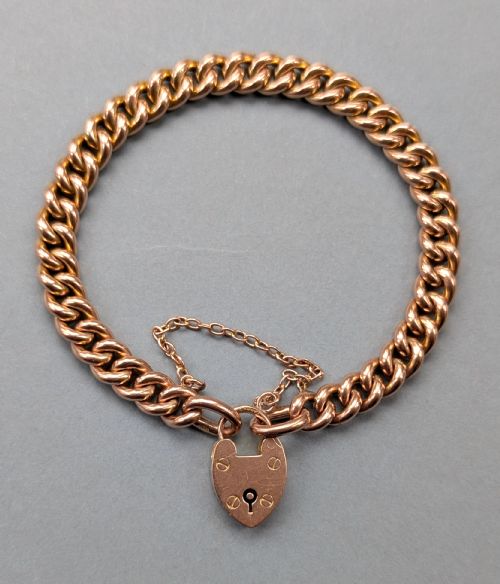
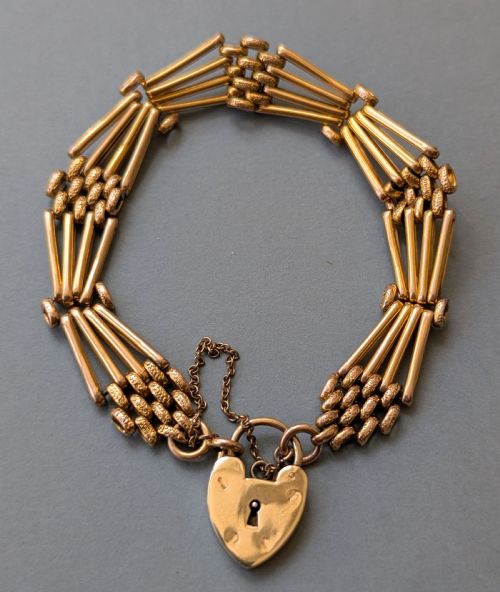
The most common form on this page is the 9ct rose gold curb or gate link bracelet fitted with a functional heart-shaped lock. These items combine practical jewellery fastening with decorative symbolism, often featuring engraved surfaces or gemstone accents.
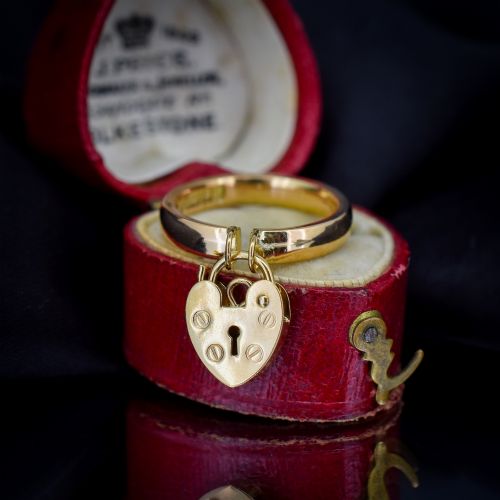
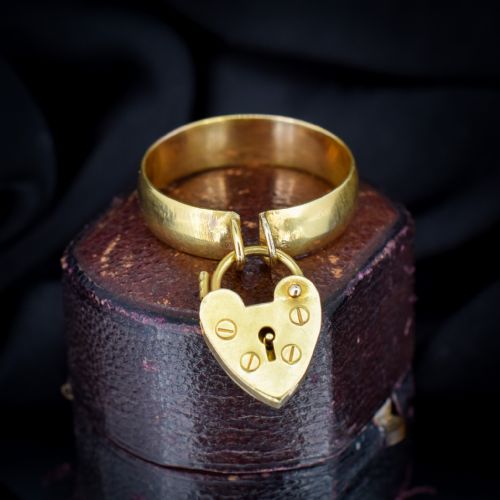
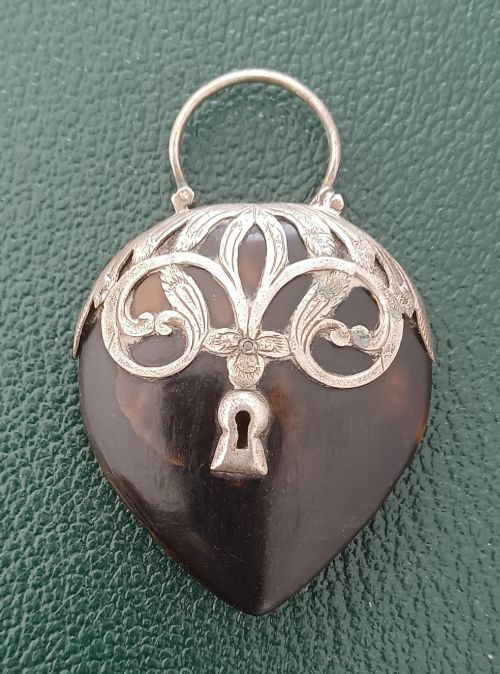
Variants include standalone charms, pendants, and rings incorporating the distinctive heart shape. Materials range from solid 9ct yellow and rose gold to rolled gold, occasionally set with seed pearls, diamonds, amethysts, opals, or tortoiseshell.
Materials and construction
Makers utilised 9ct gold in both yellow and rose hues, shaping metal into hollow or solid curb links, gate links, and fetter trombone chains. Many pieces incorporate hand-engraved scrollwork or half-engraved surface patterns.
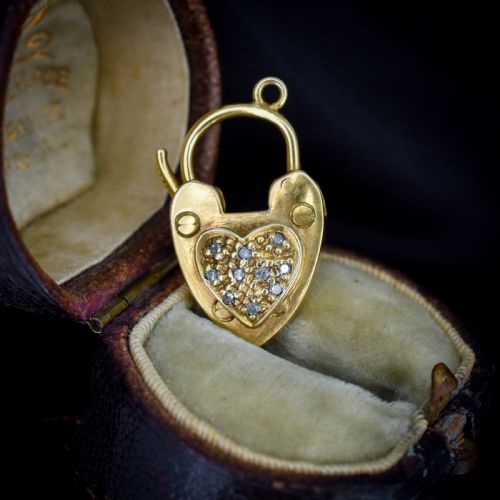
Gemstones such as seed pearls and amethysts are flush or bezel set into the gold body, while diamonds accent specific padlock charms and lock faces. Silver mounting appears alongside tortoiseshell in specialised pendant forms, and hallmarks indicate regional assay offices.
Listings demonstrate that 9ct rose gold dominates the material selection for edwardian heart padlock bracelets, accompanied by sporadic examples in silver and rolled gold.
Assessing quality and craftsmanship
Quality in these items rests on the weight of the gold and the crispness of the hand engraving. Substantial gauge links and heavy padlock bodies demonstrate superior manufacturing compared to lighter, hollow stamped alternatives.
The integrity of the internal spring mechanism inside the heart padlock determines its functional longevity. Clear assay office hallmarks and legible date letters also elevate the standing of an individual piece.
The Edwardian Heart Padlock Glossary
- Curb link
- A type of chain made of uniform interlocking links that lie flat. This style forms the foundation for many period bracelets.
- Gate bracelet
- A linked bracelet constructed from vertical bars joined by rings, resembling a small garden gate. These frequently hold a heart padlock clasp.
- Rolled gold
- A material formed by bonding a thin sheet of gold to a base metal core. This technique provided the appearance of solid gold at a lower cost.
- Seed pearl
- A very small natural or cultured pearl used in clusters or crescents. They decorate the surface of Edwardian pendants and rings.
- Hallmark
- An official stamp applied to precious metals indicating purity and origin. British pieces often show city marks and date letters.
Edwardian Heart Padlock: Frequently Asked Questions
What is an edwardian heart padlock?
An edwardian heart padlock is a small mechanical clasp shaped like a heart, originally used to secure charm bracelets during the early twentieth century. These objects served both a functional purpose as a clasp and a sentimental function as a token of affection.
Today, they are collected both attached to their original chains and as standalone pendants or charms. Their enduring appeal lies in their combination of mechanical ingenuity and romantic design.
How do you open an edwardian heart padlock?
Most edwardian heart padlocks open by pressing a small hidden spring-loaded lever or by depressing the hinged bail. The mechanism relies on internal tension to snap shut securely once aligned.
Wearers should handle these clasps with care to avoid stressing the vintage hinge or spring. Testing the movement gently reveals how each unique lock operates.
Were these padlocks always functional?
Yes, the majority of these heart padlocks were fully working clasps designed to hold heavy gold bracelets together. They required a secure snap closure to ensure the valuable jewellery remained fastened around the wrist.
Some examples transitioned into decorative pendants or charms where the locking mechanism remained intact. Over time, use can weaken the internal spring, altering how firmly the lock closes.
What metals are most common?
The primary metal found in these listings is 9ct gold, frequently seen in a warm rose coloration characteristic of the era. Rolled gold also appears as a durable alternative for buyers seeking a golden appearance without solid precious metal weight.
Silver is occasionally utilised, sometimes paired with organic materials like tortoiseshell. Hallmarks stamped directly onto the metal help identify the specific alloy and year of creation.