



Antique Padlock Clasp
An antique padlock clasp secures a Victorian or Edwardian bracelet with the solid weight and mechanical snap that modern metalwork lacks.
Antique Padlock Clasp
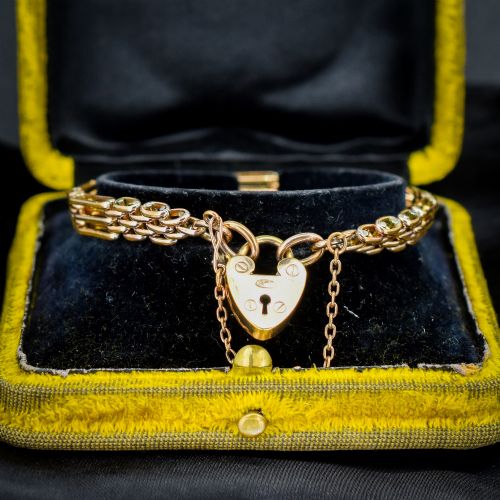
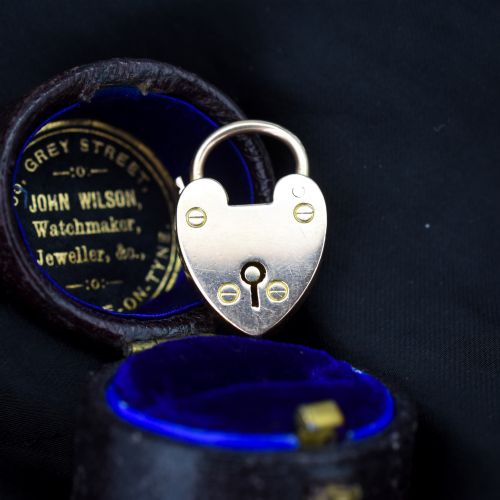
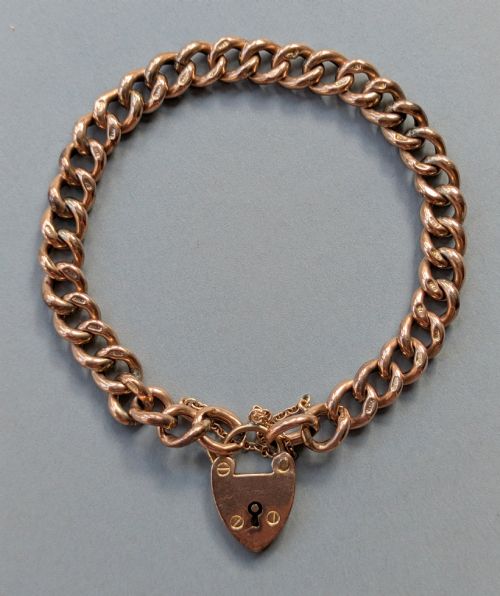
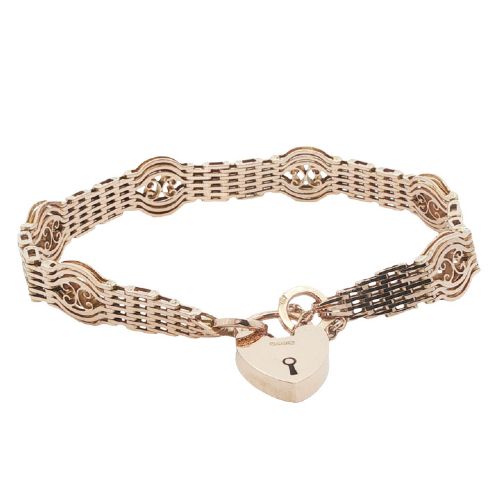
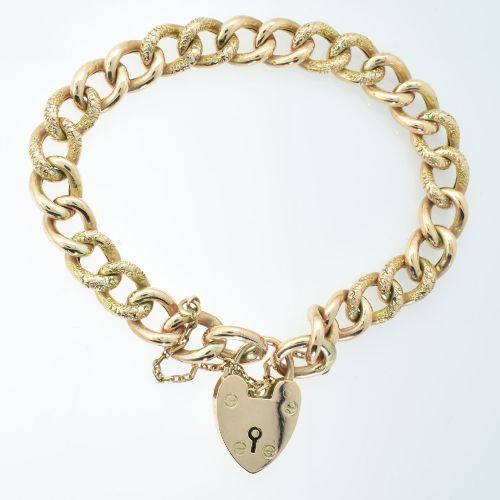
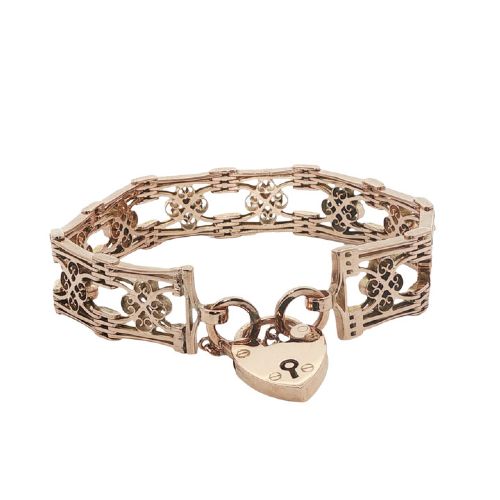
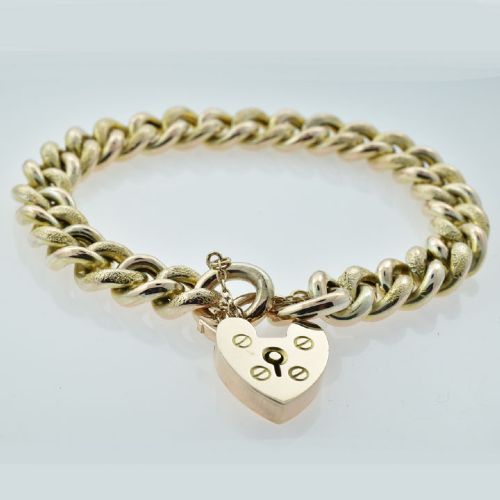
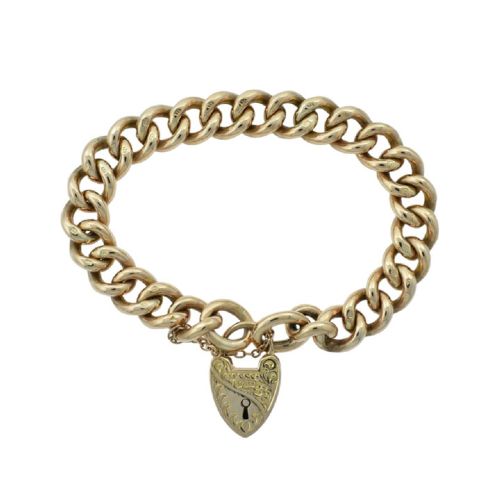
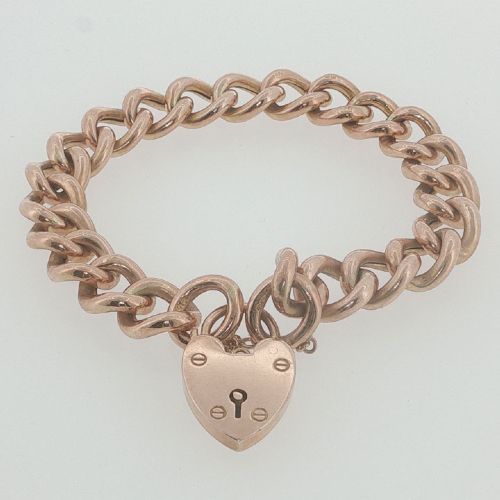
When you search for an antique padlock clasp, you encounter small mechanical closures shaped primarily as hearts, designed to secure curb link and gate bracelets. These items appear across Victorian, Edwardian, and later twentieth-century periods, showing how functional hardware evolved into decorative jewellery charms and pendants.
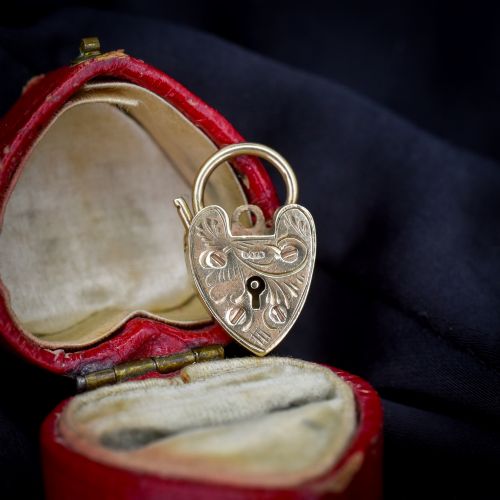
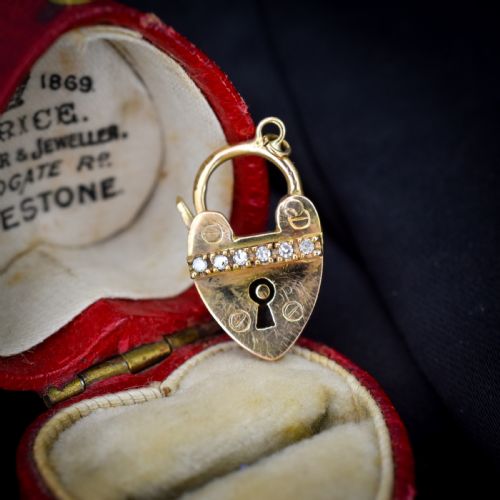
The pieces on this page are most frequently found attached to heavy 9ct rose gold or yellow gold link bracelets, or worn separately as pendants. You will discover both plain polished hearts and elaborately engraved versions, occasionally set with small diamonds, rubies, or pearls.
Origins span from the late nineteenth century through to the Edwardian era and mid-century revivals. Each specimen demonstrates the practical security measures of past decades transformed into wearable ornaments.
Materials and construction
These items rely heavily on 9ct gold in rose and yellow hues, shaped into sturdy link chains, gate bracelets, and hollow or solid heart forms. The metal provides both the structural integrity needed for daily wear and the warm tone characteristic of the era.
Surface decoration involves hand engraving, chased scrollwork, and flush or star-set gemstones including pearls, rubies, and diamonds. Internal steel springs provide the snap action that keeps the clasp securely fastened to the bracelet loop.
Antique Padlock Clasp Retail Price Guide 2026
Typical asking prices for padlock clasp among the pieces listed under this phrase on Sellingantiques today, from the lower quarter to the upper quarter. They describe what is for sale here now, not the wider market.
Listings span the Victorian and Edwardian periods alongside mid-century pieces, constructed almost entirely in 9ct rose and yellow gold.
Markers of quality
The distinction between average and exceptional examples lies in the crispness of the hand engraving and the strength of the internal spring mechanism. A superior padlock clasp snaps shut with a distinct, firm click and retains its original tension without looseness.
Weight and metal gauge also dictate quality, as thicker gold walls resist denting and wear much better over decades of use. Furthermore, pieces that incorporate genuine gemstones like rubies and pearls or feature detailed chased motifs command greater appreciation than plain, machine-stamped variations.
The Antique Padlock Clasp Glossary
- Padlock clasp
- A small, functional fastening device shaped like a padlock, frequently configured as a heart to secure Victorian and Edwardian bracelets. It serves both a mechanical and decorative purpose.
- Gate bracelet
- A distinctive style of bracelet constructed from parallel bars linked together, frequently finished with a heart padlock clasp. This design originated in the Victorian period and remained popular through the Edwardian era.
- Curb link
- A type of chain made of interlocking, slightly flattened links that lie flat against the wrist. These chains frequently accompany antique padlock clasps.
- Rose gold
- A gold and copper alloy creating a warm, reddish tint that dominated Victorian and Edwardian jewellery manufacture. It forms the primary metal body for most items listed here.
- Chased
- A metalworking technique where patterns are hammered into the front surface of the gold using steel punches rather than removing metal by engraving.
Antique Padlock Clasp: Frequently Asked Questions
How do I open an antique padlock clasp?
Most padlocks of this era operate with a small push-button or a hinged arm that releases the spring-loaded loop when pressed correctly. You should handle them gently to avoid straining the historic metal.
Inspect the side or base of the heart shape for a small concealed hinge or catch mechanism before applying any pressure.
Can I wear a padlock clasp on a chain?
These clasps easily detach from bracelets and slide directly onto fine or heavy chains to be worn as pendants. Many period pieces were designed to serve double duty in this manner.
Ensure the jump ring or bail connecting the clasp to the chain is secure enough to support the weight of the gold.
How do I date an antique padlock clasp?
Dating relies heavily on hallmarks, the style of the engraving, and the structural form of the links attached to the padlock. Victorian pieces often display heavier chasing, while Edwardian versions lean towards lighter, symmetrical ornamentation.
Checking for stamped date letters or maker marks inside the loop provides the most accurate chronological placement.
Are these clasps secure for daily wear?
The internal steel springs generally maintain their tension well, but centuries of use can weaken the mechanism. It is wise to test the snap thoroughly before trusting it on a valuable bracelet.
Take the piece to a jeweller if the spring feels loose, as they can often adjust the internal components without altering the exterior.