

Edwardian Hat Stand
When searching for an edwardian hat stand, expect sturdy hallway furniture designed to organise outerwear and accessories.
Edwardian Hat Stand
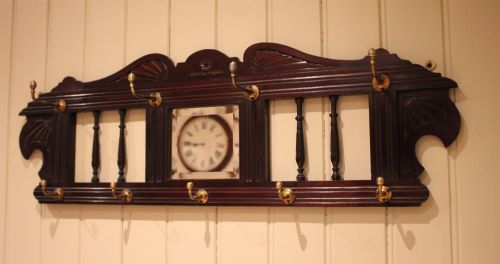
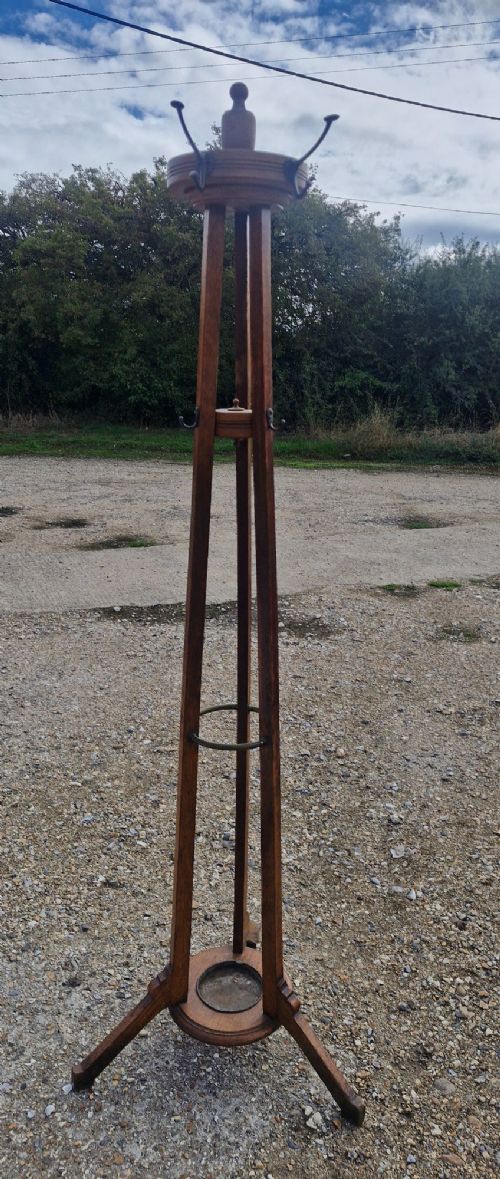
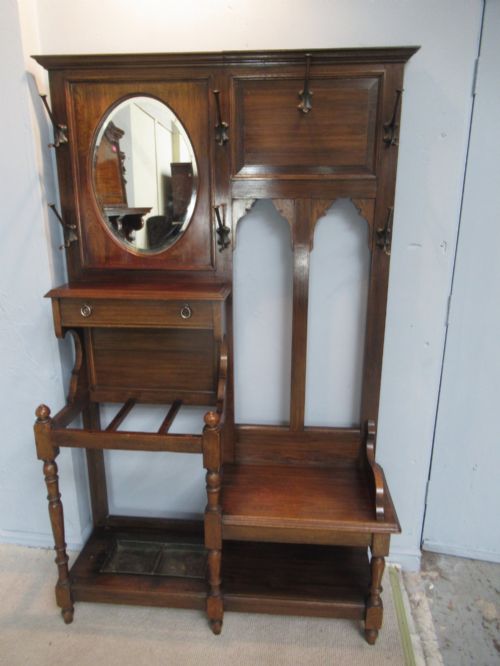
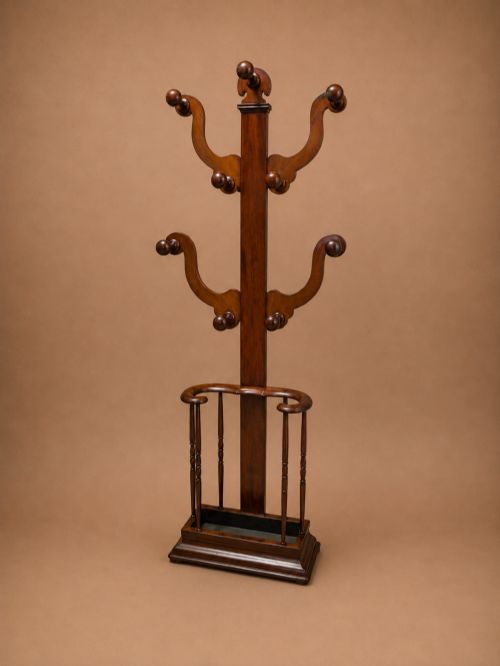
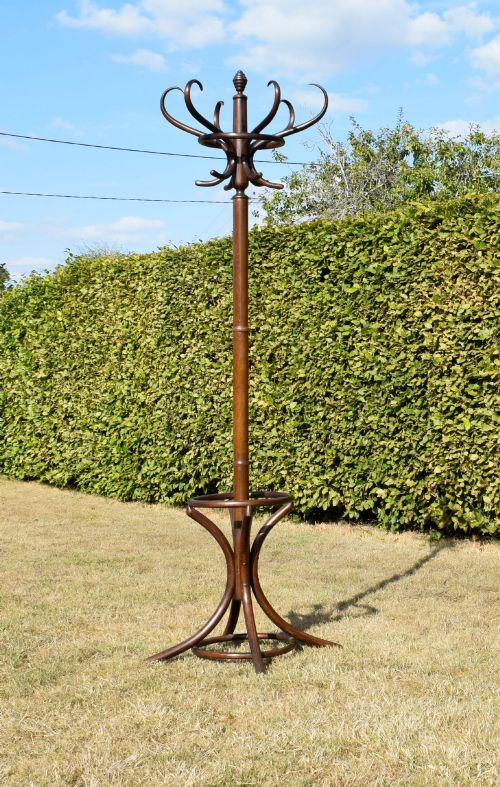
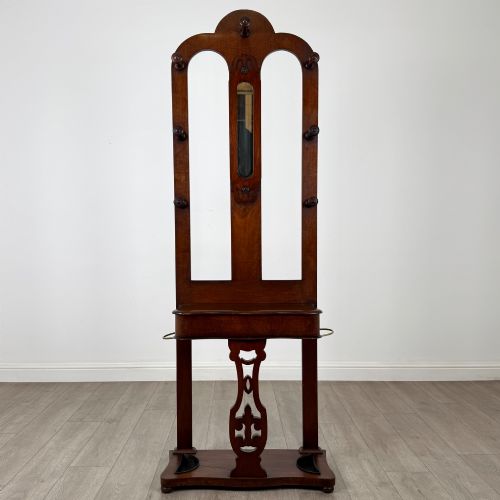
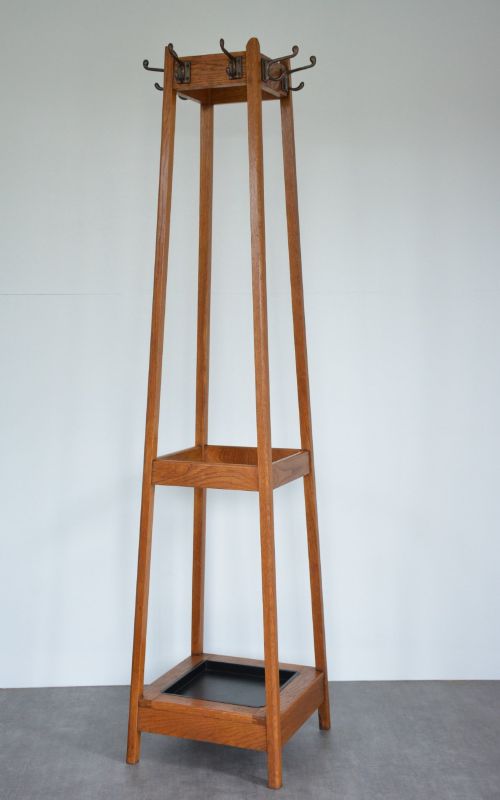
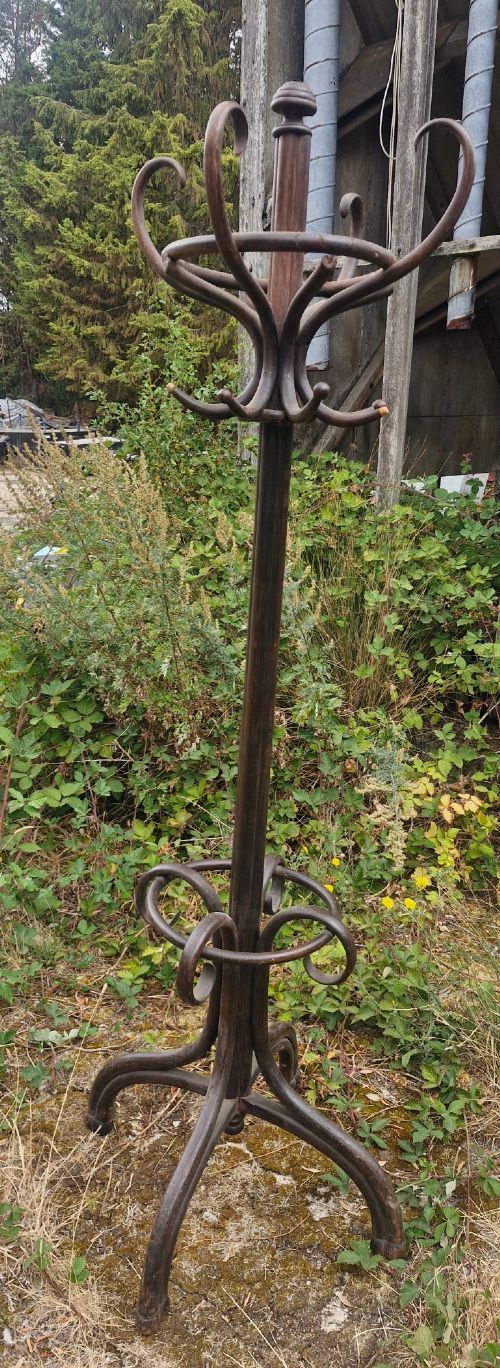
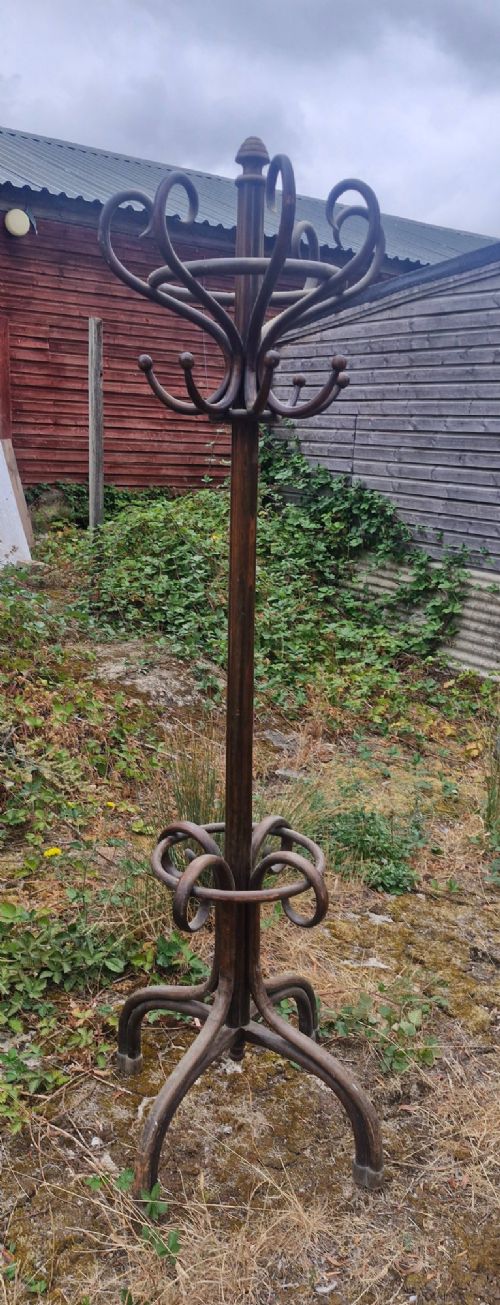
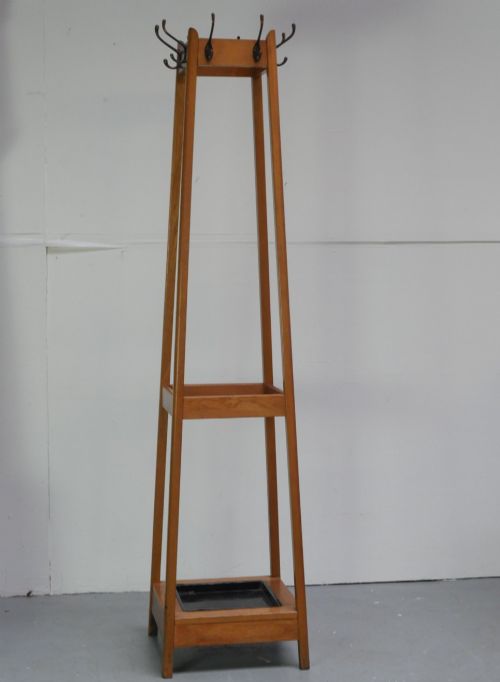
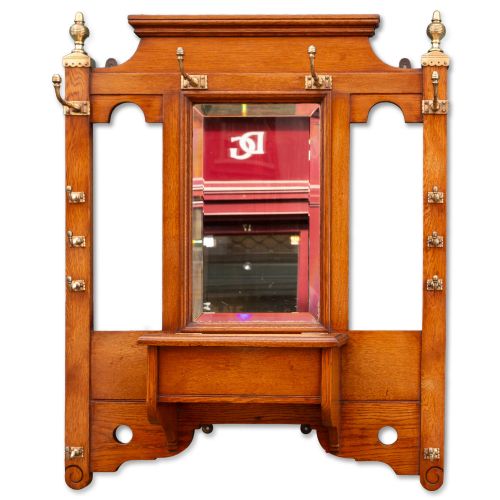
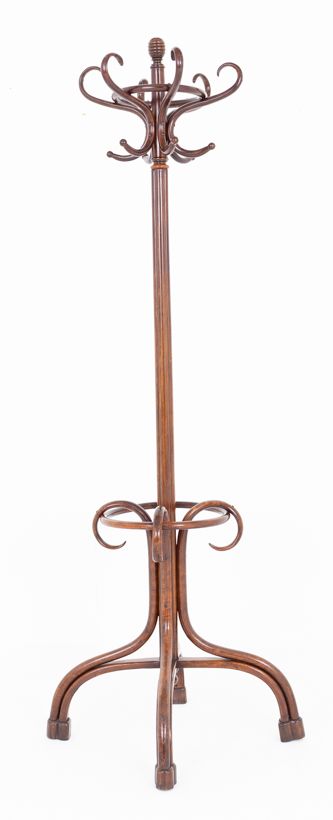
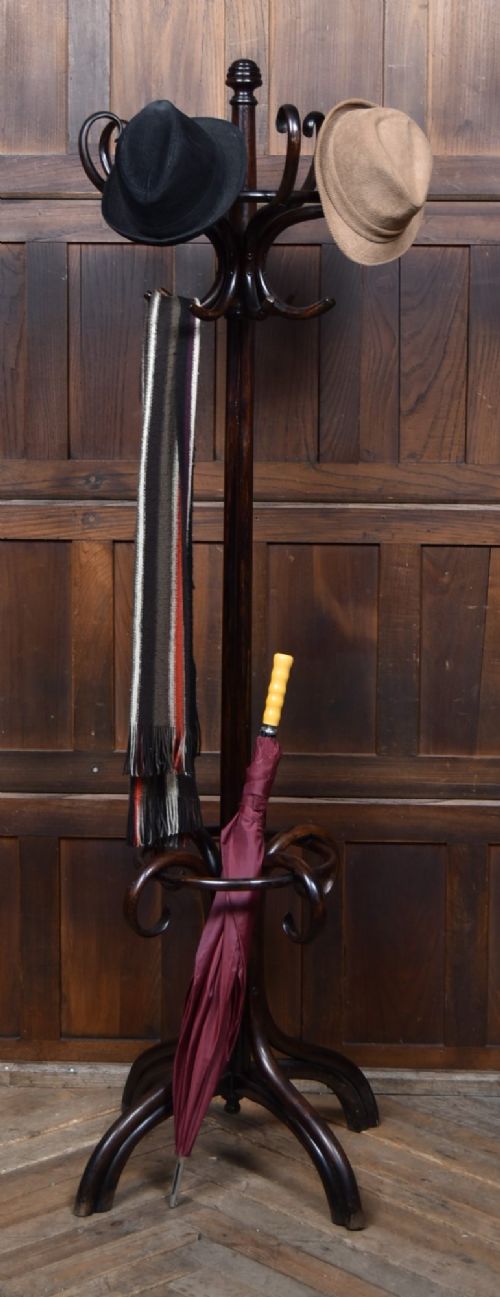
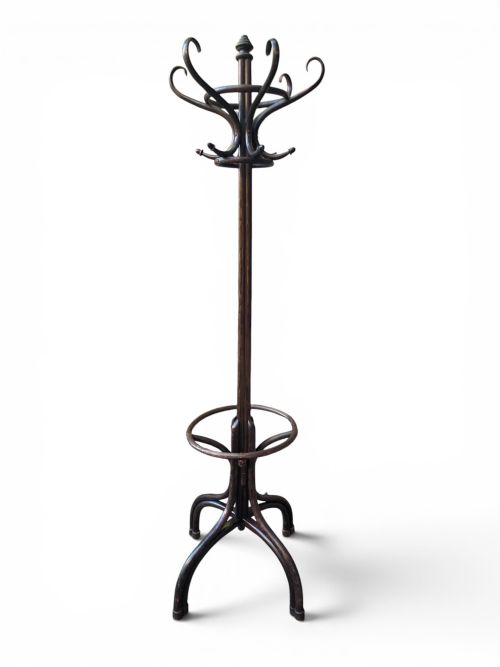
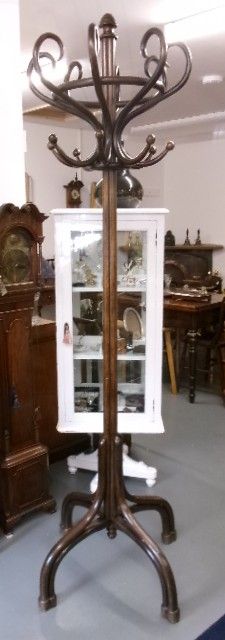
An edwardian hat stand typically appears as a tall hall tree or a revolving bentwood frame designed to hold hats, coats, and walking sticks in domestic entryways. These pieces range from upright solid timber frames with integrated umbrella trays to lightweight steam-bent wooden constructions.
The materials recorded across these examples include oak, beech, mahogany, walnut, and bamboo, frequently accompanied by brass hooks and drip pans. Many incorporate mirrors, side compartments, and revolving top tiers for convenient garment access.
Visitors browsing this selection encounter pieces spanning the late nineteenth century through to the interwar decades, with strong representation from the Edwardian period and Arts and Crafts styles.
How They Were Made
Makers utilised steam-bent beech and walnut to form the curved frameworks characteristic of bentwood hat stands, locking the timber into flowing circular shapes. Solid hardwoods such as oak and mahogany were joined using traditional cabinetmaking techniques to construct heavy hall stands with integrated coat hooks and mirror surrounds.
Metal components played a structural and decorative role, featuring cast brass hooks, umbrella ring holders, and zinc drip trays to catch moisture from wet sticks. Surface finishes relied on polished shellac and natural wax to protect the grain of the wood.
The inventory records pieces from the Victorian era, the Edwardian period, and the Arts and Crafts movement.
What Varies in Quality
Construction density dictates durability, distinguishing heavy, solid timber hall stands from lighter or later derivatives. Joints firmly pegged and braced handle the daily weight of winter coats and umbrellas without destabilising.
The refinement of decorative elements sets individual examples apart, from carved woodwork and inlaid details to the smooth rotation mechanisms found on revolving hat stands.
Thonet·Jas Shoolbred·J Parker of Woodstock
The Edwardian Hat Stand Glossary
- Hall tree
- A tall piece of hall furniture combining a coat rack, hat hooks, mirror, and umbrella stand. They anchor the entrance space of a home.
- Bentwood
- Wood softened by steam and bent into curved structural forms. This technique produced lightweight, resilient furniture.
- Revolving top
- A rotating upper tier on a hat stand that allows access to garments from multiple angles. It represents clever spatial engineering.
- Drip tray
- A metal basin positioned at the base of a hall stand to catch water from umbrellas and walking sticks. These trays protect wooden flooring from moisture damage.
- Arts and Crafts
- A design movement favouring handcrafting, honest construction, and simple materials over industrial mass production. Pieces often display exposed joinery and quality timber grain.
Edwardian Hat Stand: Frequently Asked Questions
What is an edwardian hat stand?
An edwardian hat stand is a piece of hallway furniture built to hold headwear, coats, and walking sticks. These items served busy domestic entryways at the turn of the twentieth century.
Designs range from revolving wooden frames to substantial hall trees fitted with mirrors and umbrella trays.
How were bentwood stands made?
Bentwood stands were produced by steaming lengths of timber until pliable and clamping them into curved moulds. This technique allowed makers to create strong, lightweight frames without complex joinery.
Beech was frequently utilised for this process due to its flexibility under steam.
Where should I place one?
These pieces suit entrance halls and corridors where visitors remove outdoor garments. Their vertical orientation makes efficient use of narrow floor spaces.
Ensure the stand has adequate clearance for hanging coats and accessing lower umbrella holders.
How do I spot an original?
Original examples show period construction methods, timber ageing, and hardware consistent with early twentieth-century manufacture. Look for traditional joinery, brass fittings, and period wear.
Materials like solid oak, mahogany, and steam-bent beech dominate authentic pieces from this era.