
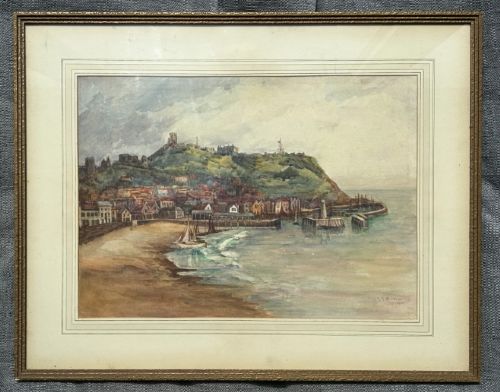


Edwardian Harbour Landscape Painting
An edwardian harbour landscape painting captures the bustling maritime life of British and European coasts through the delicate wash of watercolour or the rich texture of oil on canvas.
Edwardian Harbour Landscape Painting
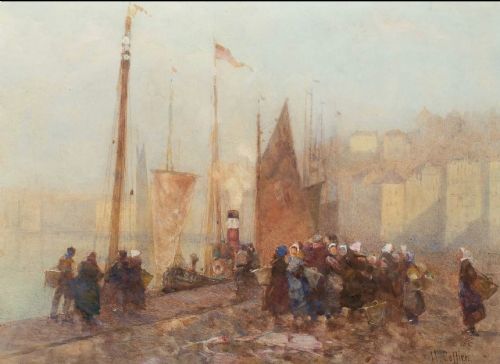
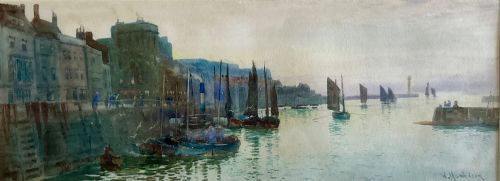
An edwardian harbour landscape painting typically depicts coastal scenes, busy docks, and fishing fleets from periods spanning the late nineteenth century to the early decades of the twentieth. These works frequently record historical viewpoints of notable fishing ports such as Whitby, St Ives, and Polperro, alongside Thames and London pool scenes.
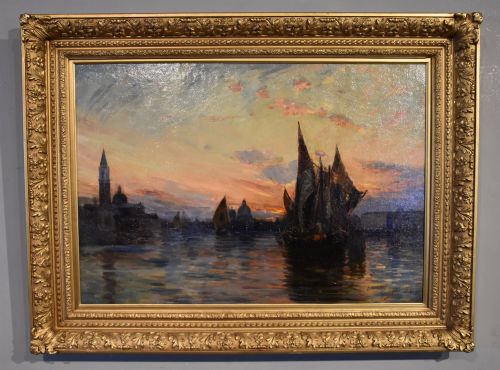
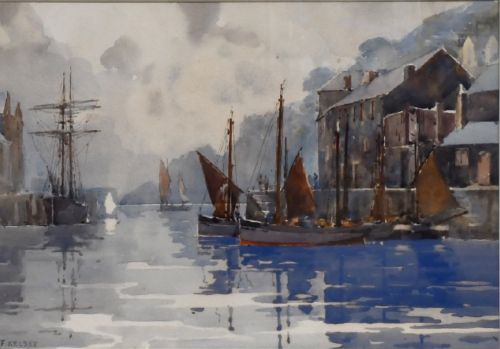
The version most commonly met on this page is the watercolour on paper, often framed behind glass within gilt wood surrounds. Oils on canvas or board, ranging from small studies to larger coastal vistas, also appear with regularity from British impressionist and realist painters of the era.
Subjects range from tranquil morning departures and calm tidal inlets to choppy seas surrounding returning vessels and abbey backdrops. Each piece offers a direct visual record of turn-of-the-century maritime activity and topographical landscape art.
How They Were Made
Watercolour pigment applied to paper forms the primary medium for these coastal views, capturing the changing light of northern harbours and southern estuaries through fluid washes. Artists utilised paper supports mounted within traditional wooden and gilt frames to protect the delicate water-based pigments.
Oil paints on canvas or board provide heavier impasto and deeper pigment saturation for marine scenes featuring choppy seas and industrial pool settings. Wood and glass historically complete the framing assembly, preserving the original surface textures of both watercolours and oil paintings.
Current listings feature watercolours and oils on canvas spanning 1900 to 1930, focusing heavily on British coastal ports.
What Varies in Quality
The strength of composition and the artist's ability to render atmospheric light and maritime movement differentiate superior works from simpler topographical records. Master painters handle watercolours with transparency and confidence, whereas lesser examples rely on heavy-handed outlines and dull washes.
Condition of the paper or canvas surface, along with the retention of the original gilt wood framing, alters the integrity of the piece. Works retaining strong, unfaded pigments and clear signatures demonstrate better preservation through the decades.
Hector Caffieri·William Matthison·Thomas Hodgson Liddell·Frank Kelsey·F A Roylance·George F Pennington·Alfred George Morgan·Tom Clough·Stanley Leader·Fred Waugh·John Bell·James Webb·Ernest F Hill·Frederick Stuart Richardson·Alfred Robert Quinton·Albert Robert Quinton·Percy Brooke·William Lambert Bell·William Kay Blacklock·Frank W Scarborough·Harry Wanless·H Hadfield Cubley·Fred Mayor·Rowland Henry Hill·Owen Bowen
The Edwardian Harbour Landscape Painting Glossary
- Watercolour
- A painting method in which the paints are made of pigments suspended in a water-based solution. Paper serves as the standard support for these transparent washes.
- Oil on canvas
- A traditional painting technique utilising pigments bound in a drying oil, stretched across a woven fabric support. This medium allows for rich texture and deep colour saturation.
- Gilt wood
- Timber frames coated with a thin layer of gold leaf or gold paint. These ornate surrounds typically house and protect period fine art.
- Impressionism
- An art style focused on capturing the visual impression of the moment, particularly regarding shifting light and ordinary subject matter. British practitioners applied these loose brushwork techniques to maritime scenes.
- Topographical view
- An accurate artistic representation of a specific geographical location. These historic coastal views often document vanished dockyards and harbour architecture.
Edwardian Harbour Landscape Painting: Frequently Asked Questions
Where were these harbour scenes painted?
Artists painted these coastal views directly on location around British fishing ports like Whitby, St Ives, and Polperro, as well as European waterways and the London Thames.
Many works record specific historical topography, capturing local docks, abbeys, and returning fishing fleets during the early twentieth century.
How do I hang a watercolour safely?
Watercolours require placement away from direct sunlight to prevent the fading of delicate pigments on paper. Framing behind glass with proper acid-free mounts protects the surface from atmospheric moisture.
Wall placement in rooms with stable temperature and humidity ensures the longevity of both the paper and the original wooden frame.
Are oils and watercolours framed differently?
Oils on canvas or board typically sit within heavier wooden or gilt frames without glass, allowing the textured paint surface to breathe. Watercolours require glazing with glass to protect the paper and water-soluble pigments from dust and moisture.
Original frames often accompany these works, providing historical context alongside the artist's signature.
How can I tell the period of a painting?
The clothing of figures, the types of shipping vessels in the harbour, and framing styles offer clear clues to the date of execution. Signatures paired with specific locations or exhibition dates recorded on the work help narrow down the decade.
Materials such as early twentieth-century paper stocks and canvas stretchers further align with the Edwardian era.