



Edwardian Hanging Wood Cabinet
These edwardian hanging wood cabinet pieces provide compact wall storage in mahogany, oak, and rosewood, offering period character to modern interiors.
Edwardian Hanging Wood Cabinet
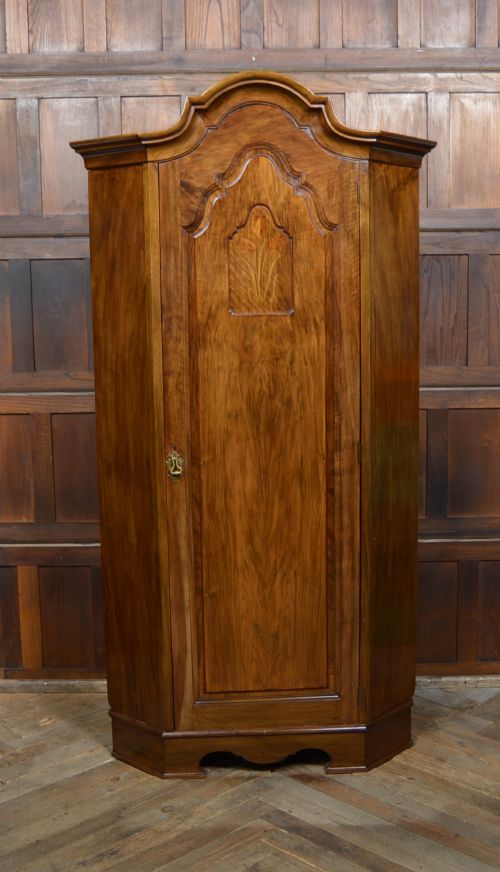
An edwardian hanging wood cabinet primarily manifests as a wall-mounted cupboard or corner cabinet designed to save floor space while displaying or storing small items. Most examples seen here date from the Edwardian period or the late nineteenth and early twentieth centuries.
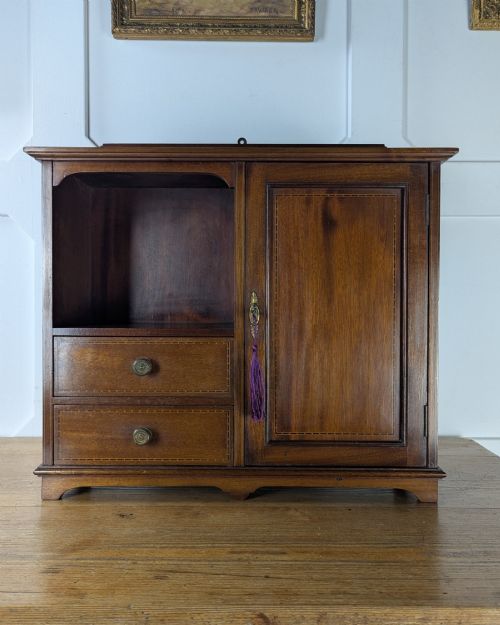
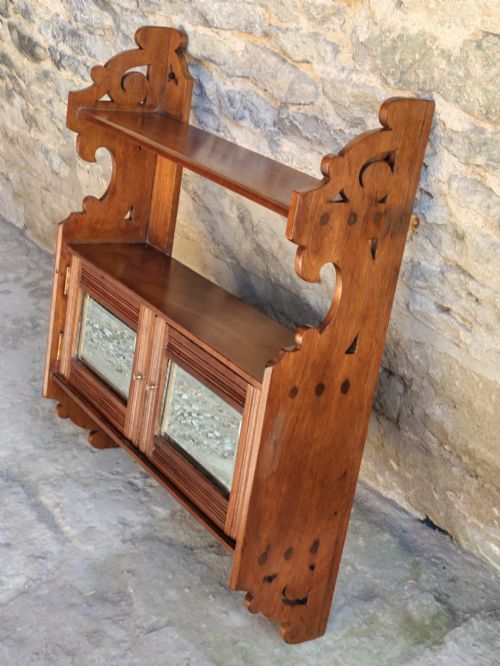
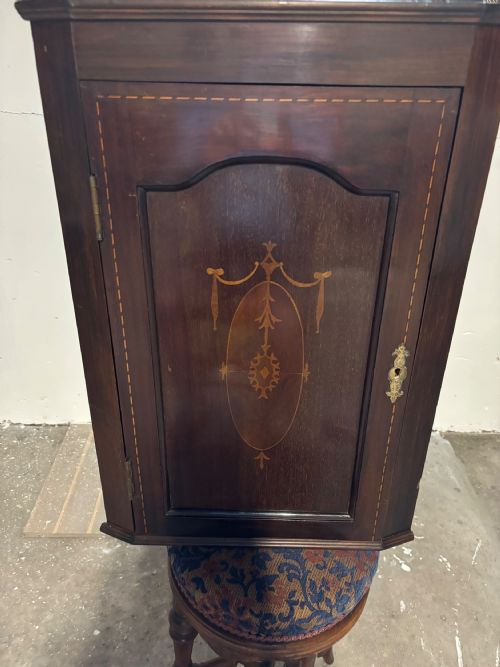
The selection ranges from simple oak wall shelves to glazed display cabinets, smokers cupboards, and corner cupboards with inlaid satinwood or mahogany surfaces. Buyers frequently encounter corner formats and wall cupboards fitted with glass doors or descending drawers.
Origins span English workshops, including estate-made pieces and items associated with specific vessels like HMY Osbourne. The forms serve both utilitarian storage and decorative display within domestic interiors.
Materials and construction
Cabinetmakers utilised hardwoods such as mahogany, oak, walnut, rosewood, and satinwood to construct these wall-mounted pieces. Surfaces frequently feature marquetry and inlay work to create decorative contrasts across the timber.
Brass hardware, including hinges, key escutcheons, and hanging brackets, secures the structure and operates the doors. Glazed panels appear on display variants to enclose the interior shelving.
The listings combine Edwardian and 19th Century periods with materials including mahogany, oak, walnut, and rosewood.
Distinctions in quality
Quality differentiates itself through the selection of cabinet timbers and the precision of the marquetry or inlay work. Finer examples display carefully matched grain patterns and sophisticated timber contrasts.
Construction methods such as dovetail joinery in drawers and the integration of substantial brass fittings separate standard utility cupboards from more decorative display pieces.
The Edwardian Hanging Wood Cabinet Glossary
- Marquetry
- Decorative veneer patterns applied to woodwork to form pictures or geometric designs. This technique uses thin slices of various coloured woods.
- Corner Cabinet
- A storage piece built to fit directly into the angle of a room. These save floor space while utilising awkward corners.
- Glazed Display Cupboard
- A cabinet featuring glass door panels designed to show contents while protecting them from dust. These often house ceramics or glassware.
- Bow Front
- A convex curved cabinet front that projects outward. This curved shape adds visual depth to smaller wall cupboards.
Edwardian Hanging Wood Cabinet: Frequently Asked Questions
How do I hang a heavy wooden wall cabinet?
Wall cabinets require secure fixings into structural wall studs or solid masonry using appropriate brackets.
Weight distribution across the back panel ensures the cabinet remains stable once loaded with contents.
What is the difference between Edwardian and Victorian cabinets?
Victorian pieces often feature darker woods, heavier proportions, and ornate carved detailing.
Edwardian items tend to show lighter timbers, simpler lines, and delicate marquetry or inlay work.
Where were corner cabinets placed in period homes?
Corner cabinets occupied vacant room angles in dining rooms, halls, and parlours.
Their triangular footprint utilised dead space efficiently while keeping everyday items accessible.
How do I care for antique mahogany and walnut?
Regular dusting with a soft, dry cloth protects the polished wooden surface from abrasive particles.
Occasional application of appropriate wax feed nourishes the timber without building up heavy residues.