

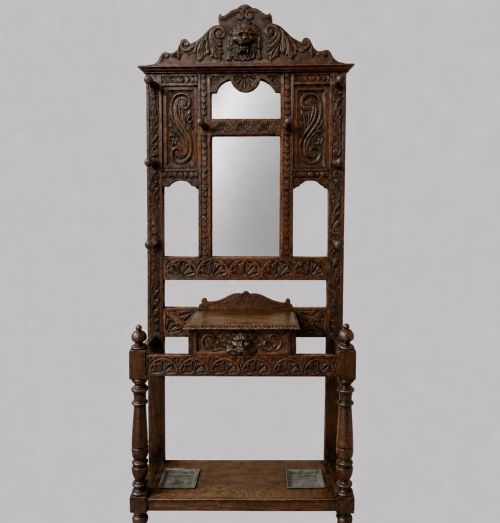


Edwardian Hall Stand Mirror
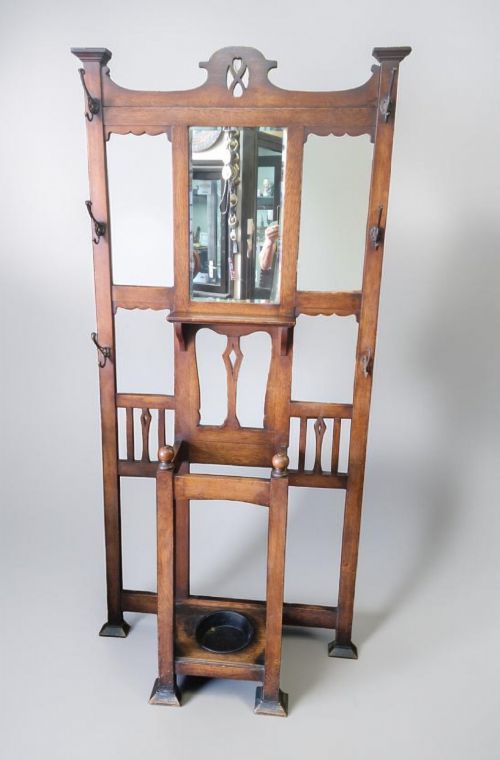
An edwardian hall stand mirror anchors a hallway with practical timber architecture, integrated glass, and structural provision for hats, coats, and sticks.
Edwardian Hall Stand Mirror
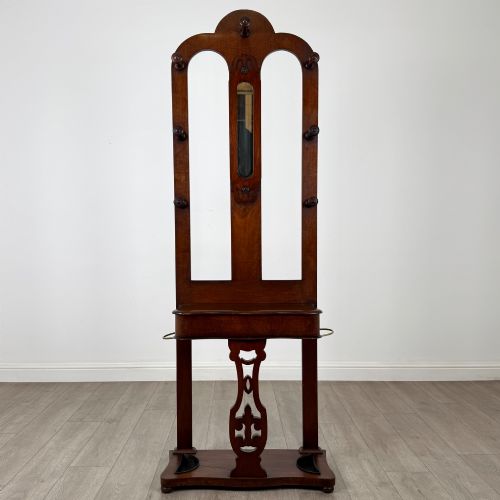
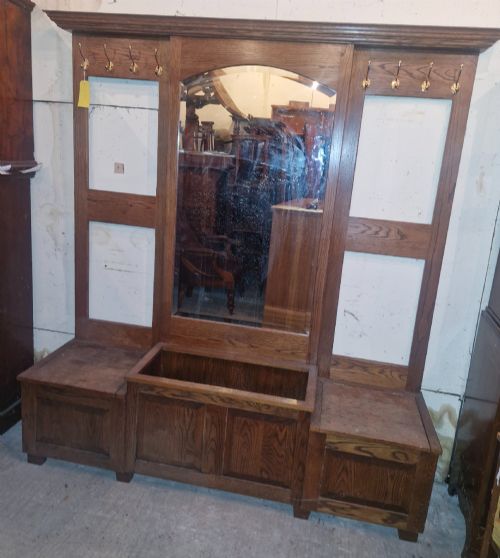
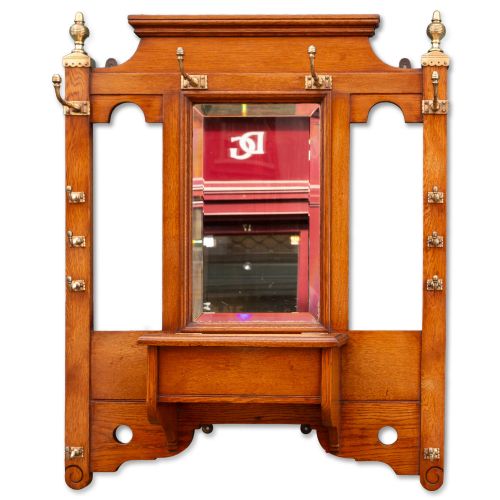
When you search for an edwardian hall stand mirror, you encounter pieces designed to greet visitors in a domestic entrance passage. Most examples belong to the Edwardian period or the late Victorian era, combining upright timber framing with a central looking glass.
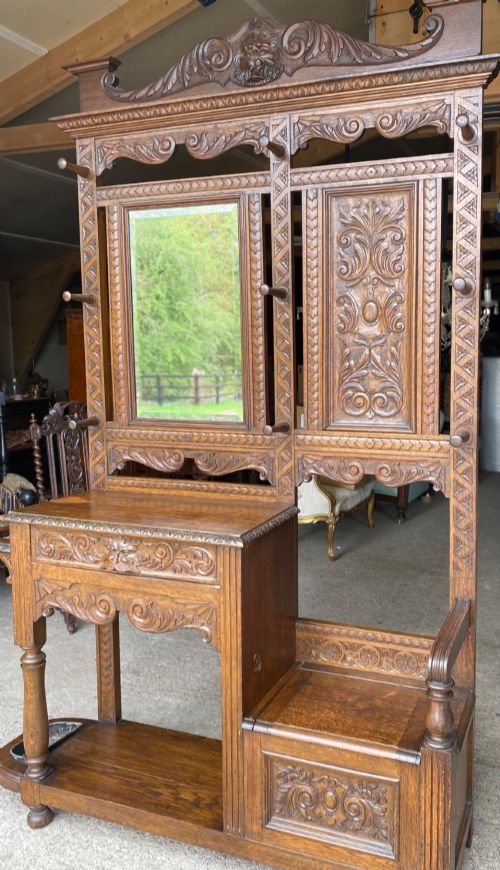
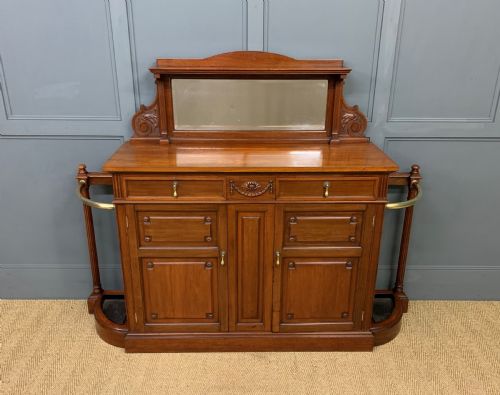
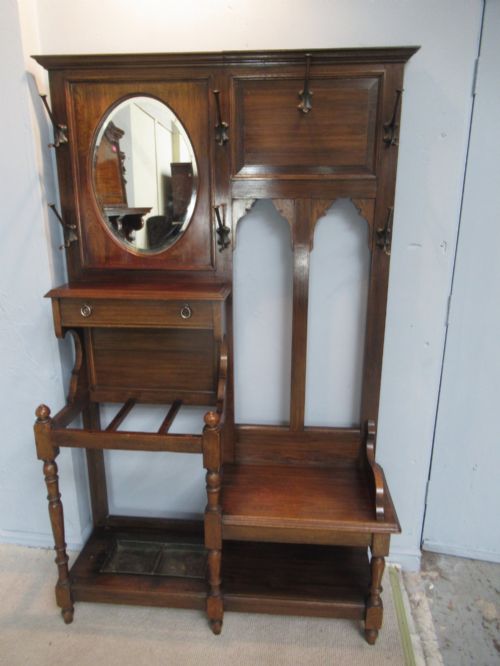
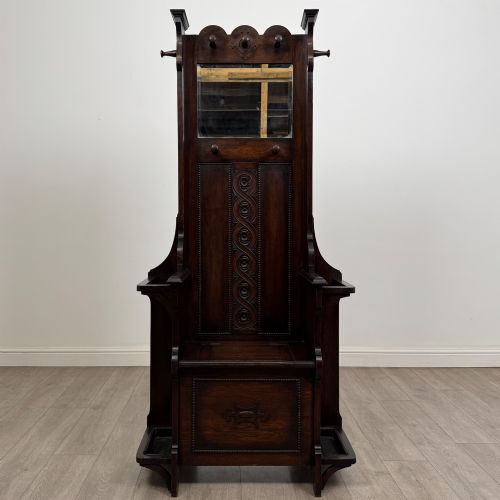
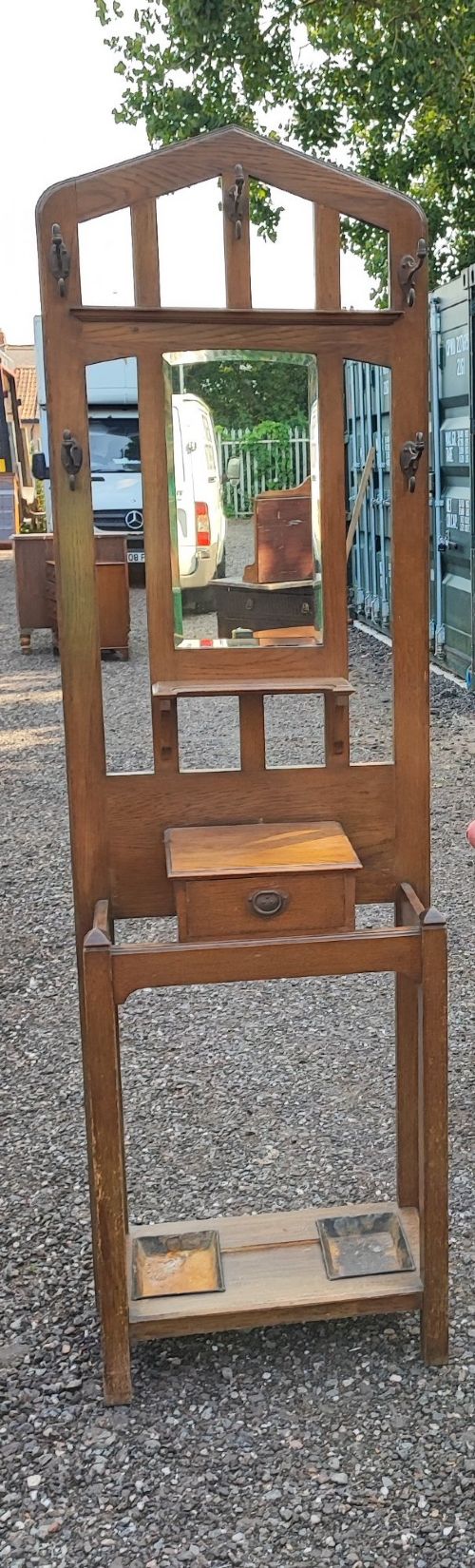
The form typically incorporates vertical coat hooks, a narrow shelf, and lower umbrella wells flanking a central panel. Oak and mahogany serve as the primary structural timbers across the pieces recorded in this archive.
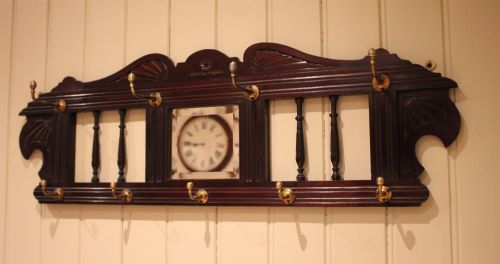
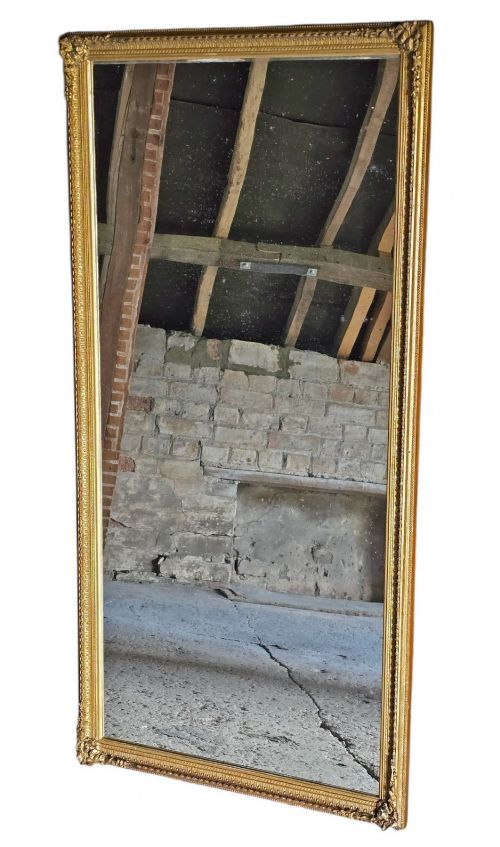
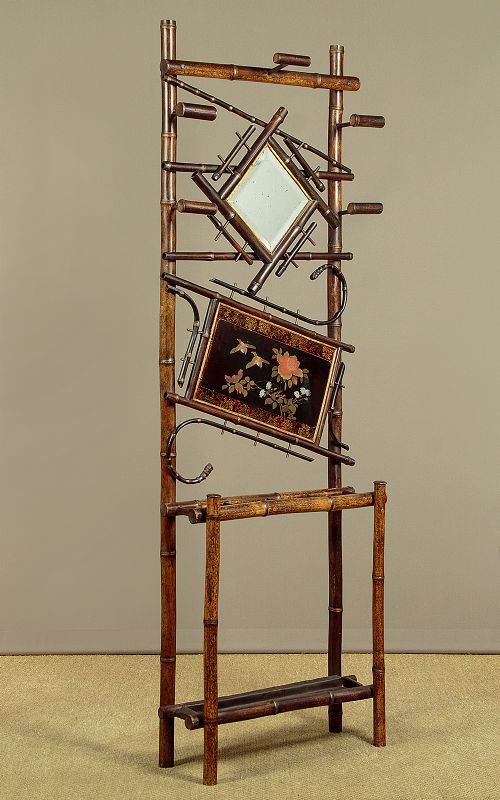
Beyond the standard tall furniture designs, variations include wall-mounted racks, bamboo frames, and console configurations. The integrated mirror plate remains the focal element shared by nearly every variant.
Materials and Construction
Cabinetmakers utilised quarter-sawn oak, rich mahogany, and walnut as the principal structural timbers, often shaping them with carved details or contrasting wood veneers. Joinery relied on traditional mortise and tenon joints to bear the weight of heavy garments and iron hardware.
Metal components added both utility and decoration, featuring cast brass coat hooks, iron umbrella drip trays, and occasionally heavy cast iron frames. Ceramic tiles, sometimes painted by specific designers, provided a moisture-resistant backing near the umbrella wells.
Mirror glass was typically bevelled at the edges and set securely into wooden rebates behind retaining mouldings. Bamboo and bentwood appeared as lighter alternatives, shaped through steaming techniques popular in the late nineteenth and early twentieth centuries.
Design styles span the Victorian, Edwardian, Arts and Crafts, Art Nouveau, and Aesthetic Movement periods.
Judging Quality and Execution
The distinction between standard utility items and finer examples rests on the ambition of the carving and the selection of materials. Deeply carved motifs, such as Green Man masks or intricate foliage, indicate workshop production of higher artistic standing.
Hardware selection marks another boundary of quality, separating plain iron utility hooks from substantial cast brass fittings designed to endure daily use. The presence of original decorative ceramic tiles or inlaid woodwork elevates a piece above simpler vernacular designs.
Shoolbred and Co·Fischel·Coalbrookdale·Ellen E Houghton of Minton
The Edwardian Hall Stand Mirror Glossary
- Bevelled plate
- Glass with an angled edge polished around the perimeter to catch light. This treatment adds depth to the reflection.
- Hall stand
- A composite hallway furniture piece uniting a mirror, coat hooks, and umbrella storage. It organises entrance garments efficiently.
- Bentwood
- Timber softened in steam and bent into curved structural forms. This technique creates light and resilient frames.
- Umbrella well
- A lower compartment or metal tray designed to hold wet umbrellas and walking sticks. It protects the surrounding timber floor.
- Inlay
- Pieces of contrasting wood or other materials fitted flush into the primary surface to form decorative patterns. It signals skilled cabinetmaking.
Edwardian Hall Stand Mirror: Frequently Asked Questions
How do I secure a tall hall stand?
Tall hall stands often require wall tethering to prevent tipping under the weight of heavy winter coats and hats. Brackets hidden behind the upper frame keep the piece stable against domestic walls.
Positioning the stand on an even floor surface also reduces structural strain on the upright legs and lower umbrella wells.
What is the purpose of the mirror?
The central mirror plate allowed visitors to inspect their attire before entering the main rooms of a house. It also served to reflect natural light into narrow Victorian and Edwardian entrance hallways.
Most surviving plates feature bevelled edges set securely into wooden frames behind protective backing boards.
How do I care for the wood?
Maintenance requires occasional application of appropriate furniture wax to nourish oak and mahogany surfaces. Avoid placing pieces in direct sunlight or beside heat sources to prevent timber splitting.
Cleaning metal hooks and brass trays with dry cloths preserves their original finish without stripping historical patina.
How do I distinguish Edwardian from Victorian?
Victorian hall stands frequently display heavier carvings, darker timbers, and robust proportions associated with nineteenth-century revival styles. Edwardian pieces often lean towards lighter oak, simpler lines, and brighter Arts and Crafts influences.
Overlaps remain common as cabinetmakers carried traditional Victorian techniques into the early twentieth century.