






Edwardian Gypsy Ring
An edwardian gypsy ring combines flush-set stones with smooth gold bands, offering a practical profile suited to daily wear.
Edwardian Gypsy Ring
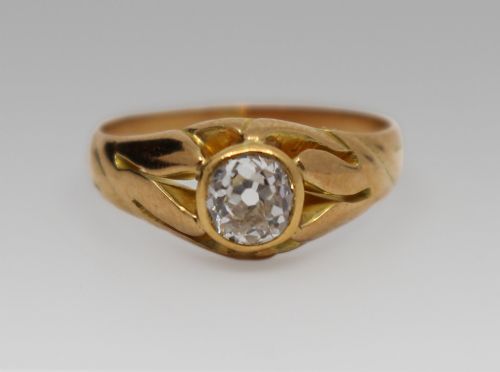
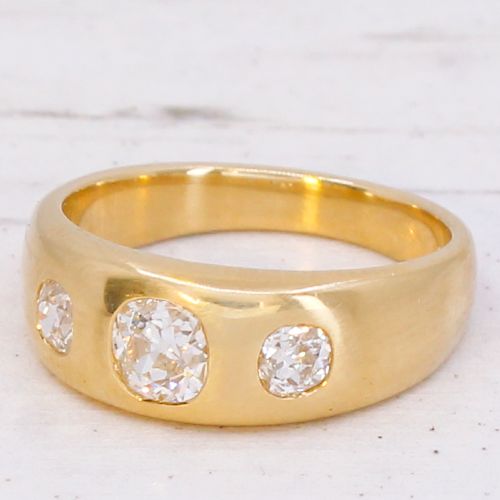
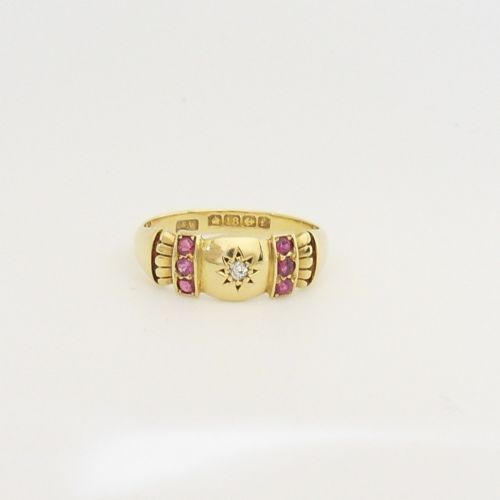
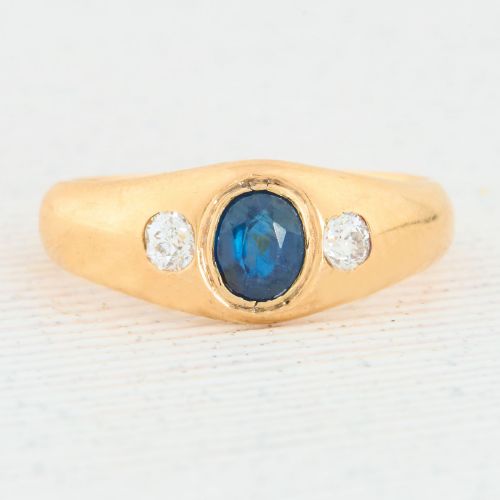
An edwardian gypsy ring sits flush against the finger with stones sunk securely into a heavy gold band. The style bridges the late Victorian period and the early twentieth century, appearing frequently with hallmarks from Birmingham and Chester.
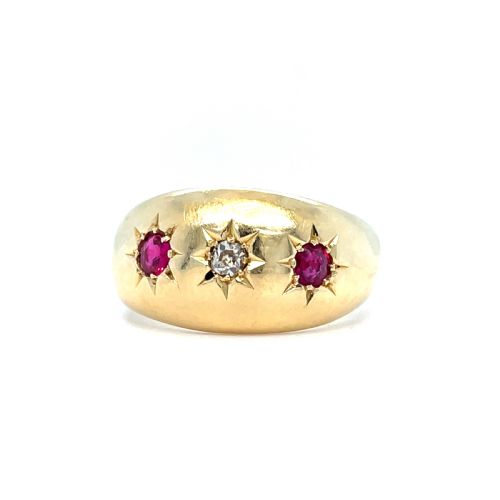
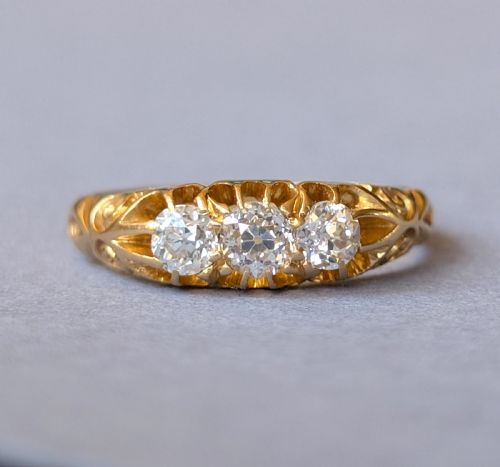
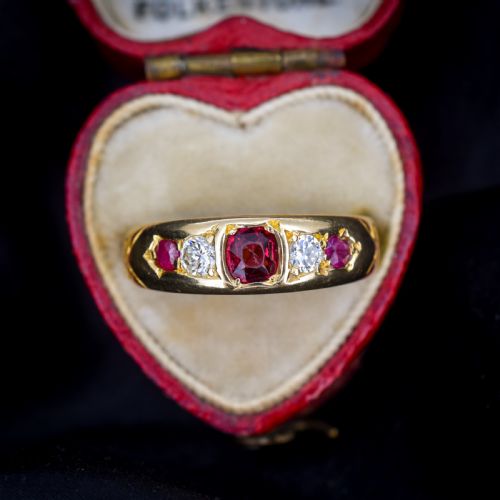
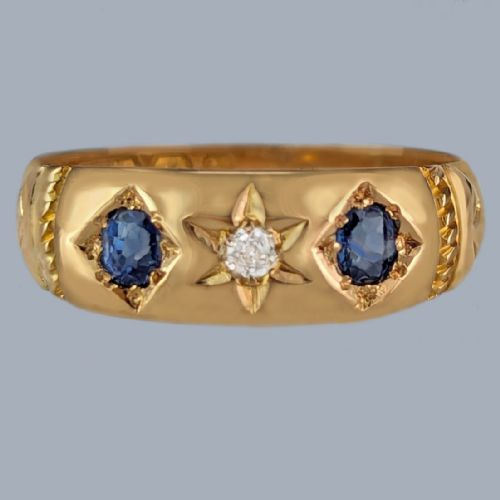
Most examples on this page are formed from eighteen-carat yellow gold, though nine-carat versions and rose gold variations also appear. They frequently feature old cut diamonds flanked by rubies, sapphires, or garnets in single, three-stone, or five-stone arrangements.
The profile is smooth and tapered, originally designed to prevent the band from catching on clothing during daily tasks. Starburst and celestial engravings often surround the flush settings, framing the stones within the metal.
Materials and Construction
Jewellers shaped these bands from cast or forged gold, hammering and filing the metal to create a thick profile that could securely enclose the gems. The stones were then gypsy set, pushed directly into tapered holes and held in place by pushing the surrounding metal over the girdle.
Gems utilised in these pieces are primarily old cut diamonds, alongside natural rubies and sapphires. Artisans often added hand-engraved starburst motifs around the bezels to reflect light outward from the flush stones.
Listings feature yellow gold, rose gold, and nine to eighteen-carat gold bands housing diamonds, sapphires, and rubies.
What Separates Examples in Quality
Quality rests on the weight of the gold band and the crispness of any surrounding starburst engraving. Thicker shanks retain their structural integrity and rounded shoulders over decades of wear.
The proportion and matching of the set stones also define the standard. Well-matched old cut diamonds and evenly saturated rubies or sapphires elevate the balance of the piece.
The Edwardian Gypsy Ring Glossary
- Gypsy ring
- A ring style featuring a flush-set stone where the metal tapers smoothly towards the setting. This design protects the girdle of the stone from impact.
- Old cut
- A diamond cutting style prevalent before modern brilliant standards, characterised by a small table, high crown, and open culet. These stones display chunky facets that catch candlelight effectively.
- Flush setting
- A stone setting technique where the gem sits level with the surrounding metal surface. Starburst engravings often radiate outward from this type of setting.
- Hallmark
- An official stamp applied by an assay office to indicate metal purity and the year of testing. British offices in Birmingham and Chester frequently marked these pieces.
Edwardian Gypsy Ring: Frequently Asked Questions
Are gypsy rings comfortable to wear daily?
The flush-set stones and smooth tapered band prevent the ring from catching on fabrics, making it practical for continuous wear.
Because the metal surrounds the girdle of each stone, the setting resists knocks better than traditional claw mounts.
How do I identify an Edwardian piece?
Look for British hallmarks indicating the assay office and date letter corresponding to the early twentieth century.
Stylistic cues include old cut diamonds paired with rubies or sapphires in heavy yellow gold bands with starburst engravings.
What stones are typically found in these rings?
Old cut diamonds form the centrepiece of most designs, frequently accompanied by rubies, sapphires, or garnets.
Multi-stone layouts range from single solitaires to trilogy and five-stone celestial arrangements.