


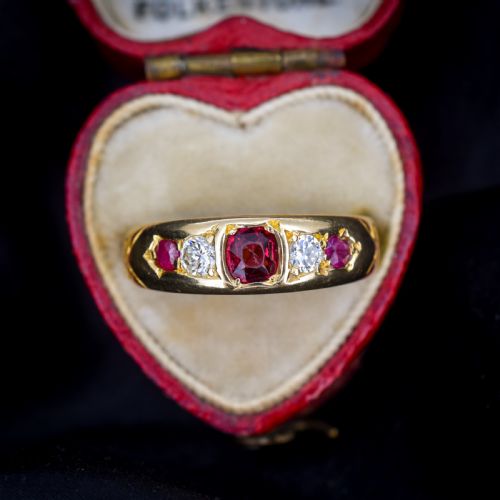


Vintage Diamond Gypsy Ring
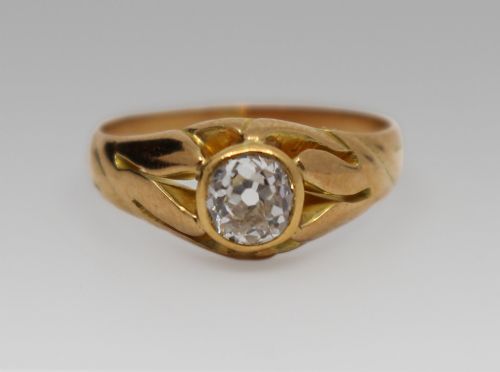
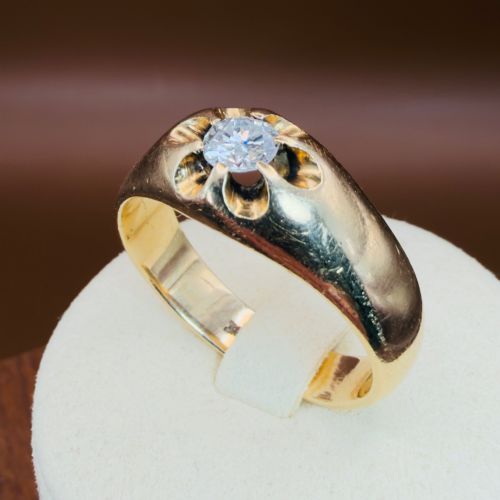
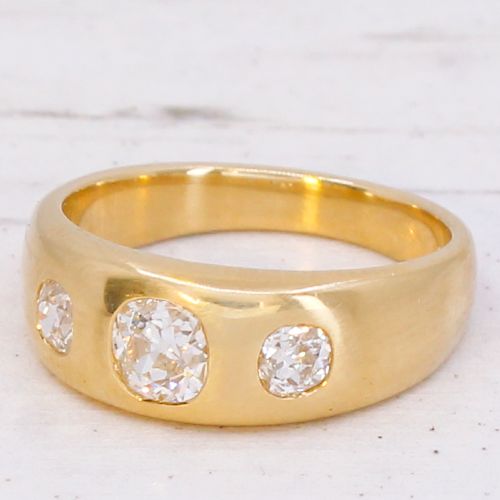
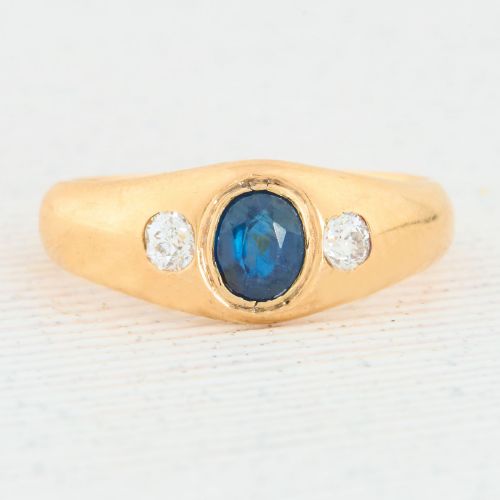
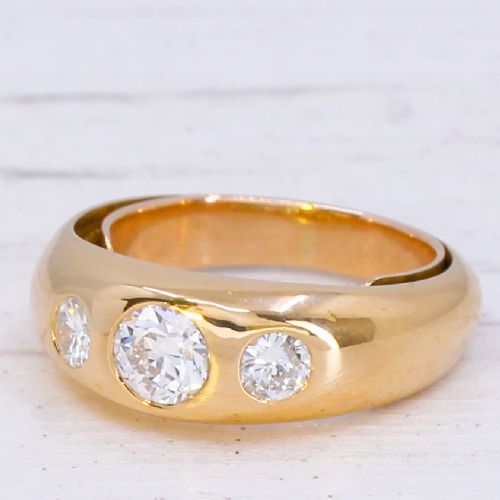
A vintage diamond gypsy ring sits flush within the metal band, offering a smooth, snag-free profile that made it a favourite for everyday wear.
Vintage Diamond Gypsy Ring
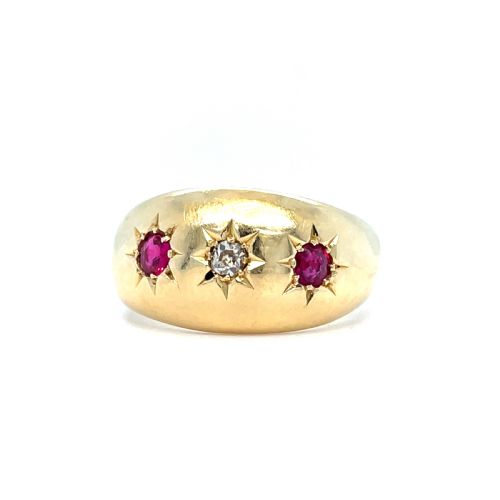
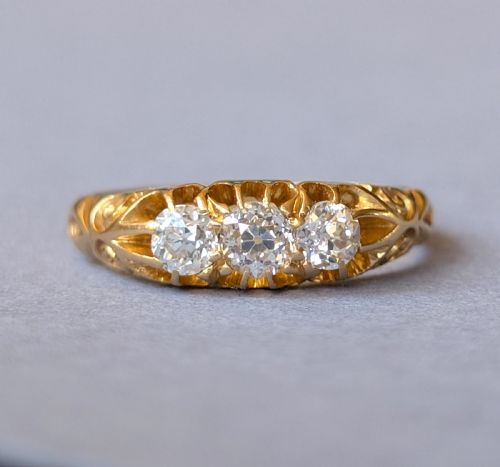
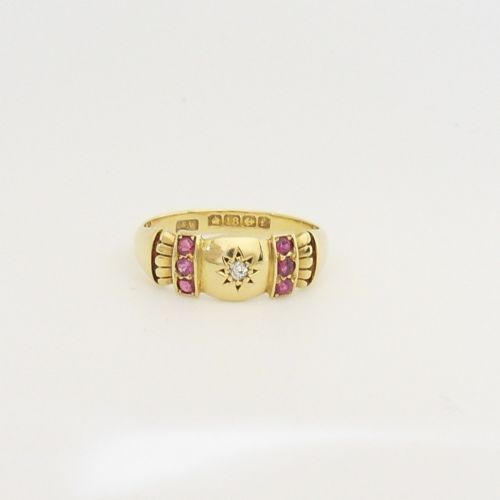
The profile is characteristically tapered, shifting from a broad top housing the diamonds to a slimmer hoop at the back. Pieces span single-stone solitaires, three-stone arrangements, and multi-stone bands interspersed with rubies, sapphires, or emeralds.
On this page, the most common iterations hail from the Edwardian era and Victorian periods, executed in yellow gold or rose gold. They range from delicate low-profile bands to heavier men's rings and substantial dress designs.
How they were made
Craftsmen utilised various carats of gold, including 9ct, 14ct, 15ct, and 18ct yellow, rose, and white gold, to form the heavy continuous bands. Stones were then inserted directly into recessed channels or star-shaped gypsy settings hammered tightly around the edges.
The diamonds selected for these pieces are predominantly old cut, old European cut, or rose cut stones hand-faceted by earlier lapidaries. These feature distinct facets and open culets that catch ambient light differently than modern brilliant cuts.
Listings span Victorian, Edwardian, George V, and mid-century periods, utilising 9ct, 14ct, 15ct, and 18ct yellow, rose, and white gold alongside platinum.
What varies in quality
Quality rests primarily on the weight and integrity of the gold band and the presence of hallmarks indicating purity and origin. Substantial weight, such as heavier gram counts in 18ct gold, marks out superior construction from lighter alternatives.
The calibre of the central diamonds and accompanying coloured stones - such as natural rubies, sapphires, or emeralds - drives distinction across the range. Clean stone integration where the metal meets the girdle without excess solder separates finer examples from standard output.
The Vintage Diamond Gypsy Ring Glossary
- Gypsy setting
- A mounting style where the gem is set flush into the metal band so the surface surrounds it smoothly. This technique protects the girdle of the stone during daily wear.
- Old cut diamond
- An antique diamond cut characterised by a smaller table, higher crown, and large open culet. These stones were shaped by hand before modern machinery standardised proportions.
- Star set
- A variation of the gypsy setting featuring hand-engraved star rays radiating outward from the stone. This decoration enhances the perceived size of the diamond.
- Solitaire ring
- A ring featuring a single prominent gemstone set into the band. In these listings, they appear as low-profile flush settings.
- Trilogy ring
- A ring set with three stones representing past, present, and future. In this selection, they often combine diamonds with rubies or sapphires.
Vintage Diamond Gypsy Ring: Frequently Asked Questions
Are these rings suitable for daily wear?
The flush setting protects the stones from knocks, making these bands exceptionally practical for everyday use.
Heavier 18ct gold versions withstand regular friction well, though thinner antique bands benefit from occasional checks by a jeweller.
How do I identify an Edwardian gypsy ring?
Edwardian examples often feature delicate starburst engravings and crisp old cut diamonds mounted in 18ct yellow gold.
They tend to feel lighter and more intricate than their chunkier Victorian or mid-century counterparts.
Can these rings be resized easily?
Resizing depends on the thickness of the band and the proximity of the flush-set stones to the back of the hoop.
A skilled jeweller can usually alter plain sections of the gold shank without disturbing the gypsy settings.
What stones accompany the diamonds?
Natural rubies, sapphires, emeralds, and garnets frequently appear alongside diamonds in multi-stone configurations.
These coloured gems are often arranged in alternating three-stone or five-stone gypsy bands.