
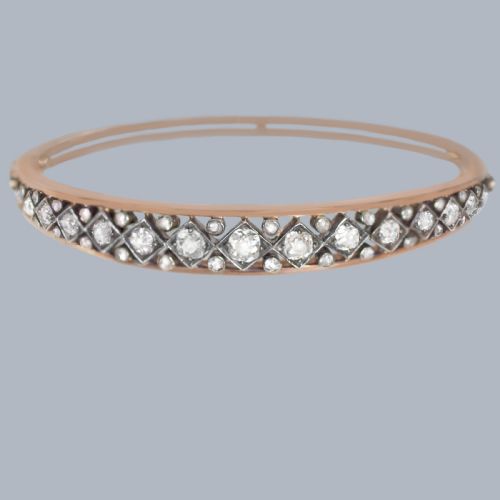


Edwardian Gold Wristlet
An edwardian gold wristlet brings together period craftsmanship and fine gems, offering buyers a wearable piece of history.
Edwardian Gold Wristlet
When searching for an edwardian gold wristlet, buyers encounter various forms of antique arm ornamentation including chain link bracelets, rigid bangles, and padlock clasps originating from the late nineteenth and early twentieth centuries. These items reflect the stylistic transitions from late Victorian ornateness through Belle Epoque delicacy into early Art Deco geometry.
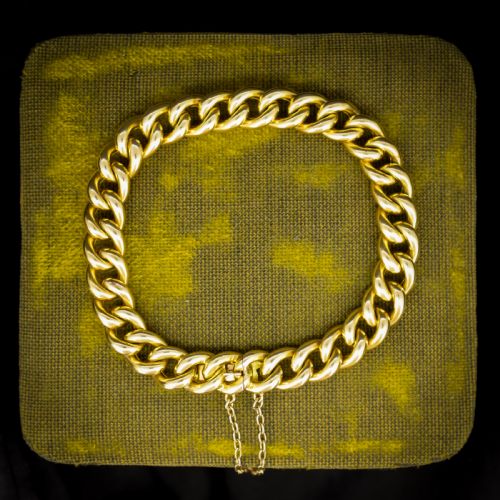
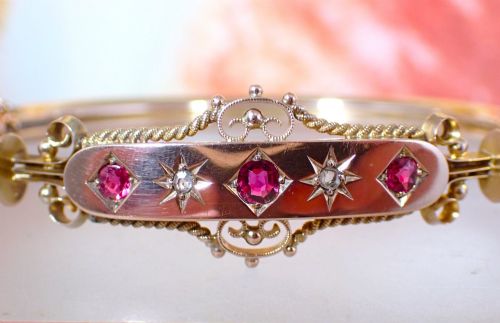
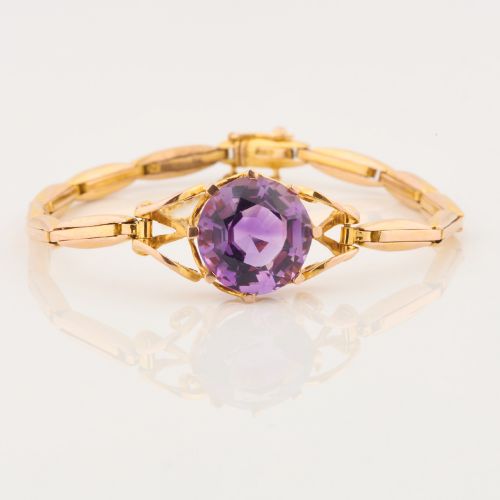
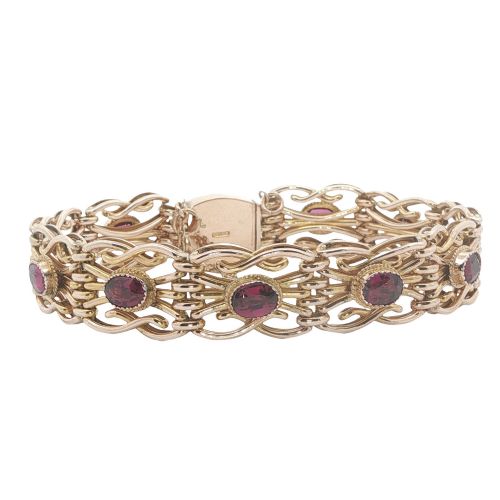
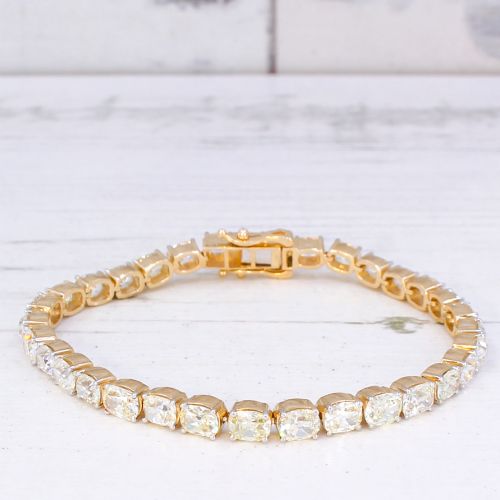
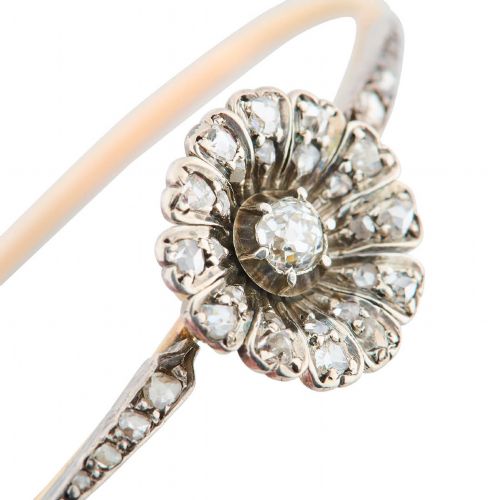
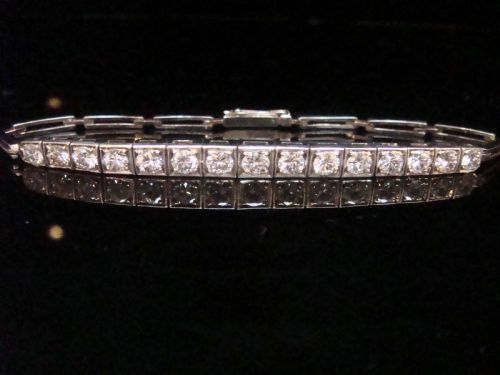
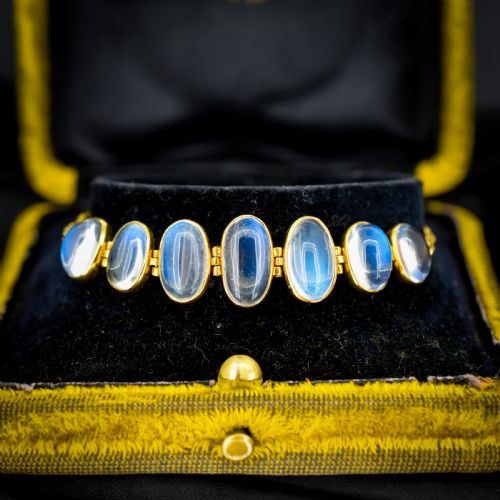
The versions met most frequently on this page span the Edwardian era alongside surrounding periods like the late Victorian phase and the 1920s. Objects take the form of flexible curb chains, ornate bangles, and multi-stone tennis configurations constructed primarily from yellow or rose gold.
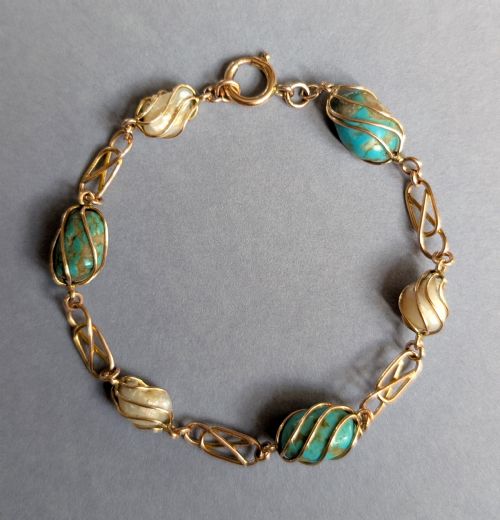
Makers integrated precious gemstones such as diamonds, sapphires, rubies, pearls, turquoise, and garnets into the metalwork. Such pieces served as personal adornments for daily wear and formal occasions alike, combining structural security with refined aesthetic appeal.
Materials and construction techniques
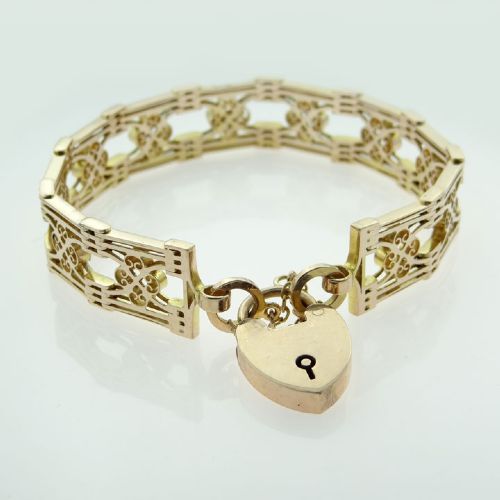
Jewellery of this period relies on distinct gold purities, predominantly 9ct, 15ct, and 18ct yellow or rose gold, alongside white gold and platinum settings for diamond work. Goldsmiths shaped these metals into hollow or solid links, gate patterns, and rigid bangle hoops.
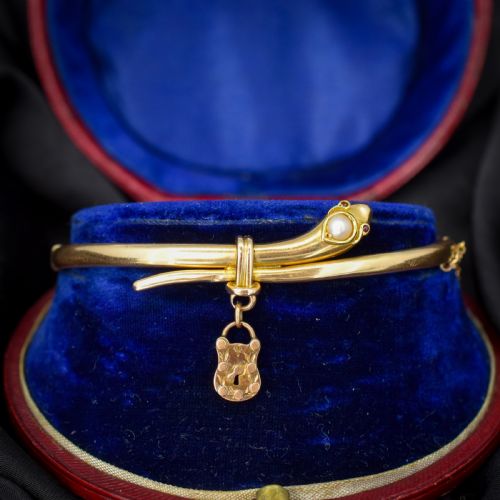
Gemstones are incorporated through various historical mounting methods, including collet settings that secure stones with folded metal rims and prong settings that maximise light exposure. Seed pearls and natural pearls appear threaded or pegged into floral and snake motifs.
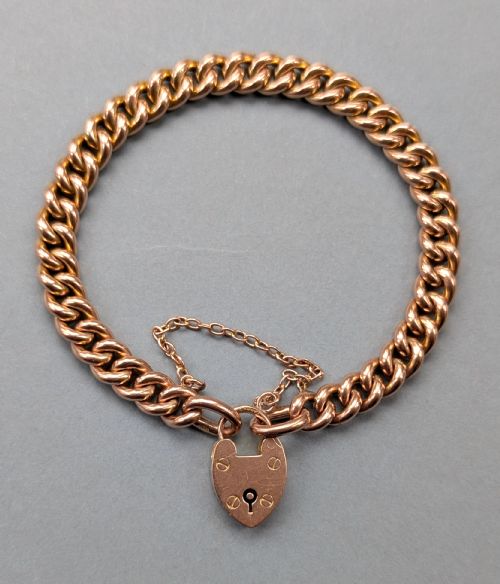
Structural elements frequently include integrated safety chains, concealed clasps, and functional heart padlocks that double as decorative centrepieces. Metal engraving and wirework such as lovers knots further define the fabrication of these items.
Several items feature coiled gold serpents biting their own tails, a traditional motif symbolising eternal love and unending devotion.
Distinctions in construction and design
Quality in these items is determined by the precision of the metalwork, the integrity of the hinges or links, and the original preservation of the piece. Finer examples maintain crisp engraving, secure stone settings, and fully intact safety mechanisms without sign of intrusive repair.
The selection and matching of gemstones also separate tiers of production, where uniform stone sizes, well-cut old mine or brilliant diamonds, and undamaged pearls elevate the piece. The weight and thickness of the gold chassis dictate the physical substance of the bracelet.
The Edwardian Gold Wristlet Glossary
- Padlock bracelet
- A style featuring a functional miniature padlock as a central clasp, often secured to a curb chain link. This form gained immense popularity during the late Victorian and Edwardian periods.
- Old mine cut
- An early diamond cut characterised by a cushion shape, a high crown, and a large culet facet. This shape reflects candlelight distinctively compared to modern brilliant cuts.
- Collet setting
- A metal collar that encircles the girdle of a gemstone to hold it in place. It represents a traditional method used extensively in antique fine jewellery.
- Bangle
- A rigid solid or hollow bracelet that slips over the hand or opens with a hinge and pin mechanism. Edwardian examples often incorporate diamonds and pearls across the upper face.
- Split pearl
- A half-pearl dome used in historical jewellery to fit flat against a gold backing or setting. These pearls are common in floral and snake cluster designs.
Edwardian Gold Wristlet: Frequently Asked Questions
How do I secure an antique clasp safely?
Many antique bracelets use concealed box clasps or heart padlocks that require careful handling to latch and release. Checking the spring tension and utilising any attached safety chain ensures the piece remains secure during wear.
For daily use, ensure the tongue of the box clasp clicks firmly into place before releasing the wrist. Professional jewellers can occasionally tighten loose mechanisms without altering the historic structure.
Can I wear my bracelet every day?
While these pieces were built for durable wear, antique settings involving pearls, turquoise, or softer gold purities require mindful handling. Removing the jewellery during physical tasks prevents unnecessary wear on delicate links and claw settings.
Storing the bracelet in a dedicated lined box prevents scratching from other items. Regular gentle cleaning maintains the lustre of the gold and gemstones without damaging historic materials.
How do I distinguish Edwardian from Victorian styles?
Victorian jewellery often displays heavier proportions, darker gemstones, and robust yellow or rose gold settings, frequently incorporating symbolic motifs like snakes and padlocks. Edwardian design shifts towards lighter, airier constructions using platinum and white gold alongside delicate diamond and pearl work.
Overlaps occur during transitional years around the turn of the twentieth century, blending characteristics from both eras. Examining hallmarks and specific gemstone arrangements helps clarify the precise period of manufacture.
What does carat weight mean for antique diamonds?
Carat weight measures the physical mass of the diamonds set into the bracelet, though antique stones are hand-cut and proportioned differently than modern gems. Older stones prioritise face-up brilliance under ambient light rather than mathematical symmetry.
Individual stone measurements contribute to the total carat weight listed for multi-stone configurations like tennis bracelets or floral bangles. This adds historical character to the overall sparkle of the piece.