


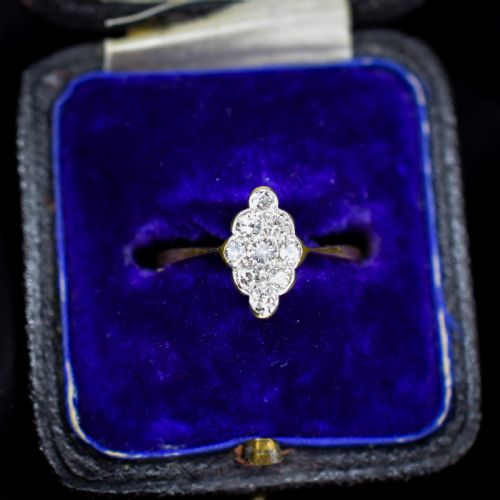
Edwardian Gold Dress Ring
An edwardian gold dress ring brings together delicate gemstone settings and rich precious metals from the early twentieth century.
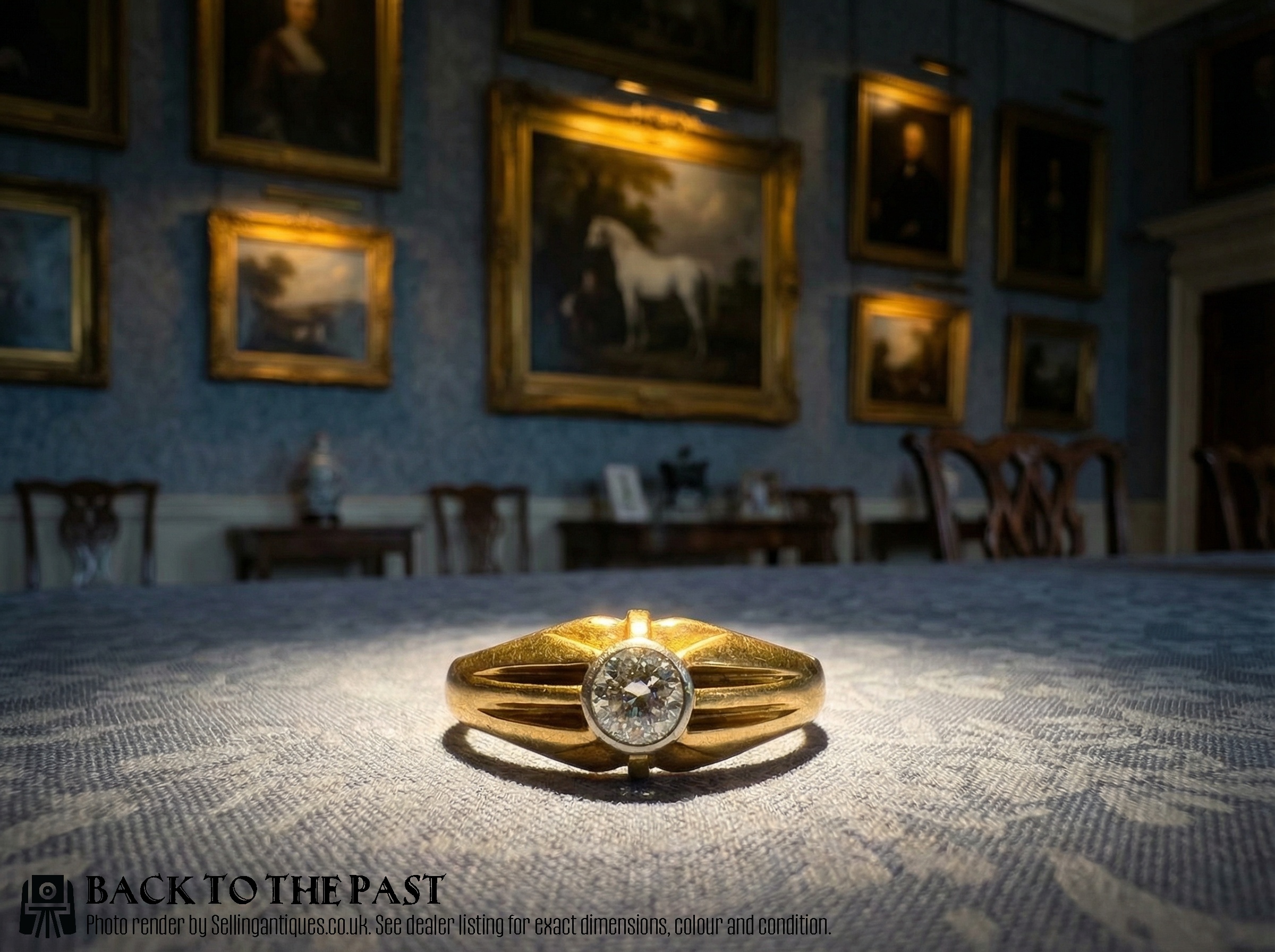
Edwardian Gold Dress Ring
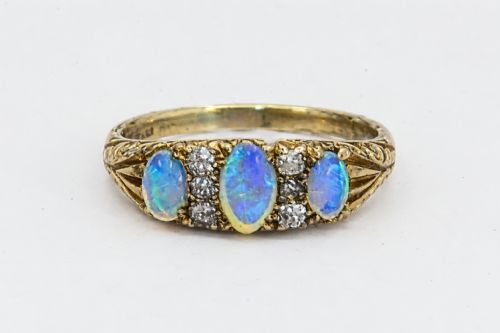
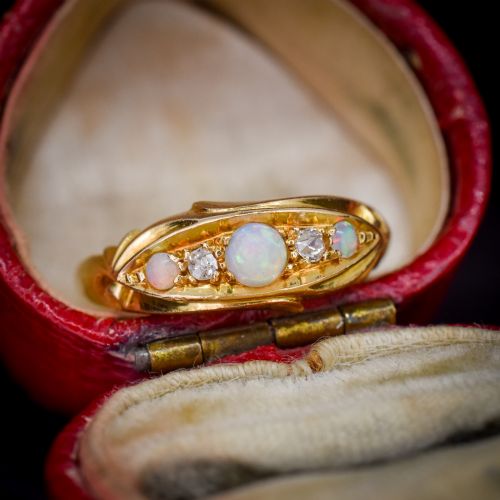
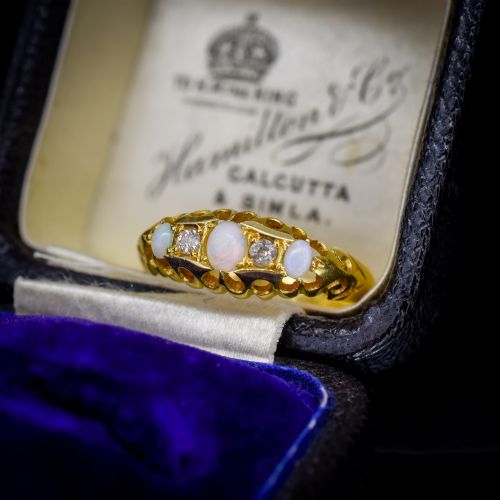
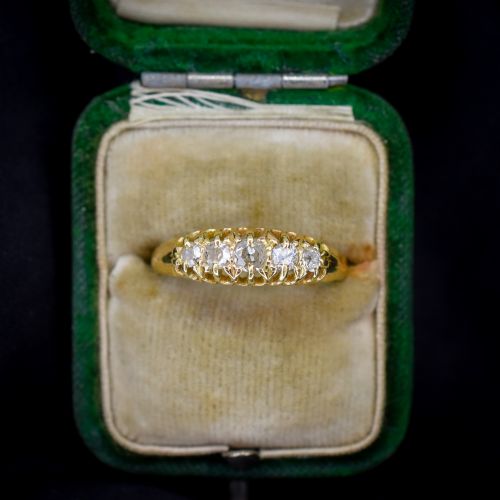
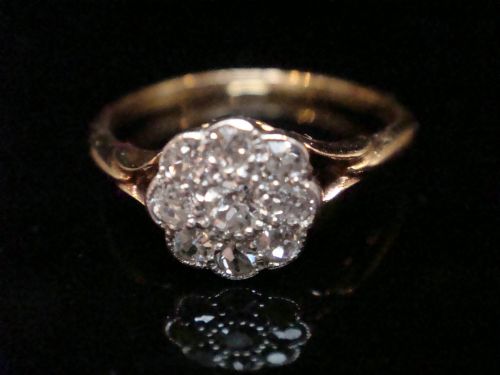
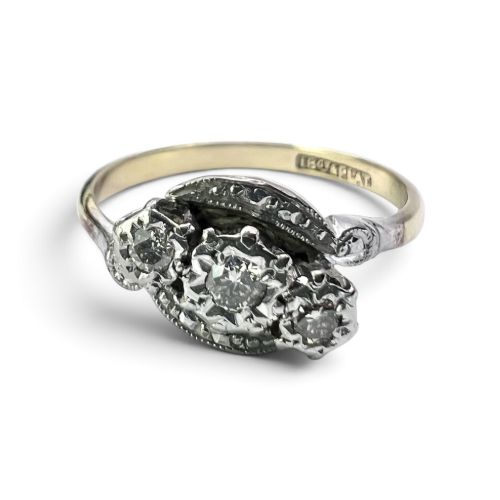
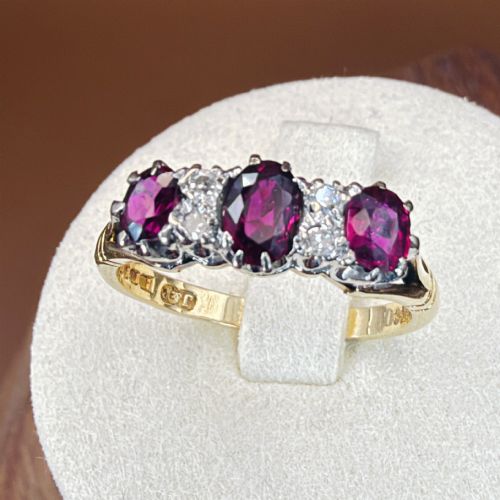
An edwardian gold dress ring represents the refined decorative jewellery of the early 1900s, though pieces from adjacent periods also appear here. Buyers searching this phrase encounter forms such as boat rings, cluster settings, and multi-stone band designs.
How they were made
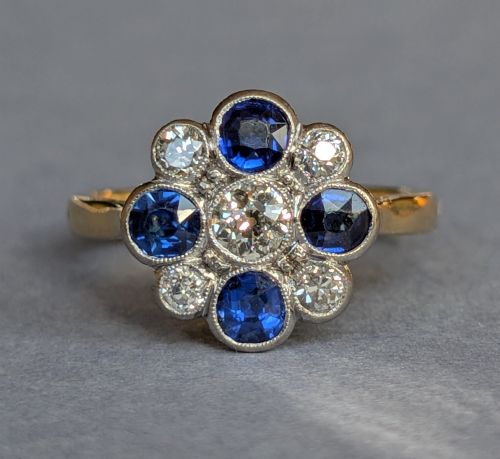
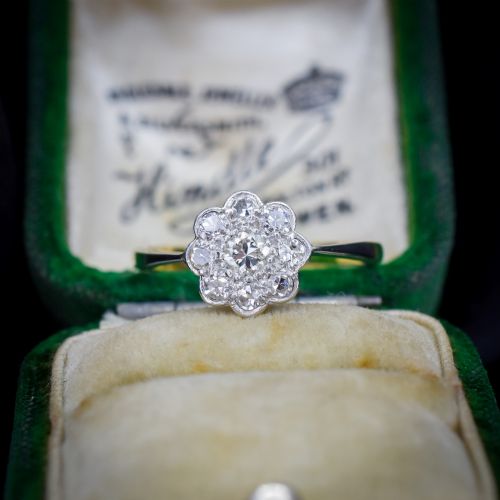
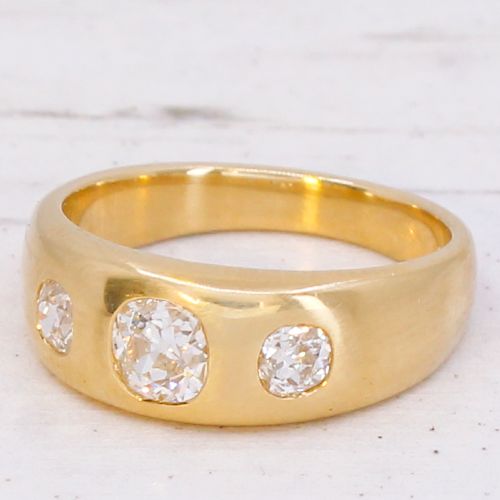
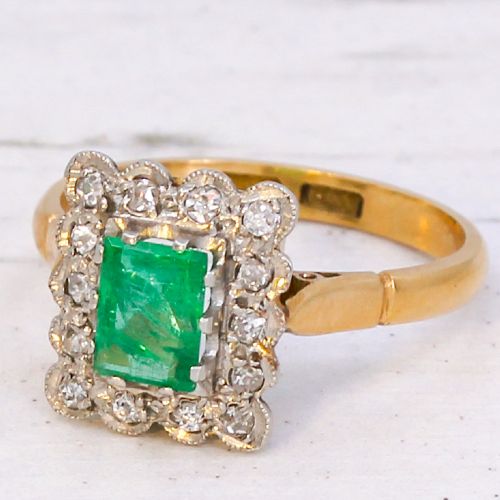
Goldsmiths of the period utilised eighteen-carat yellow gold and occasionally fifteen-carat or nine-carat gold, often pairing white metal tops like platinum with yellow gold shanks to enhance the brilliance of old cut diamonds. Stones were secured using delicate claw settings, bezel mounts, or low-profile flush settings typical of gypsy rings.
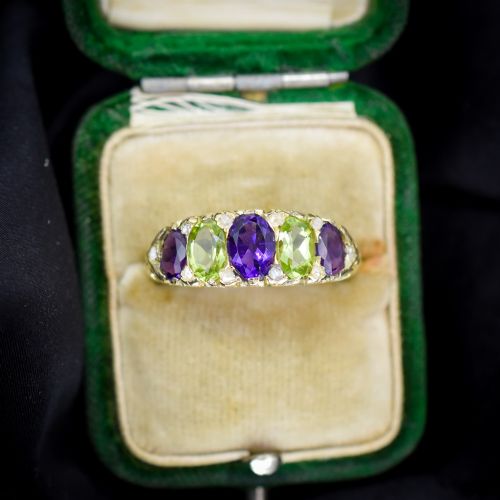
Gemstones such as opals, rubies, sapphires, emeralds, and pearls were shaped into round, oval, or navette silhouettes, frequently arranged in cluster daisy formations or balanced trilogy and five-stone layouts.
Edwardian Gold Dress Ring Retail Price Guide 2026
Typical asking prices for edwardian gold dress ring among the pieces listed under this phrase on Sellingantiques today, from the lower quarter to the upper quarter. They describe what is for sale here now, not the wider market.
What varies in quality
The distinction between tiers rests upon the choice and match of gemstones, particularly the play of colour in natural opals or the clarity and old-cut characteristics of diamonds. Hand-finishing in the metalwork, such as fine millegrain edges and well-balanced proportioning in navette or cluster layouts, separates standard production from finer examples.
Makers' marks, assay office stamps, and legible date hallmarks provide historical context that influences desirability among collectors, alongside the overall integrity of the original setting against daily wear.
The Edwardian Gold Dress Ring Glossary
- Boat ring
- A ring featuring a curved, horizontally elongated setting that tapers towards the shoulders, reminiscent of a boat hull. This shape was popular for multi-stone arrangements during the Edwardian period.
- Navette
- A boat-shaped or marquise outline characterised by pointed ends and an elongated centre. It is frequently seen in cluster rings from the early twentieth century.
- Old cut
- A diamond cut predating modern brilliant faceting, typically featuring a smaller table, higher crown, and open culet. These stones exhibit a softer, candlelit sparkle.
- Gypsy ring
- A style where gemstones are flush-set directly into a thick metal band that tapers smoothly towards the back. This design was favoured by both men and women in the Victorian and Edwardian eras.
- Millegrain
- A decorative technique involving a row of tiny raised metal beads along the edges of a setting. It provides a soft, textural border typical of fine Edwardian jewellery.
Edwardian Gold Dress Ring: Frequently Asked Questions
What is an edwardian gold dress ring?
An edwardian gold dress ring is a piece of decorative hand jewellery dating from the first decade of the twentieth century, typically constructed from yellow gold or platinum.
These rings frequently feature combinations of diamonds, rubies, sapphires, and opals arranged in boat, cluster, or multi-stone configurations.
How do I care for an edwardian gold dress ring?
Living with these antique rings requires mindful handling, particularly for pieces set with softer gemstones like opals or pearls.
It is advisable to remove them during rigorous manual tasks and store them individually to protect the delicate claw settings and millegrain edges from abrasion.
How can I tell the period from the style?
Dating relies on observing a combination of gemstone cuts, metal choices, and official hallmarks stamped inside the shank.
Edwardian pieces often pair platinum with yellow gold and utilise old cut diamonds, while maker marks and assay office letters provide precise years of origin.
Were these rings worn daily?
These pieces served as fashionable personal adornments for social occasions rather than utilitarian bands.
Their lightweight construction and intricate gemstone arrangements meant owners wore them selectively to preserve the delicate claw and bezel settings.