





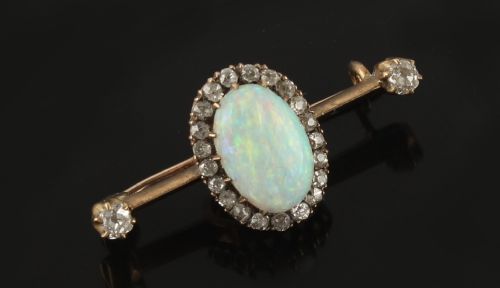
Edwardian Gold Bar Pin
When you handle an edwardian gold bar pin, you meet a slender piece of fine metal set with pearls, gems and diamonds that fastens neatly to a lapel.
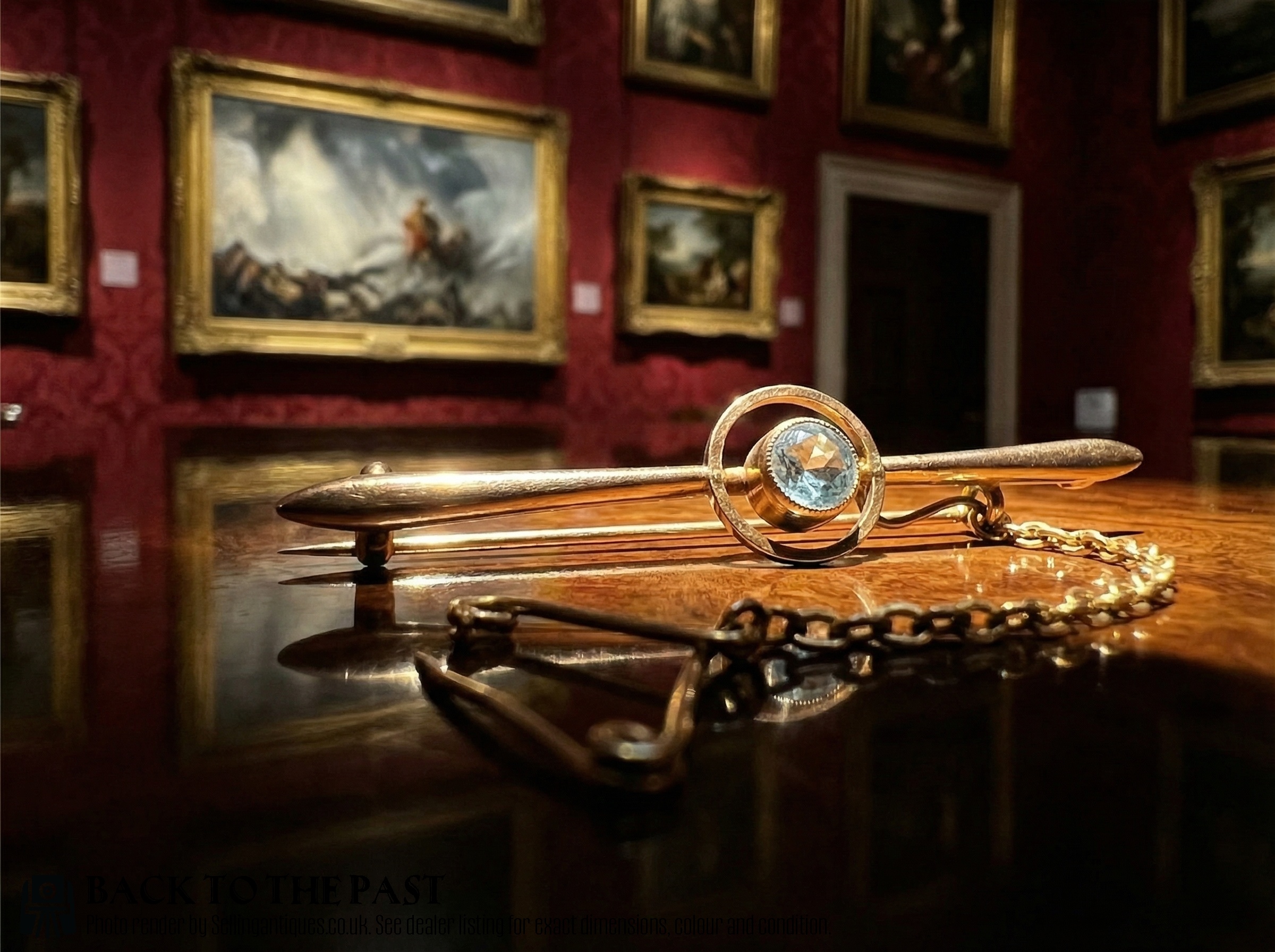
Edwardian Gold Bar Pin
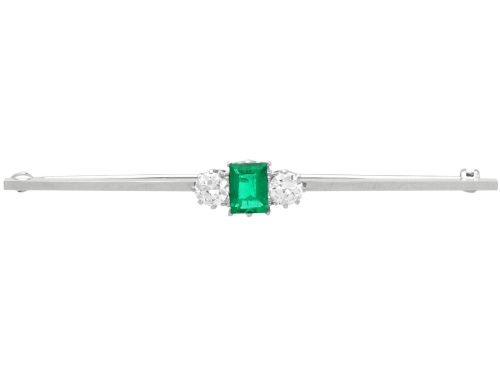
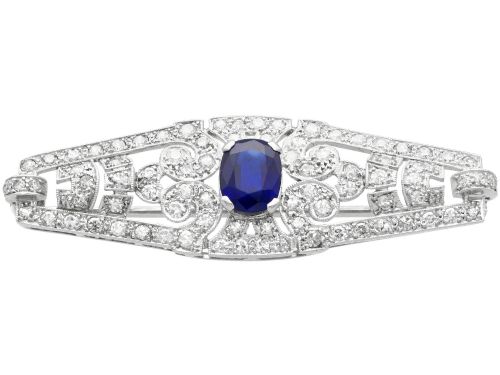
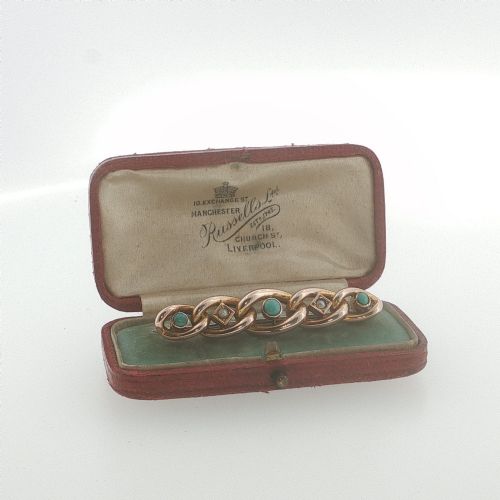
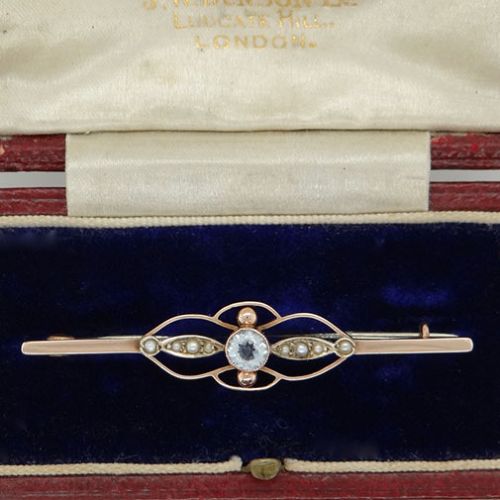
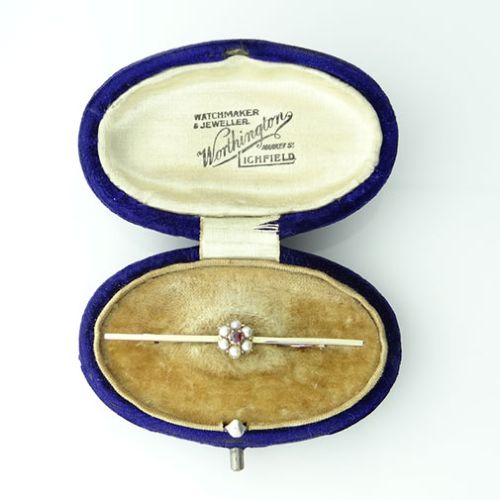
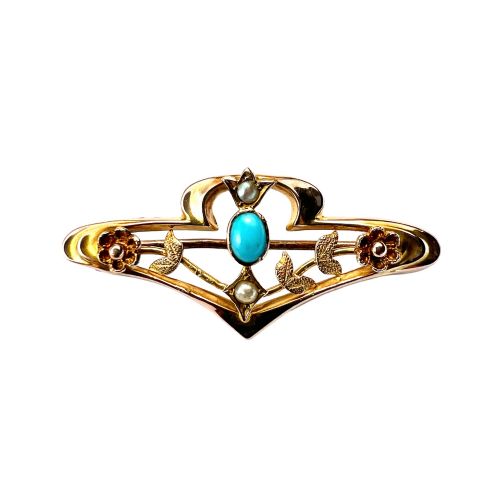
An edwardian gold bar pin brings together slender lengths of yellow, rose or white gold carrying stones such as pearls, turquoises, rubies and diamonds. These pieces belong primarily to the Edwardian and Victorian eras, spanning into the early decades of the twentieth century.
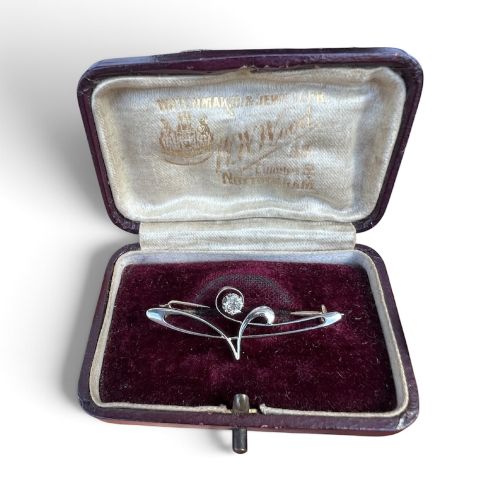
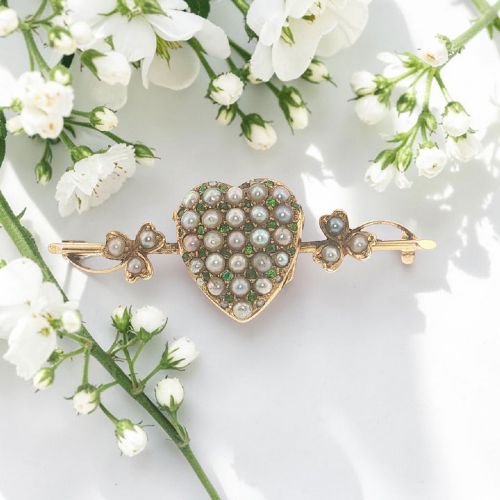
The common form on this page takes a narrow horizontal bar of gold mounted with floral clusters, hearts, crescents or winged designs. Many carry seed pearls alongside colourful gems like aquamarines, peridots and garnets.
Makers shaped these jewels in gold alloys including 9ct and 15ct, often pairing the gold with platinum or silver to highlight old-cut diamonds. They serve today as fastening pins for lapels, scarves and collars, preserving the delicate motifs of their period.
Materials and construction
Goldsmiths worked chiefly in 9ct and 15ct gold, alongside higher karat white gold and platinum settings for diamond clusters. Metals were drawn into wire or cast into bars, then fitted with secure pin stems and C-clasps.
Gemstones including seed pearls, turquoise, rubies and diamonds were hand-set into bezels or mounted via delicate claws. Artisans incorporated enamel, silver toppings and hollow stampings to keep the bar pins light on delicate fabrics.
Edwardian Gold Bar Pin Retail Price Guide 2026
Typical asking prices for edwardian gold bar pin among the pieces listed under this phrase on Sellingantiques today, from the lower quarter to the upper quarter. They describe what is for sale here now, not the wider market.
Tiny winged heart pins whisper romance from lapels where larger brooches fear to tread.
Quality differences
The distinction between standard examples and finer work lies in the selection of the gemstones and the crispness of the metal casting. Better pieces display well-matched natural pearls and clean, bright old-cut diamonds secured without excess solder.
Superior pins show careful proportion between the central cluster and the supporting bar, with robust pin mechanisms that retain their spring. The refinement of the hand-finishing on the reverse side indicates the workshop standard.
The Edwardian Gold Bar Pin Glossary
- Bar pin
- A narrow horizontal brooch designed to fasten clothing with a pin stem running the length of the reverse. These pieces often feature a central gemstone cluster.
- Seed pearl
- A very small, natural or saltwater pearl used extensively in clusters and borders on period jewellery. They provide a delicate white texture against gold.
- Old-cut diamond
- A hand-faceted diamond cut before modern machine standards, typically featuring a small table and high crown. These stones exhibit a soft, warm candlelit sparkle.
- Turquoise
- An opaque blue-green mineral utilised in Victorian and Edwardian jewellery for heart and floral motifs. It contrasts vividly with yellow and rose gold.
Edwardian Gold Bar Pin: Frequently Asked Questions
How do I wear an edwardian gold bar pin?
Fasten the pin securely through the fabric of a lapel, collar, or scarf, ensuring the safety catch is properly engaged.
Because these pieces are delicate, avoid wearing them on heavy woven materials that might strain the pin stem.
Are these pins made of solid gold?
Most examples utilise solid 9ct or 15ct gold for the bar and settings, though occasional pieces incorporate platinum or silver.
Check the hallmarks or test the metal to confirm the specific gold karat used by the maker.
How can I tell an Edwardian pin from a Victorian one?
Edwardian pieces often feature lighter, airier platinum-topped mounts and whiter diamond settings, reflecting early twentieth-century tastes.
Victorian examples tend towards warmer rose golds, heavier yellow gold weights, and sentimental motifs like hearts and horseshoes.