

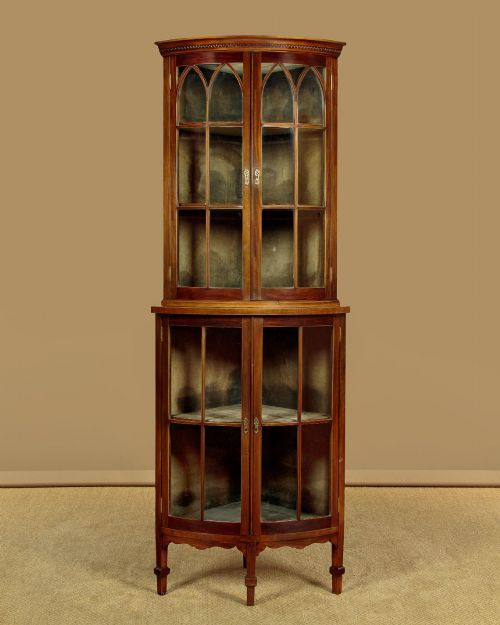
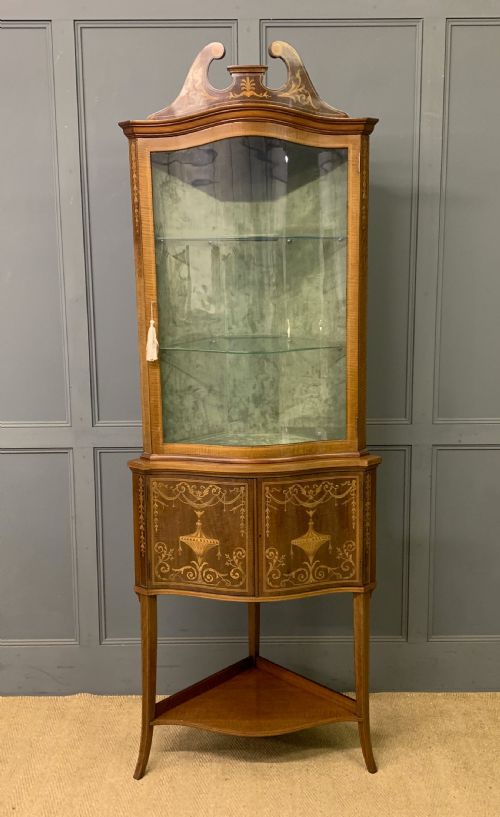


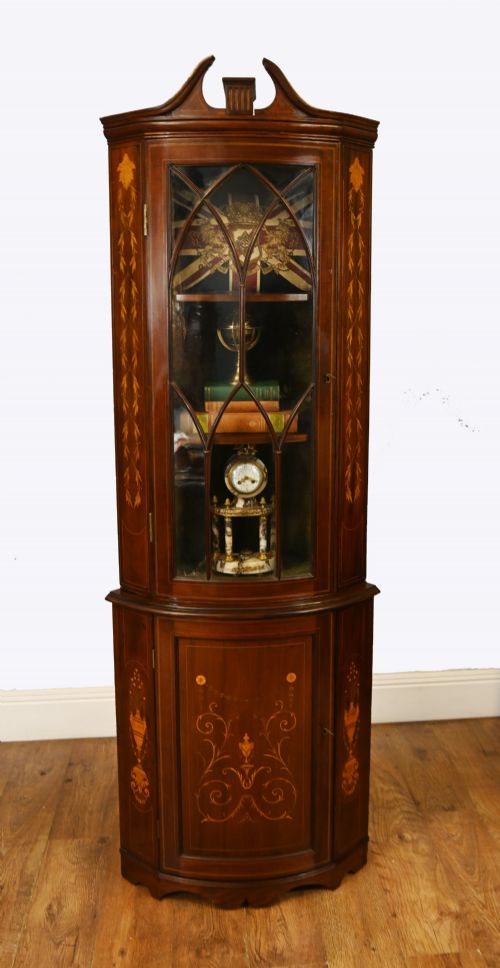


Edwardian Glass Corner Cabinet
An Edwardian glass corner cabinet uses dead space to display silver and china through glazed doors.
Edwardian Glass Corner Cabinet
An Edwardian glass corner cabinet makes clever use of awkward room angles by slotting neatly into corners while offering display space for porcelain and glassware. The majority of pieces appearing under this heading date from the Edwardian period and the surrounding decades, though earlier Victorian and George III examples also surface.
Forms range from wall hanging cupboards to substantial standing double height corner units and standing bow front styles. Buyers encounter both freestanding models that rest on the floor or stands and wall mounted versions designed to save floor space.
Cabinet makers during this era frequently drew upon earlier design idioms, producing Sheraton Revival pieces alongside Arts and Crafts variants. Mahogany remains the dominant timber, often enhanced with lighter wood inlays.
Materials and Construction
Makers built these cabinets primarily using solid mahogany and mahogany veneers, frequently incorporating satinwood inlay and marquetry details to decorate the surfaces. Rosewood and oak also appear, particularly in pieces influenced by the Arts and Crafts movement or Victorian tastes.
Glazing forms the central visual element, utilising fitted glass panels within timber doors to protect the contents while keeping them visible. Brass hardware such as hinges and escutcheons completes the construction alongside mirrored backs and fabric lined interiors in select display models.
Edwardian Glass Corner Cabinet Retail Price Guide 2026
Typical asking prices for edwardian glass corner cabinet among the pieces listed under this phrase on Sellingantiques today, from the lower quarter to the upper quarter. They describe what is for sale here now, not the wider market.
Evaluating Quality
Superior examples distinguish themselves through the crispness of their marquetry inlay and the selection of figured timber grain. Fineness in cabinet making shows in the tight joinery of the angles and the delicate proportions of the cornices and glazing bars.
Standing double height cupboards and serpentine shaped fronts generally demand higher levels of joinery skill than standard wall hanging models. The integration of curved bowed glass doors and well executed satinwood inlay further separates standard production pieces from top tier workshop output.
Edwards And Roberts
The Edwardian Glass Corner Cabinet Glossary
- Bow front
- A convex, curved front shape that projects outward in a smooth arc. This profile adds visual depth and softness to corner furniture.
- Marquetry
- Decorative patterns formed by fitting together small pieces of wood veneer. Craftsmen use contrasting timbers like satinwood to create detailed motifs.
- Sheraton Revival
- A late nineteenth and early twentieth century design movement inspired by the furniture of Thomas Sheraton. Pieces often feature refined classical details and light wood inlay.
- Glazed door
- A timber frame holding glass panes designed to showcase the interior. These doors keep dust away from displayed items.
- Double height
- A tall cabinet structure featuring an upper and lower section combined into one unit. These standing pieces provide maximum storage and display capacity.
Edwardian Glass Corner Cabinet: Frequently Asked Questions
Where should I place a corner cabinet?
These cabinets fit directly into ninety degree room junctions to utilise dead space effectively. They work well in dining rooms or drawing rooms where you want to display tableware without blocking walkways.
Position them away from direct sunlight to protect interior fabrics and any wooden finishes from fading over time.
Are these cabinets wall hanging or standing?
The selection includes both wall mounted versions and heavy freestanding floor standing models. Wall hanging variants require secure fixing to wall studs due to the weight of the timber and glass.
Standing versions rest directly on the floor or upon dedicated stands, offering greater internal capacity.
What is Sheraton Revival style?
Sheraton Revival furniture draws inspiration from eighteenth century neoclassical designs. Makers utilised light wood inlays and graceful proportions during the Edwardian era to recreate this classical look.
These pieces emphasise symmetry, polished mahogany surfaces, and refined decorative stringing.
How do I care for inlaid mahogany?
Keep the wood nourished using appropriate wax polish applied sparingly with a soft cloth. Avoid placing the cabinet near radiators or heat sources that can dry out the timber and cause veneer to lift.
Clean the glass panels using standard glass cleaner sprayed onto a cloth rather than directly onto the cabinet to protect the surrounding wood.