



Edwardian Gateleg Side Table
An edwardian gateleg side table offers clever space-saving versatility alongside the warm grain of period timbers like mahogany and oak.
Edwardian Gateleg Side Table
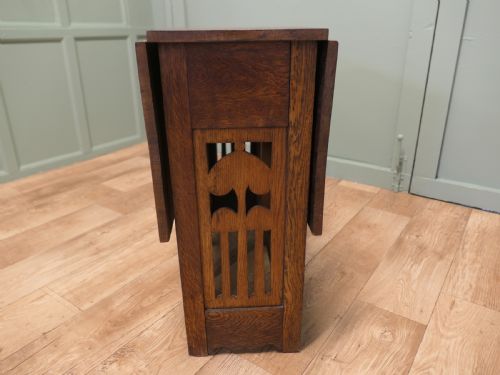
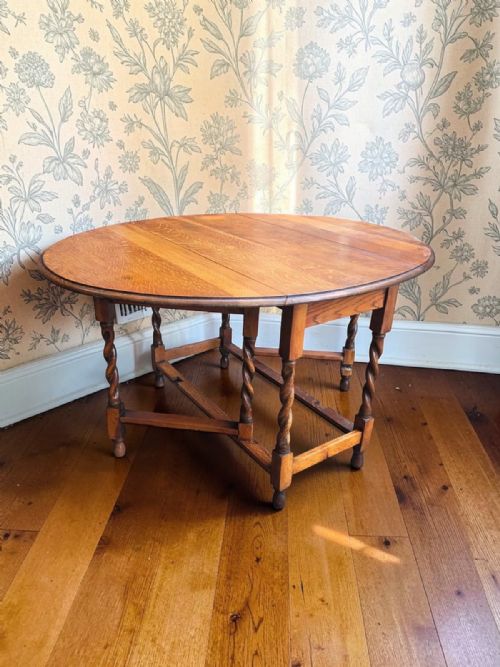
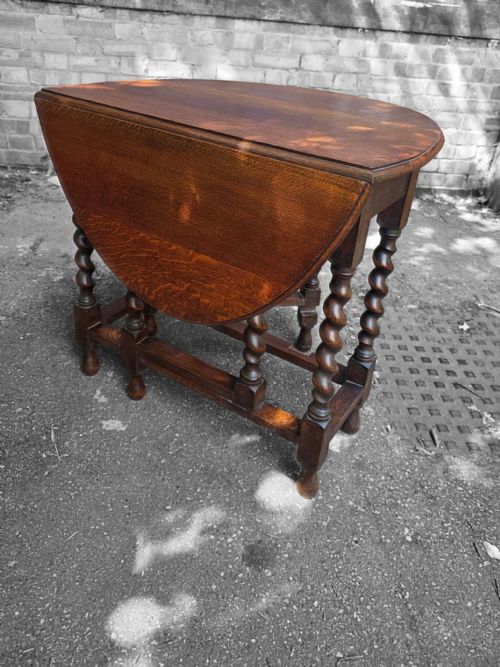
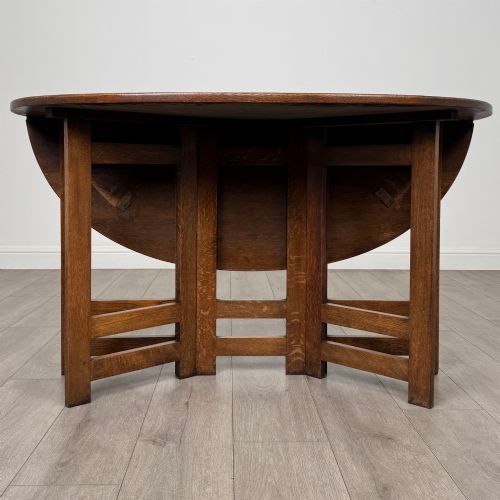
An edwardian gateleg side table combines a sturdy hinged frame with drop leaves that fold down neatly when floor space is at a premium. These pieces bridge domestic utility and refined reception room styling, appearing frequently in walnut, mahogany, and solid oak.
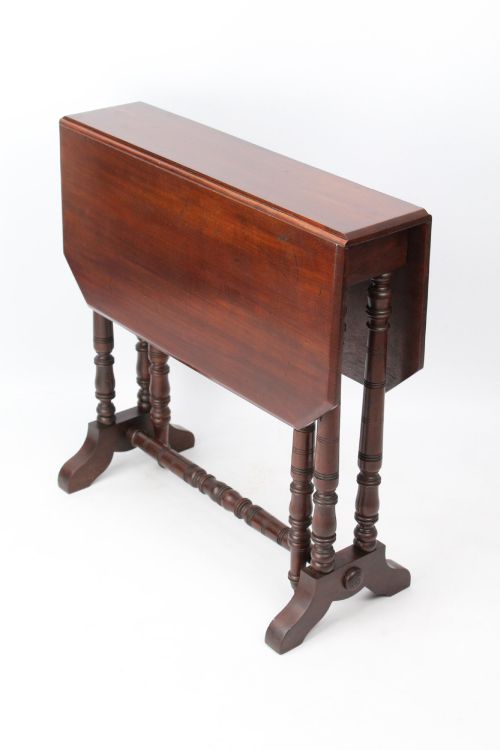
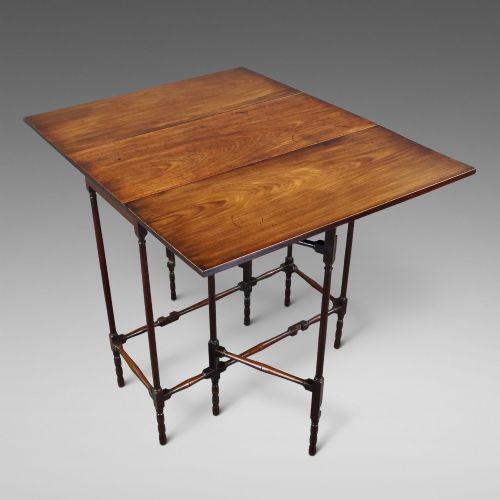
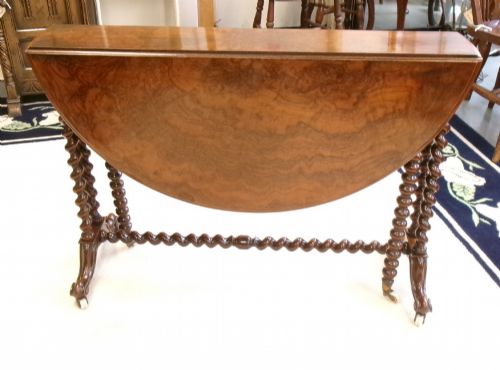
The selections span standard occasional surfaces, narrow spider-leg formats, and compact Sutherland designs featuring barley twist supports. Makers drew inspiration from earlier Jacobean, Georgian, and Sheraton revivals, blending traditional joinery with lighter, domestic proportions suited to smaller Edwardian interiors.
What Varies in Quality
The distinction between tiers rests upon timber selection and the crispness of the hand-turned details. Superior examples utilise finely figured burr walnut, rich mahogany, or carefully matched satinwood banding rather than plain secondary timbers.
Structural integrity of the pivoting gate hinges and the tightness of the leg joints dictate daily durability. Refined execution shows in balanced proportions when open, flush drop-leaf joints, and crisp execution of barley twist or inlaid decorative elements.
Some Edwardian tables incorporate tiny castors so stealthy they practically glide across the rug by themselves.
Maple & Co
The Edwardian Gateleg Side Table Glossary
- Gateleg table
- A table featuring hinged leaves supported by one or more swinging legs that pull out like a gate. This mechanism allows the surface area to expand or contract swiftly.
- Sutherland table
- A narrow-profile drop-leaf table with exceptionally slender legs and leaves that fold down almost vertically. It was designed to occupy minimal space against a wall when not in use.
- Barley twist
- A spiral turning resembling a twisted rope, carved or turned onto furniture legs and supports. This decorative motif appears frequently on oak pieces influenced by earlier revival styles.
- Spider leg
- A term describing furniture with exceptionally thin, delicate turned legs, often braced by fine stretchers. Such framing keeps the piece visually light while supporting a small drop leaf.
- Satinwood
- A lustrous, hard timber native to Ceylon and India, prized for its golden yellow colour and fine grain. It was frequently used for veneers, banding, and inlay on upscale Edwardian tables.
Edwardian Gateleg Side Table: Frequently Asked Questions
How do I use a gateleg table daily?
Keep the leaves dropped against the sides to use the piece as a compact side table or hall surface. Pull out the swinging gate supports to raise the leaves whenever you need an extra surface for tea or writing.
Fold the leaves down again to reclaim floor space in smaller rooms. Avoid placing excessively heavy loads on the unsupported outer edges of extended leaves.
What is the difference between a Sutherland table and a standard gateleg?
A Sutherland table is a specific, narrower subtype of gateleg table designed to fold into an extremely slim profile. When dropped, its leaves hang down almost parallel to the floor, leaving a very narrow central top.
Standard gateleg tables often feature broader fixed central sections and bulkier frames built for heavier dining use. Sutherland versions prioritise neatness and occasional service in sitting rooms.
How can I tell an Edwardian piece from a Victorian one?
Edwardian tables generally display lighter proportions, brighter wood tones, and restrained decorative inlays influenced by Sheraton revivals. They often incorporate satinwood banding or ebonised finishes on smaller, more portable frames.
Victorian examples tend to use heavier dark mahogany or burr walnut with more robust turnings and denser structural mass. Examining the secondary woods, fixings, and overall heft helps clarify the period of production.
Where should I place this table in my home?
These tables fit naturally beside a sofa, beneath a window, or against an empty hallway wall where depth is limited. Their narrow profile when folded makes them useful as lamp tables or display surfaces.
Position the table away from direct heat sources and strong sunlight to protect polished wood surfaces and delicate veneers. Opening the leaves periodically prevents uneven fading or timber settling.