



Compact Folding Coffee Table
A compact folding coffee table offers practical surface space that folds away neatly when floor space is at a premium.
Compact Folding Coffee Table
A compact folding coffee table brings together utility and space-saving design across various early periods. When you search for a compact folding coffee table, you encounter practical items made to adapt to changing room layouts.
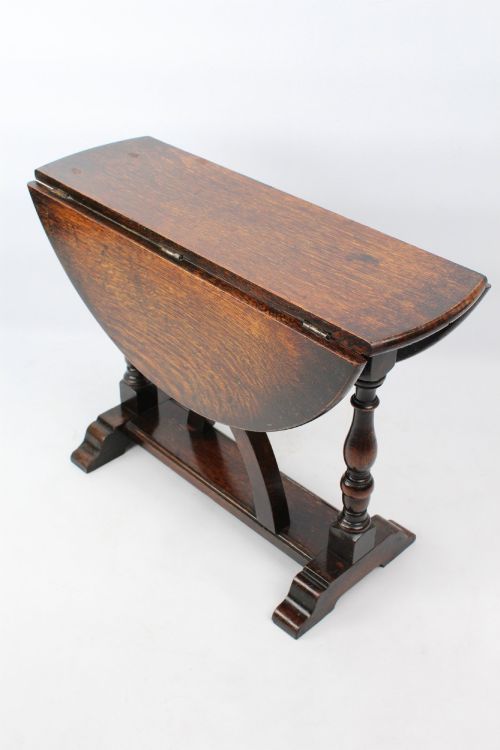
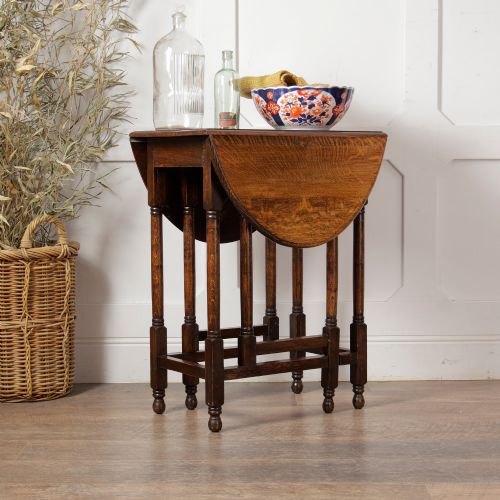
The pieces listed on this page primarily take the form of gateleg, drop-side, and dropleaf designs. These formats allow the surface area to expand or contract through hinged flaps supported by swinging legs.
Origins span from the late Victorian era through the Edwardian period and into the nineteen thirties. Common alternative classifications in the evidence include occasional tables and side tables that function in the same versatile manner.
How they were made
Construction relies heavily on timbers such as oak and mahogany, chosen for their durability and grain. Cabinetmakers also utilised satinwood for decorative inlay work, adding contrast to tabletops.
Metal and brass components appear in the form of hinges, brackets, and swivel mechanisms that allow the drop leaves and folding frames to operate smoothly. These functional hardware pieces remain integral to the structural integrity of each table.
Compact Folding Coffee Table Retail Price Guide 2026
Typical asking prices for compact folding coffee table among the pieces listed under this phrase on Sellingantiques today, from the lower quarter to the upper quarter. They describe what is for sale here now, not the wider market.
Materials recorded across the current inventory include oak, mahogany, satinwood, brass, and metal.
What varies in quality
The refinement of the timber grain and the precision of the joinery set finer examples apart from simpler utilitarian pieces. Finer tables often incorporate decorative details like inlay work or double gateleg configurations.
The smoothness of the folding or swivelling mechanism indicates the care taken during initial construction. Well-fitted hinges and sturdy pivoting joints ensure the leaves remain level when extended.
The Compact Folding Coffee Table Glossary
- Gateleg table
- A table with hinged flaps supported by legs that swing outward like a gate. This design provides a large surface area that collapses into a narrow footprint.
- Dropleaf
- A table top configuration featuring fixed centre sections with hinged leaves on either side. These leaves drop down when not in use to save space.
- Sutherland table
- A specific type of narrow drop-leaf table with particularly slender legs and leaves that drop almost vertically. It was named after the Duchess of Sutherland.
- Swivel-top
- A tabletop mechanism that rotates to reveal a hidden compartment or to alter the orientation of the surface. It locks into position for stability.
- Inlay
- A technique where pieces of contrasting wood or other materials are inserted into recesses in the primary wood surface to create decorative patterns.
Compact Folding Coffee Table: Frequently Asked Questions
How do I use a folding coffee table?
You extend the hinged leaves when you require extra surface area for drinks or books. The drop leaves fold down easily against the base to clear floor space.
This adaptability makes these tables useful in smaller rooms where permanent large furniture dominates. They transition smoothly between daily use and folded storage.
What woods were commonly used?
Makers relied predominantly on oak and mahogany for the main frames and tabletops. These hardwoods provided the structural strength needed for folding mechanisms.
Satinwood and brass appear as secondary materials for decorative inlay and operational hardware. These combinations ensure both durability and visual appeal.
How do I date an Edwardian table?
Edwardian pieces date from the reign of King Edward the Seventh between nineteen naught one and nineteen ten. Stylistic markers often include lighter mahogany timbers and refined inlay work.
Earlier Victorian pieces tend to be heavier in construction and darker in tone. Later examples from the nineteen twenties and thirties often return to simpler oak forms.