

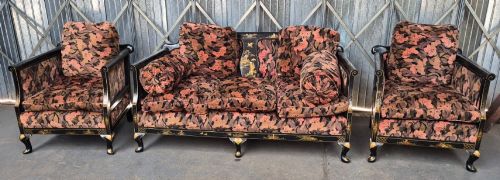


Edwardian Furniture Pieces
Edwardian furniture pieces bring together matched suites and small decorative objects in mahogany, oak, and walnut from the turn of the twentieth century.
Edwardian Furniture Pieces
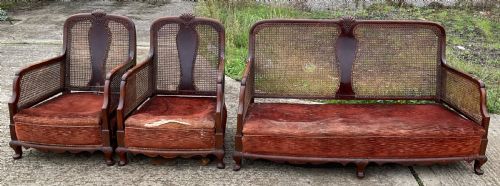
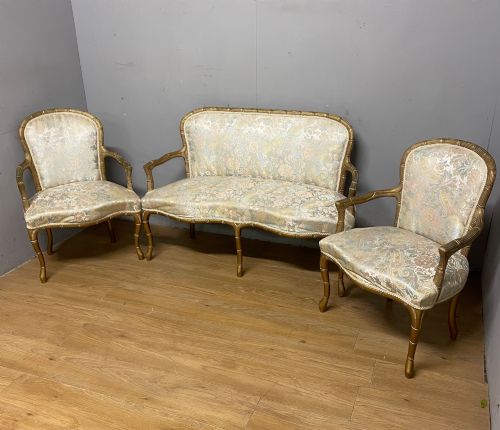
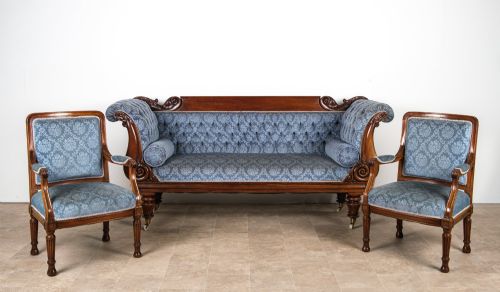
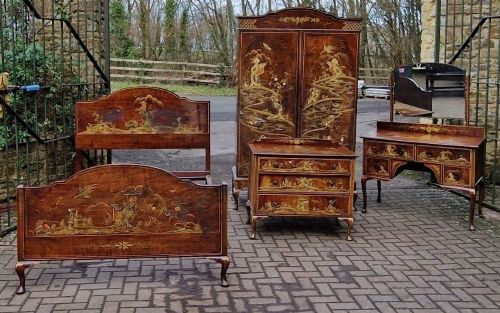
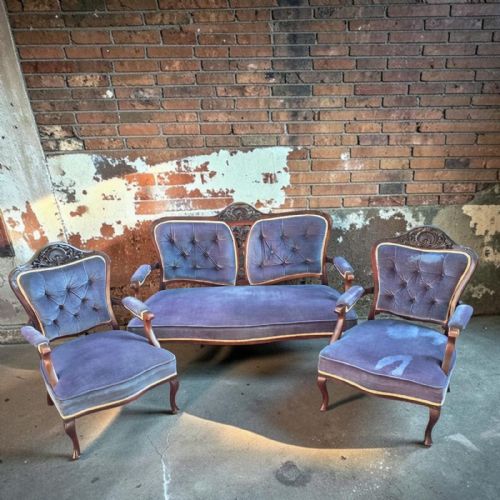
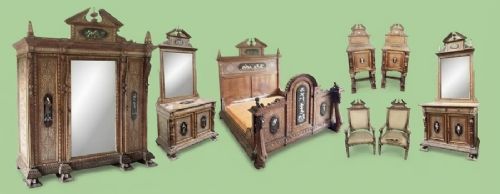
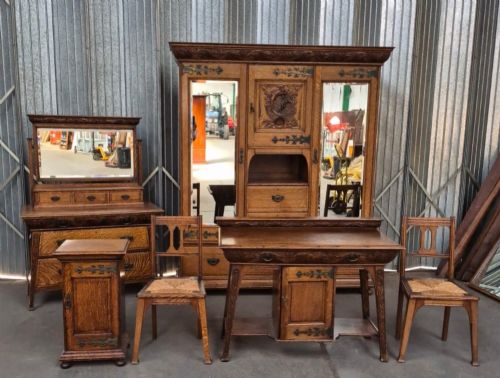
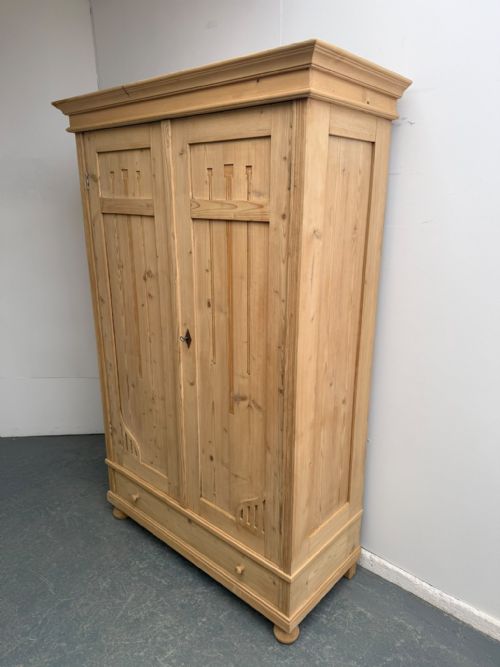
When searching for edwardian furniture pieces, collectors encounter large matched groupings alongside smaller decorative examples spanning salon suites, bedroom suites, and miniature furniture. These objects range from substantial mahogany and satinwood wardrobe suites to compact oak apprentice pieces and miniature chests of drawers.
The selections span distinct stylistic revivals, taking in Arts and Crafts designs, Chippendale Revival forms, and decorative Edwardian Chinoiserie. Buyers most frequently meet comprehensive three-piece and multi-piece upholstered seating suites, alongside cabinet furniture scaled down for display or apprenticeship.
How they were made
Maker construction relies on traditional timber framing using solid mahogany, oak, walnut, ash, and yew wood, often enhanced with satinwood inlay or mother of pearl detailing. Surfaces are finished with brass hardware, carved wooden elements, and glass panels.
Upholstered seating incorporates velvet and leather coverings alongside buttonback padding and carved wooden frames. Miniature pieces and larger cabinet suites employ standard period joinery techniques suited to the specific timber and style.
Edwardian Furniture Pieces Retail Price Guide 2026
Typical asking prices for edwardian furniture pieces among the pieces listed under this phrase on Sellingantiques today, from the lower quarter to the upper quarter. They describe what is for sale here now, not the wider market.
Apprentice cabinetmakers crammed entire wardrobes into miniature sizes just to show off.
What varies in quality
Quality differences emerge in the execution of decorative details, such as the precision of satinwood and mother of pearl inlays versus plain timber surfaces. Carved wooden elements show varying levels of crispness and depth across different workshops.
The integrity of matching suites depends on whether all component pieces share identical timber grain, upholstery fabric, and period characteristics. Complete multi-piece bedroom and salon suites display greater cohesion when original elements remain entirely unified.
Waring and Gillows
The Edwardian Furniture Pieces Glossary
- Apprentice piece
- A small-scale model demonstration item created by a craftsman to prove skill before gaining full guild membership. These items replicate full-sized furniture in miniature form.
- Salon suite
- A coordinated set of seating furniture designed for formal entertaining and reception rooms, typically comprising a sofa and matching chairs. These groupings reflect unified aesthetic periods.
- Chinoiserie
- European decorative style incorporating imitated Chinese artistic motifs and lacquer techniques. This aesthetic appears on late Edwardian furniture framing.
- Inlay
- A decorative technique where contrasting materials like satinwood or mother of pearl are embedded into the surface of a timber base. This method defines many Edwardian mahogany pieces.
- Buttonback
- An upholstery style where buttons are pulled deep into the padding to create a quilted pattern. This technique appears on Victorian and Edwardian salon seating.
Edwardian Furniture Pieces: Frequently Asked Questions
What defines an edwardian salon suite?
An Edwardian salon suite consists of coordinated seating designed for reception spaces, typically including a sofa and matching armchairs.
These groupings share identical timber frames, upholstery materials, and decorative carving styles.
How are miniature furniture pieces used?
Miniature furniture items serve as decorative display objects on tabletops, shelves, and mantelpieces.
Historically created as apprentice pieces or salesman samples, today they function as standalone decorative focal points.
What timber types appear in these suites?
Primary timbers include mahogany, oak, walnut, satinwood, ash, and yew wood.
Many pieces incorporate contrasting inlay materials and brass hardware to highlight the primary wood grain.
How do Arts and Crafts pieces differ?
Arts and Crafts furniture prioritizes visible construction, plain golden oak timbers, and straightforward geometric forms.
These designs eschew heavy decorative revival styling in favor of honest craftsmanship.