






Edwardian Fretwork Wall Mirror
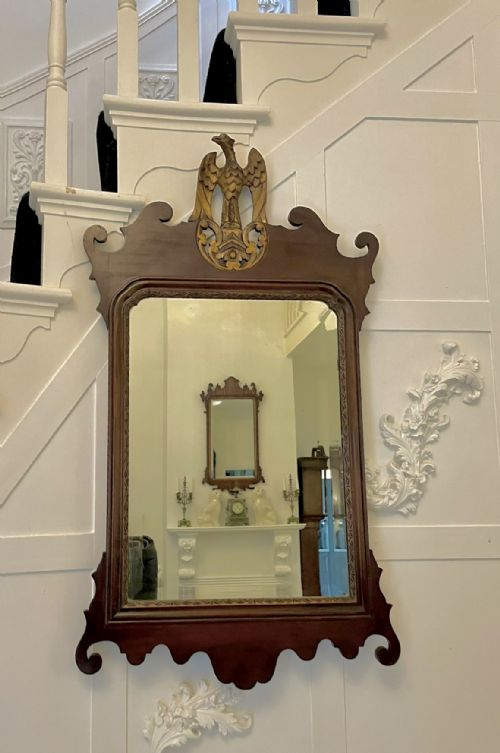
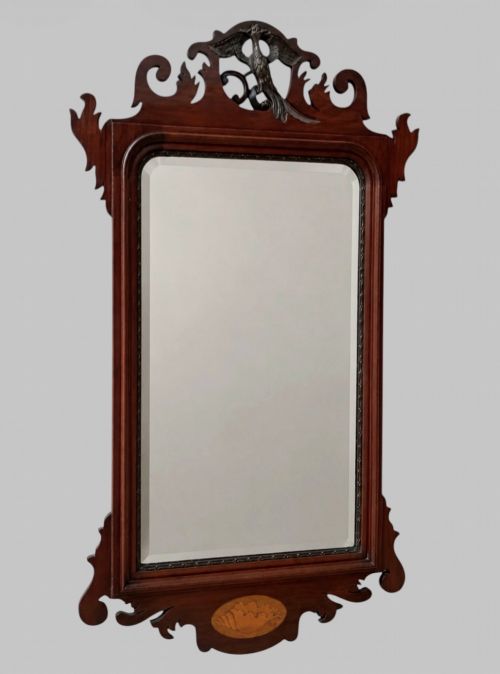
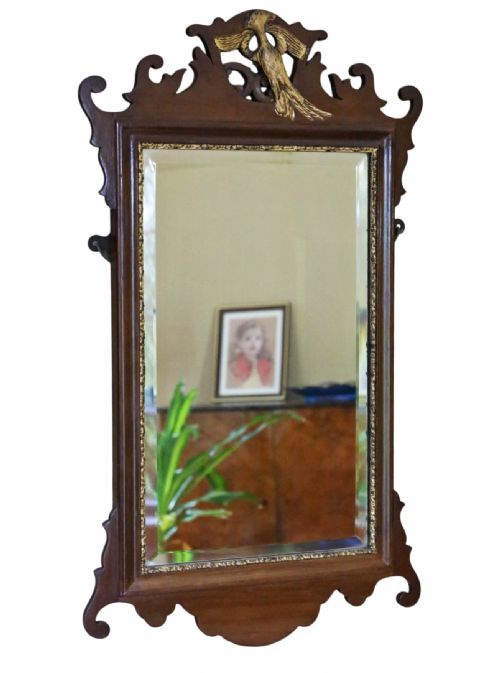
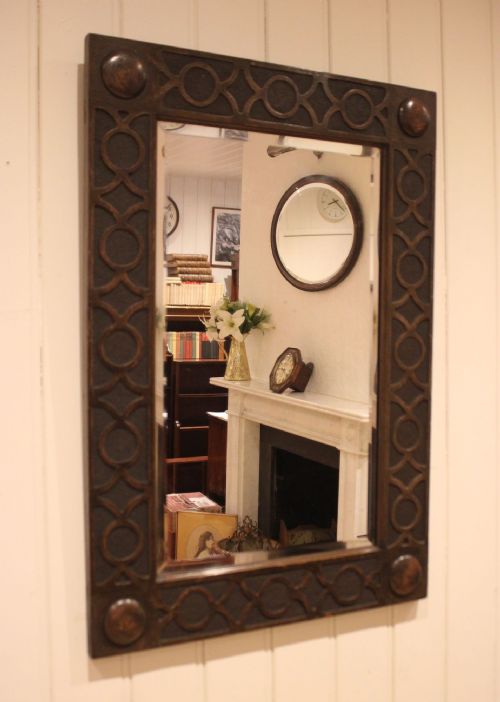
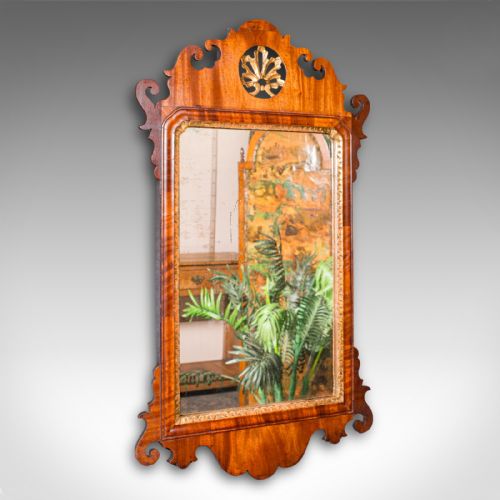
An edwardian fretwork wall mirror brings architectural line and warmth to a room through pierced mahogany frames and bevelled glass.
Edwardian Fretwork Wall Mirror
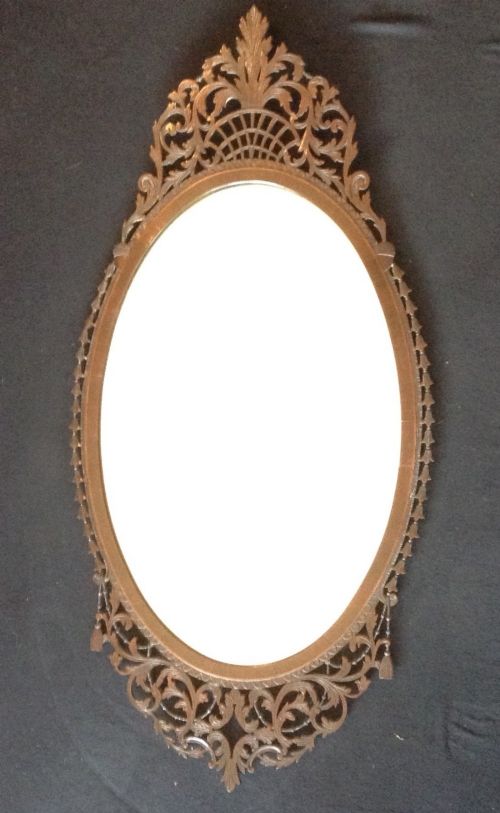
When you search for an edwardian fretwork wall mirror, you are looking at hanging glass framed by pierced woodwork that draws heavily on earlier eighteenth-century designs. Most examples found here date from around nineteen hundred to nineteen ten, executed in rich timber with delicate fret-cut silhouettes.
The form ranges from small rectangular hanging pieces to large proportions designed for reception halls or morning rooms. Alongside traditional vertical formats, the selection includes oval shapes, overmantel proportions, and variants combined with small display shelves.
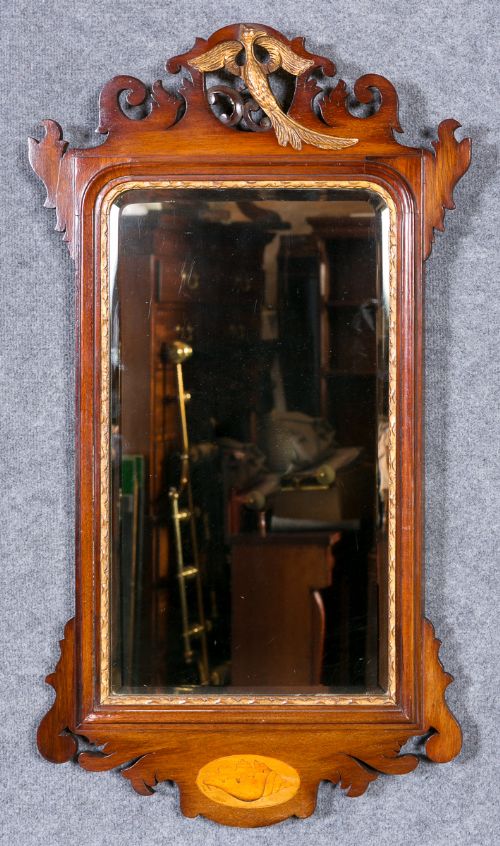
Makers of the period frequently looked backward, producing Georgian revival and Chinese Chippendale styles that sat comfortably in contemporary Edwardian interiors. These pieces relied on slender outlines and figured grain to create an impression of lightness on the wall.
Materials and construction
Makers built these frames predominantly from dense timbers like mahogany and rosewood, often choosing boards with pronounced grain or applying lighter boxwood stringing for contrast. Parcel gilt touches and complete giltwood finishes appeared on more decorative variants to catch the daylight.
The distinctive fretwork outline was achieved by piercing thin timber boards with a fretsaw, a technique that allowed for intricate scrolls and ear-pieces derived from classic pattern books. Glaziers set bevel-edged mirror glass into the back of the frame, secured behind protective wooden backing boards.
The listings on this page span the late Victorian period through the Edwardian era, predominantly featuring mahogany and rosewood frames.
Distinguishing quality
The standard of an edwardian fretwork wall mirror depends largely on the crispness of the pierced woodwork and the selection of the timber. Finer examples display sharp internal corners and balanced symmetry in the fret-cut scrolls, whilst simpler versions show softer edges and plainer boards.
The treatment of the surface also marks the distinction between workshops, with superior pieces featuring subtle inlay, well-preserved parcel gilding, and original bevel-edged glass that retains its depth and clarity.
The Edwardian Fretwork Wall Mirror Glossary
- Fretwork
- Openwork ornamentation cut with a fretsaw from thin boards. It creates intricate geometric or scroll patterns along the frame edges.
- Bevel-edged glass
- Mirror glass with angled, polished borders. This technique adds a reflective refractive edge that catches light differently across the surface.
- Parcel gilt
- Partially gilded woodwork where gold leaf highlights specific carved details or mouldings against a dark timber background.
- Chippendale Revival
- A late nineteenth and early twentieth-century style reviving the mid-eighteenth-century designs of Thomas Chippendale. It is characterised by elaborate pierced fretwork and Chinese-inspired motifs.
Edwardian Fretwork Wall Mirror: Frequently Asked Questions
Where should I hang an edwardian fretwork wall mirror?
These mirrors suit spaces where light and reflection enhance the room, such as above a mantelpiece, in a hallway, or over a console table.
Because the frames are often relatively light and include integrated hanging loops, they fix securely to standard picture hooks rather than requiring heavy structural brackets.
How do I date an edwardian fretwork wall mirror?
Dating relies on timber choice, construction methods, and the style of the bevel on the glass. Edwardian pieces often combine traditional eighteenth-century revival forms with machine-sawn precision and specific backing woods.
Comparing the timber grain and the sharpness of the fret-cut edges against known period examples helps clarify whether a piece dates to around nineteen hundred or stems from a later revival phase.
Are the mirror plates original?
Many mirrors retain their original bevel-edged glass, which may show light foxing or small age spots that confirm its period origin.
Replacement glass is sometimes found on pieces that suffered damage over the decades, though a clear original plate adds significantly to the character of the frame.
How do I care for the wood and glass?
Dust the pierced fretwork gently with a soft brush to prevent accumulation in the delicate recesses of the scrollwork. Avoid spraying cleaning liquids directly onto the glass, as moisture can seep behind the frame and damage the silvered backing over time.