


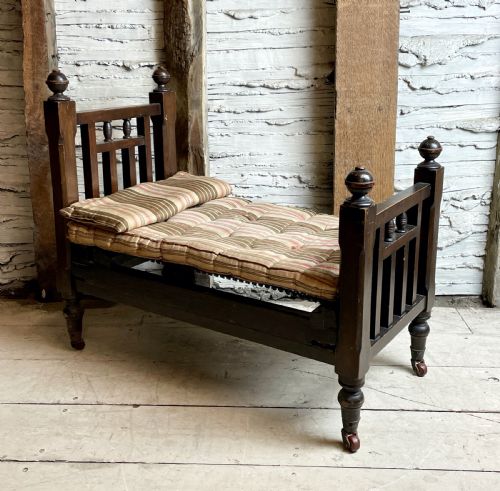

Edwardian Four Poster Bed
An edwardian four poster bed brings the architecture of full-scale sleeping frames into domestic chambers with lighter timbers and revival detailing.
Edwardian Four Poster Bed
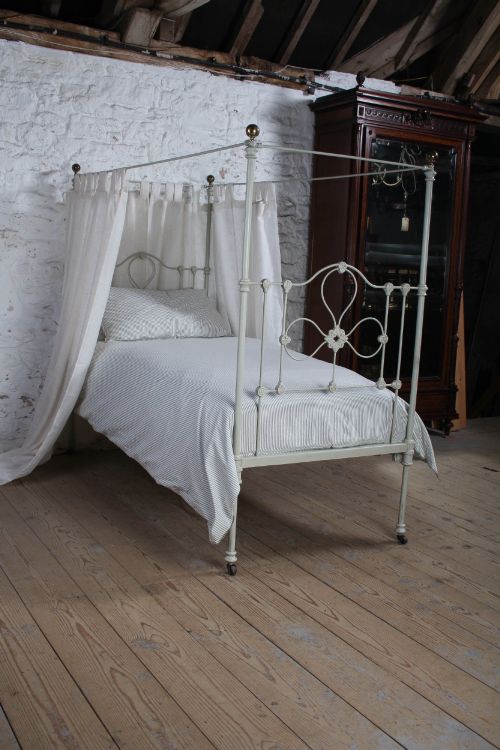
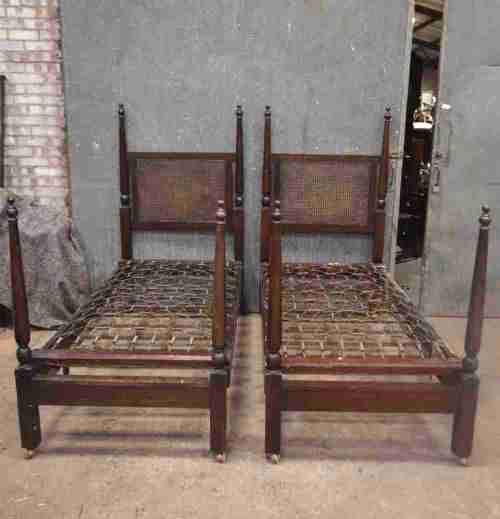
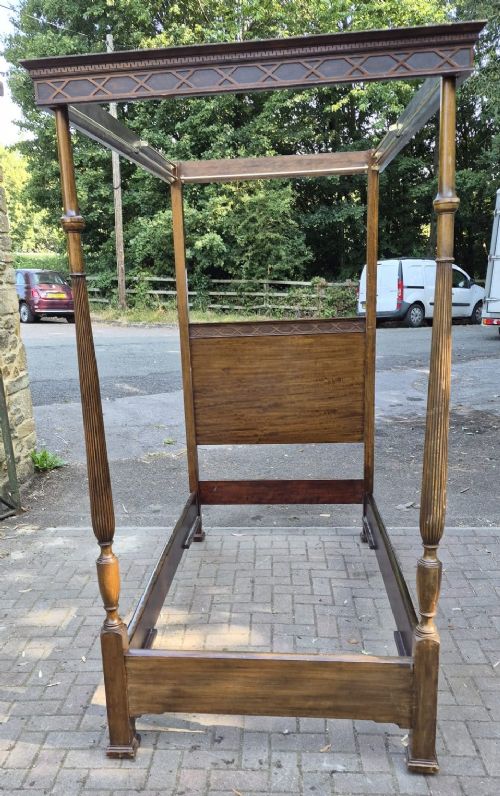
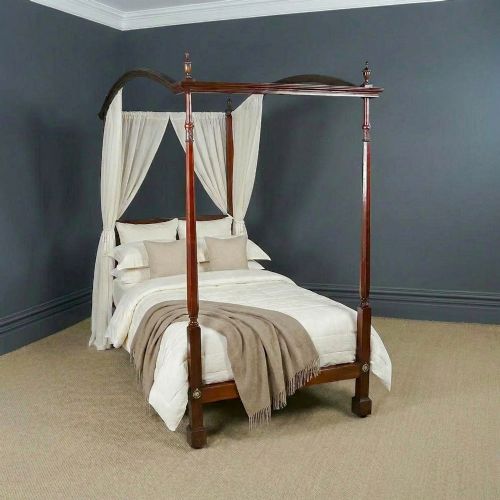
An edwardian four poster bed stands as a substantial sleeping frame defined by four vertical posts supporting an upper tester or canopy. The examples appearing here span standard single berths, larger single formats, and freestanding constructions designed for prominent bedroom placement.
Most pieces date from the Edwardian period or around 1910, often drawing on Georgian revival aesthetics, colonial revival lines, or arts and crafts simplicity. Alongside full-scale furniture, smaller items such as miniature doll beds occasionally surface in the listings.
Materials and construction
Makers utilised solid timbers like mahogany and oak for the primary structural posts, headboards, and tester frames, sometimes applying decorative carved motifs such as greek-key patterns directly into the wood.
Metal components played a structural and decorative role, with brass and iron utilised for tubular framework, decorative finials, and exposed corner brackets on combination metal-and-wood beds.
Alternative materials like cane provided lighter panel inserts for headboards and footboards, while pine served as secondary framing timber and gilt wood or painted surfaces delivered specific aesthetic finishes.
Listings feature woods spanning mahogany, oak, pine, cane, gilt wood, and painted wood alongside iron and brass.
Distinctions in quality
The degree of hand-carved detail and the fidelity of revival styling separate standard utility frames from finer cabinet-made pieces, particularly where crisp mouldings and specific motifs like greek-key carving appear.
The integrity of the timber selection and joinery determines the structural stability of the tall vertical posts and the overhead tester, distinguishing robust hardwood construction from lighter or heavily restored examples.
Attribution to known workshops or retailers adds notable distinction, as documented maker marks elevate historical interest above unmarked domestic furniture of the same era.
Heals of London
The Edwardian Four Poster Bed Glossary
- Tester
- The canopy or wooden frame supported by the four posts above the bed. It originally held curtains to keep out drafts in large rooms.
- Bergere
- A type of enclosed upholstered armchair or bed panel featuring cane webbing. The technique involves woven wickerwork that creates a light, breathable surface.
- Georgian Revival
- A design style looking back to eighteenth-century proportions and ornamentation. Makers in later decades copied these symmetrical classical motifs.
- Arts and Crafts
- A movement prioritising visible construction and honest materials over machine-made ornamentation. Pieces in this style often display plain oak surfaces and straightforward joinery.
Edwardian Four Poster Bed: Frequently Asked Questions
How do I fit a modern mattress?
Many antique frames predating modern standard sizing require bespoke mattresses or subtle internal platform adjustments to support contemporary widths and lengths safely.
Measuring the internal width between the side rails before ordering ensures the base sits correctly without damaging the historic timber or metal sides.
Are these beds freestanding?
Most designs are fully freestanding structures that do not require bolting to walls or floors for stability. Their heavy posts and sturdy foot-and-headboard connections bear the weight of the tester canopy independently.
Checking that the vertical posts stand plumb on uneven historic flooring helps maintain the alignment of the overhead frame.
How do I care for mahogany timber?
Maintenance involves dusting with a dry, soft cloth and occasionally applying a traditional beeswax polish to nourish the grain. Avoiding direct sunlight and heating vents prevents the wood from drying out or splitting.
Harsh chemical sprays should be avoided entirely to preserve the original patina and finish of the antique surface.
How do I identify the Edwardian period?
Edwardian furniture typically displays lighter proportions, brighter timber tones, and a revival of earlier styles like Georgian or Chinoiserie. Construction often combines machine precision with traditional hand-finishing techniques typical of the early twentieth century.
Comparing the turned details and hardware to dated examples helps confirm whether a piece belongs to the 1900 to 1910 window.