


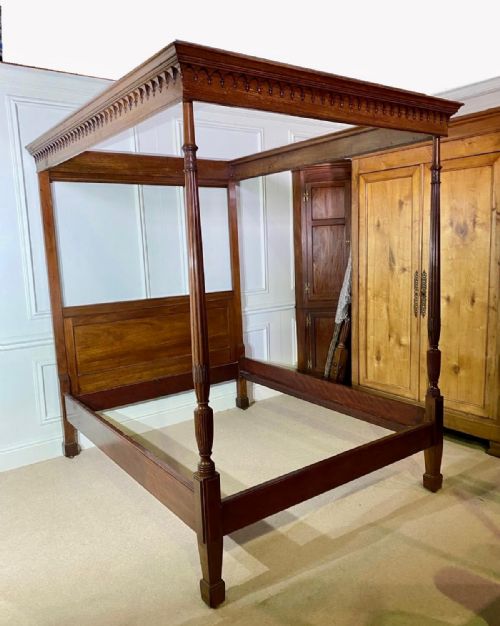


Period Wooden Four Poster
A period wooden four poster brings architectural presence to a bedroom, offering heavy oak tester frames or grand mahogany columns.
Period Wooden Four Poster
When you search for a period wooden four poster, you enter a field defined by substantial timber frames, testers, and upright posts. These large items of sleeping furniture anchor a room with distinct historic character, varying from early joined joinery to later classical revival designs.
On this page, you are most likely to meet pieces stemming from the seventeenth century or the Victorian era, alongside Regency examples. The construction relies heavily on native oak and rich mahogany, occasionally enhanced by paint or flame mahogany veneer.
The forms range from simple full tester structures to carved super king size bedframes and Anglo-Indian colonial adaptations. Each iteration demonstrates the domestic carpentry and aesthetic priorities of its respective period.
How they were made
Makers constructed these frames using solid timber, predominantly oak in the earlier centuries and dense mahogany later on. Joinery techniques involved sturdy tenon and mortise joints, ensuring the heavy posts and testers remained structurally sound.
Carving and turning formed the primary decorative methods on the upright posts, executed by hand with gouges and chisels. Surface finishes varied from polished natural grain to applied paint or flame mahogany veneer, depending on the stylistic demands of the era.
Listings feature woods spanning oak, mahogany, pine, and teak, alongside painted and gilt surfaces.
What varies in quality
The depth and crispness of the timber carving set apart the finer examples, particularly on the prominent front posts and headboards. Early seventeenth-century joinery relies on the integrity of the original construction and the proportion of the tester canopy.
Choice of wood grade dictates the visual impact, where select flame mahogany veneer or well-figured oak displays superior grain movement. The retention of original timber components across the tester and footposts heavily influences the structural authenticity.
The Period Wooden Four Poster Glossary
- Flame mahogany veneer
- A thin slice of mahogany timber cut from the fork of the tree to create a distinctive flickering flame pattern. This decorative surface was applied over a secondary wood base.
- Mortise and tenon
- A traditional woodworking joint where a protruding tenon fits tightly into a matching square hole. This method provides the robust structural connection required for heavy bedframes.
- Super king size
- A modern mattress dimension applied here to large historic bedframes. These larger formats accommodate contemporary sleeping standards within antique timber structures.
Period Wooden Four Poster: Frequently Asked Questions
How do I date a wooden four poster?
Dating relies on examining the timber species, construction joints, and decorative carving styles. Seventeenth-century pieces typically feature dark oak and pegged joinery, while Regency and Victorian examples show finer mahogany turning and classical motifs.
Changes in proportion and the presence of applied veneers also help assign pieces to specific centuries like the eighteen-hundreds or Edwardian period.
Are these beds suitable for daily use?
These robust timber frames are built to support standard modern mattress weights when correctly assembled. Many have been adapted internally to accommodate contemporary bases while preserving the historic exterior.
Careful positioning and periodic checking of structural joints ensure they remain functional sleeping furniture for everyday living.
What is an Anglo-Indian colonial bed?
An Anglo-Indian colonial bed is a distinct nineteenth-century form produced under British influence abroad. These pieces frequently combine traditional European four-poster architecture with exotic dense timbers and local carving traditions.
They offer a unique cross-cultural aesthetic within the broader category of Victorian sleeping furniture.
Do four poster beds require high ceilings?
These tall structures require careful room measurement before purchase, as the vertical posts and overhead testers demand substantial clearance. Ceiling height dictates whether a full tester canopy can be installed comfortably.
Checking both overall height and bedroom dimensions prevents placement issues with grand seventeenth-century or Victorian frames.