

Edwardian Floor Light
An edwardian floor light brings practical illumination and period character to a room, shifting overhead glare to a warm, low level.
Edwardian Floor Light
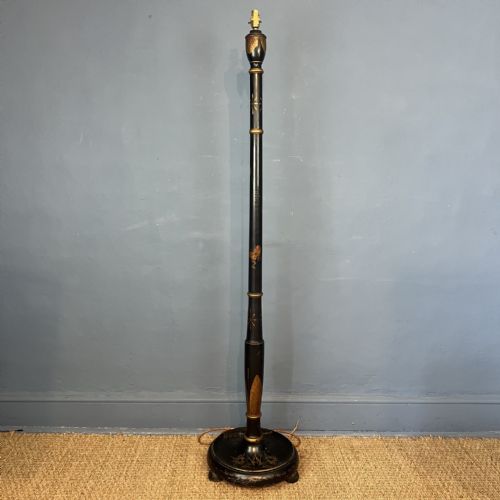
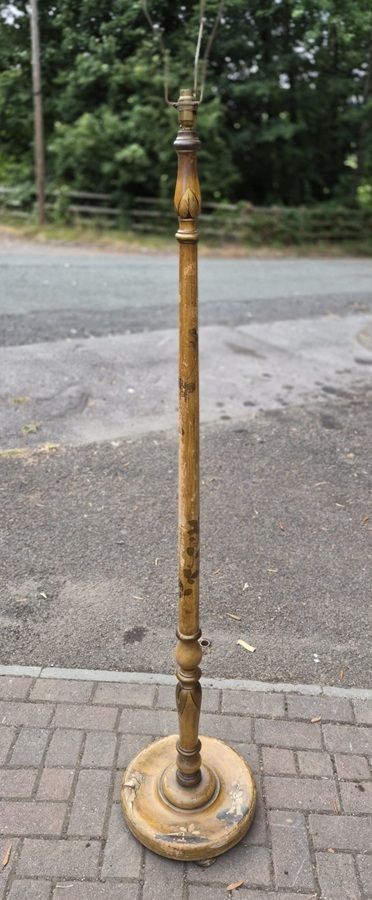
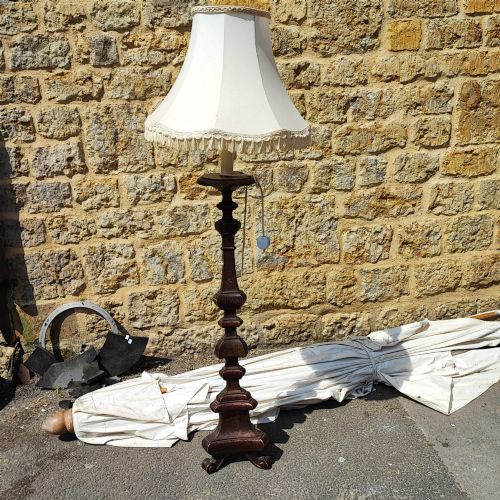
When you search for an edwardian floor light, you encounter tall upright fixtures designed to illuminate larger spaces without relying entirely on ceiling pendants. These pieces span standard lamps and floor lamps recorded across Edwardian, Victorian, and early twentieth century periods, reflecting the shift toward adjustable and movable illumination.
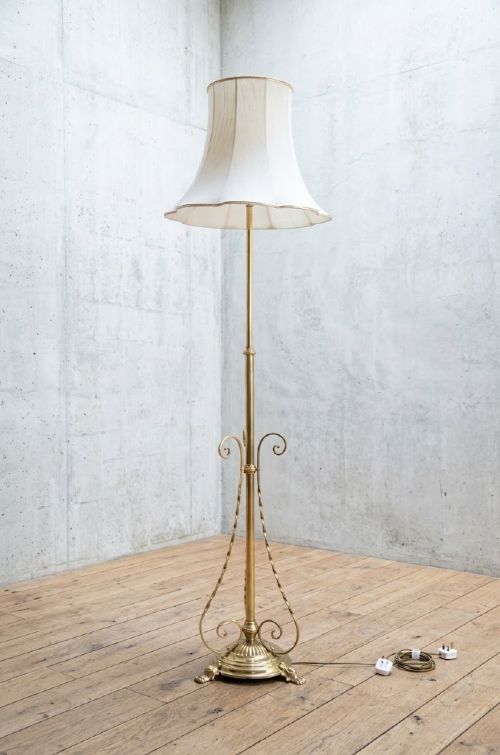
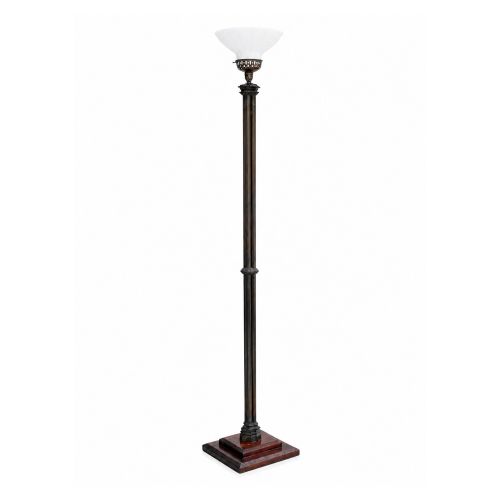
The most common versions on this page combine slender vertical columns with weighted bases, frequently incorporating adjustable heights or swing arms for reading. You will find examples ranging from straightforward brass engineering to decorative lacquered finishes and carved timber.
Origins stretch from English workshops influenced by Arts and Crafts utility to more ornate Neoclassical Revival and Chinoiserie aesthetics. Selecting the right piece involves matching the height and proportions of the column to the scale of your reception room or study.
Materials and construction
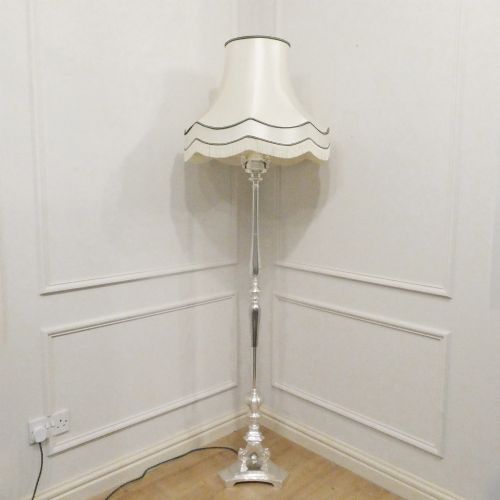
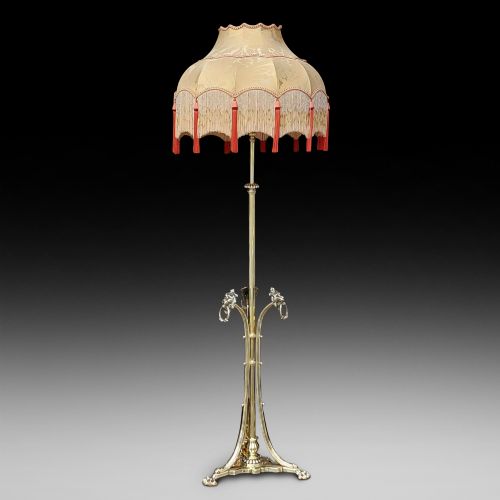
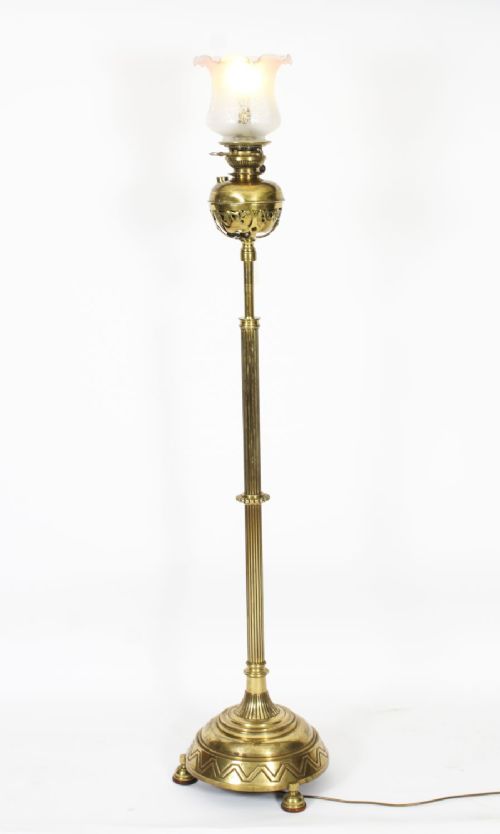
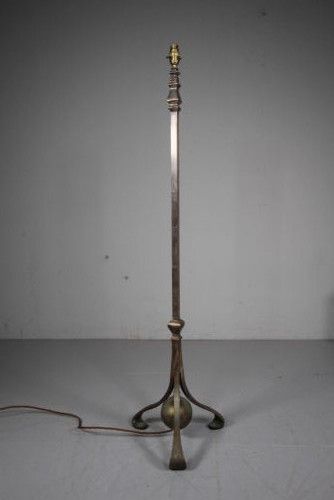
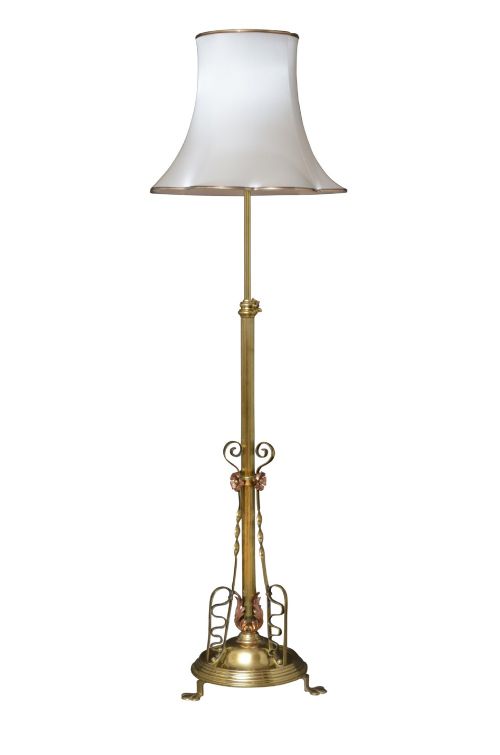
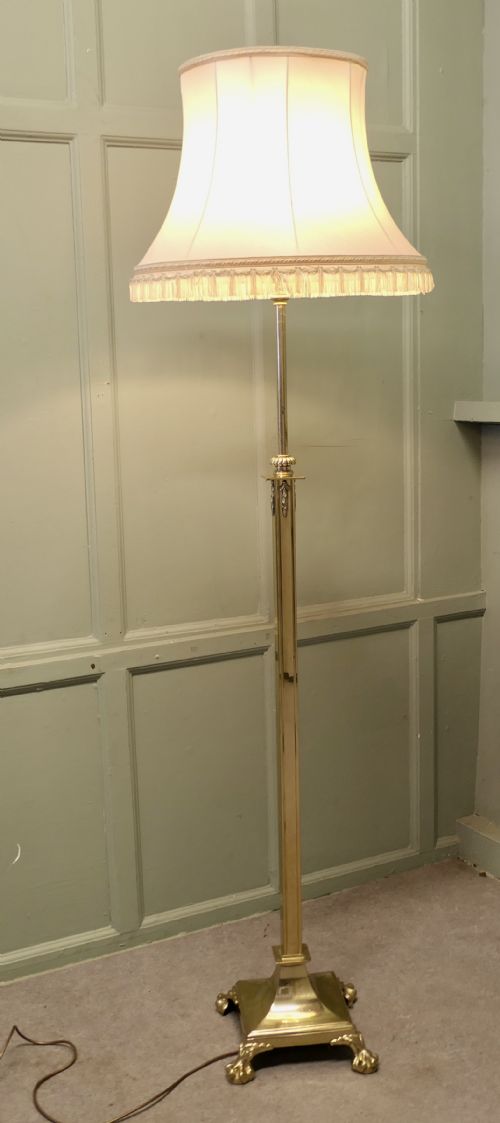
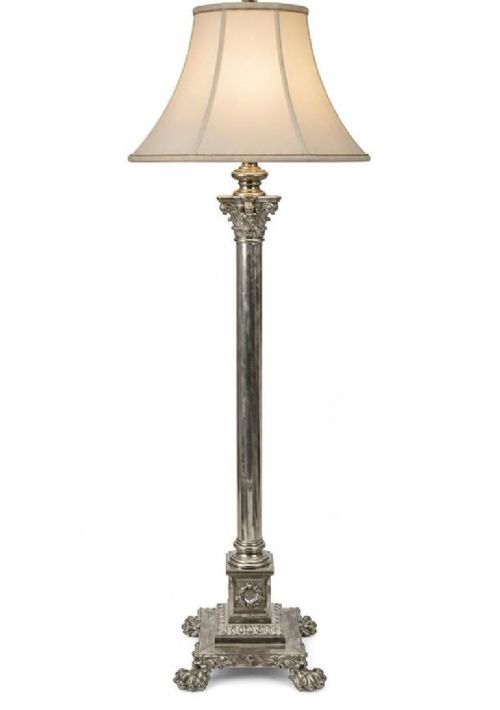
Metalworking dominates the construction of these lamps, utilising brass, copper, silver plate, or bronze shaped into telescopic columns, weighted bases, and Corinthian capitals. Many incorporate adjustable mechanisms, allowing the upright stem to extend or lock securely at different heights.
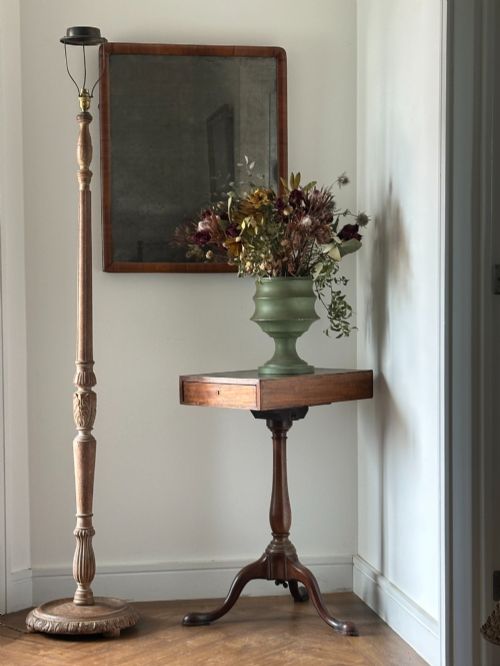
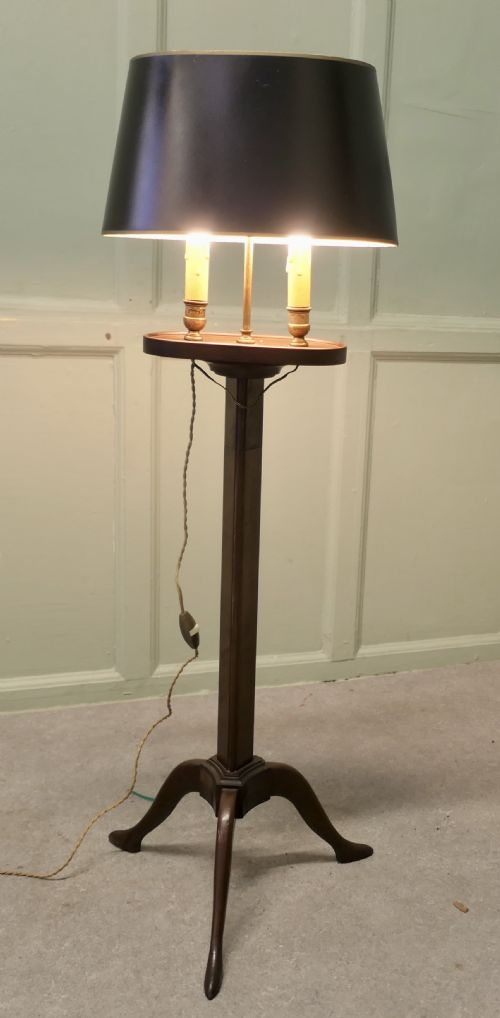
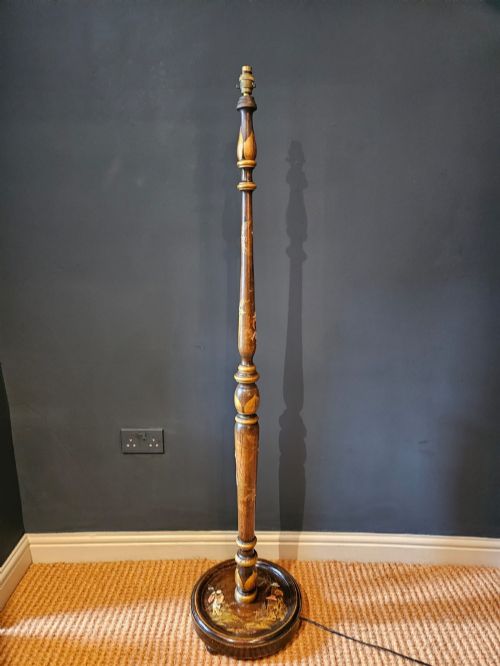
Wooden examples rely on turned and carved mahogany, oak, and walnut, often paired with tripod or circular weighted plinths to ensure stability. Decorative models feature applied lacquer and hand-painted Chinoiserie motifs on wood or metal substrates.
Conversion from oil or candle to electricity is standard practice for surviving examples, integrating fabric shades that soften the output of the bulb. Patination on the brass and wear on the lacquer provide tangible evidence of age and original handling.
Some specimens double as nautical searchlights or towering bronze figures holding torches high above the drawing room.
Assessing quality and craftsmanship
The distinction between standard utility lighting and superior examples lies in the weight of the metal and the precision of the mechanical adjustments. High quality telescopic stems operate smoothly and lock firmly without slipping, resting on heavy, well-balanced bases that prevent tipping.
Carving and surface decoration differentiate simpler production pieces from finer artisan work. Walnut and oak standards show crisp detail in turned members, while Chinoiserie pieces demonstrate depth and layering in the lacquered finish rather than flat printed decoration.
The Edwardian Floor Light Glossary
- Standard lamp
- A term historically used in British English for a floor-standing lamp designed to hold a single bulb and shade.
- Telescopic
- An adjustable mechanism allowing the vertical shaft of the lamp to extend upwards or collapse down.
- Chinoiserie
- European decorative style employing imitation Chinese motifs, seen here in lacquered and painted lamp standards.
- Corinthian
- A classical column capital design featuring ornate acanthus leaves, frequently cast in brass at the top of the lamp stem.
- Torchere
- A tall ornamental stand or floor lamp, historically adapted from torch holders, often carrying figural or classical details.
Edwardian Floor Light: Frequently Asked Questions
How do I adjust the height?
Many of these lamps feature a central telescopic mechanism secured by a thumbscrew or collar near the upper section of the shaft. Loosening this fixture allows the inner tube to slide up or down before locking it securely in place.
Heavier examples rely on balanced internal weights or simple friction fits, so supporting the upper section with one hand while adjusting prevents sudden drops.
Were these originally electric?
Most surviving examples from the early twentieth century were originally configured for oil or gas lighting before being converted to electricity later in their lifespan. Original oil reservoirs and burners are frequently replaced with internal wiring and standard lamp holders.
This conversion process preserves the decorative metalwork or timber body while making the fixture safe and practical for modern domestic interiors.
What shades work best?
Traditional fabric shades with pleated silk or parchment linings complement the proportions of brass and wooden columns. The scale of the shade should balance the width of the base to ensure visual stability.
Neutral tones diffuse light effectively for reading, while patterned or dark fabric shades direct illumination downward to create a focused pool of light.
How do I clean brass bases?
Dusting with a dry microfiber cloth prevents the buildup of grime on both metal columns and wooden shafts. Avoid harsh chemical polishes that strip away the authentic patination accumulated over decades.
If cleaning is necessary for unlacquered brass, a mild soapy solution dried immediately with a soft cloth preserves the surface finish without creating an overly bright modern shine.