

Edwardian Flatware
Edwardian flatware encompasses the silver, steel and cased cutlery sets designed for formal dining during the early twentieth century.
Edwardian Flatware
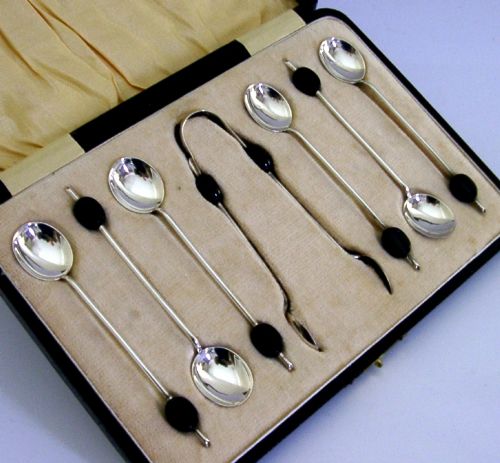
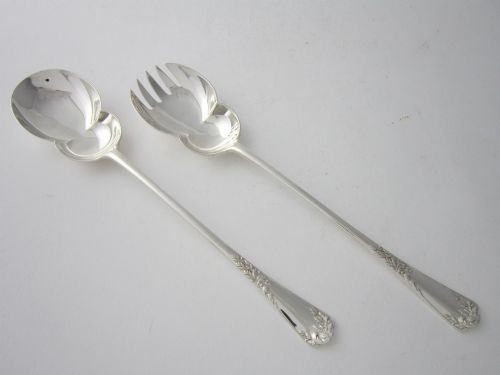
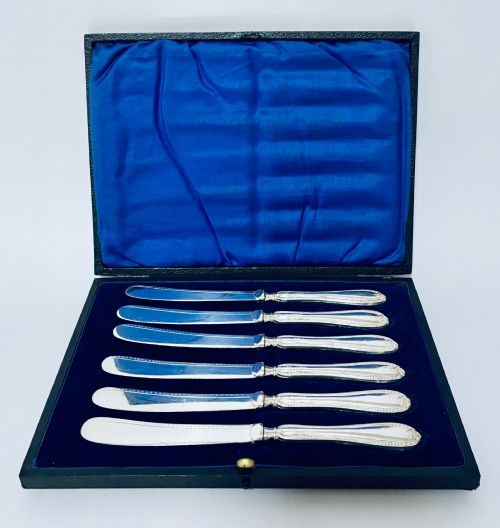
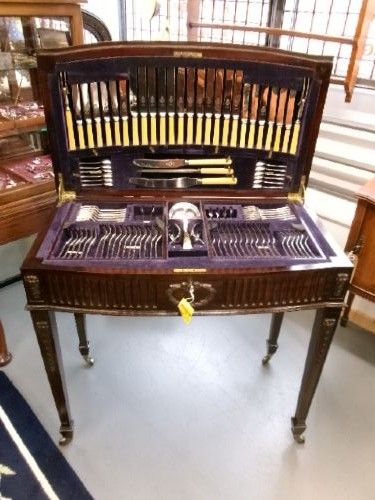
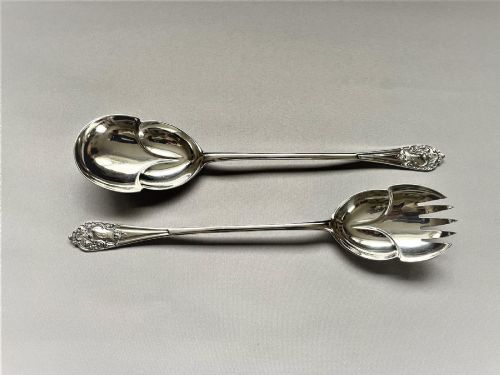
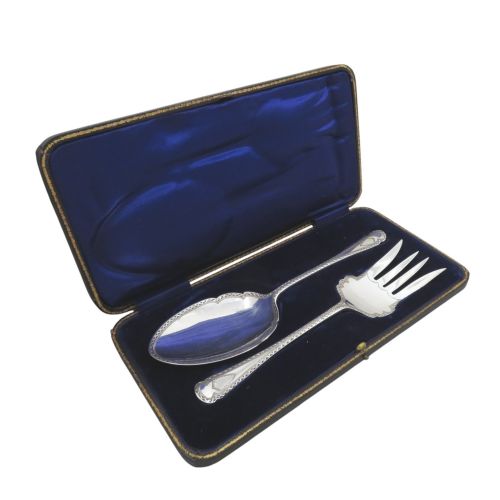
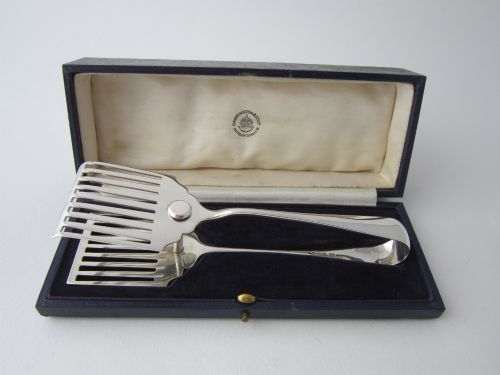
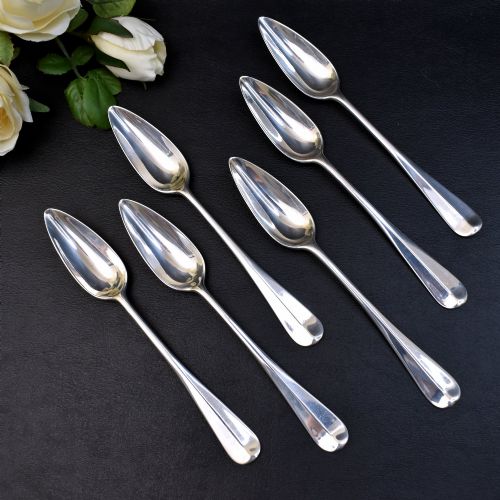
When searching for edwardian flatware, buyers encounter a diverse range of cutlery, including cased sets of spoons, forks and specialised serving pieces. The selection spans single items like stilton scoops and grape scissors to large cased cantons housed in fitted mahogany or oak cabinets.
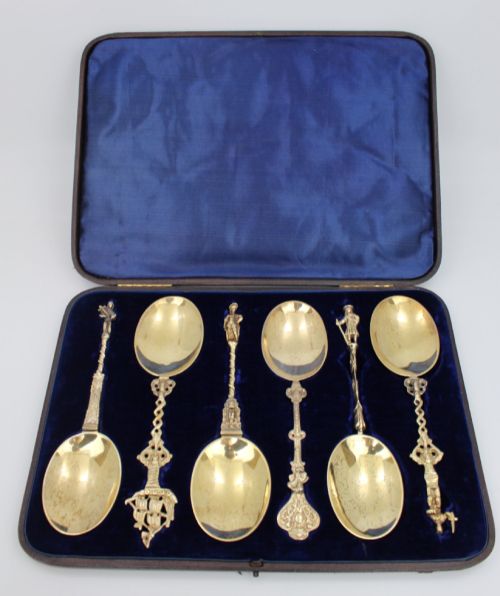
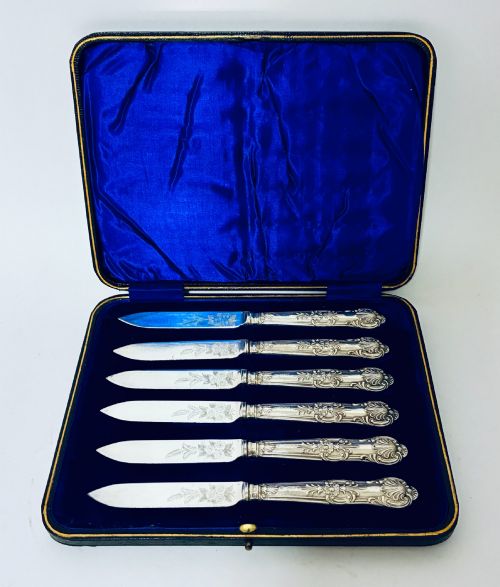
The objects originate primarily from the Edwardian era, alongside adjacent periods such as the late nineteenth century and the George V years. Forms range from everyday butter knives and coffee spoons to decorative apostle spoons, fruit knives and fish servers.
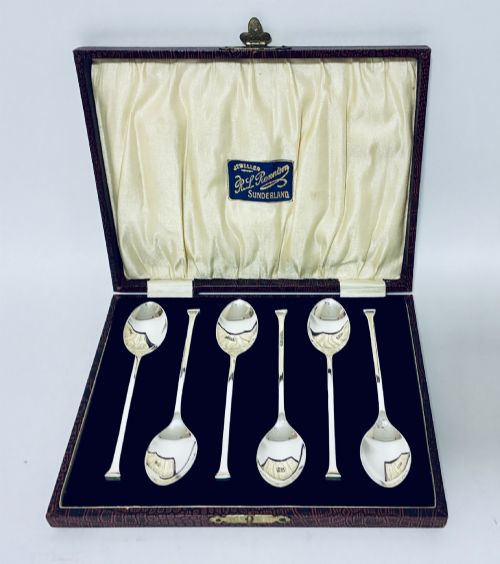
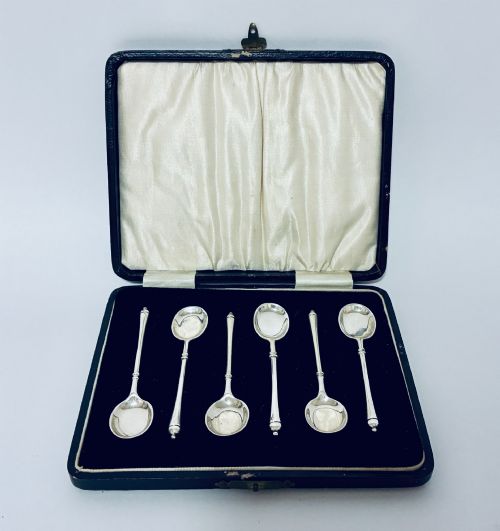
Many items appear in fitted presentation cases lined with silk or velvet, often complete with matching sugar tongs or servers. These sets reflect the formal dining customs of the period, offering specialised utensils for specific courses.
Distinctions in quality
Quality in these items is determined by the weight of the silver, the precision of pierced or chased ornamentation, and the integrity of the maker's mark. Superior examples demonstrate crisp detailing on handles and functional parts, alongside robust construction in hinges and joints.
The condition and completeness of original fitted presentation cases significantly influence the standing of a set. Well-preserved velvet or silk linings and matching components across a full service indicate higher craftsmanship than assembled or mismatched groups.
Edwardian Flatware Retail Price Guide 2026
Typical asking prices for edwardian flatware among the pieces listed under this phrase on Sellingantiques today, from the lower quarter to the upper quarter. They describe what is for sale here now, not the wider market.
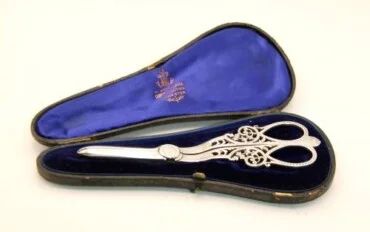
Grape scissors allowed diners to harvest fruit from a communal bunch without touching the stem.
Deakin & Francis·Hamilton & Inches·Vale & John·William Devenport·Oliver Barker·Amy Sandheim·Walker & Hall·Mappin & Webb
The Edwardian Flatware Glossary
- Flatware
- The collective term for dining utensils such as spoons and forks. In antique contexts, this often includes specialised serving pieces.
- Canteen
- A fitted box, chest or cabinet designed to store a complete set of cutlery securely. These are frequently lined with velvet and made from oak or mahogany.
- Silver-gilt
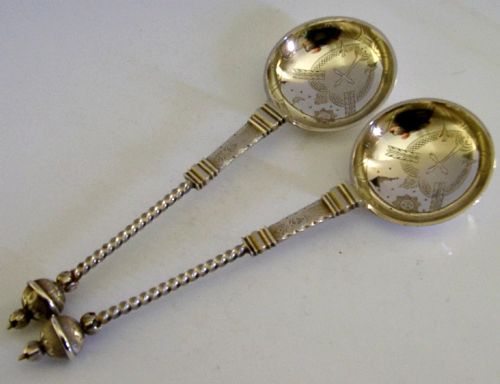
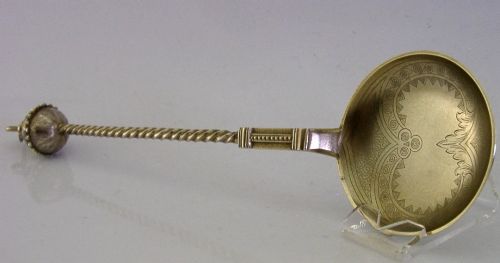
- Sterling silver that has been coated with a thin layer of gold on the surface. This technique is often found on decorative spoons and serving pieces.
- Sifter spoon
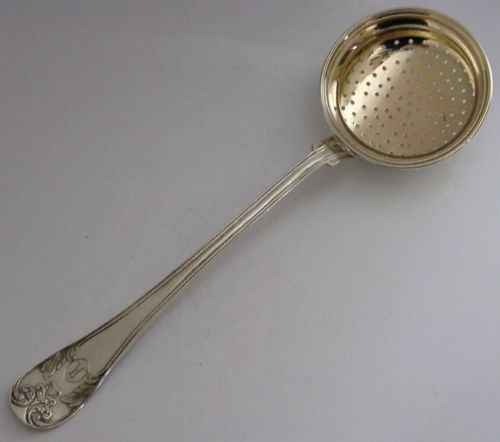
- A large spoon with a pierced or perforated bowl used for dusting sugar over food. They frequently appear in ornate Art Nouveau or Edwardian styles.
- Stilton scoop
- A specialised utensil with a semi-cylindrical blade designed for serving crumbly cheeses. Handles often incorporate materials like bone, ivory or silver.
Edwardian Flatware: Frequently Asked Questions
What is included in edwardian flatware?
This category includes individual spoons, forks and knives, alongside comprehensive cased sets for fish, fruit or tea. Specialised items such as asparagus tongs, sugar sifters and grape scissors are also common.
Many pieces arrive in original fitted presentation boxes lined with silk or velvet. These sets reflect the structured dining habits of the early twentieth century.
How do I identify edwardian flatware?
Identification relies on hallmarks stamped into the silver, indicating the assay office, standard of metal and year of manufacture. Stylistic clues such as Art Nouveau curves or traditional Edwardian motifs also help date the pieces.
Boxed sets often retain maker plaques inside the lid, providing further context regarding their origin and retailer.
How were these items used originally?
These utensils were created for formal household dining, afternoon tea and specialised courses like dessert or cheese. Specific tools were designated for individual foods to maintain etiquette during large meals.
Cased sets were often given as wedding gifts or christening presents, remaining stored in cabinets until required for guests.
How should I care for antique silver?
Silver pieces require gentle cleaning with dedicated silver polish to remove tarnish without abrading the metal. Avoid abrasive cloths and harsh chemical dips that can damage engraved details or gilt finishes.
Store items in dry conditions, ideally within lined boxes or anti-tarnish rolls to minimise exposure to air and moisture.