

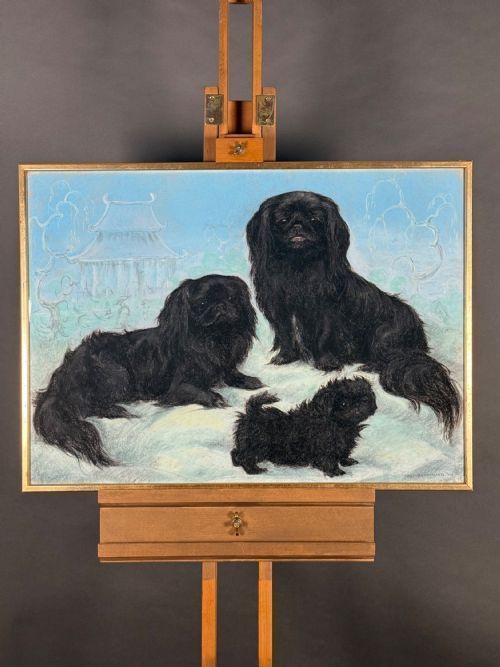


Edwardian Fine Art Print
These edwardian fine art print pieces offer paper-based imagery from past centuries, bringing traditional wall art into modern interiors.
Edwardian Fine Art Print
An edwardian fine art print covers works on paper and framed artwork spanning periods from the Victorian era through the early twentieth century. Buyers seeking this phrase encounter watercolours, pastels, and etchings rather than mass-produced posters.
The current selection includes original drypoint etchings and hand-signed prints alongside watercolours and oil paintings on canvas. Pieces depict genre scenes, animal studies, and architectural views.
Origins stretch from Victorian pastoral and genre subjects to British Modernism and Edwardian portraiture. Paper and glass protect these fragile works within original frames.
How they were made
Makers utilised paper, ink, and watercolour applied by hand or pressed through etching plates. Etchings often feature pencil signatures from artists working in the early twentieth century.
Gilt wood and traditional timber mouldings frame the paper and glass components. Pastels and watercolours rely on absorbent paper surfaces to hold fine pigment layers.
Edwardian Fine Art Print Retail Price Guide 2026
Typical asking prices for edwardian fine art print among the pieces listed under this phrase on Sellingantiques today, from the lower quarter to the upper quarter. They describe what is for sale here now, not the wider market.
Six Persian kittens gather for a tea party in one painted scene.
What varies in quality
Distinction lies in the precision of the draughtsmanship and the clarity of the printed line or watercolour wash. Signed works by documented artists command greater attention than anonymous student pieces.
The survival of original framing, including giltwood surrounds and protective glass, influences the integrity of the piece. Preservation of the paper ground without heavy toning separates superior examples from faded sheets.
Thomas Ellison·Charles Burton Barber·Augustus Edwin John·B. Kaufmann·Agnes Augusta Tallboys·Joseph Kirkpatrick·Herbert Dicksee·John Atkinson·CB Prescott
The Edwardian Fine Art Print Glossary
- Drypoint etching
- A printmaking technique where an artist scratches a design directly into a metal plate with a sharp needle, producing a velvety line when inked and pressed onto paper.
- Watercolour
- A painting method using water-soluble pigments on paper, valued for its translucent washes and luminous colour.
- Giltwood
- Wood carved and coated with gold leaf, frequently used for traditional picture frames during the Victorian and Edwardian periods.
- Genre painting
- Artwork depicting scenes from everyday life, often featuring domestic animals or figures engaged in ordinary tasks.
Edwardian Fine Art Print: Frequently Asked Questions
What periods do these prints cover?
The works span the Victorian era, the Edwardian period, and early twentieth-century modernism.
Dates range from the late nineteenth century through to mid-century pastels.
Are these works original?
The selection includes original watercolours, pastels, and hand-pulled drypoint etchings.
Many bear artist signatures in pencil alongside period framing.
How should I display them?
These framed works suit traditional interiors, living rooms, and studies. Keep them away from direct sunlight to protect the paper and pigments.
Glass and timber frames safeguard the delicate surfaces from atmospheric moisture.
What subjects are most common?
Common subjects include domestic animals, pastoral scenes, architectural views, and figurative studies.
Cats, dogs, and rural workers feature prominently across the watercolours and etchings.