

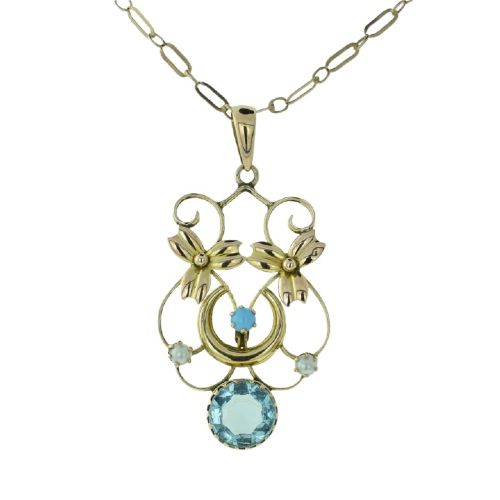


Edwardian Filigree Necklace
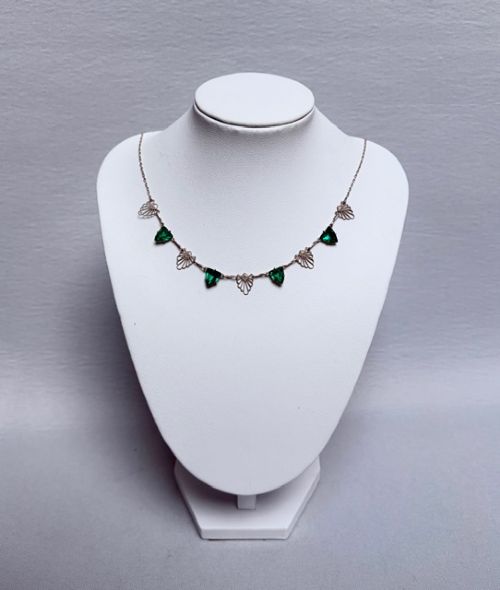
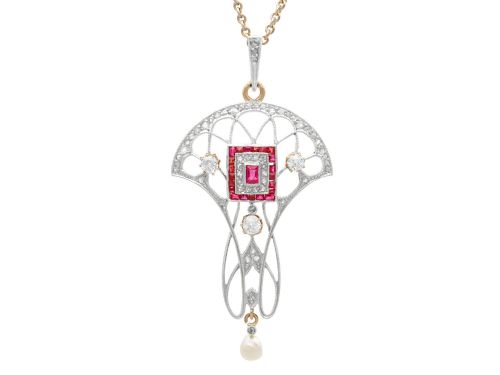
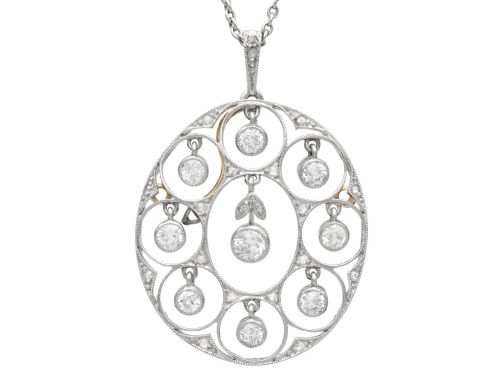
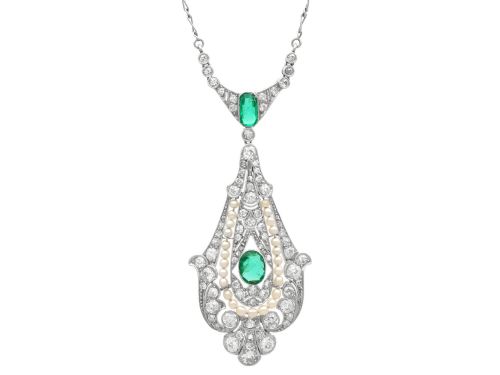
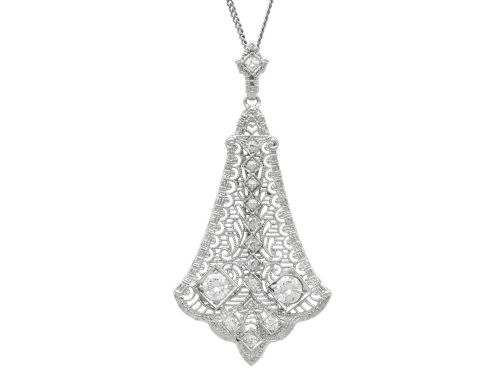
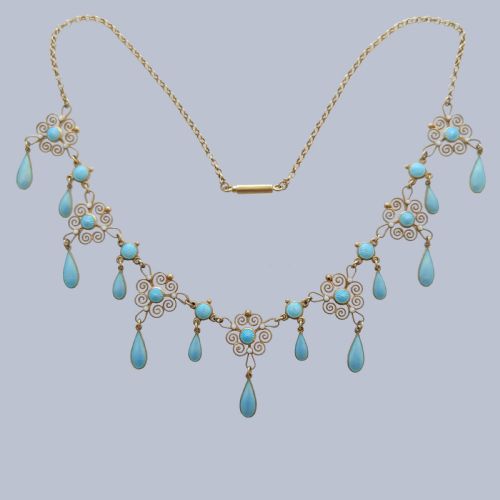
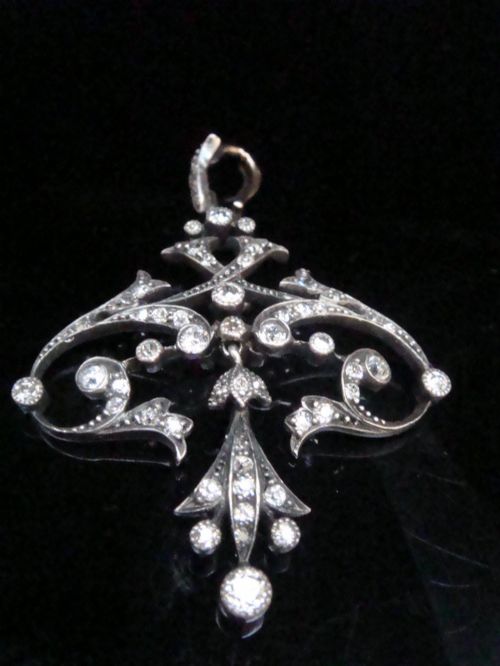
An edwardian filigree necklace is a delicate, openwork piece of period jewellery defined by intricate metal wirework and set with gemstones.
Edwardian Filigree Necklace
The selections on this page draw heavily from the early twentieth century, featuring stylistic crossover into adjacent decades like the 1920s and 1930s. Alongside traditional Edwardian workmanship, you find Continental examples, Austro-Hungarian designs, and pieces incorporating butterfly wing or religious motifs.
Pendants and necklaces in this category frequently incorporate central stones suspended on delicate chains or ribbons of metal. Forms range from symmetrical geometric Art Deco drops to flowing, organic Art Nouveau and Arts and Crafts botanical motifs.
What varies in quality
The quality of an edwardian filigree necklace depends significantly on the precision and density of the wirework. Superior examples display uniform, tightly secured threads without excess solder visible at the joints, whereas lesser pieces show uneven spacing and brittle construction.
Gemstone selection and the intricacy of the mounting further distinguish the finer pieces on the page. Master artisans integrated quality diamonds, natural pearls, and vibrant coloured stones into balanced compositions that enhanced the lightness of the surrounding metalwork.
Edwardian Filigree Necklace Retail Price Guide 2026
Typical asking prices for edwardian filigree necklace among the pieces listed under this phrase on Sellingantiques today, from the lower quarter to the upper quarter. They describe what is for sale here now, not the wider market.
Some Edwardian makers tucked tiny secret compartments behind filigree fronts, leaving hidden spaces for miniature keepsakes.
The Edwardian Filigree Necklace Glossary
- Filigree
- Delicate jewellery ornamentation made from fine twisted wire, usually gold or silver, soldered together to create open, lace-like patterns. This technique forms the primary aesthetic foundation of the pieces on this page.
- Lavalier
- A pendant necklace featuring a central gemstone or ornament with one or more smaller drops dangling below. This drop style gained immense popularity during the Edwardian era.
- Millegrain
- A decorative technique involving a row of tiny raised metal beads along the edges of a setting. It provides a soft, textural border common in Edwardian and platinum jewellery.
- Seed pearl
- Very small, naturally occurring pearls often used in clusters or delicate rows to accent Edwardian and Art Nouveau pendants. Their soft lustre contrasts with polished metals and faceted stones.
- Continental silver
- Silver items manufactured outside of Britain, often bearing foreign assay marks and distinct regional aesthetic traits such as Austro-Hungarian or German influences.
Edwardian Filigree Necklace: Frequently Asked Questions
What is an edwardian filigree necklace?
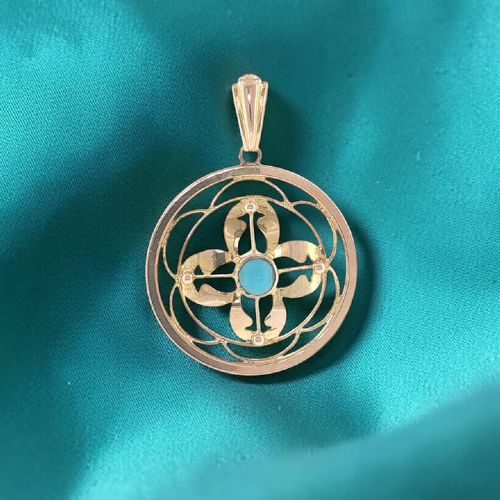
An edwardian filigree necklace is a delicate piece of antique jewellery characterised by fine, twisted metal threads soldered into intricate openwork patterns. These pieces frequently incorporate stones like diamonds, pearls, or turquoise.
They reflect the lighter, more graceful aesthetic that emerged in the early twentieth century, moving away from heavier Victorian styles.
How do I care for delicate filigree jewellery?
Care for filigree pieces by storing them individually in soft pouches to prevent the fine metal wires from catching or bending. Avoid harsh chemical cleaners and ultrasonic baths, which can dislodge seed pearls or weaken soldered joints.
Clean them gently with a soft, dry cloth or a mild soapy solution when necessary, ensuring they are dried thoroughly afterwards.
What materials are used in these necklaces?
These necklaces utilise precious metals including silver, sterling silver, platinum, 9ct gold, 18ct white gold, and 14k yellow gold. Gemstone accents commonly include diamonds, seed pearls, turquoise, amethysts, and tourmalines.
Some pieces also feature glass, emerald paste, or butterfly wings set within the metal framework.
How can I tell an Edwardian piece from a 1920s piece?
Edwardian pieces generally lean towards flowing organic lines, platinum settings, and delicate floral or ribbon motifs influenced by Art Nouveau and Arts and Crafts ideals. Pieces from the 1920s often introduce geometric shapes, sharper lines, and symmetrical Art Deco styling.
Examining the overall silhouette and the integration of the filigree work helps distinguish between these overlapping eras.