





Edwardian Enamel Mantel Clock
Edwardian enamel mantel clock examples bring together brass, silver, and crystal forms from the early twentieth century.
Edwardian Enamel Mantel Clock
When you search for an edwardian enamel mantel clock, you encounter timepieces spanning carriage clocks, desk clocks, and crystal regulators from the Edwardian period and late nineteenth century. These objects combine timekeeping with decorative metalwork and glazed panels, originating largely from British and French makers.
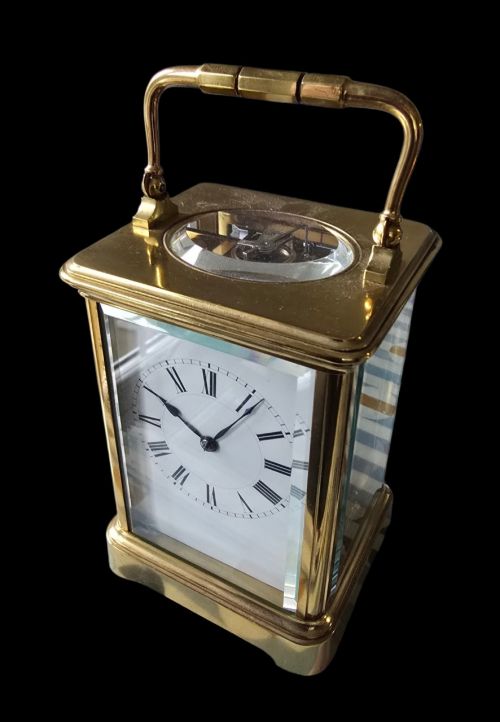
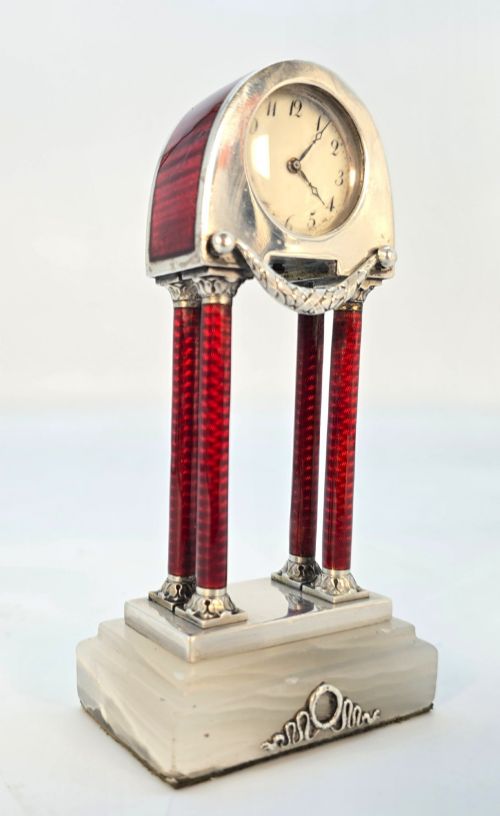
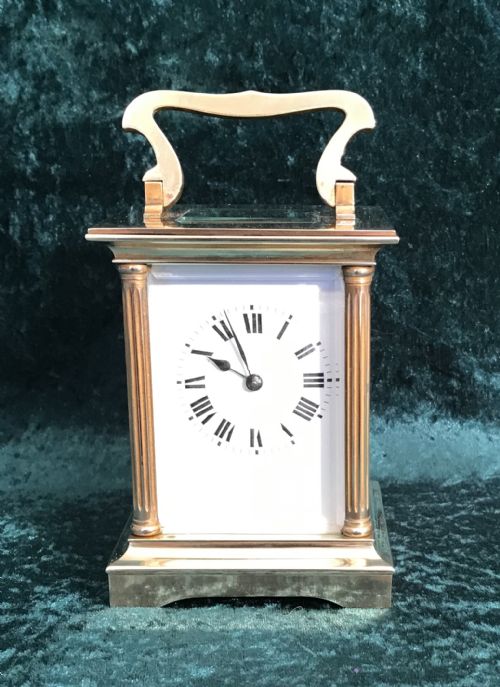
The version you are most likely to meet on this page is the brass carriage clock, often fitted with enamel dial bands or side panels and driven by a Swiss or French movement. Alongside these sit silver boudoir pieces and mahogany mantel styles bearing enamel chapter rings.
The selection ranges from simple travel clocks housed in leather cases to large crystal regulators featuring painted enamel faces. Makers utilise silver, pewter, and faux tortoiseshell to frame the dials, reflecting Victorian and Art Nouveau aesthetic influences.
Materials and construction
Makers constructed the primary frames of these clocks from brass, gilt brass, and solid sterling silver, frequently employing glass panels on four sides to expose the mechanical movement within. Dial faces feature white enamel with painted numerals, sometimes complemented by coloured enamel bandings and filigree brass masks.
Movements rely on precision brass gear trains, escapements, and coiled springs, with certain pieces incorporating repeating mechanisms and travel cases. Cabinetmakers also shaped wood, mahogany, and pewter into specialised mantel and bracket housings to support the heavy metalwork.
Edwardian Enamel Mantel Clock Retail Price Guide 2026
Typical asking prices for edwardian enamel mantel clock among the pieces listed under this phrase on Sellingantiques today, from the lower quarter to the upper quarter. They describe what is for sale here now, not the wider market.
Assessing quality and execution
The distinction between standard and superior pieces rests upon the precision of the metal casting and the crispness of the enamel work on dials and side panels. Finer examples display engine-turned dial masks, finely chased silver cases, and signed movements from recognised Parisian or London workshops.
Weight and heft indicate the density of the brass or silver casing, while the presence of original travel cases and fully functioning repeating complications elevate the standard of the object. Simpler brass timepieces rely on clean glass and unblemished enamel to hold their appeal.
Georg Adam Scheid·Liberty and Co·Samuel Marti et Cie·Mappin and Webb·Henry Matthews·J C Vickery·Alfred Drocourt
The Edwardian Enamel Mantel Clock Glossary
- Carriage clock
- A portable spring-driven timepiece originally designed for travel, typically fitted with a carrying handle and glass panels. They often rest in fitted leather cases.
- Crystal regulator
- A mantel clock featuring glass panels on four sides that reveal the pendulum and gear train. These pieces frequently incorporate enamel dials.
- Enamel
- A glassy substance fused to metal through firing, used here for white dial faces and decorative coloured panels. It provides a smooth and durable surface.
- Repeater
- A mechanical complication that sounds the hours and quarters upon pressing a button. This feature required advanced gear work.
- Escapement
- The internal mechanism that controls the release of power from the mainspring to the gear train. It maintains the regular beats of the clock.
Edwardian Enamel Mantel Clock: Frequently Asked Questions
How do I wind an edwardian enamel mantel clock?
Winding requires a matching key inserted into the arbours on the dial or back plate. Turn gently until resistance indicates the mainspring is fully tensioned.
Avoid overwinding, as this places undue strain on the internal brass springs and gear teeth.
What is a crystal regulator clock?
A crystal regulator is a mantel clock featuring heavy bevelled glass panels on all four sides. This design exposes the movement and pendulum to view from multiple angles.
Such pieces usually date from the late nineteenth and early twentieth centuries, often housing enamel dials.
How do I clean the enamel dial?
Cleaning requires a soft, dry cloth to remove dust from the glass and exposed metal surfaces. Moisture should be kept away from the delicate painted numerals on enamel dials.
Harsh chemical cleaners will strip the gilt from brass and damage vulnerable enamel.
Are these clocks suitable for daily use?
Many of these pieces remain reliable timekeepers when serviced correctly by a professional horologist. Their mechanical movements require periodic cleaning and lubrication of the pivots.
Gentle handling ensures the antique glass and delicate enamel panels remain secure within their metal frames.