


Edwardian Emerald Diamond Ring
An edwardian emerald diamond ring brings together rich green beryl and bright historic cuts of diamond set in yellow gold or platinum.
Edwardian Emerald Diamond Ring
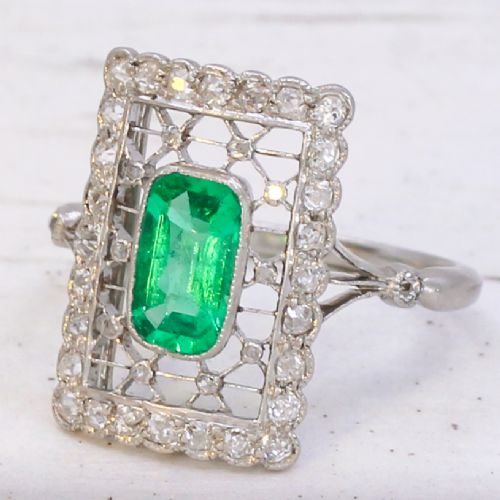
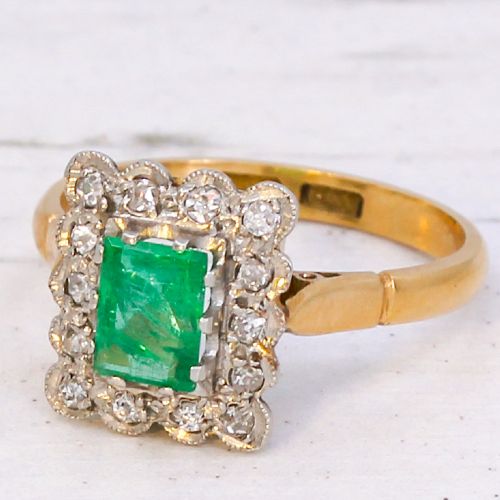
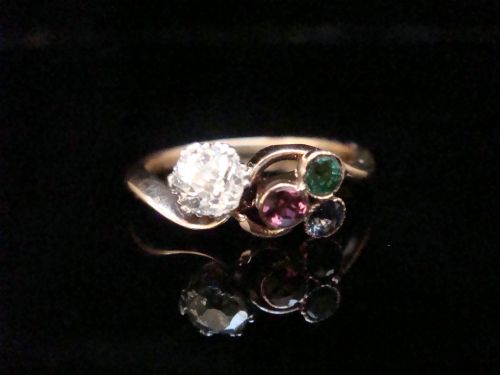
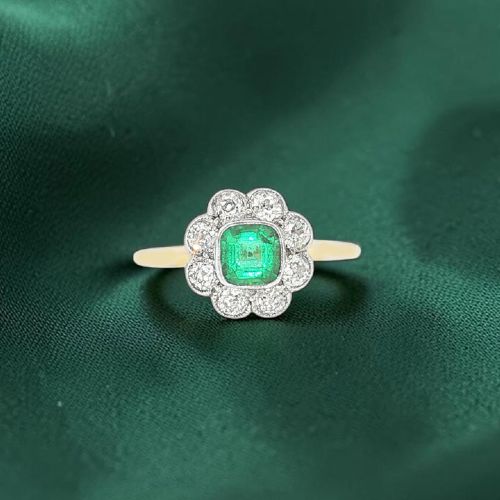
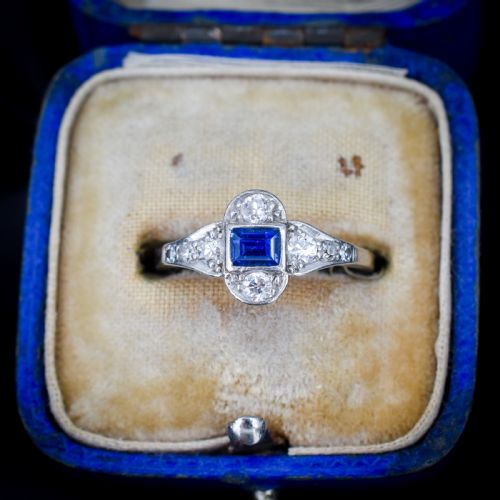
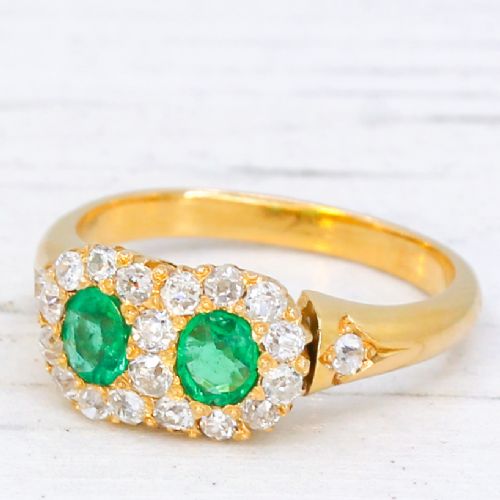
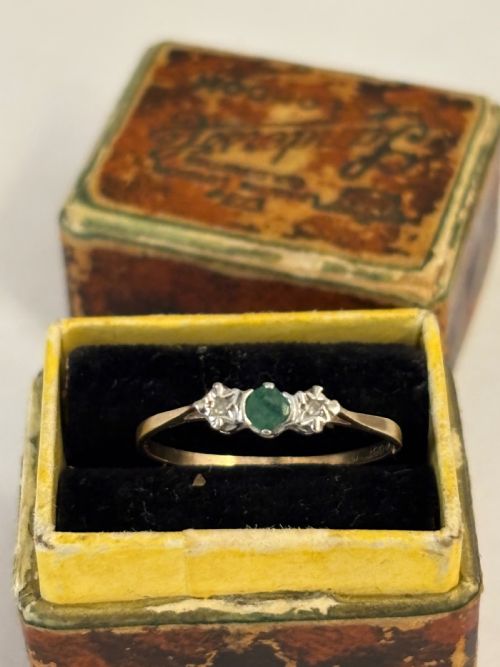
An edwardian emerald diamond ring is a piece of jewellery from the early twentieth century combining central green emeralds with framing diamonds. These rings appear in several distinct forms across the selection, including cluster designs, multi-stone settings, and linear navette shapes.
The primary focus rests upon the contrast between the saturated green of the emerald and the sparkle of old cut diamonds. Most pieces emerge from the Edwardian period or the subsequent Art Deco era, reflecting the transition from warm yellow gold mounts to crisp platinum settings.
How they were made
Goldsmiths utilised a combination of traditional yellow gold and newly viable platinum to mount these stones. Platinum allowed for delicate claw settings and millegrain edges that held diamonds securely without heavy metal bulk.
Emeralds were shaped into oval, square, or marquise cuts and paired with old cut or rose cut diamonds. Jewelers arranged these gems into tight clusters, trilogy lines, or intricate navette panels.
Listings feature emeralds paired with old cut and rose cut diamonds set in platinum, yellow gold, and white gold across Edwardian and Art Deco periods.
What varies in quality
The distinction between tiers rests upon the origin and clarity of the emerald, with Colombian stones and those requiring minimal oil treatment sitting at the apex. Diamond cut and matching consistency across multi-stone layouts also determine the calibre of the piece.
Handwork precision in the metal gallery, such as fine millegrain wire and pierced under-settings, separates standard production from superior examples. The integrity of the original claw work and the crispness of the stamp marks complete the assessment.
The Edwardian Emerald Diamond Ring Glossary
- Old cut diamond
- A hand-faceted diamond cut popular before the modern brilliant standard, featuring a smaller table, higher crown, and open culet. These stones catch candle or gas light with broader flashes.
- Millegrain
- A decorative technique involving tiny raised metal beads along the edge of a setting. This borders the stones with a soft texture typical of the era.
- Navette
- A boat-shaped ring setting that tapers to points at either end. This elongated silhouette flatters the finger.
- Cluster
- An arrangement where a central stone is surrounded by a border of smaller gems. This layout maximises visual impact on the hand.
- Trilogy
- A three-stone setting often interpreted as representing past, present, and future. In these rings, an emerald frequently occupies the centre flanked by diamonds.
Edwardian Emerald Diamond Ring: Frequently Asked Questions
How do I care for an edwardian emerald diamond ring?
Emeralds are softer than diamonds and require gentle cleaning with warm soapy water rather than ultrasonic machines. Avoid exposure to harsh chemicals and sudden temperature changes.
Store the ring in a separate fabric compartment to prevent the harder diamonds from scratching the emerald or the gold and platinum metalwork.
Can I wear an edwardian emerald diamond ring daily?
Daily wear is possible if you take proper precautions, though the age of the settings calls for mindfulness during heavy tasks. Many owners reserve these pieces for lighter wear to preserve the delicate claw work.
Regular checks by a jeweler ensure that the emeralds and diamonds remain secure in their original mountings over time.
What is the difference between Edwardian and Art Deco settings?
Edwardian rings lean towards yellow gold combined with platinum tops, featuring flowing floral garlands, bows, and lace-like openwork. The mood is light and organic.
Art Deco rings embrace geometric rigidity, stark platinum, and symmetrical arrangements with straight lines and stepped shoulders.
How can I tell if the emerald is natural?
Natural emeralds typically display internal inclusions, often referred to as a jardin, along with traces of oil or resin used to improve clarity. Certification notes from laboratories confirm origin and treatment levels.
Magnification reveals the distinct growth patterns characteristic of natural beryl rather than synthetic alternatives.