

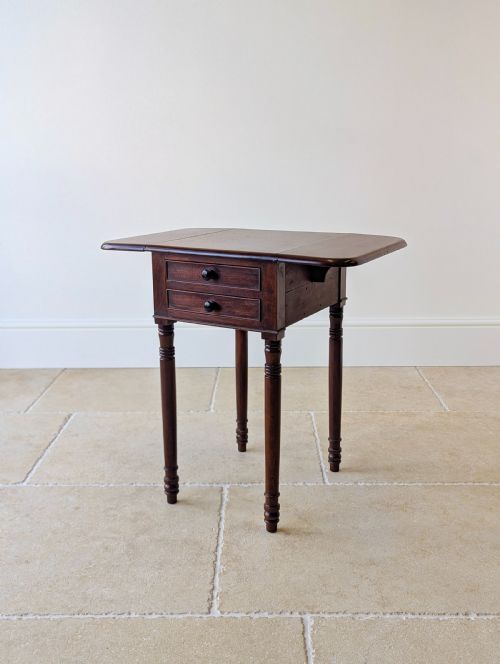


Edwardian Drop End Sofa
These Edwardian drop end sofa pieces are versatile seating options designed for flexible lounging, combining period charm with adjustable comfort.
Edwardian Drop End Sofa
When searching for an Edwardian drop end sofa, a buyer encounters seating designed for adjustable comfort and compact rooms. The pieces recorded on this page include two-seater settees and Chesterfield sofas featuring hinged drop-end mechanisms.
Originating largely from the Edwardian period, these settees often feature upholstered frames in fabrics such as damask. The selection demonstrates how period seating adapts to modern living spaces through movable arms.
How they were made
The framework utilises timber such as mahogany, providing sturdy support for the upholstered body. Workshops incorporated mechanical hinges to enable the drop-end action.
Upholstery techniques include button tufting and fabric covering, paired with brass fittings on castors. Skilled makers shaped the frames to balance rigidity with movable components.
What varies in quality
Quality rests upon the smoothness of the drop-end mechanism and the resilience of the internal frame. Solid timber construction outperforms lighter substitutes in longevity.
Upholstery finish and fabric choice distinguish standard examples from finer commissions. The precision of the joinery reveals the workshop standard.
The Edwardian Drop End Sofa Glossary
- Drop end
- A sofa arm fitted with a mechanical hinge that lowers to transform the settee into a daybed. This mechanism allows the user to adjust the seating angle.
- Chesterfield
- A traditional style of upholstered sofa featuring deep buttoning and arms matching the back in height. It remains a staple of period seating.
- Damask
- A reversible figured fabric traditionally utilised for heavy upholstery. It adds texture and pattern to period furniture surfaces.
- Upholstery
- The padded and fabric-covered components of seating furniture. This layer provides comfort and defines the aesthetic of the piece.
Edwardian Drop End Sofa: Frequently Asked Questions
How does a drop end sofa work?
The mechanical hinges on either arm allow one or both sides to lower completely or lock at an angle. This provides flexible use as a standard settee or a single daybed.
Operating the mechanism requires releasing the catch and gently lowering the upholstered arm into place. It offers a practical solution for smaller rooms.
Where should I place this sofa?
These settees suit living rooms, studies, or bedrooms where space is at a premium but versatility is desired. Their compact proportions fit neatly against walls or float in smaller interiors.
Positioning the sofa away from direct sunlight protects the fabric and timber frame from fading. Allowing clearance around the drop ends ensures the mechanism operates without obstruction.
How do I care for the upholstery?
Regular vacuuming with a soft brush attachment removes dust from the fabric crevices and button tufting. Professional cleaning is recommended for deeper maintenance to preserve the textile.
Keeping the furniture away from excessive heat sources prevents the timber frame from drying out. Periodic checks of the internal mechanism ensure smooth movement.
What defines the Edwardian style?
Edwardian furniture often exhibits lighter proportions and refined details compared to heavier Victorian predecessors. Makers frequently utilised mahogany alongside subtle fabric selections.
The aesthetic values comfort and adaptability, seen clearly in adjustable seating like the drop end sofa. This period bridged traditional craftsmanship with practical domestic design.