
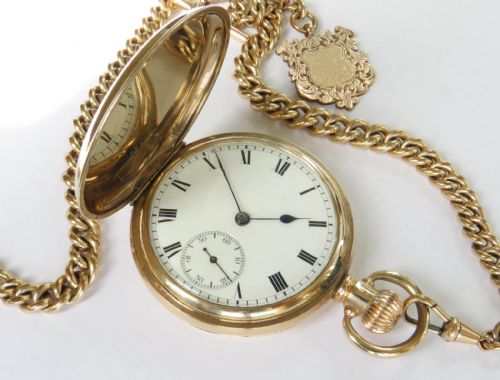
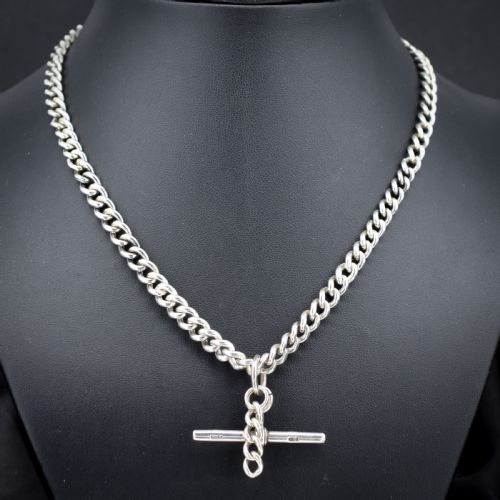
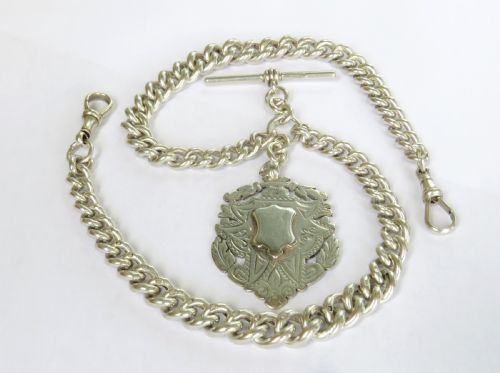
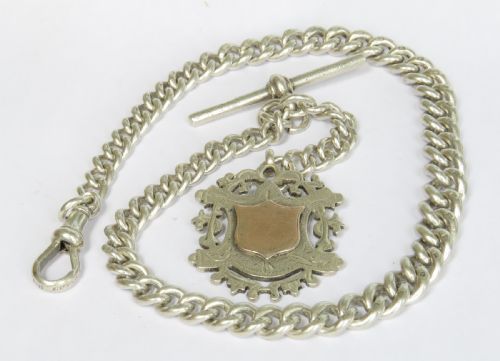




Edwardian Double Albert Chain
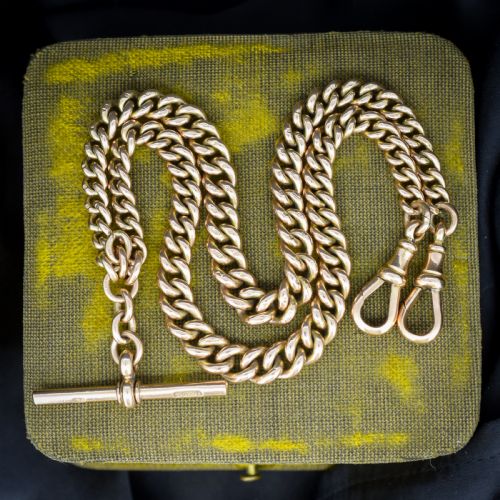
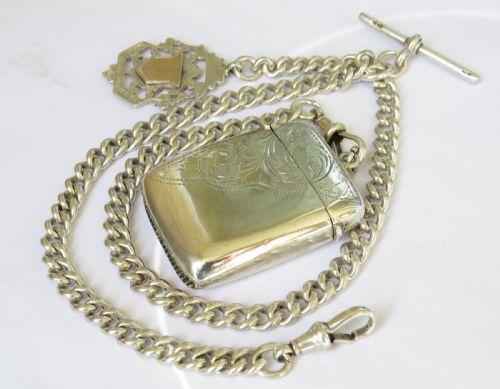
An Edwardian double albert chain secures a pocket watch with two strands meeting at a central T-bar, bringing substantial weight and classic tailoring to daily wear.
Edwardian Double Albert Chain
An edwardian double albert chain is a traditional watch chain designed to span a waistcoat, featuring links that divide from a central T-bar to secure a pocket watch on one side and a fob or pendant on the other. The pieces found here include uniform curb links, graduated links, and figaro patterns spanning the Edwardian period alongside adjacent Victorian and Art Deco examples.
Most items appear in sterling silver or 9ct gold, including both yellow and rose variations, with occasional rolled gold or gold filled alternatives. They typically measure between fourteen and twenty inches in length, often retaining their original double dog clips and T-bars as recorded in the listings.
How they were made
Silversmiths and goldsmiths constructed these chains from interlocking metallic links, shaping sterling silver, 9ct yellow gold, and 9ct rose gold into robust curb, oval, or figaro patterns. Individual links were hand-assembled to create flexible strands capable of supporting heavy timepieces and silver vests.
Makers incorporated functional hardware such as swivel dog clips and T-bars, often hallmarked to denote the metal purity and assay office origin like Chester. The construction balances structural durability with polished aesthetic finish, using steel or enamel components only in associated accessories.
Listings feature precious metals including sterling silver, 9ct yellow gold, and 9ct rose gold alongside rolled gold alternatives.
What varies in quality
The distinction between standard examples and finer pieces lies in the weight of the metal and the uniformity of the link graduation. Heavier gold specimens, such as substantial 9ct rose gold pieces weighing over thirty grams, display greater material substance than lighter or gold filled alternatives.
Quality also rests in the preservation of original hallmarks and the tight action of the swivel dog clips. Complete assemblies retaining matching T-bars and clear assay marks represent the more desirable survivals from the period.
The Edwardian Double Albert Chain Glossary
- Albert chain
- A watch chain designed to secure a pocket watch in a waistcoat pocket, named after Prince Albert. It can be single-stranded or double-stranded with a central drop for a fob.
- T-bar
- A short transverse bar attached to the centre of an albert chain. It slips through a waistcoat buttonhole to anchor the chain securely.
- Dog clip
- A spring-loaded swivel clasp attached to the ends of a watch chain. This mechanism fastens directly to the pocket watch or fob pendant.
- Graduated link
- A style of chain where the links decrease in size progressively from the centre towards the ends. This design provides a balanced visual taper across the waistcoat.
- Curb link
- A chain pattern formed of interlocking flat or slightly twisted links that lie flush against fabric. It remains one of the most durable structures for pocket watch chains.
Edwardian Double Albert Chain: Frequently Asked Questions
How do I wear an edwardian double albert chain today?
Thread the central T-bar through a buttonhole on your waistcoat and let the two strands drape across the front. Secure your pocket watch to one dog clip and tuck it into a pocket.
Alternatively, you can wear shorter lengths around the neck as a necklace or attach a pendant to the central drop instead of a pocket watch.
How can I tell 9ct gold from gold filled chains?
Solid 9ct gold pieces bear official hallmark stamps indicating metal purity, such as assay marks for Chester. Gold filled or rolled gold items consist of a base metal core bonded with a thin layer of gold.
Examining the links closely under magnification often reveals wear points where base metal shows through on filled pieces, whereas solid gold maintains consistent colour throughout.
What lengths do these chains typically measure?
Most pocket watch chains range from fourteen to twenty inches when laid flat, designed to fit comfortably across standard waistcoat dimensions. Some heavier curb link variations extend beyond thirty inches.
Shorter lengths around sixteen inches suit modern necklace wear, while longer examples accommodate traditional waistcoat draping.