

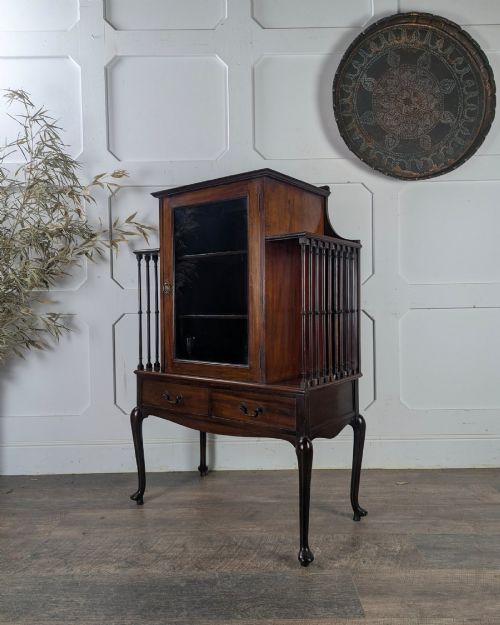
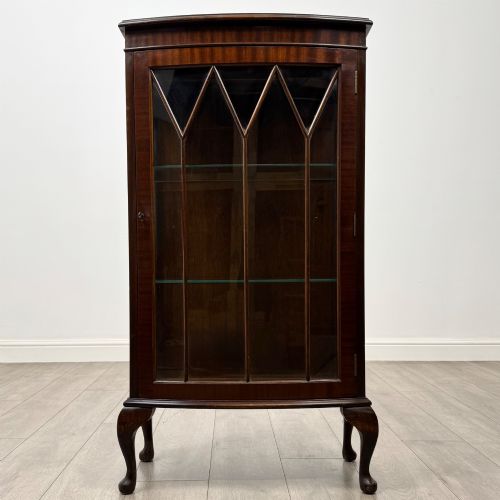
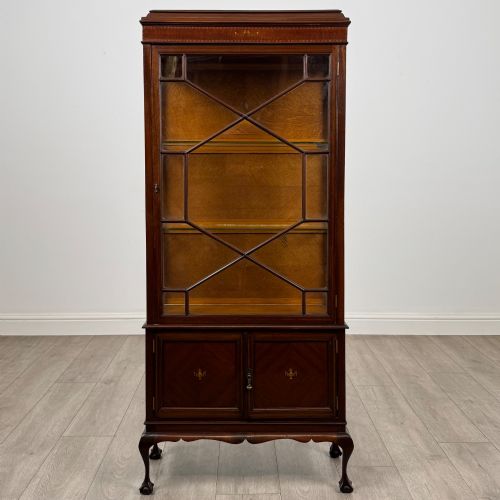
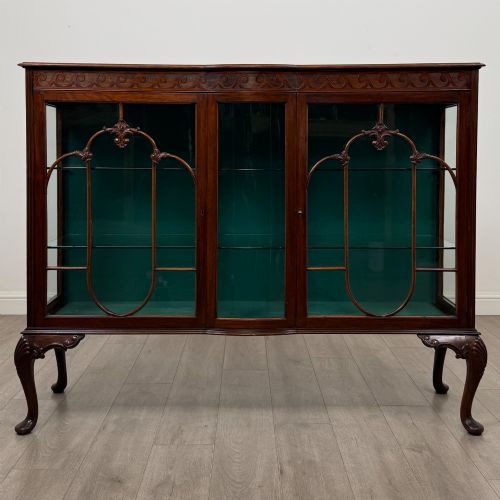
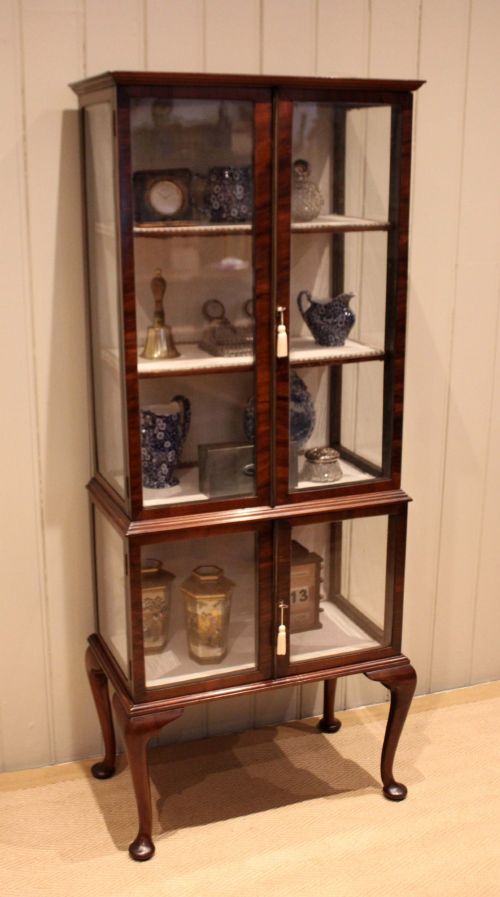
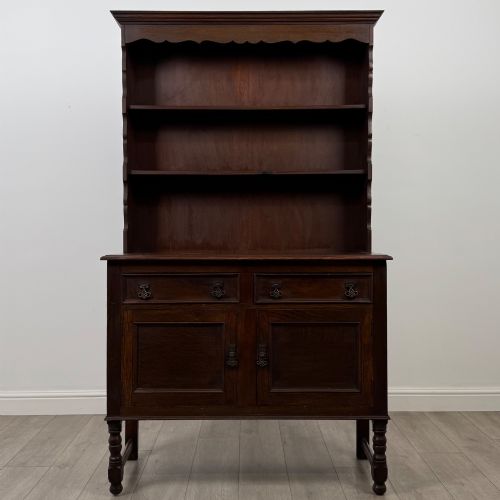
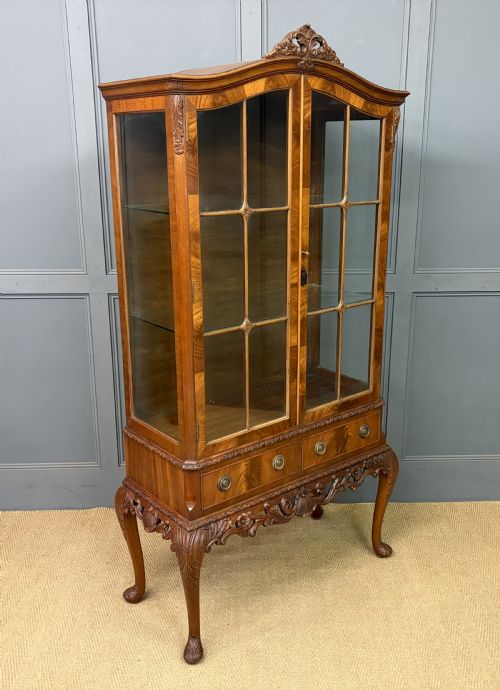
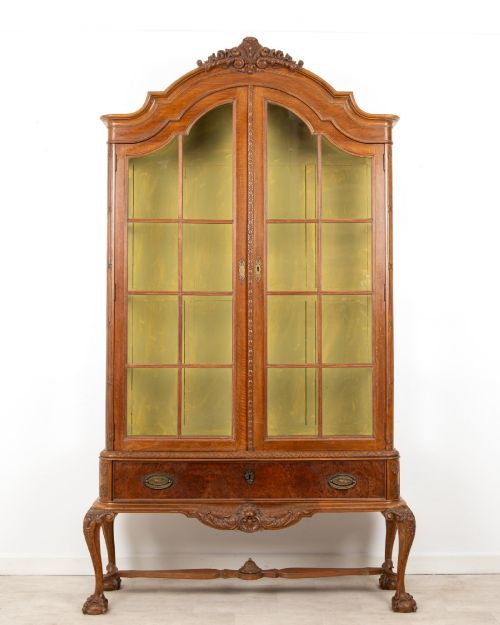
Edwardian Display Cabinet Legs
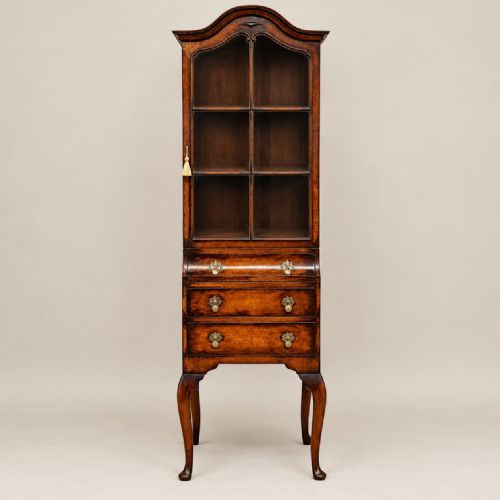
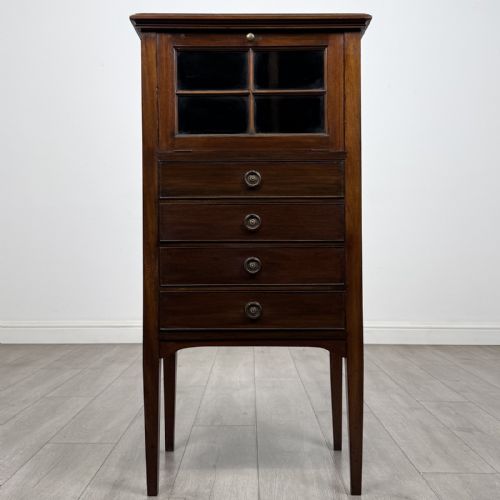
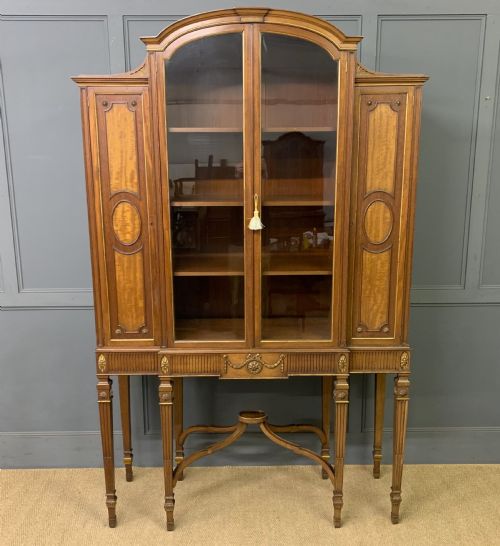
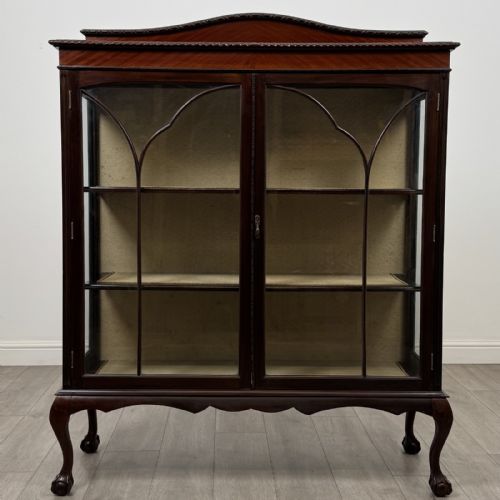
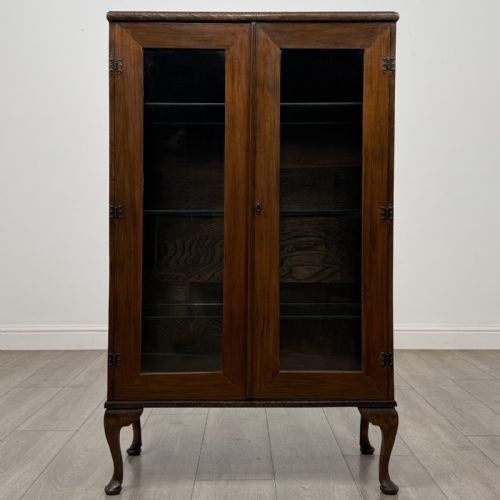
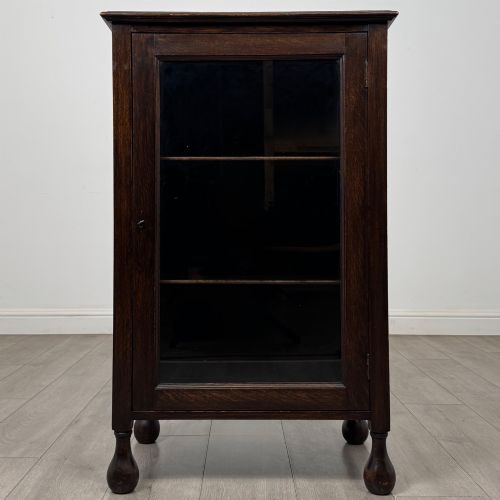
These edwardian display cabinet legs support refined mahogany, satinwood, and oak vitrines, bijouterie tables, and bookcases designed to showcase treasured possessions.
Edwardian Display Cabinet Legs
When you search for edwardian display cabinet legs, you are examining the sturdy supports beneath period glazed cabinets, bijouterie tables, and corner cupboards. These components hold up structures designed to exhibit collections behind glass panes.
The pieces listed on this page predominantly date from the Edwardian era and the early twentieth century, alongside Victorian and later revival styles. You will find display tables, music cabinets, and bureau bookcases resting upon these foundational pedestals.
Makers such as Maple & Co. and Waring & Gillow produced notable examples featuring quality timber frames. The supports reflect the prevailing tastes of their periods, ranging from straightforward uprights to ball and claw feet.
Materials and Construction
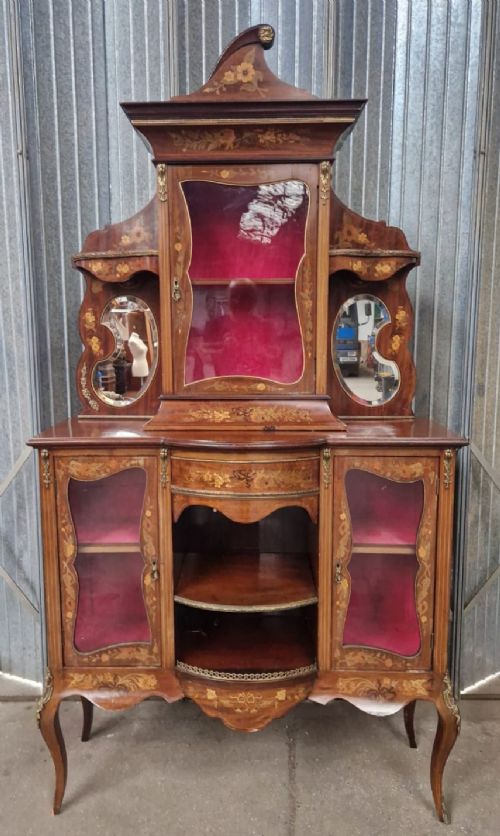
Cabinetmakers utilised dense timbers like mahogany, walnut, satinwood, and oak to construct the main frames and their supporting legs. Inlaid details and gilt metal mounts frequently complement the primary woods.
Glass panels enclose the display sections, while internal shelves sometimes feature fabric or velvet linings. Brass hardware and fittings provide structural security and operational handles for doors and lids.
Edwardian Display Cabinet Legs Retail Price Guide 2026
Typical asking prices for edwardian display cabinet legs among the pieces listed under this phrase on Sellingantiques today, from the lower quarter to the upper quarter. They describe what is for sale here now, not the wider market.
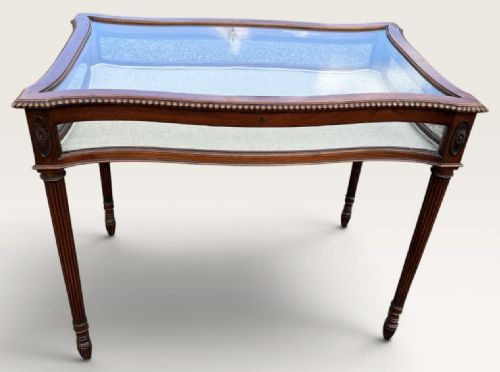
Some tables double as jewellery display cases, inviting guests to admire trinkets without opening a drawer.
Distinctions in Quality
The fineness of the timber selection and the precision of the joinery dictate the standing of each piece. Finely figured mahogany or satinwood with crisp inlaid decoration indicates higher grade manufacturing.
Carved details upon the legs, such as ball and claw feet or neat mouldings, separate standard utility items from superior workshop productions. The integrity of the glass panels and the smoothness of hinged doors also distinguish finer examples.
Maple & Co.·Waring & Gillow
The Edwardian Display Cabinet Legs Glossary
- Bijouterie table
- A glass-topped table designed specifically for displaying small valuables, jewellery, and curiosities. These pieces often feature glazed lids and slender legs.
- Vitrine
- An enclosed glass cabinet used for exhibiting porcelain, ornaments, or books. The term derives from the French word for glass.
- Inlaid
- A technique where contrasting woods or materials are set into the surface of a primary timber to create decorative patterns. This method appears frequently on Edwardian furniture.
- Serpentine
- A gently curved shape resembling a snake's movement, featuring convex curves at the ends and a concave curve in the centre. This profile appears on table tops and cabinet fronts.
- Chippendale Revival
- A style drawing inspiration from the eighteenth-century designs of Thomas Chippendale. Pieces in this revival often incorporate elaborate carving and ball and claw feet.
Edwardian Display Cabinet Legs: Frequently Asked Questions
What are edwardian display cabinet legs made from?
The structural supports and frames typically consist of solid hardwoods such as mahogany, oak, and walnut. Satinwood also appears on finer decorative pieces.
Craftsmen often integrated brass mounts and detailed woodwork into the construction of these items.
How do I identify an Edwardian display cabinet?
Edwardian pieces frequently display lighter timbers, delicate inlaid decoration, and influences from Sheraton or neoclassical revivals. They date from the period around the early twentieth century.
Earlier Victorian examples tend to utilise darker, heavier mahogany with more robust proportions.
Where were bijouterie tables used?
Bijouterie tables served as drawing room furniture intended for displaying personal collections of small valuables and jewellery. Guests could inspect the contents easily through the glass top.
These tables combined storage functionality with decorative presentation in formal reception rooms.
What styles are common among these cabinets?
Listings feature pieces reflecting Edwardian, Victorian, and various revival movements including Chippendale, Sheraton, and Queen Anne. Art Nouveau designs also appear.
These stylistic revivals adapt eighteenth-century motifs for early twentieth-century interiors.