
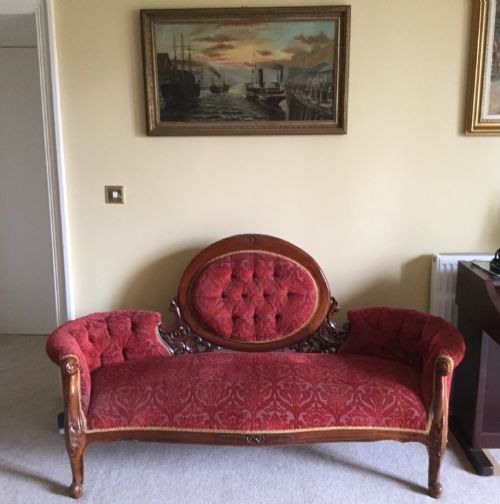
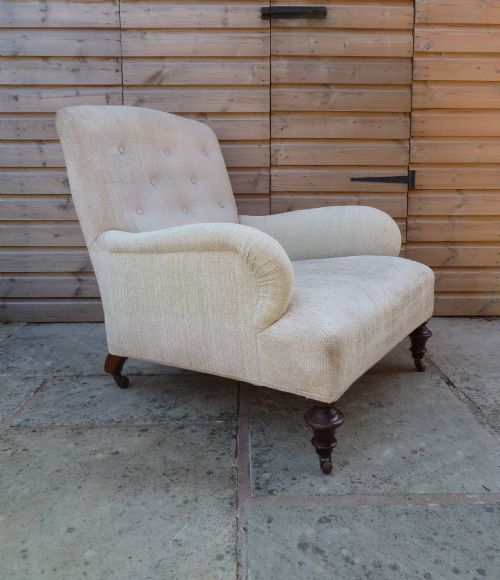
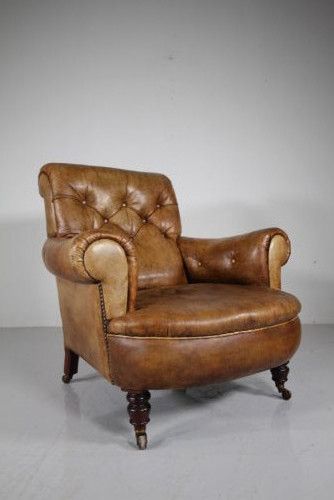
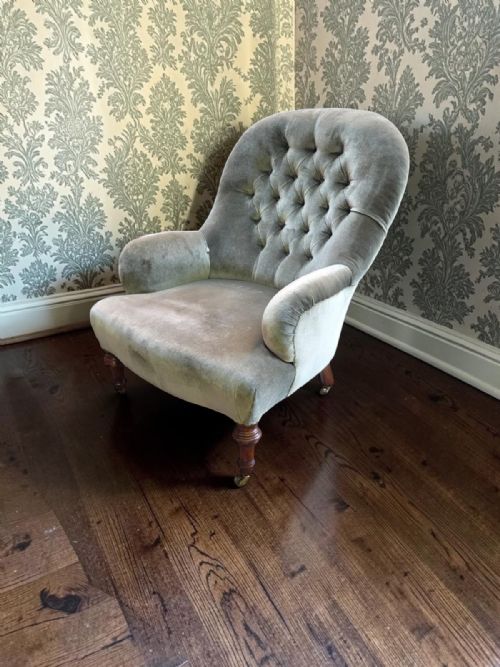


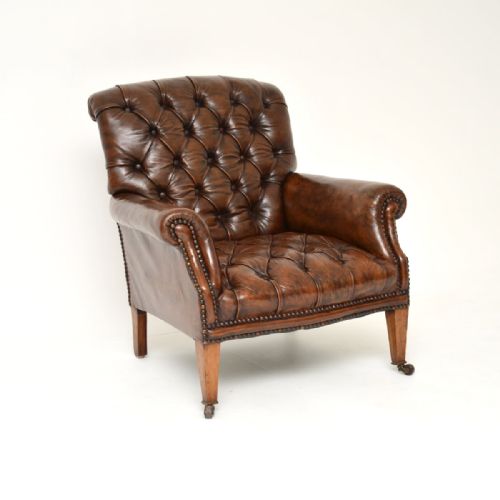
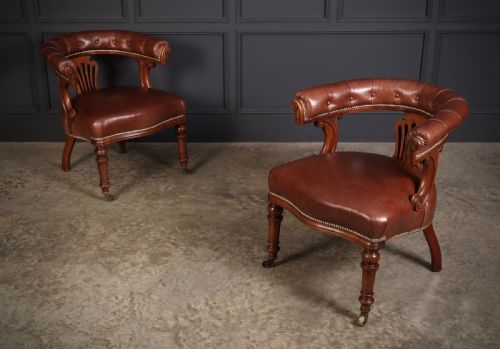


Edwardian Deep Buttoned Chair
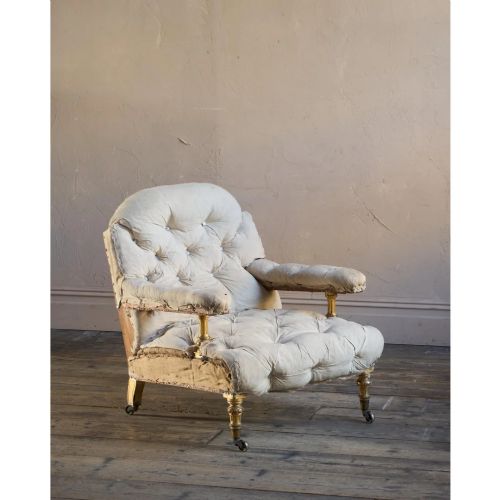
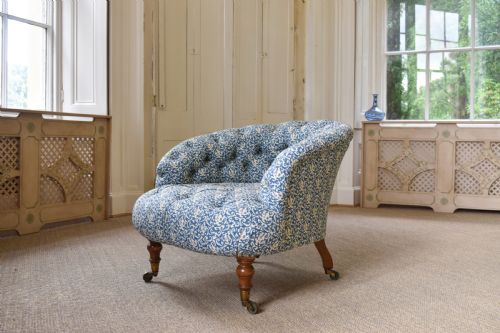
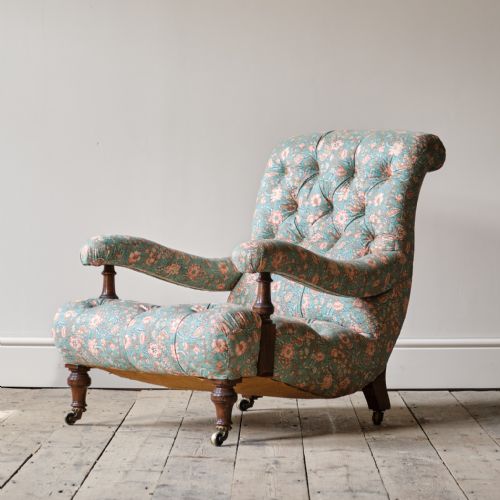
An edwardian deep buttoned chair brings generous upholstery and low, sprung comfort into a room.
Edwardian Deep Buttoned Chair
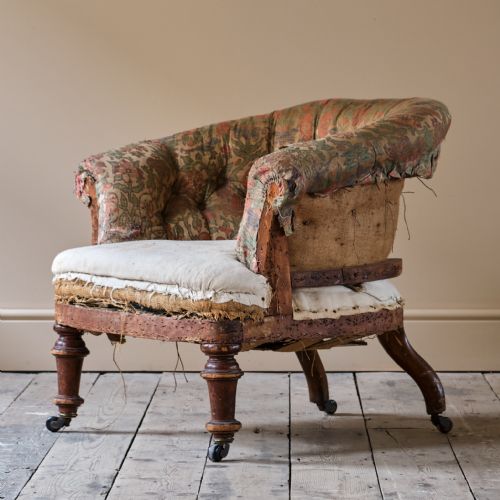
When you search for an edwardian deep buttoned chair, you encounter low armchairs, tub chairs, and wingback designs originating from the late nineteenth and early twentieth centuries. These seating forms developed from earlier Victorian library and fireside chairs, carrying forward deep tufting and sprung seats designed for long hours of reading or relaxation.
The versions most commonly met on this page span the Edwardian period and the late nineteenth century, alongside pieces influenced by traditional English country house tastes. They appear upholstered in leather, velvet, brocade, or ticking, often showing maker attributions or distinct workshop styles from the era.
Materials and construction methods
Frames are built from sturdy timber foundations such as mahogany, oak, and walnut, providing the structural skeleton necessary to support heavy internal springing and dense padding. Hardwood rails and iron back supports ensure the rigidity required for deep seating.
Traditional upholstery techniques define these chairs, utilising deep buttoning across the backrests to pull the fabric tight against internal stuffing. Sprung seat bases and stuffed arms are then covered in leather, velvet, or woven fabric, secured with careful hand-tack work.
Several chairs arrive ready for their next chapter wearing heavy vintage ticking, carrying the quiet history of country house sewing rooms.
Judging quality in buttoned seating
Quality rests upon the integrity of the underlying timber frame and the depth of the original craftsmanship in the springing and padding. Chairs that retain their original maker stamps, tight buttoning, and robust frame structures sit at the upper end of the range.
Proportion and the handling of materials also distinguish superior examples, such as those originating from notable workshops or featuring fine leather hides and heavy velvet piles. The alignment of the button tufting and the resilience of the sprung settee base indicate the level of care invested by the maker.
Howard and Sons·Holland and Sons·Sopwith·Woodstock
The Edwardian Deep Buttoned Chair Glossary
- Buttoned
- Upholstery technique where buttons are sewn through the padding at regular intervals to create a quilted, tufted surface. This method secures the internal stuffing and provides structural support to the backrest.
- Tub chair
- An armchair featuring a rounded, enclosed back that curves continuously into low arms. This form offers a snug, enclosed seat frequently found in libraries and studies.
- Wingback
- An armchair with side panels or wings attached to the back frame designed to shield the sitter from draughts. These chairs often incorporate deep buttoning and generous sprung bases.
- Ticking
- A heavy, tightly woven cotton or linen fabric historically used as a durable inner cover for mattresses and upholstered furniture. In later periods, it became a recognised outer upholstery choice for country house seating.
- Chesterfield
- A large, heavily padded seating style characterised by arms and back of the same height, traditionally finished in deep leather upholstery and button tufting.
Edwardian Deep Buttoned Chair: Frequently Asked Questions
How do I identify an Edwardian chair?
Edwardian chairs generally display lighter proportions and softer decorative influences compared to their heavy Victorian predecessors. They often combine traditional deep buttoning with refined woodwork and understated lines.
Examining the internal frame construction and any retained maker marks or stamps helps confirm the production era. Materials like mahogany and walnut frequently point toward this period of refined domestic comfort.
What is a deep buttoned back?
A deep buttoned back involves pulling the upholstery fabric inward with twine tied to buttons embedded deep into the stuffing. This creates a distinct diamond pattern across the leather or fabric.
Beyond visual texture, this technique keeps the internal padding evenly distributed and firmly in place over years of use. It remains a hallmark of traditional club and library seating.
Where were these chairs used?
These armchairs and tub chairs originally populated English country house libraries, drawing rooms, and studies. Their robust sprung bases and supportive buttoned backs suited long periods of reading or resting by the fire.
Today, they transition easily into modern living spaces as statement reading chairs or fireside seating. Their diverse upholstery options allow them to anchor both formal and relaxed interiors.
Are these chairs comfortable for daily use?
Designed for sustained relaxation, these chairs offer deep seats and supportive sprung bases. The inclusion of upholstered arms and padded backs provides a high degree of physical comfort.
Many examples feature generous proportions that accommodate lounging. Their enduring popularity stems from this combination of structural support and soft padding.