

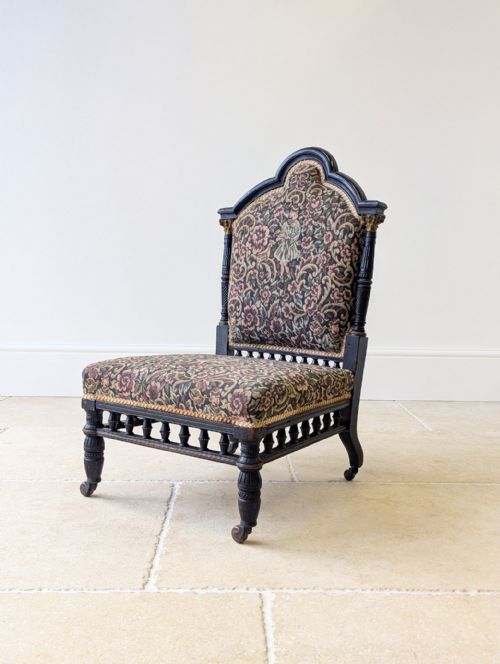
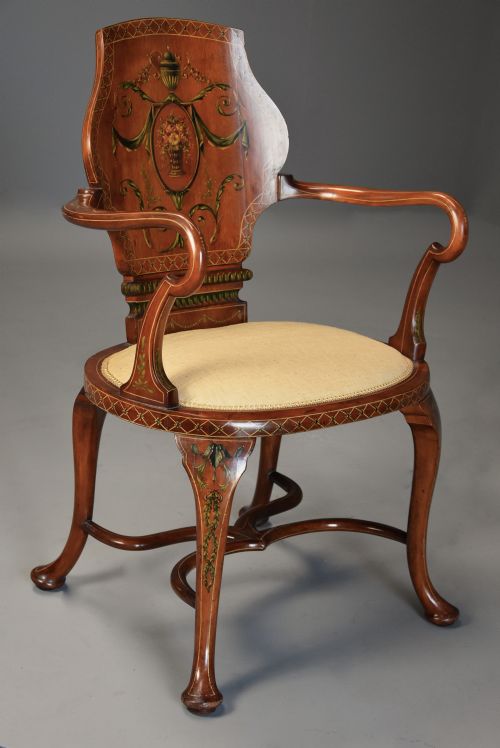
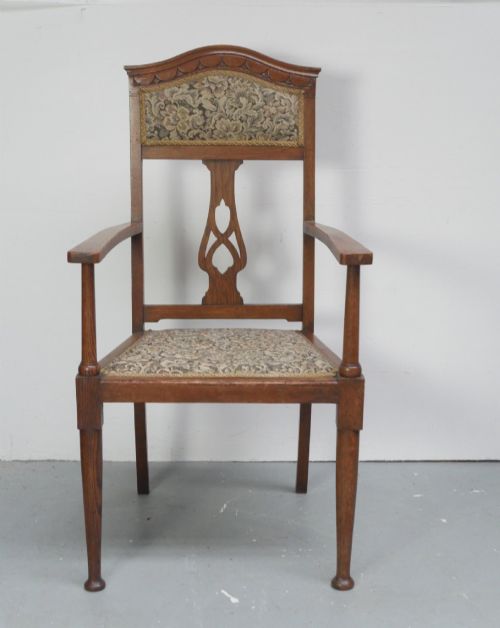


Edwardian Decorative Armchair
An edwardian decorative armchair brings together rich period woodwork and painted or inlaid surfaces to anchor a traditional room.
Edwardian Decorative Armchair
When you search for an edwardian decorative armchair, you encounter seating designed primarily for reception rooms and salons rather than heavy daily use. The pieces span from the late Victorian and Arts and Crafts movements through to the early twentieth century, showing substantial variety in revival styles.
The evidence on this page points toward mahogany and walnut frameworks alongside painted finishes, wood inlay, and occasional wicker or rattan. Forms range from X-frame armchairs and salon chairs to splat-back designs drawing on Georgian or Queen Anne revivals.
You are most likely to meet mahogany models featuring delicate marquetry or painted splats, reflecting the sophisticated tastes of the period. These chairs often combine sturdy timber frames with decorative upholstery fabric suited to period interiors.
Materials and construction
Makers built these frames using solid hardwoods including mahogany, walnut, and oak, often shaping the timber to follow prevailing revival aesthetics. Ebonised wood also appears among the listings, providing a dark contrast for pieces rooted in the Aesthetic Movement.
Decorative surface work defines many of these items, utilising painted details and wood inlay to create visual interest on splats and backrests. Upholstery fabric completes the seating, applied over traditional sprung or padded foundations.
Edwardian Decorative Armchair Retail Price Guide 2026
Typical asking prices for edwardian decorative armchair among the pieces listed under this phrase on Sellingantiques today, from the lower quarter to the upper quarter. They describe what is for sale here now, not the wider market.
Current listings span periods from 1890 to the 1920s, uniting Victorian, Edwardian, and early twentieth-century craftsmanship.
Assessing quality and craftsmanship
The distinction between standard examples and finer pieces lies in the precision of the cabinetwork and the intricacy of the decorative elements. Hand-painted motifs and detailed marquetry inlay require skilled artisans, lifting a chair from simple utility to decorative art.
The choice of primary timber and the integrity of the frame construction further separate the tiers of quality. Better examples maintain crisp carving and stable joinery across revival forms like the Queen Anne and Georgian styles.
Dryad & Co
The Edwardian Decorative Armchair Glossary
- Marquetry
- Decorative woodwork where pieces of veneer are fitted into a background to form geometric or pictorial designs. This technique frequently graces the backrests of mahogany salon chairs.
- Splat
- The vertical central strip of wood in the back of a chair. Painted splats are a notable feature in several revival designs on this page.
- Ebonised
- Wood finished to resemble ebony through a staining or painting process. It was a favoured treatment during the Aesthetic Movement.
- X-frame
- A chair structure featuring intersecting diagonal members forming an X shape beneath the arms or seat. This form offers both structural support and distinct visual movement.
- Aesthetic Movement
- A late nineteenth-century design current emphasising visual beauty over narrative or moral content. Pieces from this movement often utilise ebonised finishes.
Edwardian Decorative Armchair: Frequently Asked Questions
Where should I place these chairs?
These armchairs suit drawing rooms, studies, or bedrooms where their decorative woodwork and painted details can be appreciated without enduring heavy daily wear. Their compact salon proportions make them ideal as accent seating in corners or beside fireplaces.
Because many examples feature delicate inlay or fabric upholstery, pairing them with gentle lighting helps preserve the finish of the timber and textiles over time.
How do I care for the upholstery?
Care for the fabric upholstery by regular gentle vacuuming with a soft brush attachment to prevent dust settling into the weave. Direct sunlight should be avoided to protect both the textile colours and the polished wood frame.
For wooden components, dusting with a dry, soft cloth maintains the finish without moisture damage. Avoid modern silicone sprays, which can build up on antique polish.
How can I tell the styles apart?
Distinguishing between the styles involves looking at the specific revival cues and materials used in the construction. Arts and Crafts pieces tend to emphasise honest oak construction and simpler forms, whereas Edwardian pieces frequently showcase mahogany with fine inlay or painted satinwood.
Victorian and Aesthetic Movement examples often lean towards darker timbers, including ebonised wood, paired with distinct decorative motifs that reflect nineteenth-century design shifts.