



Edwardian Damask Armchair
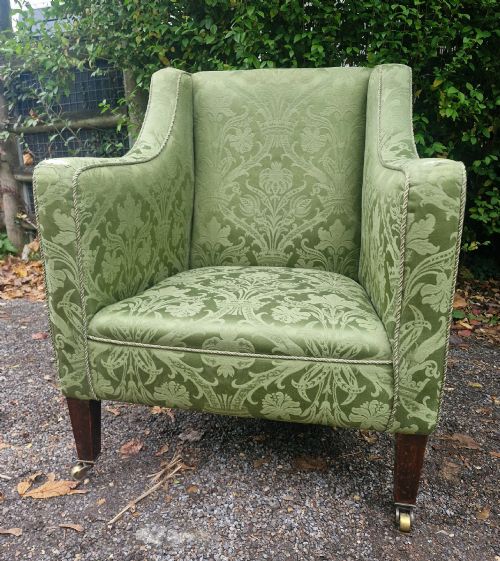
An Edwardian damask armchair brings patterned textile upholstery and dark timber frames together for a traditional seating choice.
Edwardian Damask Armchair
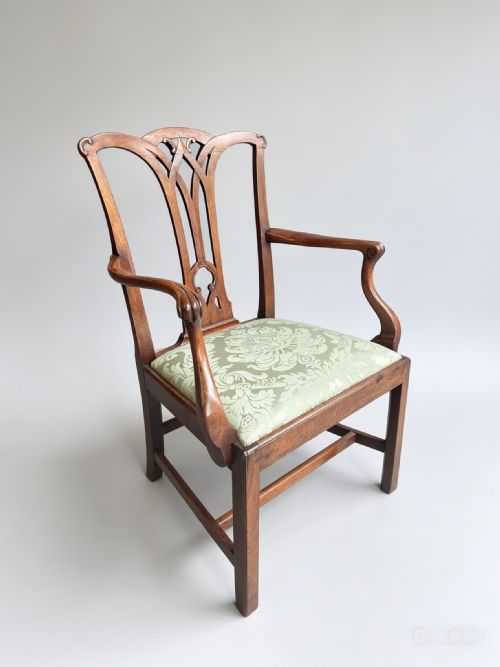
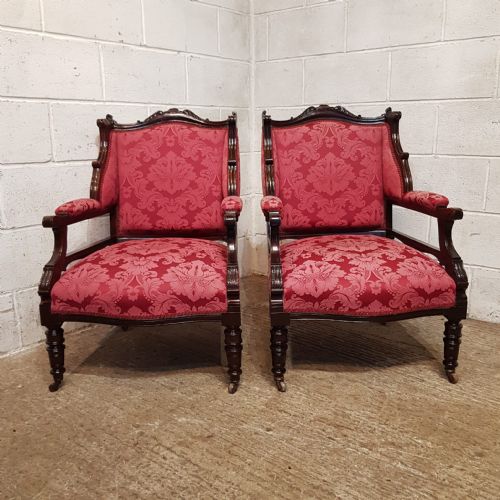
An edwardian damask armchair provides comfortable seating constructed primarily during the early twentieth century. These pieces often combine traditional wooden frames with patterned fabric coverings.
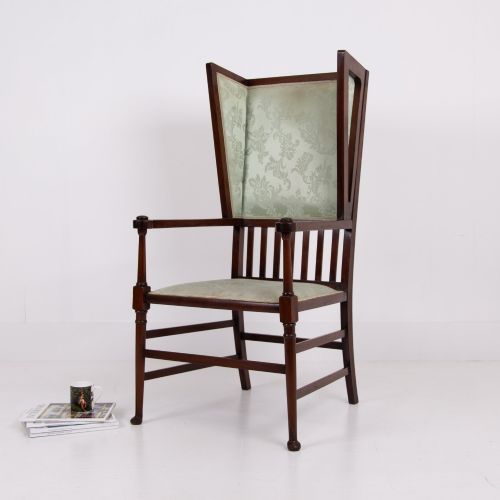
The selections available here range from formal library chairs to lighter salon chairs and winged designs. Many examples reflect the stylistic influences of earlier periods while maintaining Edwardian proportions.
Buyers frequently encounter mahogany frames paired with damask upholstery, alongside related items such as matching settees and larger salon suites.
How they were made
Makers built the structural frames using hardwoods such as mahogany and walnut, frequently incorporating carved details or inlaid decorative elements. Joinery relied on traditional timber connections to ensure stability.
Upholstery involved securing patterned damask fabric over supportive internal stuffing and springs. Brass fittings and castors often completed the lower sections of these chairs.
Edwardian Damask Armchair Retail Price Guide 2026
Typical asking prices for edwardian damask armchair among the pieces listed under this phrase on Sellingantiques today, from the lower quarter to the upper quarter. They describe what is for sale here now, not the wider market.
A child's chair makes an appearance among the full-sized library and salon suites, offering miniature seating charm.
What varies in quality
The excellence of the timber framing and the crispness of any carved decoration set finer examples apart. Heavier woods and more complex inlay indicate superior cabinetmaking.
The condition and weave of the damask upholstery influence the overall integrity of the piece. Well-preserved textile coverings and robust internal springing elevate the standing of the seating.
The Edwardian Damask Armchair Glossary
- Damask
- A reversible figured fabric with patterns woven into the cloth. It is commonly used for upholstery on formal period seating.
- Mahogany
- A durable tropical hardwood prized for its reddish-brown colour and fine grain. Cabinetmakers used it extensively for chair frames.
- Art Nouveau
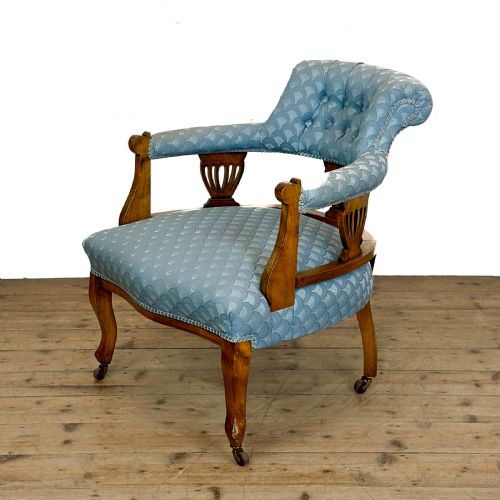
- A style characterised by organic, flowing lines and natural motifs. It appears on several chair frames from the turn of the twentieth century.
- Winged Armchair
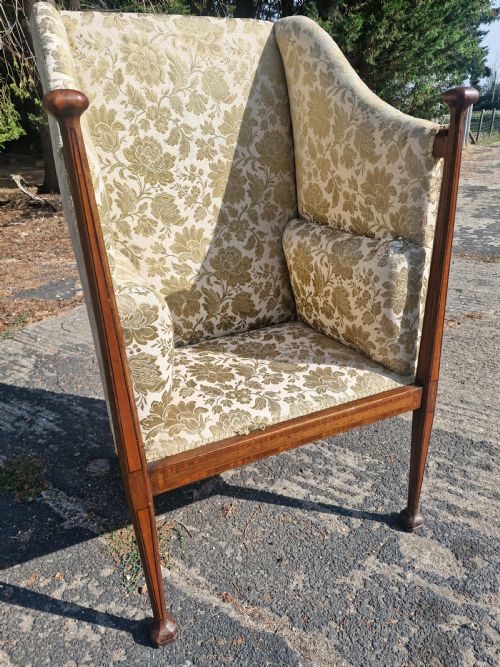
- A seat featuring protective panels extending from the back to the armrests. This design shielded occupants from drafts in cooler rooms.
- Tub Chair
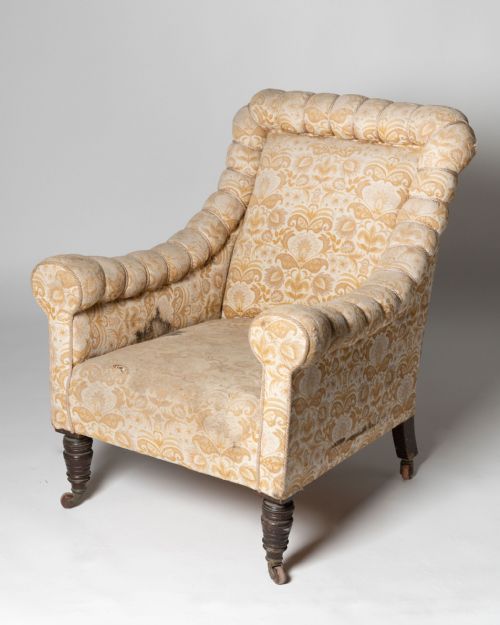
- A form with a rounded back that curves continuously into the arms. It provides a compact and enclosed seating profile.
Edwardian Damask Armchair: Frequently Asked Questions
What is an edwardian damask armchair?
An edwardian damask armchair is a seated piece of furniture featuring patterned fabric upholstery and a wooden frame, typically dating from the early decades of the twentieth century.
These chairs combine the comfort of upholstered seating with the decorative aesthetic of the Edwardian era, often displaying mahogany woodwork.
How were these armchairs used originally?
These armchairs served as comfortable seating in drawing rooms, libraries, and parlours. They provided functional support for reading and socialising.
Larger winged versions offered warmth near fireplaces, while lighter salon chairs were easily moved around entertaining spaces.
How do I care for damask upholstery?
Damask fabric requires gentle maintenance to preserve the woven pattern and textile fibres. Regular light vacuuming removes dust before it settles into the weave.
Professional cleaning is advisable for deeper maintenance to avoid damaging the delicate threads of the patterned surface.
How can I identify an Edwardian piece?
Edwardian furniture generally exhibits lighter proportions and simpler lines than heavier Victorian designs. Makers frequently utilised mahogany and incorporated subtle decorative inlays.
Comparing the framing styles and secondary woods helps distinguish Edwardian manufacturing from earlier nineteenth-century work.