



Antique Channelled Armchair
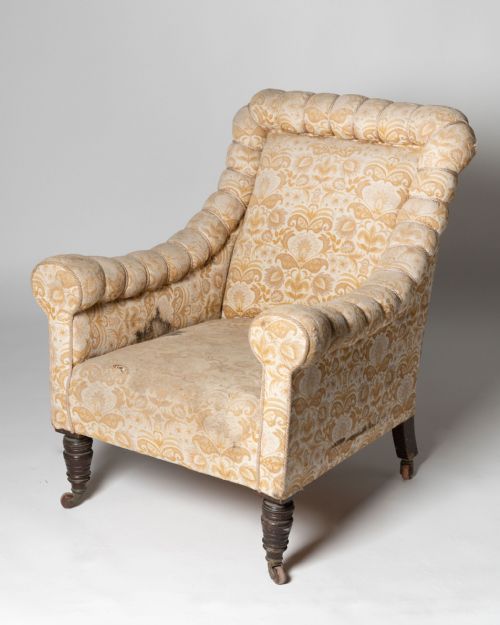
An antique channelled armchair brings substantial presence and deep comfort to a room through upholstered fluting and robust period timber framing.
Antique Channelled Armchair
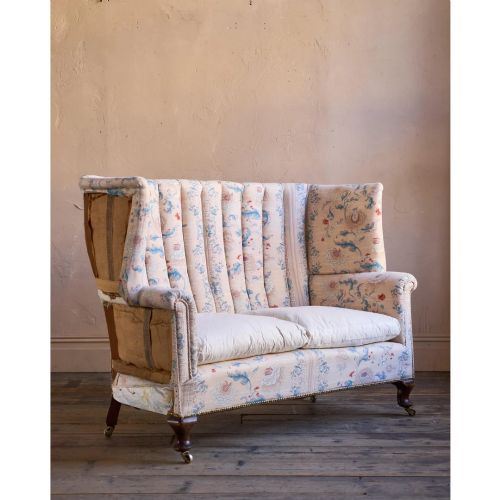
When you search for an antique channelled armchair, you encounter deeply padded seating designed with vertical fluting or ribbed upholstery across the backrest. The pieces appearing here span the Victorian, Edwardian, and Georgian eras, taking the form of barrel backs, wingbacks, and tub shell chairs.
The most common examples on this page are nineteenth-century barrel back armchairs featuring enclosed sides that wrap around the sitter. These designs combine substantial proportions with structured upholstered ribs that draw the eye upward.
Makers and upholsterers from the nineteenth and early twentieth centuries built these chairs using timber frames of mahogany, walnut, and general wood. Upholstery treatments range from simple linen and damask fabric to plush velvet and brown leather.
Construction and materials
Carpenters constructed the underlying frames using sturdy timbers such as mahogany and walnut, shaping cabriole or straight legs depending on the prevailing style. The distinctive channelled effect requires precise internal stitching to maintain the vertical rows of padding without sagging over time.
Traditional stuffing materials and heavy textiles like damask, velvet, and linen were hand-tacked to the wooden carcase. Showwood elements, particularly in Victorian ebonised mahogany versions, left portions of polished timber exposed around the arms and base.
Antique Channelled Armchair Retail Price Guide 2026
Typical asking prices for channelled armchair among the pieces listed under this phrase on Sellingantiques today, from the lower quarter to the upper quarter. They describe what is for sale here now, not the wider market.
Listings span the nineteenth century through the 1930s, featuring materials such as mahogany, walnut, velvet, leather, and damask fabric.
Assessing quality and craftsmanship
Quality rests in the integrity of the wooden frame and the tightness of the vertical upholstery fluting. Chairs that retain their original timber structure without excessive movement in the joints demonstrate superior cabinetmaking.
The refinement of the channelled stitching separates standard production from finer examples. Even spacing across the ribbed upholstery and well-defined curves on barrel back or wingback forms indicate skilled hands in the workshop.
The Antique Channelled Armchair Glossary
- Barrel back
- An armchair style characterised by a semicircular upholstered back that curves continuously into the arms. This enclosed design provides draught-proof comfort.
- Channelled
- An upholstery technique involving vertical sewn seams that create parallel ribbed tubes of padding. It adds structural rigidity and a decorative linear rhythm to the backrest.
- Showwood
- Furniture framing left visible around the edges of the upholstery rather than being entirely covered in fabric. It highlights the polished timber grain.
- Wingback
- An armchair featuring protective side panels projecting from the backrest. These wings historically blocked draughts from fireplaces.
Antique Channelled Armchair: Frequently Asked Questions
What is a channelled armchair?
A channelled armchair is a seating form defined by vertical stitched lines in the upholstery that create distinct padded ribs. This design offers structured back support while adding texture to the silhouette.
Most examples found in period furniture date from the nineteenth and early twentieth centuries, incorporating barrel backs or enclosed wing designs.
How do I date a barrel back chair?
Dating relies on examining the timber species, frame construction methods, and leg styles visible beneath the upholstery. Georgian examples display different proportions compared to later Victorian or Edwardian interpretations.
Upholstery materials and tacking techniques also provide clues, though many pieces have been recovered over their lifetimes to suit changing tastes.
Where should I place an antique armchair?
These substantial chairs suit studies, living rooms, or reading corners where their enclosed backs and deep padding create a comfortable retreat. Their generous proportions require adequate floor space to let the silhouette stand clear.
Pisitions away from direct sunlight help preserve delicate fabrics such as silk damask, velvet, or antique leather.
What woods were used in these chairs?
Cabinetmakers primarily utilised mahogany and walnut for visible framework and structural support. Other pieces simply record general timber construction beneath the extensive upholstery.
Ebonised finishes on mahogany also appear, reflecting Victorian preferences for dark, formal decorative arts.