




Edwardian Cut Glass Inkstand
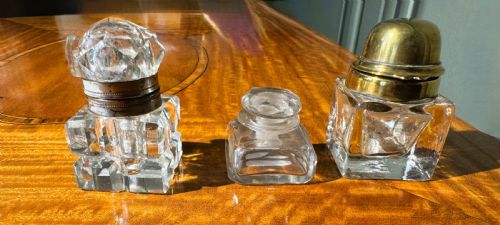
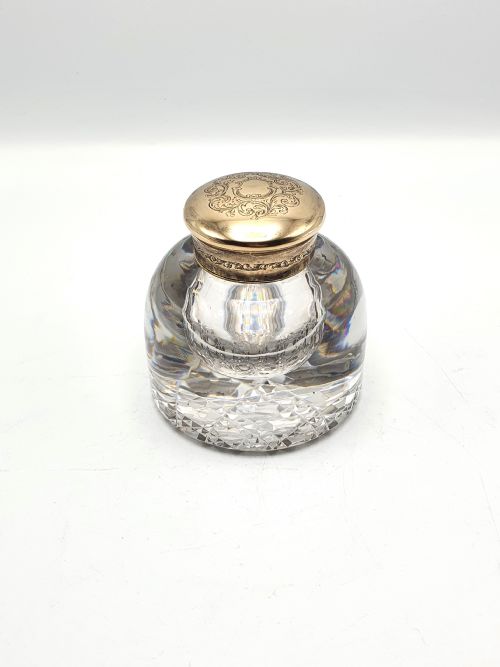
These edwardian cut glass inkstand pieces combine heavy glass bodies with metal mounts, offering both practicality and period character for the desktop.
Edwardian Cut Glass Inkstand
An edwardian cut glass inkstand brings together desk accessories from the Edwardian and Victorian periods, spanning the nineteenth and early twentieth centuries. These items appear as single ink pots, double inkstands, and larger desk sets designed for correspondence.
Most examples feature a glass or crystal bottle paired with mounts of sterling silver, silver plate, brass, or oak bases. The selections range from horn of plenty cornucopia desk stands to simple glass inkwells and heavy faceted desktop jars.
How They Were Made
Maker techniques rely on heavy glass cutting to create faceted crystal bottles that catch the light on a desk. Metal components utilise silver plating, solid sterling silver with hallmarks, or cast brass for mounts and lids.
Wooden elements incorporate solid oak to form substantial desk stands that secure the glass ink bottles. Silver mounts frequently carry London assay office hallmarks dating from the nineteen-hundreds.
Listings feature items from both the Victorian and Edwardian periods, utilising materials such as cut glass, sterling silver, silver plate, brass, and oak.
What Varies in Quality
Quality rests in the weight and clarity of the cut glass bottle, alongside the substantial nature of the metal mounts. Finer pieces display crisp facet cutting on the crystal and heavy gauge sterling silver lids with clear hallmarks.
The complexity of the base construction also separates standard items from superior pieces, such as those incorporating solid oak or ornate brass frames with specialised feet like dolphin motifs.
Tiffany & Co·Peter Henderson Deere
The Edwardian Cut Glass Inkstand Glossary
- Inkstand
- A desktop stand holding one or more inkwells along with space for pens. These pieces anchor the writing desk.
- Hallmark
- An official stamp indicating the purity of precious metals and the year of assay. English silver bears these marks on the lids and mounts.
- Cut Glass
- Glass shaped and patterned by grinding wheels to produce facets. This technique creates the heavy, refractive quality seen in period ink pots.
- Desk Accessory
- Items designed to assist with writing and correspondence. Inkstands and inkwells form the primary examples of this category.
Edwardian Cut Glass Inkstand: Frequently Asked Questions
What is an edwardian cut glass inkstand?
An edwardian cut glass inkstand is a desk accessory comprising a heavy glass or crystal ink bottle mounted with silver, silver plate, or brass, often set within an oak or metal tray.
These items date predominantly from the early twentieth century and late nineteenth century, serving both a functional writing purpose and a decorative role on the desktop.
How do I date these inkstands?
Dating relies heavily on silver hallmarks stamped onto the metal lids and mounts, which indicate the assay office and precise year of manufacture. Stylistic clues such as Edwardian ornate brasswork or late Victorian oak bases also point to the correct period.
Archive records and maker marks further help place the piece within the nineteenth or early twentieth century.
How were these inkstands used?
These pieces sat on writing desks to hold liquid ink for dip pens during the period of handwritten correspondence. The glass bottles kept the ink accessible while the metal lids helped prevent dust and rapid evaporation.
Larger double inkstands allowed writers to keep different coloured inks or accommodate multiple users at a shared desk.
How do I care for cut glass and silver?
Glass components benefit from gentle washing with warm soapy water, avoiding harsh abrasives that might scratch the surface. Silver mounts require occasional polishing with a soft cloth designed for precious metals to maintain their finish.
Keeping the oak bases dry and away from direct heat sources preserves the wood and prevents the metal mounts from loosening.