


Edwardian Cut Glass Condiments
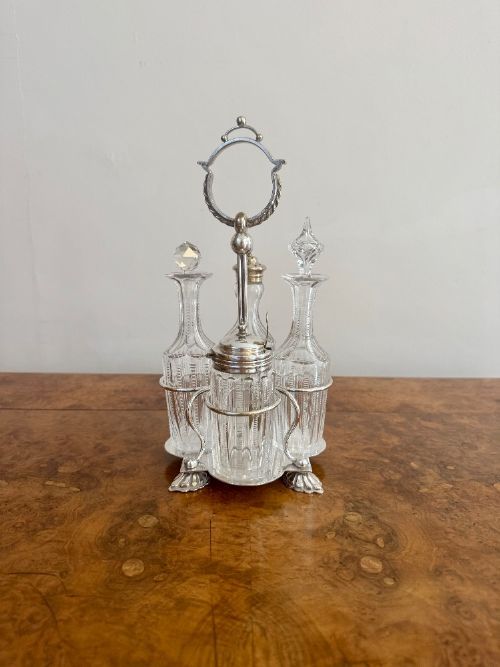
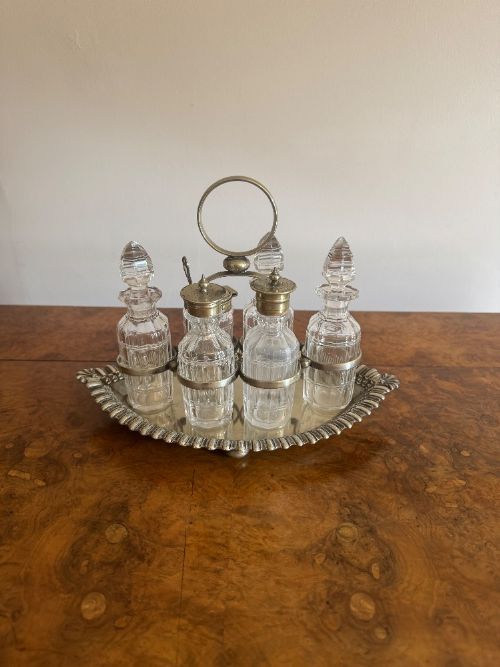
These Edwardian cut glass condiments bring brilliant sparkle to the table through heavy facet-cut vessels fitted in polished silver plate.
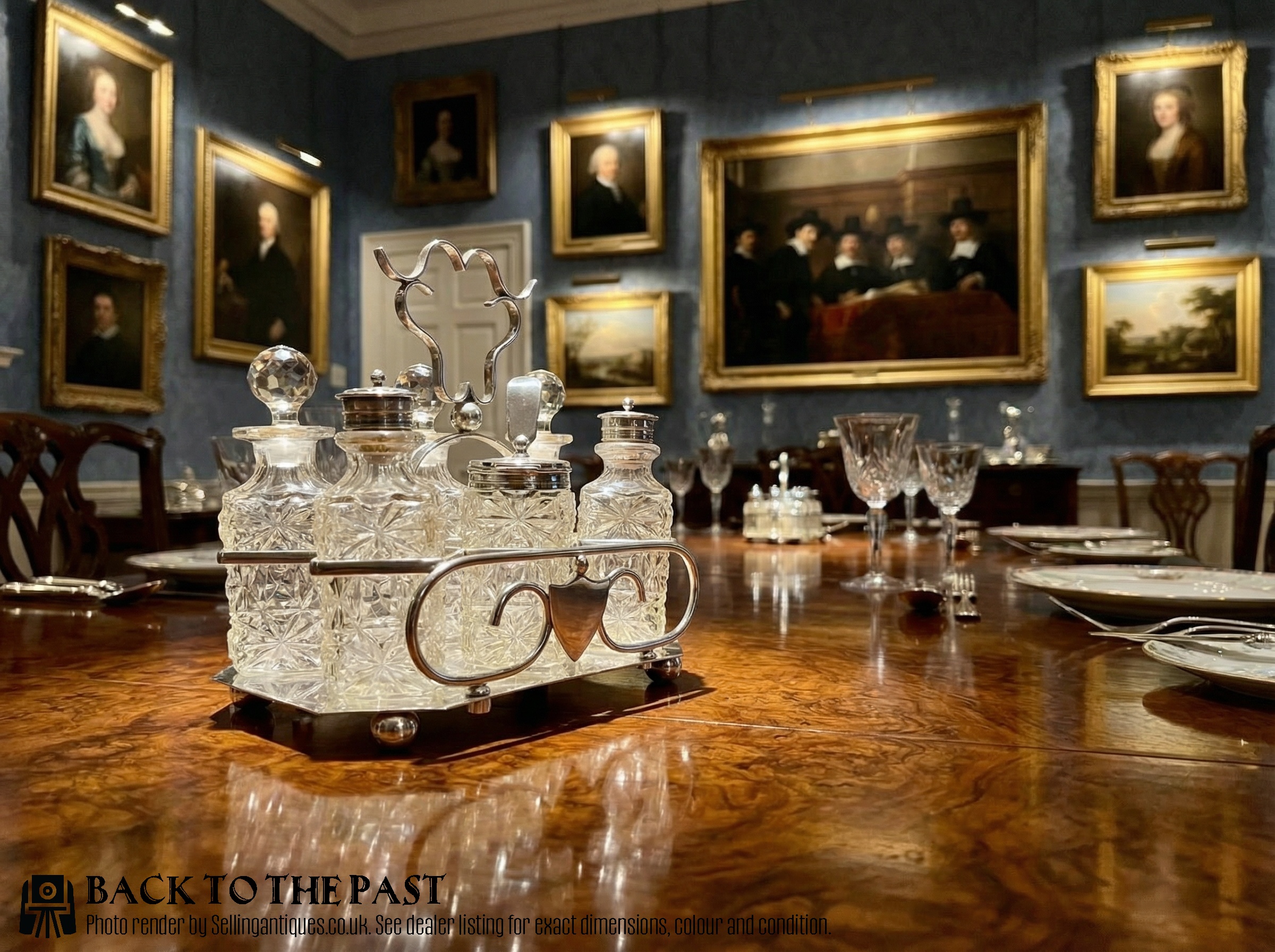
Edwardian Cut Glass Condiments
When you search for Edwardian cut glass condiments, you encounter an array of tableware designed for serving preserves, relishes, salt, and pepper at the dining table. The listings here centre primarily on cruet sets, condiment stands, and individual preserve jars housed in stands.
Most examples combine heavy cut glass bodies with silver plate mounts, frames, or spoons. Pieces range from multi-bottle cruet sets holding six or eight glass containers down to single preserve dishes and open salt cellars.
Materials and construction
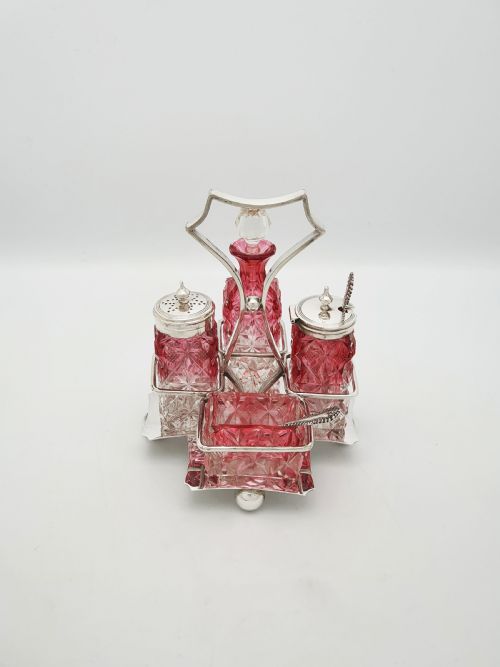
Makers utilised clear cut glass and crystal, alongside cranberry flashed glass, shaping them with deep geometric facets that catch the light. These glass vessels sit within sturdy silver plated frames or feature sterling silver mounts and hallmarked silver tops.
Metal components often take the form of silver plate over a base metal, frequently shaped into stands complete with carrying handles and fitted rings to secure each individual glass bottle or jar.
Current listings feature cut glass, silver plate, sterling silver, cranberry glass, and velvet across periods ranging from Georgian to the 1960s.
Gradations in quality
The distinction between standard table items and finer pieces lies in the crispness of the glass cutting and the weight of the silver plating. Superior sets feature deep, sharp facets on the glass and heavy, well-balanced metal frames.
Completeness also dictates standing, as multi-bottle cruet sets retaining their original matched bottles and matching spoons command greater attention than assembled or incomplete groupings.
Walker & Hall
The Edwardian Cut Glass Condiments Glossary
- Cruet set
- A matched collection of glass bottles or jars for condiments, held together in a metal stand. These sets typically include containers for oil, vinegar, mustard, and pepper.
- Cranberry glass
- Transparent glass coloured with gold chloride to produce a rich red hue, often flashed onto clear glass before cutting. This technique creates a striking contrast when cut facets reveal the clear glass beneath.
- Silver plate
- A layer of silver fused to a base metal such as copper or Britannia metal. This process provided the bright appearance of solid silver for domestic tableware at a lower cost.
- Relish caddy
- A specialised metal stand designed to hold glass jars containing rel<bos>4ishes or preserves. They frequently include a matching spoon tucked alongside the glass vessel.
Edwardian Cut Glass Condiments: Frequently Asked Questions
What are Edwardian cut glass condiments?
These pieces are table service items created during the early twentieth century to hold condiments like salt, pepper, mustard, and preserves. They combine heavy cut glass vessels with metal frames.
Most examples use silver plate for the stands and mounts, designed to sit directly on the dining table or sideboard during meals.
How were cruet sets used?
Cruet sets held liquid and dry seasonings so diners could flavour their food at the table. Individual bottles served oils, vinegars, and sauces, while open cellars held salt.
Stands kept these condiment bottles organised and made it simple to pass the entire collection around the dining table during formal meals.
How do I clean cut glass and silver plate?
Clean the glass portions in warm soapy water using a soft cloth to avoid scratching the surface. Dry them thoroughly to maintain the sparkle of the cut facets.
Polish the silver plate frames and mounts gently with a specialised silver cloth, taking care not to expose the underlying base metal through aggressive rubbing.
Are all condiment sets Edwardian?
While the core of these listings dates from the Edwardian period and the early 1900s, the evidence includes pieces from the Victorian era, the Georgian period, and mid-century items.
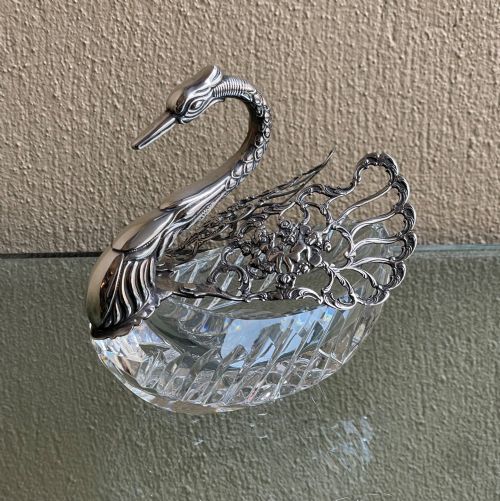
Styles span from Victorian novelty designs and Rococo Revival frames to clean Edwardian stands and later mid-century pieces like the silver and glass swan dish.