



Edwardian Curved Settee
An Edwardian curved settee offers refined seating, bringing sweeping lines and period character to a formal room or parlour.
Edwardian Curved Settee
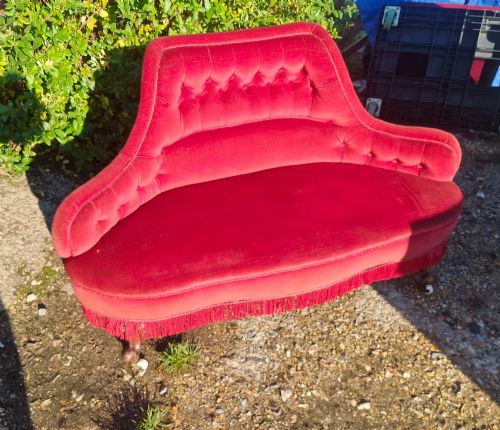
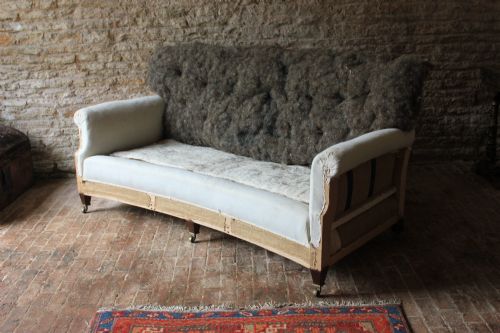
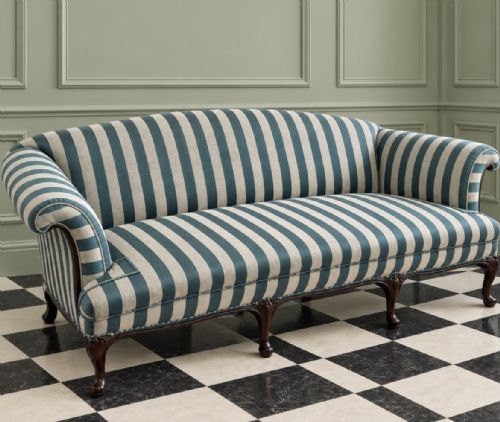
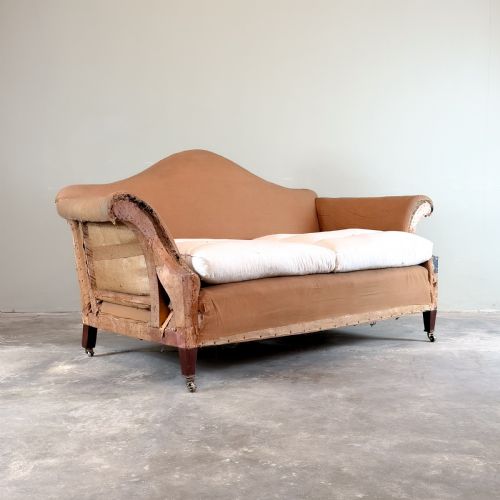
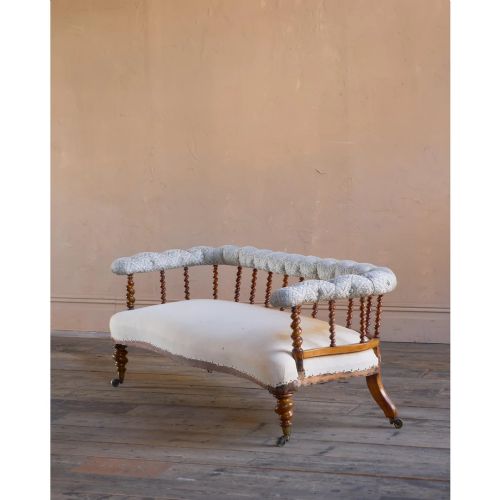
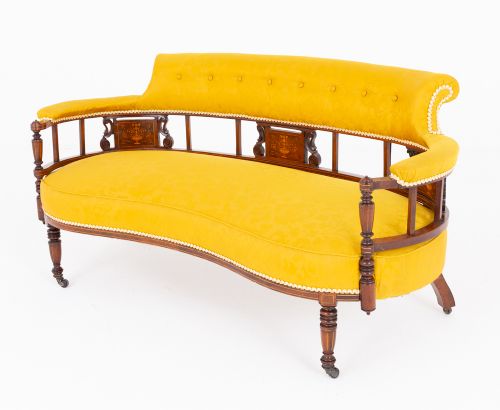
The edwardian curved settee combines graceful upholstery forms with slender woodwork, frequently emerging from the Edwardian period alongside late Victorian and early twentieth-century variations. These pieces often feature mahogany, rosewood, or beech frames, sometimes enhanced by delicate inlay or painted decoration.
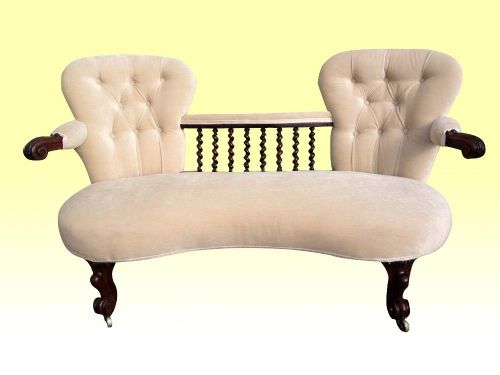
The layout of these settees ranges from camel backs and tub shapes to high curved backs designed for parlour or bedroom settings. Buyers encounter diverse stylistic influences, including Louis XVI designs, Art Nouveau flourishes, and Viennese bentwood constructions.
Many examples are accompanied by matching armchairs or form part of larger salon suites. The silhouette remains distinctive through sweeping contours and tailored upholstery, serving as both functional seating and decorative centrepieces.
Materials and construction methods
Makers utilised solid timbers such as mahogany and rosewood for structural integrity, often incorporating lighter satinwood for decorative inlay work. Beech provided a reliable framing material for bentwood items and painted couches.
Upholstery techniques involved deep buttoning, cane panels, and fabric coverings including velvet. Brass elements occasionally appeared in castors or decorative mounts, while spindle backs relied on traditional turning methods.
Edwardian Curved Settee Retail Price Guide 2026
Typical asking prices for edwardian curved settee among the pieces listed under this phrase on Sellingantiques today, from the lower quarter to the upper quarter. They describe what is for sale here now, not the wider market.
Some settees were built narrow enough to accommodate elaborate Edwardian hats without disturbing the brim.
Understanding quality and craftsmanship
The distinction between standard production and superior craftsmanship rests in the execution of fine details, such as intricate wood inlay, precise fluting on legs, and the complexity of bentwood shaping. Finer pieces demonstrate careful selection of timber veneers and harmonious proportions across curved frames.
Upholstery standards and structural joinery define the enduring integrity of each settee. Original cane work, robust frame construction, and sophisticated decorative motifs elevate certain pieces above simpler functional seating.
C. Hindley & Sons·Thonet·Howard and Sons
The Edwardian Curved Settee Glossary
- Bergere
- An enclosed upholstered armchair or settee with wooden frames and cane panels. This French-inspired seating style appears frequently in early twentieth-century suites.
- Bentwood
- Wood softened by steam and bent into curved structural forms. Thonet utilised this technique to create lightweight and durable furniture frames.
- Inlay
- Contrasting timber or shell inserted into recesses within the wood surface to create decorative patterns. Satinwood is commonly employed for this detailed ornamentation.
- Tub shaped
- A seating form featuring a continuous curved back and arms wrapping around the user. This design provides an enclosed and supportive posture.
- Camel back
- A furniture back profile featuring a central upward curve resembling a camel's hump. This classic contour defines formal sofa designs across several periods.
Edwardian Curved Settee: Frequently Asked Questions
What defines an edwardian curved settee?
An edwardian curved settee is a seating piece characterised by a rounded or sweeping backrest, produced primarily around the early twentieth century. These settees often incorporate mahogany or rosewood frames with tailored upholstery.
They reflect diverse design influences, ranging from straightforward Edwardian parlour styles to Louis XVI revival motifs and bentwood construction.
Where were these settees placed in a home?
These settees were traditionally arranged in formal reception rooms, parlours, and drawing rooms where guests were entertained. Some specialised variants were designed specifically as end-of-bed seating or companion pieces within matching salon suites.
Their decorative backs and curved profiles made them suitable for placement where the furniture could be viewed from multiple angles.
How do I care for velvet and fabric upholstery?
Maintaining fabric and velvet upholstery involves gentle brushing to remove dust and prevent the pile from crushing. Avoiding direct sunlight helps preserve the original colour and integrity of the textiles over time.
Professional cleaning is recommended for delicate materials to maintain the condition of the fabric without damaging the underlying structure.
How can I distinguish Edwardian from Victorian pieces?
Victorian furniture typically displays heavier proportions, darker woods, and deeper buttoning with more exuberant ornamentation. Edwardian pieces tend to feature lighter frames, more restrained inlay work, and slender legs.
Design influences also shift, with Edwardian makers frequently incorporating neoclassical revivals and early Art Nouveau elements alongside traditional forms.