




Edwardian Curb Link Bracelet
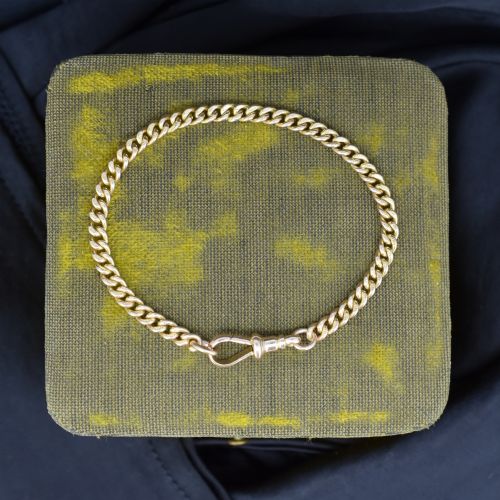
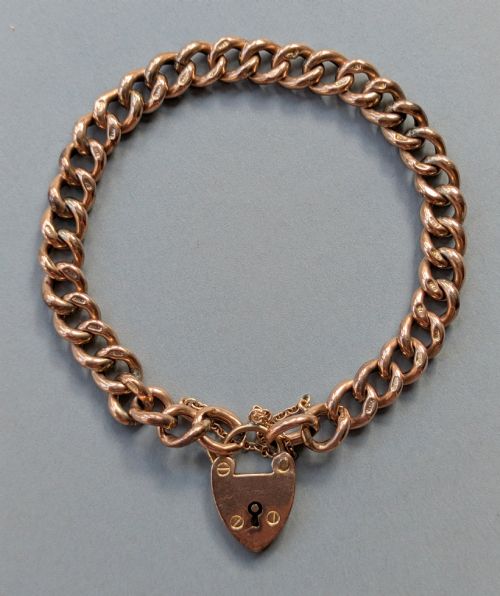
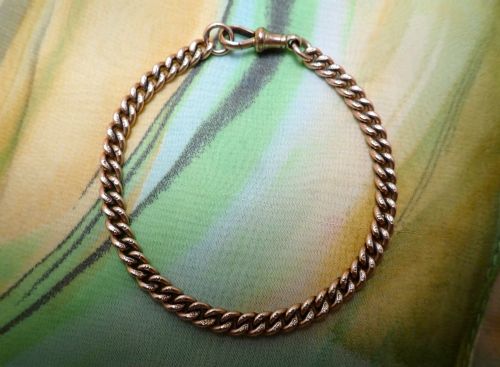
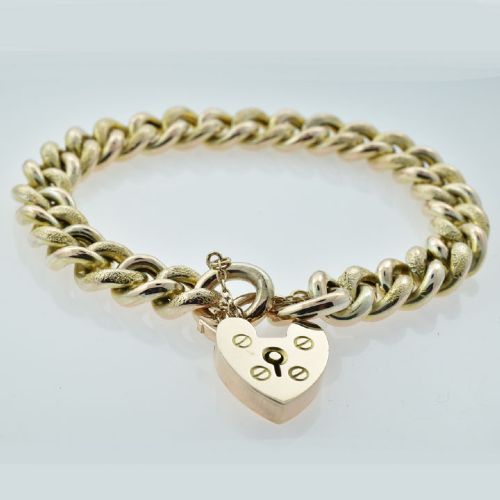
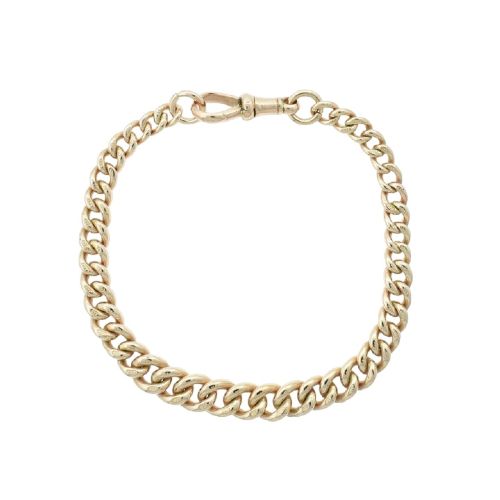
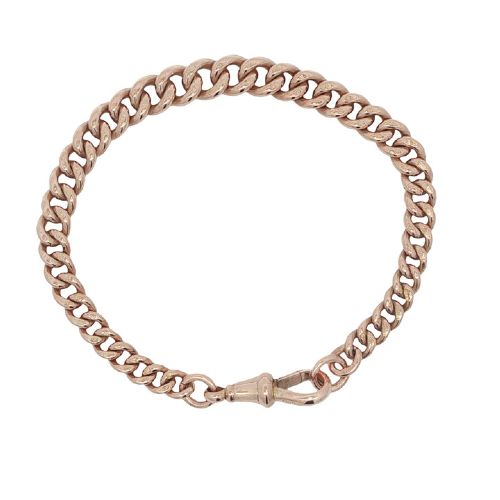
An Edwardian curb link bracelet is a dense, interlocking chain of gold links that sits substantial and warm on the wrist.
Edwardian Curb Link Bracelet
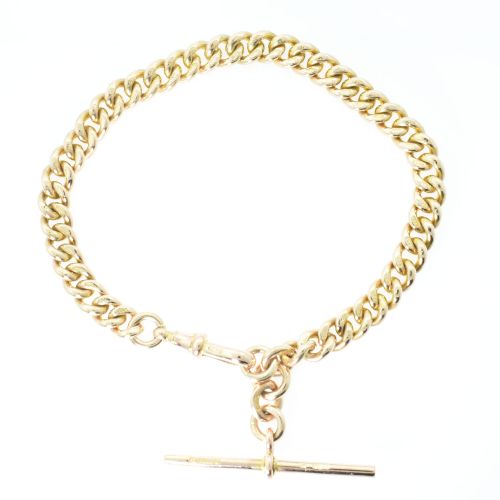
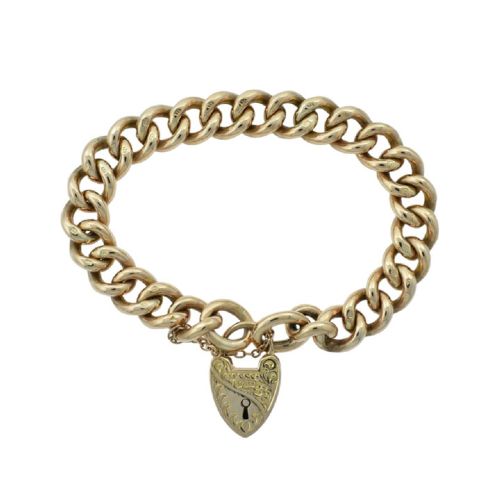
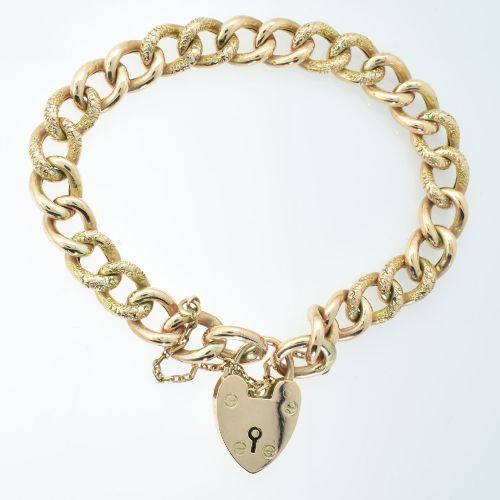
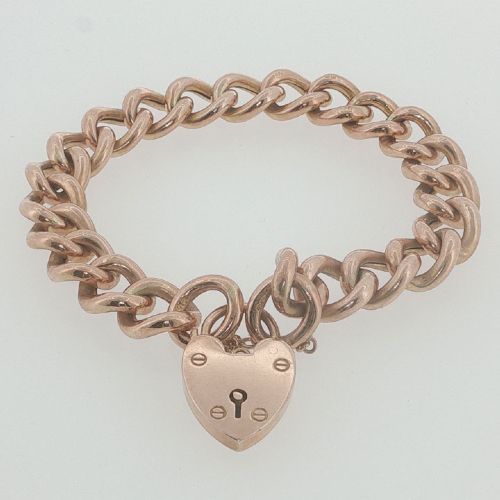
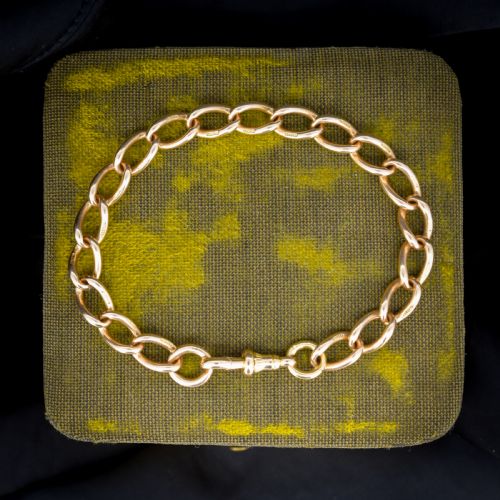
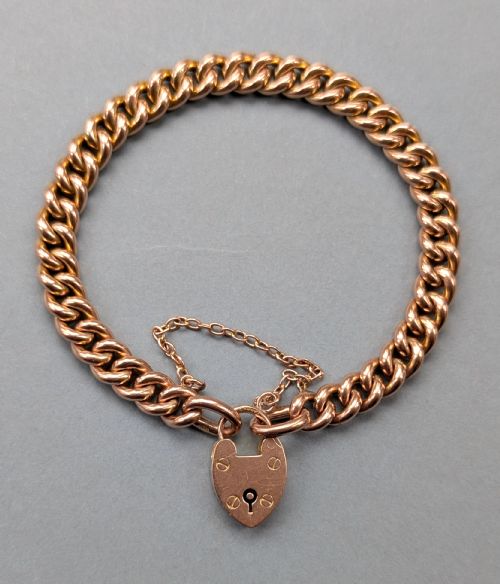
An Edwardian curb link bracelet is built from interlocking metal loops designed to lie flat against the skin, appearing most frequently in the listings from the Edwardian period and around 1900. These pieces often incorporate practical additions like a T-bar, a dog clip, or a heart-shaped padlock fastening.
While Edwardian examples dominate the selection, the wider category includes pieces spanning from the late Victorian era through to 1910, showing how the heavy curb form persisted across decades. Gold purity ranges across 9ct, 15ct, and 18ct variants in both yellow and rose shades, frequently accompanied by decorative settings of seed pearls, turquoise, or amethyst.
How They Were Made
The foundation of an Edwardian curb link bracelet relies on hollow or solid gold links shaped and soldered into uniform chains, often finished with hand-engraved patterns along half the surface. Jewellers utilised goldsmithing techniques such as patterned texturing and secure box or concealed clasps to integrate function with ornament.
Gemstones including turquoise, seed pearls, and sapphires were set into specific components like padlocks or central stations using flush or bezel settings. Hallmarks stamped directly into the metal record assay office stamps and specific dates, confirming the gold standards used.
Edwardian Curb Link Bracelet Retail Price Guide 2026
Typical asking prices for edwardian curb link bracelet among the pieces listed under this phrase on Sellingantiques today, from the lower quarter to the upper quarter. They describe what is for sale here now, not the wider market.
Several bracelets double as miniature storage units, retaining their original puffed heart padlocks that double as lockable pockets for tiny secrets.
What Varies in Quality
The distinction between tiers rests upon the weight of the metal and the complexity of the assembly, where heavier links and solid construction command greater presence. Graduated chains require precise proportions as links scale down toward the clasp, demonstrating superior balance in design.
The Edwardian Curb Link Bracelet Glossary
- Curb link
- A type of chain formed of interlocking, slightly flattened links designed to lie flat against the wrist. This form provides the structural base for the entire bracelet.
- Padlock clasp
- A heart-shaped or rectangular padlock functioning as the primary fastening mechanism. These often contain small gems or hand-engraved scrollwork.
- Albert bracelet
- A heavy chain style originally designed to secure a pocket watch, adapted for wristwear. It frequently includes a T-bar attachment.
- Dog clip
- A spring-loaded swivel fastening used to secure the bracelet to a ring or loop. This hardware provides a reliable alternative to traditional spring rings.
- Seed pearl
- A very small, natural or cultured pearl used in clusters or floral motifs. They appear flush-set into padlocks and central decorative links.
Edwardian Curb Link Bracelet: Frequently Asked Questions
How do I wear a curb bracelet?
An Edwardian curb link bracelet wraps securely around the wrist using either a concealed clasp, a dog clip, or a heart padlock fastened to a jump ring.
The substantial weight of these gold chains allows them to be worn comfortably as a daily standalone piece or paired with other period items.
Are these bracelets solid gold?
The pieces listed in this category span various gold purities, predominantly 9ct, 15ct, and 18ct yellow and rose gold, alongside occasional rolled gold items.
Hallmarks stamped on the links or padlocks provide official verification of the metal standard and the year of assay.
What is a T-bar used for?
The T-bar is a small metal bar attached by a short chain to the main bracelet, originally intended to secure a pocket watch through a waistcoat buttonhole.
On a bracelet, it acts as a decorative toggle that threads through a designated link or the padlock loop to secure the fastening.
How do I tell Victorian from Edwardian?
Late Victorian pieces often display heavier, darker yellow gold tones and robust engraving, sometimes accompanied by safety chains for added security.
Edwardian items frequently lean towards rose gold hues, lighter gemstone settings like turquoise and seed pearls, and refined openwork detailing.