


Edwardian Country Sofa
An Edwardian country sofa brings deep, sprung comfort and relaxed English house style to a room.
Edwardian Country Sofa
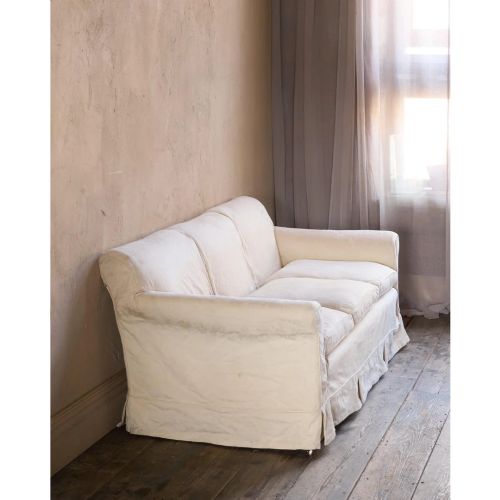
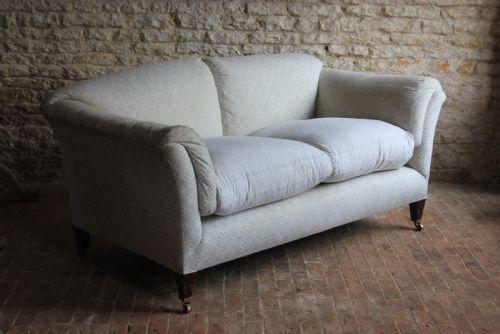
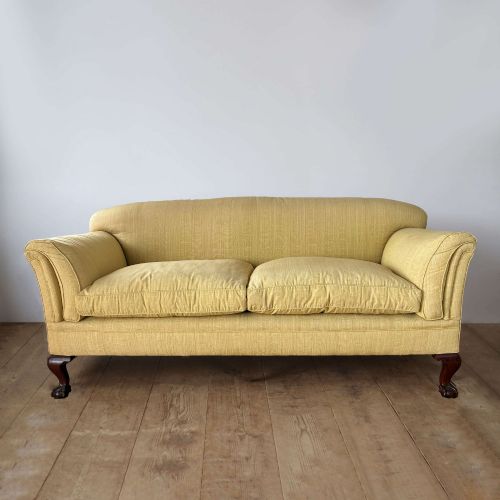
An edwardian country sofa is defined by deep seating, generous proportions, and a relaxed silhouette designed for comfort rather than formal reception rooms. These pieces often emerge from the late nineteenth and early twentieth centuries, spanning Victorian, Edwardian, and early twentieth-century periods.
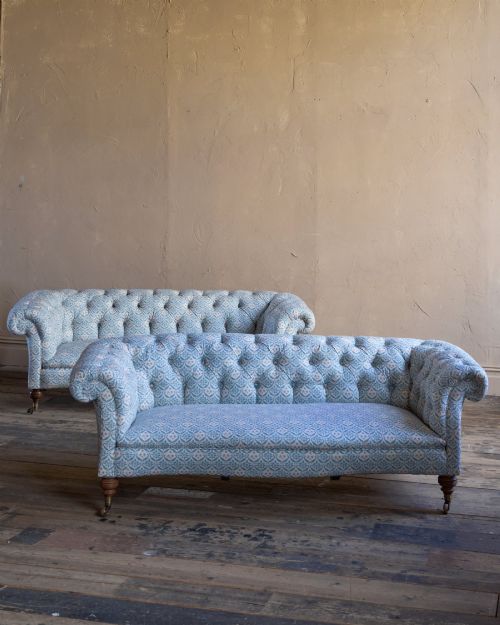
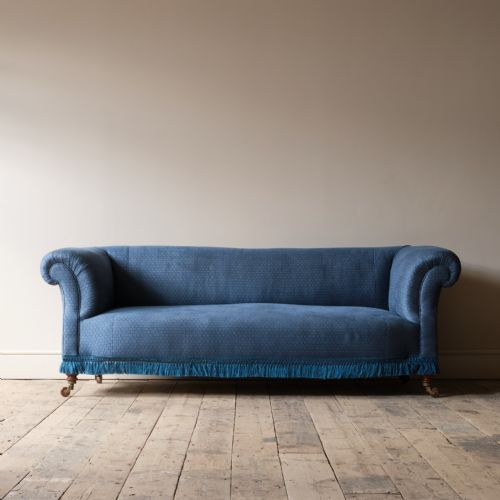
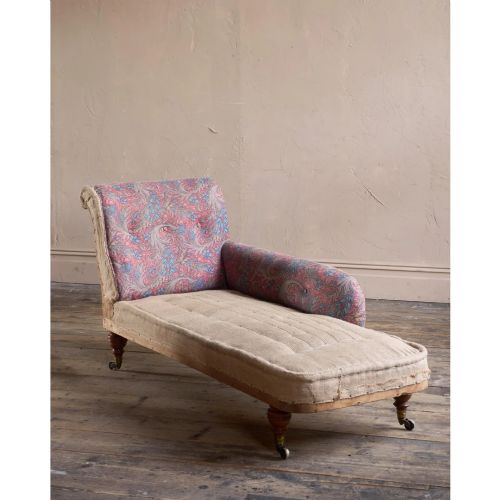
The versions most commonly met on this page range from upholstered two-seater chesterfields to large country house sofas covered in calico, cotton, or designer printed textiles. Alongside traditional upholstered builds, occasional variants include bergere caned frames and mahogany or walnut wooden structures.
Originating largely within English country house traditions, these sofas also occasionally reflect French chateau or belle epoque influences through leather finishes and velvet trims. They serve as durable, inviting centerpieces for sitting rooms, studies, and libraries.
Construction and Materials
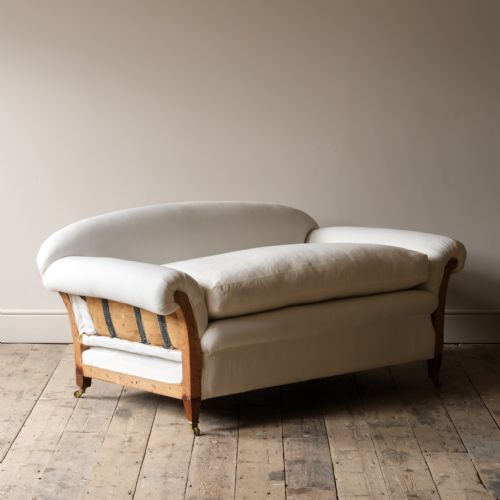
Makers constructed these frames using sturdy timbers such as mahogany, walnut, and ordinary wood, often supported by exposed brass castors on the feet. The structural woodwork remains concealed beneath layers of traditional stuffing, original ticking, and calico linings.
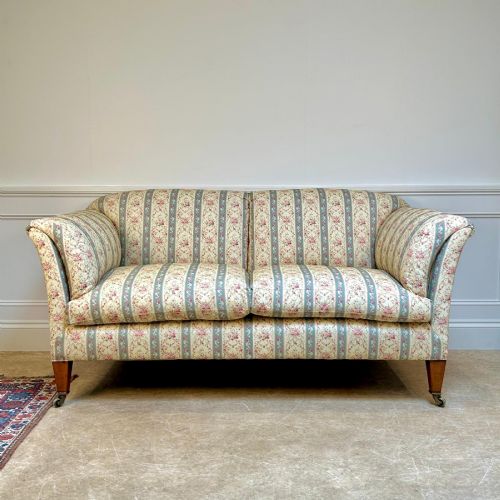
Upholstery relied on natural textiles including cotton, fabric, and leather, frequently finished with velvet trims or modern designer prints. Frames were built with deep coil springs to achieve the characteristic slouch and resilience expected in country house seating.
Listings feature pieces spanning the 19th century, Edwardian era, and early 20th century, constructed from mahogany, walnut, brass, and leather.
Assessing Quality
Quality rests significantly on the integrity of the underlying wooden frame and the retention of original upholstery elements like stamped brass castors, ticking, and maker markings. Pieces retaining their original structural stuffing and firm spring platforms demonstrate superior preservation.
The distinction between standard workshop output and top-tier maker production lies in the weight of the timber, the subtlety of the serpentine curves, and the precision of the hand-tied springing. Finer examples maintain balanced proportions and robust joinery that withstands decades of daily use.
Howard and Sons·Hampton and Sons·Gillows
The Edwardian Country Sofa Glossary
- Chesterfield
- A traditional upholstered sofa characterised by rolled arms and deep buttoning or tufting. This form provides a formal yet comfortable seat found frequently in nineteenth-century English interiors.
- Bergere
- An enclosed armchair or sofa featuring woven cane panels on the back and sides. This French-inspired technique lightens the visual weight of heavy wooden frames.
- Ticking
- A tightly woven, durable cotton or linen fabric used traditionally as a hard-wearing cover beneath outer upholstery. It holds internal stuffings securely in place.
- Calico
- A plain-woven unbleached cotton fabric utilised as an inner lining on quality upholstered furniture. It provides a clean, neutral foundation before decorative top covers are applied.
Edwardian Country Sofa: Frequently Asked Questions
How do I identify an Edwardian country sofa?
Look for deep, low-slung proportions, traditional sprung seats, and upholstery styles that favour comfort. Evidence of period manufacturing often appears in the timber framing, original castors, and under-linings.
Many examples feature turned wooden legs on brass wheels and bear the stamps of prominent workshops on the castors or frame webbing.
Were these sofas used only in country houses?
While the style originates from the informal aesthetic of English country estates, these sofas were equally popular in townhouses and suburban drawing rooms. Their primary purpose was relaxed, domestic lounging rather than formal entertaining.
Their adaptable scale meant they fit comfortably into libraries, studies, and morning rooms alike.
Can I reupholster an antique sofa?
Reupholstering is a common practice for pieces stripped down to their webbing or covered in worn fabric. Retaining the original frame, springs, and stuffing maintains the historical integrity of the piece.
Choosing appropriate traditional or contemporary textiles allows the sofa to function in modern interiors while preserving its foundational architecture.
What is the difference between Victorian and Edwardian sofas?
Victorian models tend toward heavier frames, darker timbers, and more rigid button-tufted upholstery. Edwardian pieces generally introduce lighter proportions, looser cushion designs, and a more relaxed slouch.
Both periods share a commitment to sturdy internal joinery and durable natural stuffing materials.