




Edwardian Corner China Cabinet
An edwardian corner china cabinet makes clever use of overlooked room angles while showing off cherished porcelain behind glass.
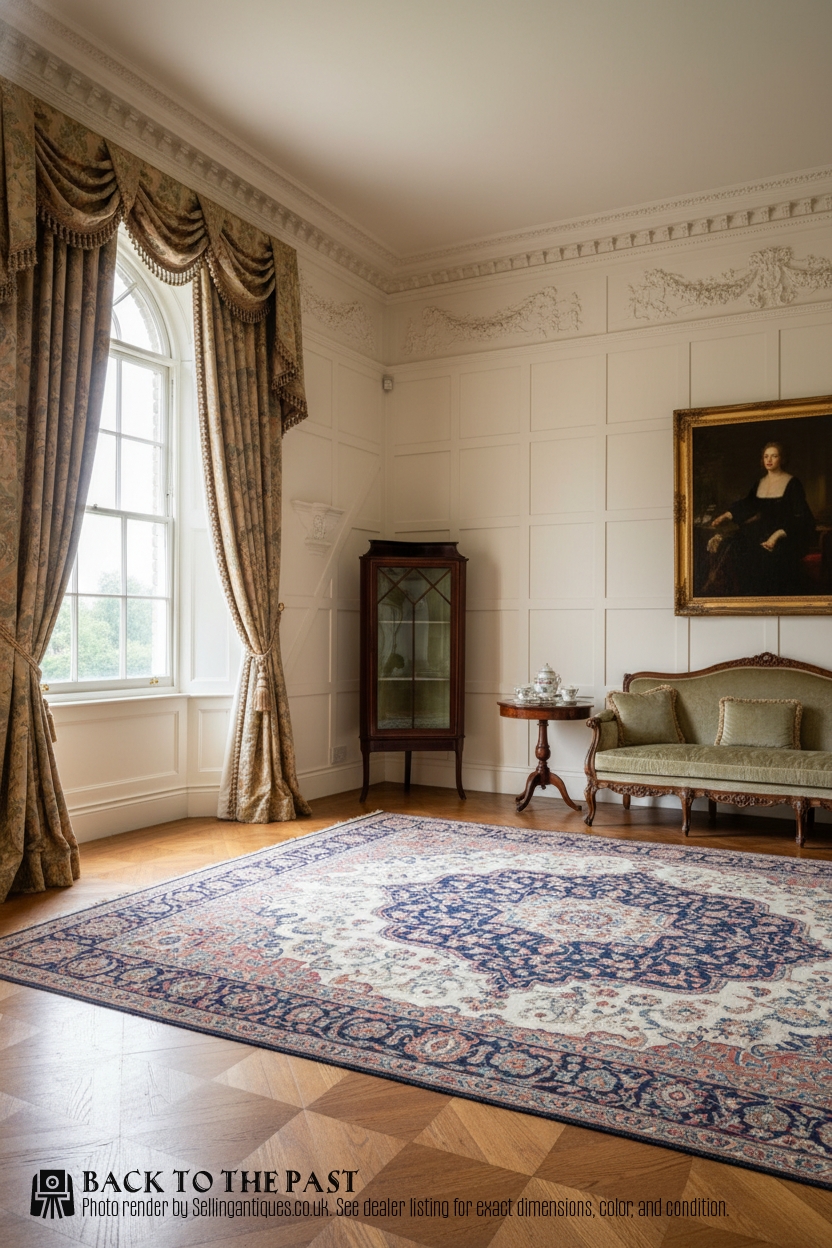
Edwardian Corner China Cabinet
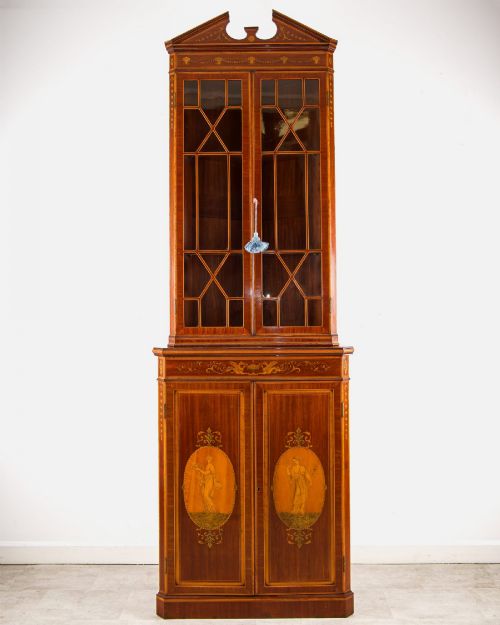
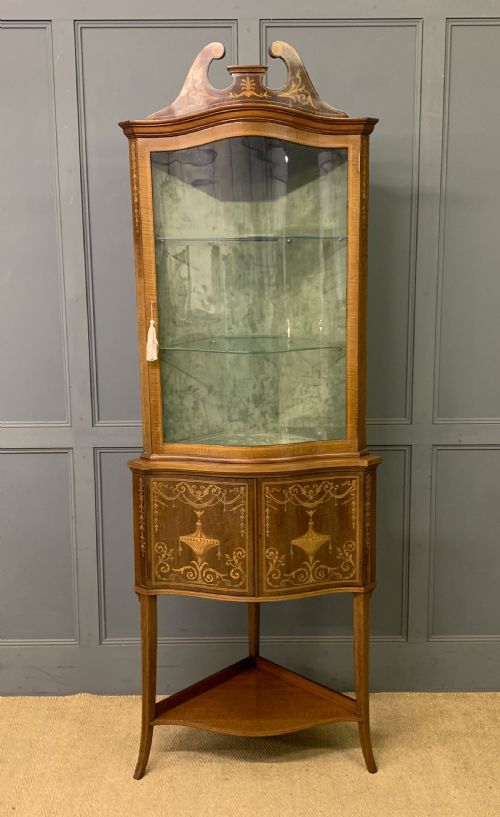
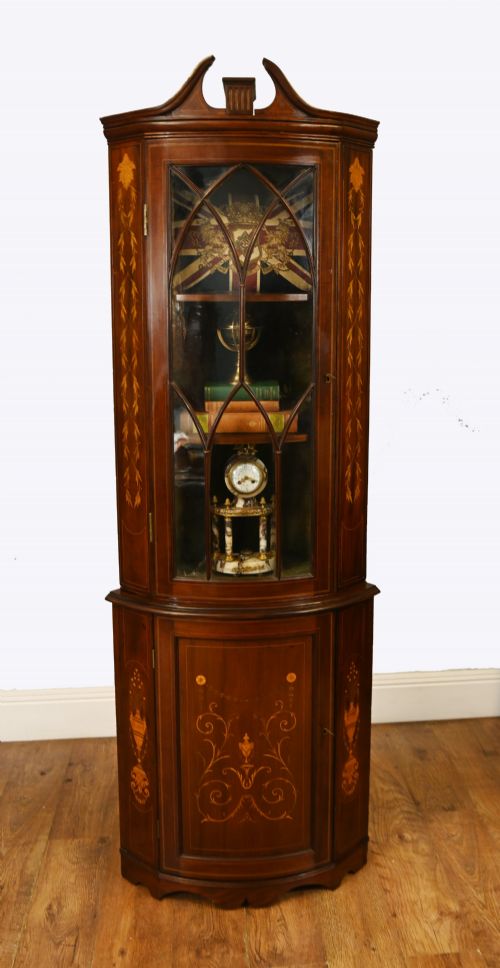
When you search for an edwardian corner china cabinet, you encounter display furniture designed to fit neatly into domestic room angles. The version most commonly met on this page is the Edwardian mahogany cabinet, often featuring inlaid satinwood or boxwood details.
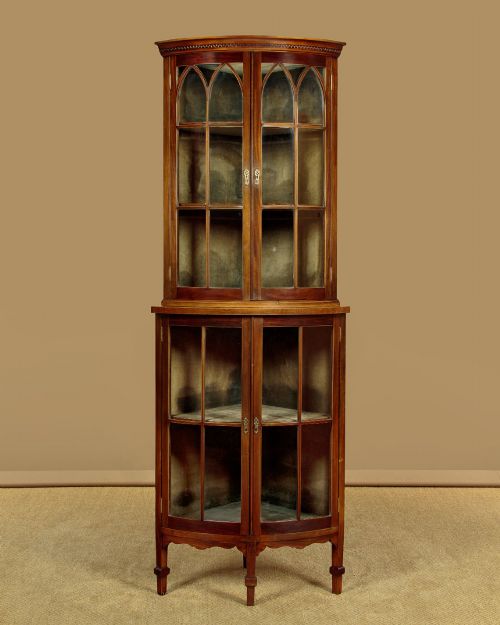
These pieces function primarily to exhibit tableware and collectables while saving valuable floor space. Makers utilised glazed doors, sometimes with astragal bars or bowed glass, to keep dust away from contents while maintaining visibility.
While the core of the selection stems from the early twentieth century, precursors and later revivals also appear. You find examples stretching from late Victorian times into the nineteen-thirties, spanning standing double-height cupboards and single-door variants.
Materials and Construction
Cabinetmakers built these corner units predominantly using solid mahogany and mahogany veneers, frequently incorporating contrasting satinwood and boxwood inlay to create delicate border lines and decorative motifs. Brass hardware secures doors and internal fittings, while mirrored backs occasionally enhance the sense of depth behind the display shelves.
Glazing technique defines the visual impact of the facade, employing individual glass panes held by timber or lead astragal bars, or curved bowed glass for a softer silhouette. Certain taller models employ a two-part construction, separating into upper display sections and lower cupboards for ease of movement.
Bow front glass doors catch afternoon light, throwing quiet curved reflections across the room.
Quality and Craftsmanship
The refinement of the cabinetmaking separates standard utility pieces from exceptional examples. Superior items display crisp, tightly fitted marquetry inlay, well-figured mahogany timber grains, and finely proportioned glazing bars rather than heavy or plain framing.
Structural integrity also dictates standing quality, particularly in the alignment of doors within angled frames and the preservation of original glass panes. Cabinets retaining subtle architectural detailing, such as dental cornices or polished brass escutcheons, demonstrate superior original workshop input.
The Edwardian Corner China Cabinet Glossary
- Astragal glazing
- Timber or metal mouldings dividing individual panes of glass within a cabinet door. These bars form geometric patterns that structure the view into the interior.
- Bow front
- A convex, outwardly curved front facade on a piece of furniture. This treatment softens the sharp angles typical of corner furniture.
- Marquetry
- Decorative veneer work forming pictures or patterns by assembling thin pieces of wood, shell, or other materials. It frequently adorns the friezes and doors of Edwardian cabinets.
- Satinwood inlay
- Contrasting pale yellowish timber embedded into darker primary woods to create fine lines and decorative borders. It serves as a hallmark of Sheraton Revival styling.
- Standing corner cupboard
- A tall, floor-standing unit designed to occupy a ninety-degree room junction. Unlike hanging wall cupboards, these feature full-height or two-part floor bearing.
Edwardian Corner China Cabinet: Frequently Asked Questions
How do I fit a corner cabinet?
Measure the wall depth extending from the corner point to ensure the door swing clears adjacent skirting boards or furniture. Most units require anchoring to the wall for stability, particularly taller standing double-height versions.
Position the cabinet away from direct heat sources and strong sunlight to protect mahogany veneers and internal fabric linings from fading or warping over time.
Can I store heavy china inside?
Standard internal wooden shelves comfortably support normal porcelain tea sets and dinner plates. Distribute heavier serving platters toward the centre of the shelves rather than stacking them heavily near the glass fronts.
Check the fixed or adjustable shelf supports before loading the interior to ensure they sit securely within their original grooves or pin brackets.
How do I identify Edwardian style?
Edwardian furniture often borrows lighter eighteenth-century Sheraton and George III design principles. Look for delicate satinwood inlay, mahogany carcasses, and refined glazing patterns rather than heavy Victorian mass.
Revival pieces from this era frequently combine older classical proportions with early twentieth-century manufacturing techniques like machine-cut veneer joints.
Are these cabinets in two parts?
Some taller standing models feature a two-piece construction where the upper display section lifts away from the lower cupboard base. This modular approach simplifies transport and placement in rooms with restricted access.
Single-piece standing units and wall-hung corner cupboards remain fully assembled, requiring careful handling around tight staircases and doorways.