


Edwardian Column Candlesticks
Edwardian column candlesticks bring classical proportion and polished metal to a room, offering functional candlelight with distinct architectural presence.
Edwardian Column Candlesticks
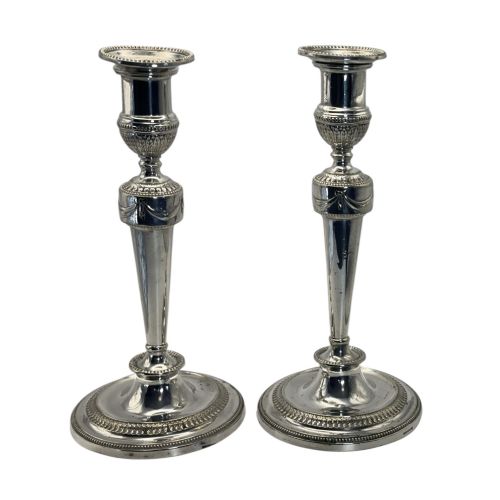
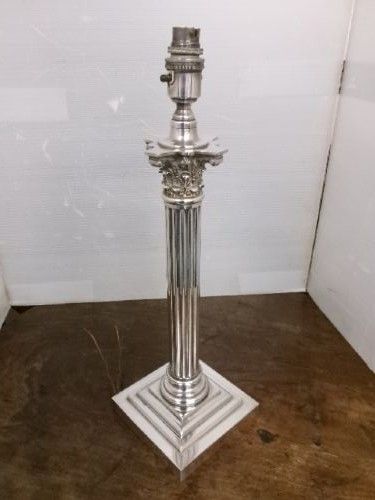
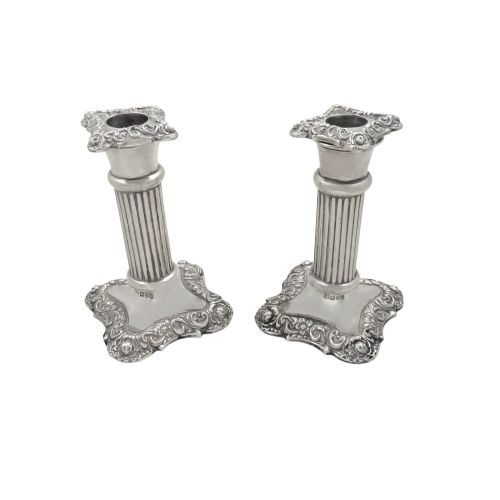
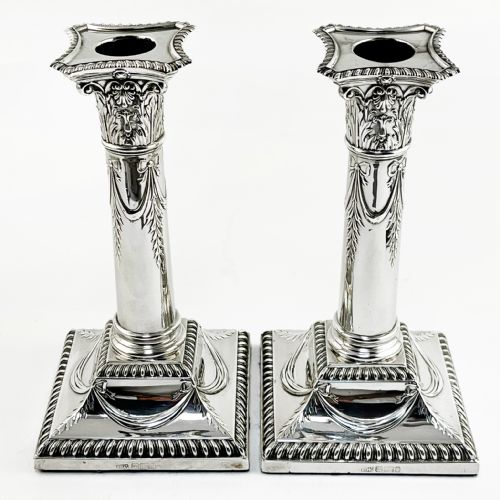
Edwardian column candlesticks are architectural lighting and dining pieces that translate ancient Greek and Roman orders into domestic metalwork. When searching for Edwardian column candlesticks, buyers encounter objects rooted firmly in the early twentieth century alongside adjacent Victorian and George V examples. These pieces frequently adopt the Corinthian or fluted column form, standing upright on weighted square bases designed to support tapers or transition into table lamps.
Materials and construction
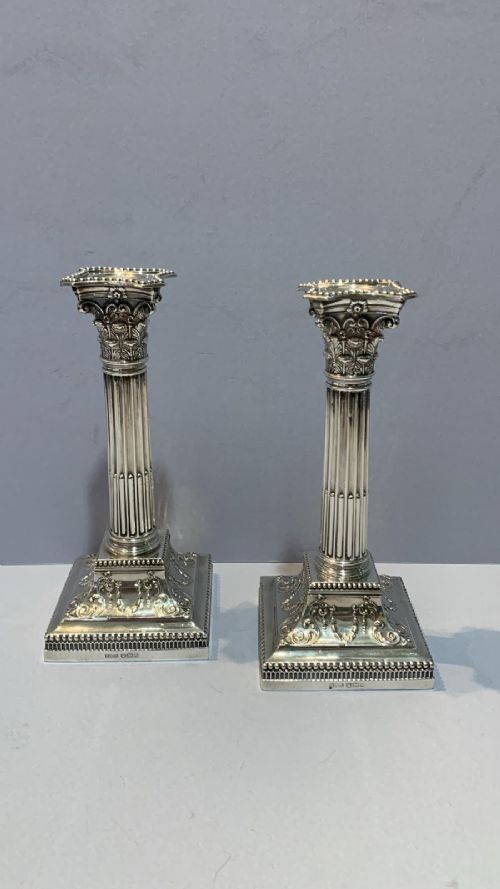
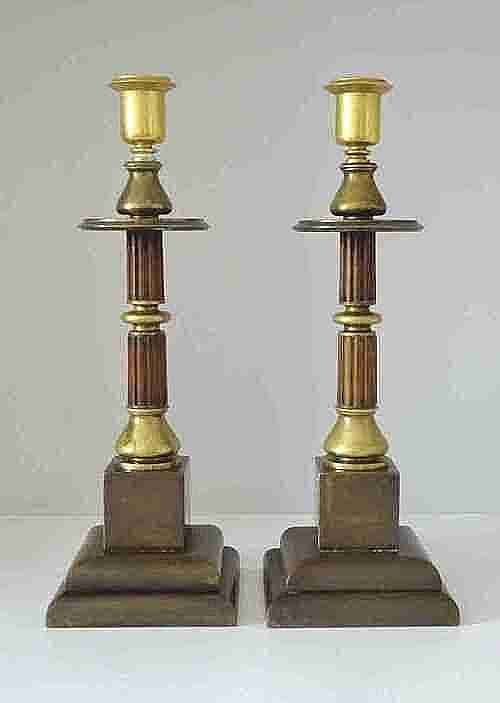
Makers produced these pieces using silver plating over base metal, solid sterling silver, or cast brass, often weighting the interiors with resin, pitch, or wood to provide stability. Corinthian capitals and square stepped bases were cast in components and assembled, while shafts were turned, fluted, or shaped into barley twists.
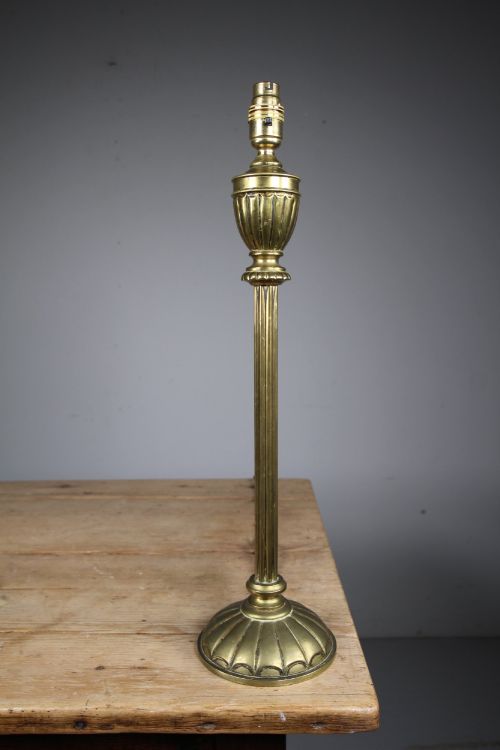
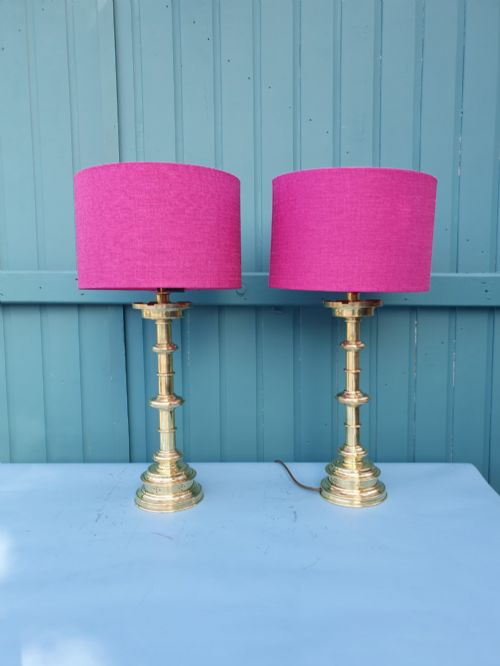
Silver items carry hallmarks indicating assay offices such as Sheffield alongside maker marks, while plated wares utilise base metals underneath applied silver layers. Brass examples show varied manufacturing methods, ranging from heavy cast metal components to spun elements utilised in later table lamps.
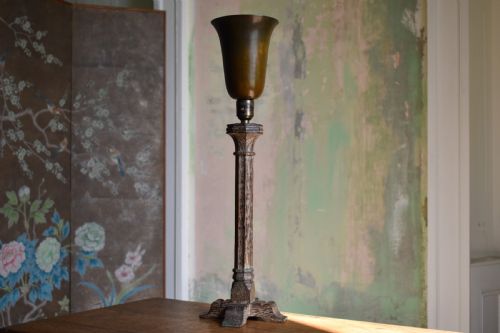
One surviving piece includes lion's paw feet supporting a Corinthian column.
Distinctions in standard
The hierarchy among these pieces rests upon the crispness of the cast architectural details and the thickness of the silver or metal used. Superior examples display sharply defined acanthus leaves on the capitals and deeply struck hallmarks, whereas lower quality items show softened casting lines from worn moulds.
Weight distribution and structural integrity also divide the range, as well-preserved pieces retain their original weighted internal material without dents to the thin metal columns. The presence of matching hallmarks across paired components indicates higher workshop care during original production.
Mappin & Webb·John Pound & Co·Thomas Bradbury & Sons Ltd·William Hutton & Sons·Fordham & Faulkner·James Dixon & Sons
The Edwardian Column Candlesticks Glossary
- Corinthian capital
- The ornate top section of a column decorated with carved acanthus leaves and scrolls. This architectural motif defines the most sought-after column candlesticks.
- Hallmark
- An official stamp applied to precious metals indicating the assay office, standard of purity, and year of manufacture. These marks allow precise dating of sterling silver pieces.
- Silver plate
- A layer of silver fused to a base metal substrate, such as copper or nickel silver. This technique offered the appearance of solid silver at a lower cost.
- Fluting
- Vertical parallel grooves cut into the shaft of a column. This decorative technique enhances the vertical emphasis of the design.
- Weighted base
- An interior filling of resin, plaster, or wood added to the hollow foot of a candlestick. This addition provides necessary balance and prevents tipping.
Edwardian Column Candlesticks: Frequently Asked Questions
How do I date silver candlesticks?
Dating relies primarily on the stamped hallmarks found on the base or nozzle, which record the assay office and date letter.
Stylistic indicators such as neoclassical revival proportions and associated registration numbers also help confirm the production period.
Are these pieces usually found as pairs?
Many surviving examples appear as matched pairs because they were manufactured for symmetrical placement on dining tables or mantelpieces.
Single candlesticks do occur, often having been separated from their original companions over decades of use.
How were column candlesticks converted to lamps?
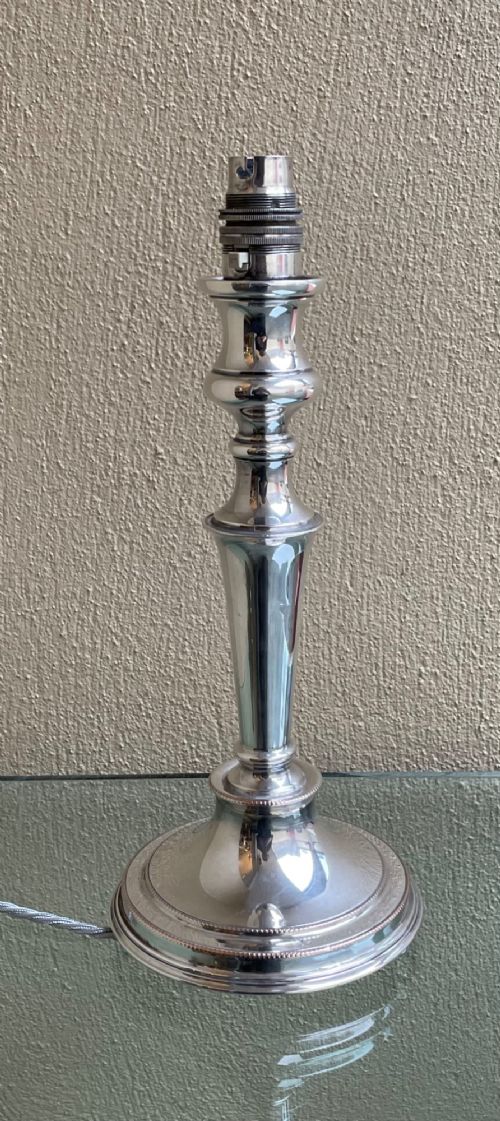
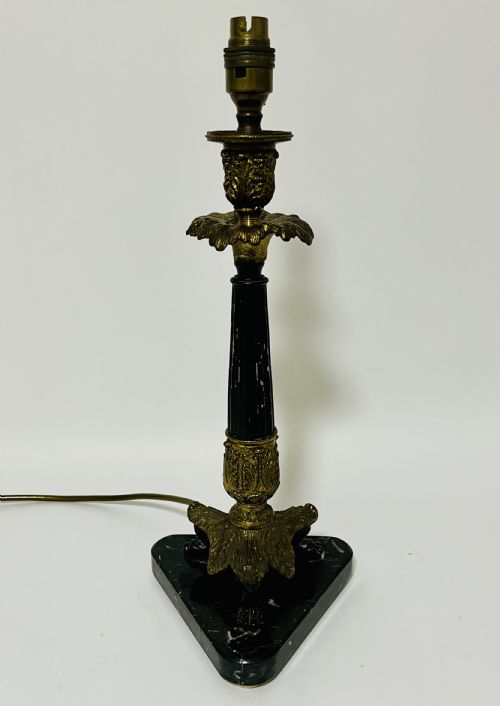
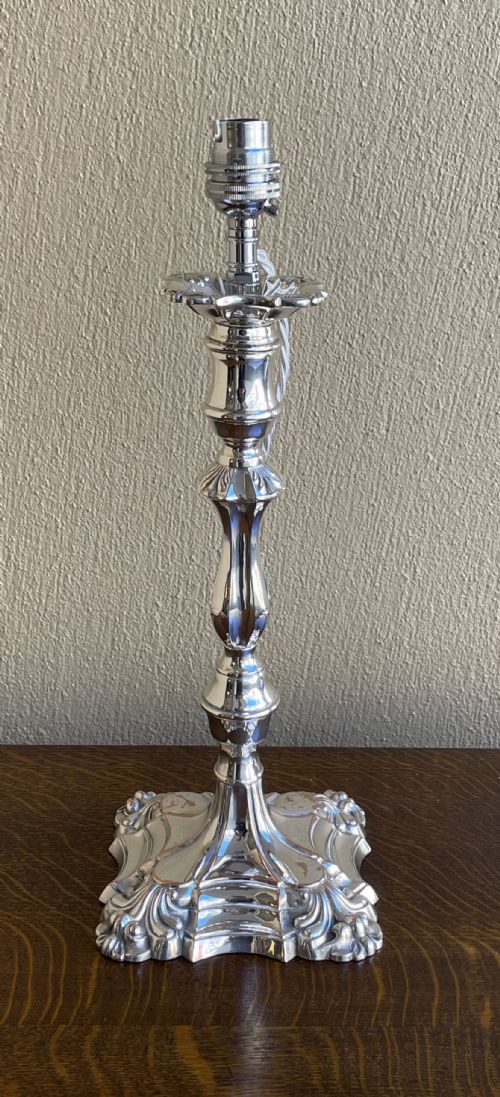
Conversion typically involves passing electrical wiring through the central column and attaching a lamp holder above the original nozzle.
Many conversions were undertaken later in the twentieth century to adapt antique candlesticks for modern table lighting.