
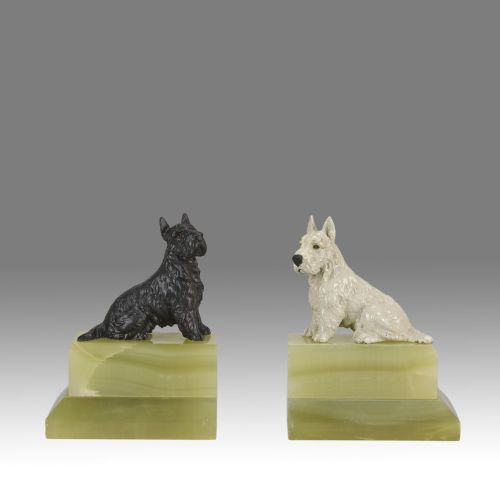


Edwardian Cold Painted Bronze
Edwardian cold painted bronze figures and desk accessories bring vivid polychrome detail to desks and cabinets through miniature animals and human subjects.
Edwardian Cold Painted Bronze
When you search for edwardian cold painted bronze, you encounter small sculptures, bookends, desk tidies, inkwells, and pin cushions spanning the late nineteenth and early twentieth centuries. These pieces originate predominantly from Austrian workshops, particularly Vienna, alongside Russian imperial work and British or continental interpretations.
The objects frequently depict animals such as terriers, woodcocks, parrots, rhinoceroses, ibexes, bulldogs, and boxer dogs, as well as distinct human figures like dwarf miners or St. Petersburg policemen. Forms range from utilitarian desk accessories with integrated crystal or onyx to standalone cabinet figures and car mascots.
You meet pieces dated across the nineteenth century, 1900, 1910, and 1911, representing Vienna Bronze, Austrian Art Nouveau, Victorian Orientalist, and Imperial Russian styles. The selection blends whimsical animal studies with functional desk equipment suited for period interiors.
How edwardian cold painted bronze pieces were made
Maker foundries cast molten bronze into intricate moulds to create the foundational animal or human shapes, occasionally utilising alternative metals such as spelter for specific figures. The resulting metal forms provide the sturdy structure necessary for functional desk accessories and detailed sculptures.
Artisans applied polychrome cold paint directly onto the unheated metal surface by hand, building up the naturalistic colours of birds, animals, and clothing without firing the pigment in a kiln. This low-temperature painting method produces the characteristic matte finish that defines the medium.
Listed objects span diverse forms from functional inkwells and bookends to sculptural parrots, terriers, and St. Petersburg policemen.
What varies in quality in edwardian cold painted bronze
The preservation and skill of the original cold painted polychrome surface dictate desirability, with masterworks retaining layered, naturalistic colouration. Inferior specimens display heavy overpainting or significant pigment loss that obscures the underlying bronze modelling.
Franz Bergman·Fabergé
The Edwardian Cold Painted Bronze Glossary
- Cold-Painted Bronze
- Bronze sculpture decorated with unheated polychrome paint applied directly to the metal surface. This technique allows for minute multicoloured detail on small animal and human figures.
- Vienna Bronze
- Small cast metal sculptures produced by Austrian foundries during the late nineteenth and early twentieth centuries. These pieces are celebrated for their humorous subjects and meticulous hand-painting.
- Spelter
- A zinc alloy used as a less expensive alternative to bronze in the manufacture of nineteenth-century figures and decorative objects. It accepts patination and paint similarly to bronze but possesses a lighter weight.
- Desk Tidy
- A functional desk accessory designed to hold small stationery items, pens, or stamps. They often incorporate decorative bronze animal sculptures or cut crystal elements.
- Pin Cushion
- A small sewing accessory featuring a padded section mounted within a decorative bronze frame or animal figure. These items combine utility with ornamental display on dressing tables.
Edwardian Cold Painted Bronze: Frequently Asked Questions
What is cold painted bronze?
Cold painted bronze refers to metal sculptures finished with oil-based or tempera paint applied without heat. The technique allows artisans to render naturalistic animal colours and human costumes with high precision.
Unlike fired enamels or hot patinas, this cold application sits on the surface of the bronze. Consequently, handling and cleaning require care to preserve the original pigment layers.
How were these bronze items used?
Many pieces served practical functions on Edwardian desks, dressing tables, and smoking rooms. Items functioned as inkwells, desk tidies, bookends, pin cushions, and even car mascots.
Others served purely decorative purposes as cabinet figures and statues. Their compact size made them portable ornaments for wealthy households.
Where were Vienna bronzes made?
Vienna bronzes were produced in workshops located in and around Vienna, Austria, during the late nineteenth and early twentieth centuries. These foundries employed skilled modellers and painters specialising in miniature animal bronzes.
Exporters distributed these popular novelty figures across Europe and Russia, catering to an international demand for whimsical and exotic subjects.
How do I care for cold painted bronze?
Maintenance requires keeping pieces away from direct sunlight, moisture, and chemical cleaners that can lift the delicate cold paint. Dusting should be done gently with a soft, dry brush.
Because the paint is not fired into the metal, aggressive rubbing or polishing will damage the polychrome surface and reduce the historical integrity of the object.